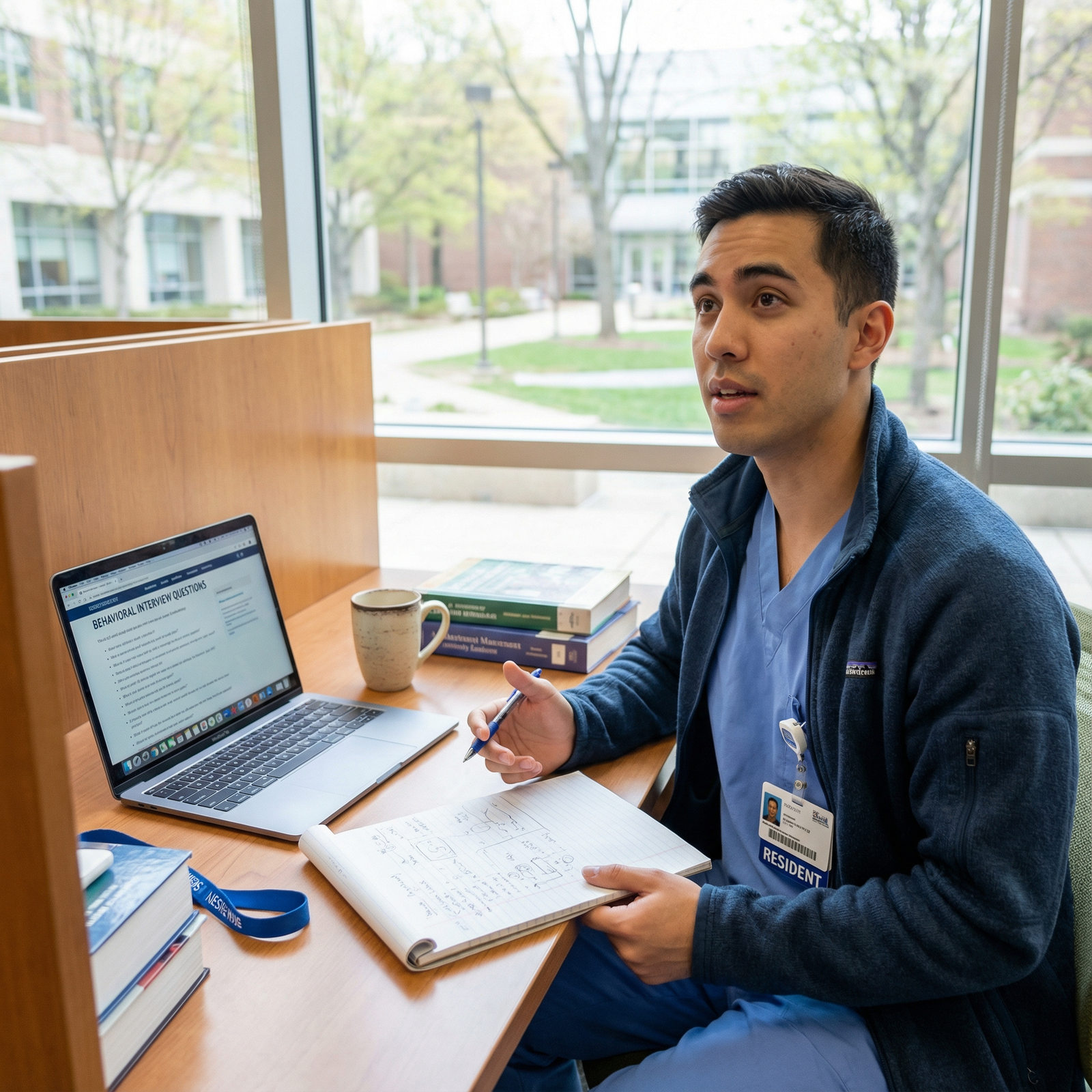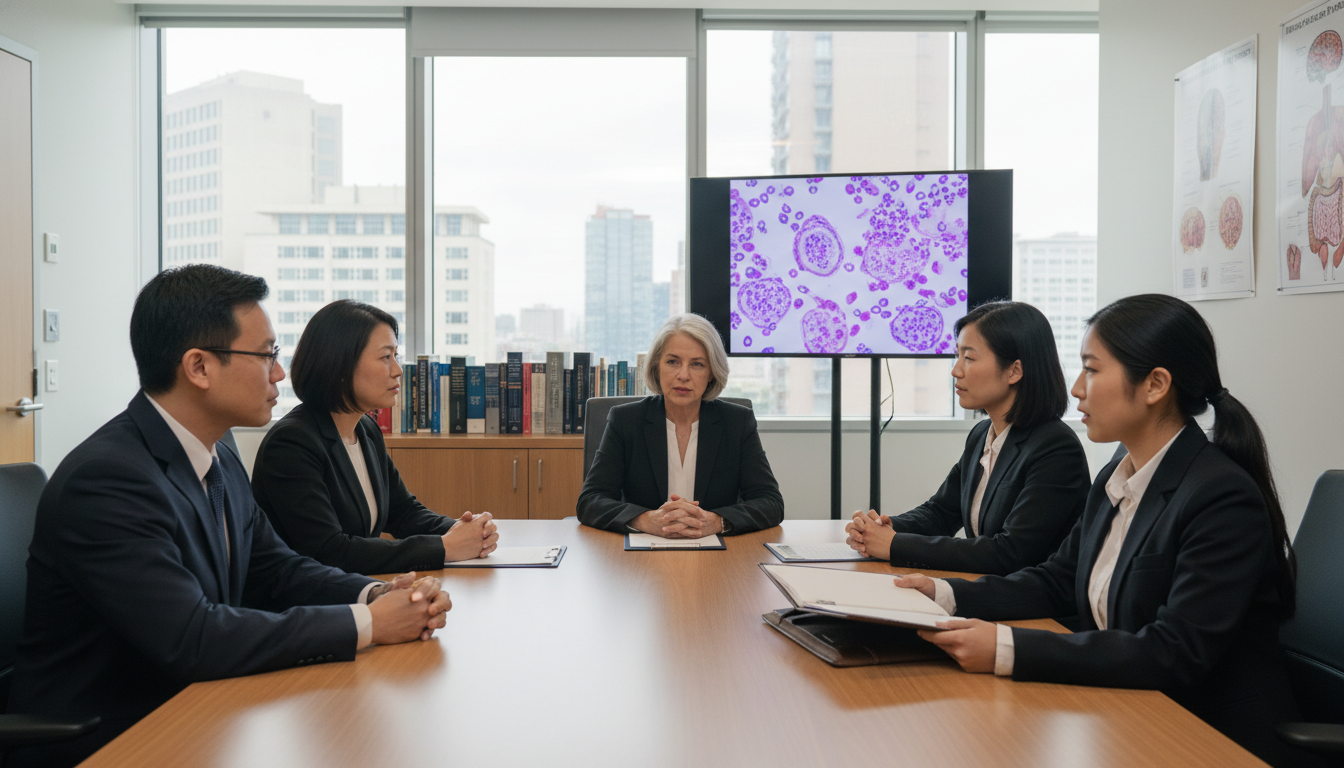
Preparing for a pathology residency interview involves more than reviewing your CV and reading about the program. Interviewers will evaluate how you think, how you communicate, how you work with others, and whether you genuinely understand what a career in pathology entails. This guide walks through common pathology residency interview questions, why they are asked, and how to craft strong, authentic responses.
Understanding the Pathology Residency Interview
Pathology residency interviews are usually conversational but structured. You will likely meet:
- Program director and associate program directors
- Core teaching faculty (surgical pathology, cytology, hematopathology, etc.)
- Residents at different training levels
- Occasionally a department chair or hospital administrator
Across these meetings, you can expect a mix of:
- Traditional questions (“Why pathology?” “Why this program?”)
- Behavioral interview questions (“Tell me about a time…” scenarios)
- Knowledge- and insight-based questions about the field
- Application-specific questions (research, red flags, gaps)
Your goal is not to deliver memorized answers, but to show:
- Clear, realistic understanding of pathology as a specialty
- Evidence of professionalism, reliability, and resilience
- Good interpersonal and communication skills
- Alignment between your goals and what their pathology residency offers
Core Personal and Motivational Questions
These foundational questions show up in nearly every pathology match interview. Preparing them well will help you set the tone and communicate your story clearly.
1. “Tell me about yourself.”
This is often the opening question and sets the frame for the entire interview. Interviewers are not asking for your life story; they want a concise professional narrative.
What they’re assessing:
- Your ability to summarize relevant information
- Your communication style and organization
- What you see as your key strengths and experiences
How to structure your answer (2–3 minutes):
Use a simple, past–present–future format:
- Past: Brief background and key experiences that led you toward medicine and pathology
- Present: Where you are now—clinical year, roles, interests, ongoing projects
- Future: Your career goals and how pathology residency helps you reach them
Example structure:
- Start with your medical school and any notable prior training (e.g., graduate degree, lab experience)
- Highlight 2–3 experiences that sparked or deepened your interest in pathology (e.g., autopsy rotation, research in hematopathology, diagnostic reasoning cases)
- End with what you are looking for in a pathology residency (strong anatomic pathology training, exposure to molecular diagnostics, etc.)
Pitfalls to avoid:
- Rambling or listing your CV chronologically
- Oversharing personal details not relevant to residency
- Sounding rehearsed without genuine enthusiasm
2. “Why pathology?”
This is one of the most critical questions in a pathology residency interview. Vague or superficial answers raise red flags.
What they’re assessing:
- Depth and realism of your understanding of the specialty
- Whether you chose pathology thoughtfully rather than as a backup
- Your motivation and long-term fit
Elements of a strong answer:
- Exposure: Describe how and when you were meaningfully exposed to pathology
- Insight: Mention specific aspects of pathology that appeal to you (morphology, pattern recognition, diagnostics, lab management, patient impact through clinicians, etc.)
- Reflection: Connect those aspects to your own strengths (analytical thinking, comfort with indirect patient care, interest in lab-based medicine)
- Realism: Acknowledge challenges (limited direct patient contact, heavy cognitive workload, evolving technology) and why you still find the field satisfying
Example talking points:
- Cases where pathologic diagnosis changed patient management in a striking way
- Enjoyment of clinicopathologic correlation conferences or tumor boards
- Satisfaction with troubleshooting lab issues or working with multidisciplinary teams
3. “Why our program?”
Programs want residents who are a good fit, not just those sending generic applications.
What they’re assessing:
- Whether you’ve researched their program
- If your interests align with their strengths
- Your sincerity and maturity in decision-making
How to answer:
- Mention specific features: e.g., strong neuropathology, early subspecialty sign-out, robust CP training, informatics exposure, case volume, fellowships offered
- Connect these features to your goals: academic vs. community practice, subspecialty interests, research aspirations
- Reference interactions: conversations with residents/faculty, impressions from an elective/away rotation, or virtual open house
Weak vs. strong answer examples:
- Weak: “You’re a strong program with good training and a good reputation.”
- Strong: “I’m particularly drawn to your structured exposure to molecular pathology starting in PGY-1 and the opportunity to participate in the lab management curriculum. My long-term goal is to practice in a community setting where I’ll need solid CP skills and comfort with molecular diagnostics, and your graduates’ track record reflects that preparation.”
4. “What are your strengths and weaknesses?”
This staple of residency interview questions reveals insight, self-awareness, and honesty.
Strengths:
Pick 2–3 strengths that are:
- Relevant to pathology: attention to detail, pattern recognition, critical thinking, reliability, communication with clinical teams, comfort with technology/informatics
- Supported by evidence: give a brief example for each
Weaknesses:
Choose a real, but manageable, weakness—not a disguised strength.
- Examples: difficulty delegating, overcommitting, being initially quiet in group settings, needing time to adapt to new software systems
- Focus on what you are doing to improve (courses, feedback, strategies)
- Avoid deal-breakers: chronic lateness, poor work ethic, inability to follow through
Example:
- “One of my strengths is meticulous attention to detail, which I’ve applied in both my hematopathology research and on inpatient rotations when reconciling complex medication lists. A weakness I’ve been working on is speaking up more quickly during group discussions; I tend to process internally first. I’ve been pushing myself to contribute earlier, and feedback from my small-group leaders suggests I’m improving.”

Behavioral Interview Questions in a Medical Context
Behavioral interviews are increasingly common in residency selection. These questions probe how you have behaved in real situations, under the assumption that past behavior predicts future performance.
Most behavioral interview medical questions will begin with:
- “Tell me about a time when…”
- “Give me an example of…”
- “Describe a situation where…”
Using the STAR Method
Use the STAR framework to structure answers:
- Situation – Brief context
- Task – Your role/responsibility
- Action – What you did (focus on your actions)
- Result – Outcome and what you learned
This keeps your response organized and focused.
Common Behavioral Questions and Pathology-Focused Examples
1. “Tell me about a time you made a mistake.”
They are not looking for perfection; they want honesty and learning.
Example approach:
- Choose a real but non-catastrophic error (e.g., miscommunication, delay, overlooking a subtle lab result that was later caught)
- Emphasize accountability, communication, and systems thinking
Sample outline:
- S: On an internal medicine rotation, you overlooked an abnormal lab value
- T: You were responsible for pre-rounding and presenting
- A: You recognized the oversight, immediately informed the team, discussed with the resident how to prevent similar errors (checklist, double-review of labs)
- R: No harm to the patient; you improved your workflow, and now you proactively review labs using a structured method
Relate it, if appropriate, to how attention to detail is critical in pathology.
2. “Describe a time you had a conflict with a team member. How did you handle it?”
Pathologists work in complex systems and must collaborate with clinicians, technologists, and other staff.
Key points:
- Avoid blaming or disparaging others
- Emphasize understanding the other perspective, clarifying expectations, resolving the conflict respectfully
- Show maturity and emotional regulation
Example scenario:
- Conflict with a co-intern over responsibilities for following up on biopsy results
- You initiated a calm conversation, clarified roles, agreed on a shared process, and informed your senior to align expectations
3. “Tell me about a time you had to give or receive critical feedback.”
Pathology training involves constant feedback on case sign-outs, slide reviews, and reports.
Focus on:
- Openness to feedback
- Specific steps you took to improve
- How feedback shaped your development
Example:
- A faculty member noted that your case presentations lacked succinct assessment and plan
- You worked on structuring presentations, asked for follow-up feedback, and saw improvement in clarity and efficiency
4. “Describe a time you experienced high stress or burnout risk. What did you do?”
Residency can be demanding, even in specialties with fewer overnight calls.
A strong answer includes:
- Recognizing signs of stress in yourself
- Concrete coping strategies (time management, prioritization, seeking help, healthy habits)
- Appropriate boundary-setting while maintaining professionalism
Avoid:
- Suggesting that you never get stressed
- Overemphasizing maladaptive coping (e.g., avoiding responsibilities)
Clinical, Specialty-Specific, and Insight Questions
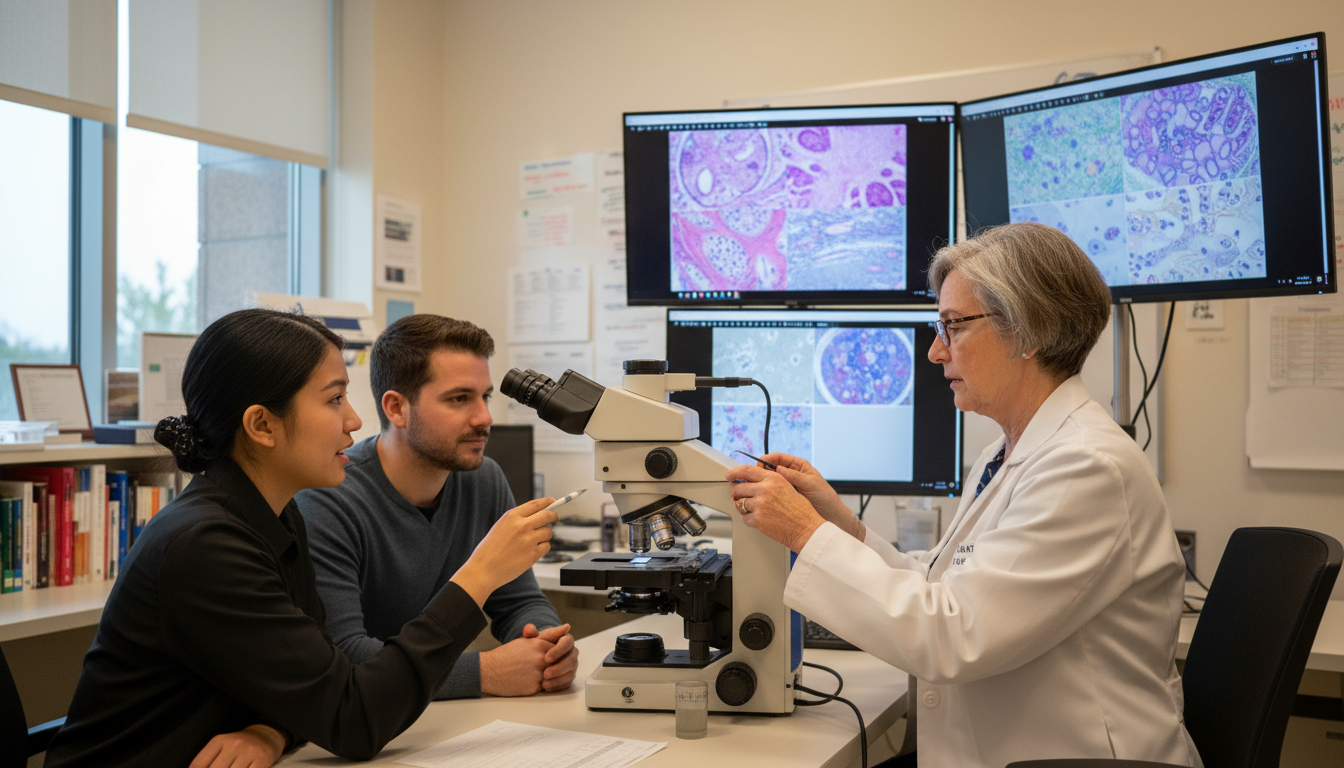
Pathology interviews rarely involve formal clinical quizzes, but they often include questions assessing your genuine understanding of the field and your thought process.
1. “How did you become interested in pathology?”
This builds on “Why pathology?” with more narrative detail.
Elements to highlight:
- Initial exposure: autopsy, histology lab, elective, research, tumor boards
- A moment or case that stood out: e.g., identifying a subtle malignancy on a biopsy that changed management
- How repeated experiences confirmed your interest
Include both emotional resonance (“It was satisfying to solve diagnostic puzzles”) and cognitive fit (“I enjoyed the careful, detailed analysis and pattern recognition”).
2. “What do you understand about the day-to-day work of a pathologist?”
Programs want to ensure you understand what you are committing to.
Discuss both AP and CP:
Anatomic pathology (AP):
- Grossing specimens, reviewing slides, frozen sections
- Sign-out with attending, integrating clinical data
- Involvement in tumor boards and multidisciplinary conferences
Clinical pathology (CP):
- Oversight of labs (chemistry, hematology, microbiology, transfusion medicine)
- Quality assurance, test validation, lab management
- Consultation for test interpretation and selection
Mention differences between academic and community practice, and that pathology involves significant indirect patient care via clinicians.
3. “Where do you see yourself in 5–10 years?”
They want to understand your long-term vision, not a fixed commitment.
Possible avenues:
- Academic subspecialist (e.g., GI pathology, hematopathology, cytopathology)
- Community general pathologist with broad AP/CP practice
- Focus on molecular diagnostics, informatics, or lab management
- Combination of clinical sign-out, teaching, and administration
Express flexibility but be specific enough to show direction:
- “I’m currently leaning toward academic surgical pathology with a focus on GI, but I’m keeping an open mind and am excited to explore other subspecialties during residency.”
4. “How do you keep up with the medical literature and advances in pathology?”
Pathology rapidly evolves with new markers, molecular techniques, and guidelines.
Mention:
- Specific journals or resources: e.g., American Journal of Surgical Pathology, Modern Pathology, CAP resources, UpToDate, WHO classification updates
- Strategies: table of contents alerts, journal clubs, online pathology forums or webinars
- A recent topic you found interesting: e.g., emerging biomarkers, digital pathology, AI-assisted diagnostics
5. “What do you think are the biggest challenges currently facing pathology as a specialty?”
This shows depth of understanding and awareness of the broader landscape.
Potential topics:
- Increasing case complexity and workload
- Maintaining quality while managing cost pressures
- Integration of molecular pathology and genomics
- Adoption of digital pathology and AI
- Workforce distribution between urban and rural areas
- Misperceptions about the specialty among the public and other clinicians
Offer a brief, balanced view and, if possible, note how these challenges also make the field dynamic and intellectually stimulating.
Program Fit, Red Flags, and Application-Specific Questions
Interviewers will tailor questions to your individual file and pathway to pathology.
1. Questions About Your CV and Experiences
You should be prepared to discuss anything on your application:
- Research: objectives, your role, outcomes, what you learned
- Publications/abstracts: your contribution, key findings
- Pathology electives: what you saw, what you liked or disliked
- Leadership roles: how they shaped your communication and organizational skills
Be honest about your level of involvement and avoid inflating your contributions.
2. Questions About Gaps, Remediation, or Exam Performance
If your application contains potential “red flags” (gap years, leaves of absence, failed exams, remediation), practice clear and non-defensive explanations.
General strategy:
- Briefly describe the circumstance (health, family, academic difficulty) without oversharing
- Take responsibility where appropriate
- Emphasize insight: what you learned and how you changed your approach
- Provide evidence of improvement: subsequent grades, exam scores, stable performance, supportive evaluations
Interviewers want reassurance that the underlying issue has been resolved or is well-managed.
3. “What other specialties did you consider?”
It is normal to have explored other fields; programs want to know you chose pathology thoughtfully.
How to answer:
- Mention one or two related fields you considered (e.g., internal medicine, radiology, surgery)
- Explain what aspects initially attracted you
- Then clearly explain why pathology is ultimately a better fit for your skills and values
Avoid implying that pathology is a “backup” for not matching elsewhere.
4. “What do you do outside of medicine?”
Residency programs value well-rounded applicants who maintain balance.
Aim to:
- Share 2–3 genuine hobbies or interests (sports, music, hiking, cooking, languages, volunteering, etc.)
- Highlight skills that overlap with residency (discipline from running, teamwork from sports, creativity from music)
- Avoid controversial topics (politics, religion) unless clearly relevant and presented carefully
Questions You Should Ask Programs
Your questions are part of the interview. They demonstrate your priorities and sophistication in evaluating fit.
Topics worth asking about
Training structure:
- “How is the balance of AP and CP structured over the four years?”
- “How early do residents get independent sign-out responsibility?”
Case volume and complexity:
- “What is the typical case load for upper-level residents?”
- “How much exposure is there to complex oncologic cases or transplant pathology?”
Teaching and feedback:
- “How is feedback given to residents on sign-out?”
- “Are there regular slide conferences, unknowns, or board review sessions?”
Fellowship and career outcomes:
- “What fellowships do most graduates pursue?”
- “Where have recent graduates gone for practice?”
Support and wellness:
- “How does the program support residents during high-stress periods?”
- “How is call structured, and what backup is available?”
Avoid questions easily answered on the website unless you want clarification or more depth.
Practical Preparation Tips for the Pathology Match
Preparing for pathology residency interview questions should be systematic and reflective.
1. Build a Personal Story Bank
List 8–10 real experiences you can draw on for behavioral questions:
- Clinical challenges
- Team conflicts or collaborations
- Times you took initiative
- Moments of growth after feedback
- Meaningful patient or diagnostic experiences
For each, jot down the Situation, Task, Action, Result (STAR) so you can adapt them on the spot.
2. Practice Key High-Yield Questions
Especially rehearse:
- “Tell me about yourself.”
- “Why pathology?”
- “Why this program?”
- “What are your strengths and weaknesses?”
Practice out loud with:
- A mentor or faculty member (preferably in pathology)
- A fellow applicant or friend
- Recording yourself to refine clarity and pacing
3. Understand Program-Specific Focus
Some programs are:
- Research-heavy
- Community-oriented
- Strong in specific subspecialties
- Leaders in informatics or molecular pathology
Tailor your examples and questions to align with each program’s emphasis.
4. Prepare for Virtual Interviews (if applicable)
Virtual interviews remain common in many pathology residency programs.
- Test your camera, audio, and internet connection
- Choose a quiet, well-lit, neutral background
- Have your CV and program notes accessible (but do not read from them)
- Maintain eye contact by looking at the camera periodically
- Avoid multitasking or excessive note-taking while the interviewer is speaking
5. Reflect After Each Interview
Right after the day ends, jot down:
- People you met and your impression
- Program strengths and concerns
- Unique features or “feel” of the environment
- How well your goals matched what they offer
These notes will help with rank list decisions later.
Frequently Asked Questions (FAQ)
1. Do pathology residency interviews include technical or diagnostic questions?
Most pathology residency interviews focus on your motivations, experiences, and fit rather than testing diagnostic knowledge. You may be asked about your exposure to pathology cases, what you found interesting or challenging, or to discuss your research. Rarely, someone might pose a simple clinical scenario to explore your thinking process, but you are not expected to perform at a board-exam level during interviews.
2. How can I stand out in a pathology interview if I have limited pathology research?
Research is helpful but not mandatory. You can stand out by showing genuine curiosity about pathology, solid clinical performance, strong communication skills, and a thoughtful understanding of the specialty. Emphasize pathology electives, tumor board participation, or case discussions that shaped your interest. Demonstrate that you understand both AP and CP roles and that you’ve explored the field beyond a single short rotation.
3. How should I answer if I’m unsure about my future subspecialty in pathology?
It is perfectly acceptable to be undecided. You can say that you have areas of interest—such as hematopathology or GI pathology—but that you are open to exploring the full breadth of the field. Programs appreciate flexibility. What matters is that you convey realistic awareness of various paths in pathology and an eagerness to discover where you best fit during residency.
4. What if I get a question I truly don’t know how to answer?
Take a brief pause to think. It is acceptable to say, “That’s a great question; let me think about that for a moment.” Then respond as honestly as you can, even if the answer is partial or reflects uncertainty. For opinion or insight questions (e.g., challenges in pathology), share your current understanding and acknowledge that you are still learning. For behavioral questions where you cannot recall a perfect example, choose the closest relevant experience you have. Staying calm, thoughtful, and authentic is more important than having a “perfect” answer.
By anticipating common pathology residency interview questions—ranging from “tell me about yourself” to nuanced behavioral scenarios—you can present yourself as a reflective, motivated, and well-informed applicant. Combine thoughtful preparation with genuine engagement, and you will be well positioned to navigate the pathology match interview process successfully.