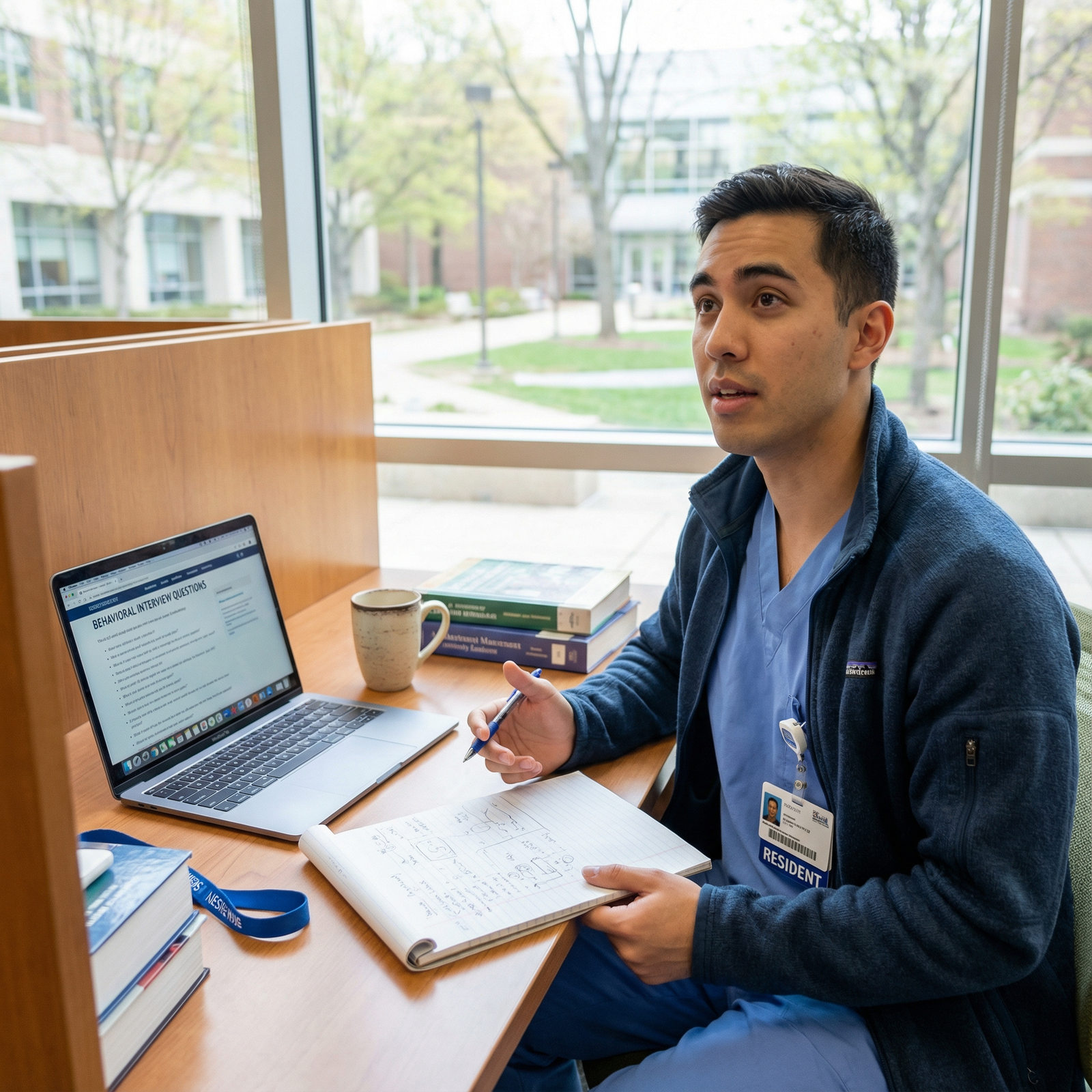
As a Caribbean IMG aiming for a pediatrics residency in the United States, you already know the road is competitive—but absolutely achievable. Programs receive hundreds (sometimes thousands) of applications, so by the time you’re invited to interview, the big question becomes: Can you communicate your story, skills, and fit for pediatrics clearly and confidently?
This guide focuses on common pediatrics residency interview questions you’re likely to encounter as a Caribbean medical school graduate, especially if you trained at institutions like SGU, AUC, Ross, SABA or similar. You’ll see how to approach traditional, behavioral, and “fit” questions, with examples, frameworks, and sample answers tailored specifically to Caribbean IMGs in pediatrics.
Understanding the Interviewer’s Mindset
Before diving into individual questions, it helps to understand what pediatric program directors and faculty are really trying to assess. Whether they’re asking “Tell me about yourself” or a classic behavioral interview medical question like “Tell me about a time you made a mistake,” they’re usually evaluating:
Clinical readiness
- Can you function safely as an intern?
- Are your pediatric rotations solid enough, especially your U.S. clinical experience?
Commitment to pediatrics
- Do you truly want pediatrics, or are you using it as a backup?
- Can you articulate why you’re choosing children and families over other fields?
Professionalism and resilience
- How do you handle stress, conflict, and feedback?
- Can you cope with high-acuity situations and emotionally challenging cases?
Communication and teamwork
- Can you communicate clearly with families who are scared or upset?
- Do you collaborate well with nurses, residents, and attendings?
Fit with the program
- Do your goals align with what the program offers?
- Are you likely to thrive in their environment and stay for all three years?
Caribbean IMG-specific considerations
- How have you adapted from Caribbean medical school to U.S. clinical settings?
- Have you addressed any gaps (USMLE attempts, time since graduation, visa needs)?
- What does your Caribbean medical school residency preparation look like?
Keeping these goals in mind will help you structure your answers in a way that directly addresses what programs care about.
Foundational Questions: Your Story, Your Training, and Your Motivation
These are often the first questions you’ll receive—and they set the tone for the entire interview.
1. “Tell me about yourself.”
This is almost guaranteed. It’s not small talk; it’s your chance to give them a clear, concise narrative that ties your background, Caribbean education, and interest in pediatrics into one coherent story.
Structure (2–3 minutes):
- Brief background – Where you’re from, where you studied.
- Medical and pediatric journey – Key experiences that shaped your interest.
- Current status and goals – Where you are now and what you’re looking for in a pediatrics residency.
Example (Caribbean IMG, pediatrics-focused):
“I grew up in Trinidad and completed my basic sciences at [Caribbean school], followed by clinical rotations in the U.S. at [list key sites]. During my third-year core pediatrics rotation at [hospital], I realized how much I enjoy working with children and their families—especially the continuity of care and the satisfaction of helping anxious parents understand what’s happening with their child.
Since then, I’ve pursued additional pediatric electives in inpatient pediatrics and NICU, and I’ve been involved in a quality improvement project focused on improving vaccination follow‑up in the clinic. Right now, I’m looking for a pediatrics residency that values teaching, diverse patient populations, and strong mentorship, and I’m especially drawn to programs with a significant underserved community focus, like yours.”
Tips for Caribbean IMGs:
- Mention your Caribbean school confidently and without apology.
- Briefly highlight your transition to U.S. clinical rotations and what you learned.
- Avoid reciting your entire CV; focus on 2–3 defining elements that lead naturally to pediatrics.
2. “Why pediatrics?”
This is central to your peds match success. Programs want to see more than “I like kids.”
Use the 3-Part Framework:
- Personal reason – What initially drew you to pediatrics.
- Clinical experiences – Specific moments that reinforced your decision.
- Future vision – How you see yourself growing in the field.
Stronger answer elements:
- A meaningful patient story (de-identified) from your pediatric rotation.
- Emphasis on communication with families, preventive care, continuity, advocacy, or child development.
- Alignment with program features (community peds, academic, subspecialty exposure).
Example: “My interest in pediatrics started during my early clinical experiences in the Caribbean, where I noticed how much of a family’s well-being revolves around the health of its children. In my core pediatrics rotation at [U.S. hospital], I took care of a school-age boy with new-onset type 1 diabetes. What stood out wasn’t just the medicine—insulin education and glucose monitoring—but the time we spent counseling the parents, coordinating with the school nurse, and helping him adjust emotionally to a chronic illness.
I realized I love that combination of acute care, long-term follow‑up, and family-centered communication. I want to train in a program where I can become a strong general pediatrician with the skills to care for diverse, often underserved populations, and potentially pursue a fellowship in [e.g., pediatric endocrinology or hospital medicine] in the future.”
3. “Why our program?”
This question tests whether you’ve actually done your homework and whether you can envision yourself there.
Research program-specific details:
- Patient population (urban, suburban, rural).
- Unique tracks (global health, advocacy, community peds, hospitalist).
- Educational structure (X+Y scheduling, simulation curriculum).
- Fellowship opportunities and alumni outcomes.
Customize your answer:
- Name 2–3 program features.
- Directly connect them to your experiences/goals.
- Show how you’ll contribute (not just what you’ll receive).
Example: “I’m particularly interested in your program because of your strong emphasis on community pediatrics and advocacy. During my rotations in Brooklyn and the Bronx, I saw how social determinants like housing instability and food insecurity affect children’s health. I was impressed to see your residents partner with local schools and community organizations, and your longitudinal advocacy curriculum really stands out to me.
In addition, your program’s track record of supporting international graduates and the mentorship in hospital medicine aligns with my goal of becoming a strong inpatient pediatrician who also understands how to advocate for children beyond the hospital walls.”

Classic Pediatrics Residency and Behavioral Questions
These questions appear in nearly every pediatrics residency interview and are often asked in a behavioral interview medical style, where you need to describe a specific past experience.
Use the STAR framework:
- Situation – Brief context
- Task – Your responsibility/goal
- Action – What you did
- Result – Outcome and what you learned
4. “Tell me about a challenging patient or family you worked with.”
Pediatrics involves working with both patients and families. Programs want to see how you handle complex dynamics.
Good themes:
- Anxious or mistrustful parents.
- Non-adherence due to socioeconomic challenges.
- Cultural/communication barriers.
Sample answer outline:
- Choose a specific pediatric case.
- Show empathy for the family.
- Highlight your communication strategies and team collaboration.
- End with what you learned about family-centered care.
Example (abbreviated):
“During my pediatrics rotation, I cared for a 4-year-old with poorly controlled asthma who was frequently readmitted. His mother appeared disengaged and sometimes missed appointments.
I learned that she worked two jobs and relied on public transportation. I sat with her to review the inhaler technique in simple terms and helped connect her with our social worker to arrange a home nebulizer and transportation assistance. Over the next few months, his hospitalizations decreased.
This experience taught me that in pediatrics, understanding a family’s context is as important as the medication you prescribe.”
5. “Tell me about a time you made a mistake.”
This is a core behavioral interview medical question. They’re not looking for perfection; they’re assessing honesty, accountability, and growth.
Key principles:
- Choose a real, mid-level mistake (not something catastrophic, and not something trivial).
- Own your part; don’t blame others.
- Focus on what you learned and how you changed your behavior.
Example (outline for a Caribbean IMG):
“In my early U.S. rotations, I was still adjusting to documentation standards. Once, I submitted a progress note on a pediatric patient without confirming updated lab results. My attending pointed out that I had referenced an older lab value.
I immediately acknowledged the error, updated the note, and discussed the correct lab interpretation with my attending. After that, I created a checklist to review all new results before finalizing notes. It was a reminder that attention to detail is critical, especially with children, and that I have to proactively adapt to new systems.”
6. “Tell me about a time you worked in a team and had a conflict or disagreement.”
Residency is team-based. Programs want to see if you can disagree respectfully and still prioritize patient care.
Common pediatric scenarios:
- Disagreement with another student or resident about a plan.
- Miscommunication with nursing staff.
- Different expectations with a consultant service.
Example elements:
- Describe the conflict without blaming.
- Show how you listened to the other person.
- Emphasize focus on patient safety and shared goals.
- End with improved teamwork or communication.
7. “Describe a situation where you had to deliver bad news or handle an emotionally difficult encounter.”
Even in pediatrics—especially in pediatrics—there are emotionally heavy moments.
You might not have independently delivered bad news as a student, but you can:
- Describe participating in a family meeting.
- Explain how you supported parents after difficult information was shared.
- Focus on empathy, clarity, and presence.
Example (abbreviated):
“During a pediatric oncology rotation, I observed a discussion where the attending informed parents that their child’s leukemia had relapsed. Afterwards, I spent time with the family, answering simple questions about what the next steps might look like, being careful to stay within my level of training.
I learned how important it is to allow silence, listen more than speak, and avoid giving false reassurance. It reinforced my commitment to developing strong communication skills in emotionally charged situations.”
Caribbean IMG–Specific Questions: Addressing Training Path, Gaps, and Perceptions
As a Caribbean IMG, you may face additional questions about your path. These are not necessarily negative; they’re often about clarifying your journey.
8. “Why did you choose a Caribbean medical school?”
Programs may ask this directly. You should have a confident, honest, and non-defensive answer.
Elements to include:
- Practical reasons (timing, opportunity, personal circumstances).
- How the Caribbean school gave you clinical exposure in diverse settings.
- What you did to maximize your training and prepare for residency.
Example: “I chose a Caribbean medical school because it provided me with the opportunity to start medical training without a prolonged delay and offered a curriculum designed to prepare students for U.S. practice. During my time there, I completed my basic sciences in a rigorous environment and then did the majority of my clinical rotations in U.S. teaching hospitals, where I worked alongside U.S. medical students.
This path required me to be proactive and adaptable—arranging rotations, seeking mentorship, and preparing for USMLE exams. I believe this experience made me more resilient and resourceful, and I’m confident it has prepared me well for the demands of pediatrics residency.”
9. “Can you tell me about your US clinical experience in pediatrics?”
For Caribbean medical school residency candidates, U.S. clinical experience is critical.
Highlight:
- U.S.-based core and elective pediatric rotations.
- Types of settings (academic, community, children’s hospitals).
- Specific responsibilities (presenting patients, writing notes, procedures under supervision).
- Any pediatric-focused research or QI projects.
Example bullet points you might mention:
- 8-week core pediatrics rotation at [Hospital A] (inpatient + outpatient).
- 4-week sub-internship in inpatient pediatrics at [Hospital B].
- 4-week NICU elective at [Hospital C].
- QI project: Improving vaccination documentation in the EMR.
10. “I see you attended SGU / another Caribbean school. How did that prepare you for residency?”
If you’re coming from a well-recognized Caribbean school (e.g., SGU, Ross, AUC, SABA), programs may be familiar with the curriculum and often ask about it in the context of SGU residency match or similar outcomes.
Your answer should:
- Emphasize academic rigor and high expectations.
- Highlight integration with U.S. healthcare systems.
- Show that you understand and have addressed the unique challenges of being an IMG.
Example: “Studying at [school] required me to be highly self-directed. The basic sciences were fast-paced and exam-heavy, which prepared me for the USMLE. Once in clinicals, I rotated in multiple U.S. hospitals, which exposed me to different practice styles and patient populations.
I also learned early on that, as a Caribbean IMG, I needed to be proactive in seeking feedback and mentorship and in building my application. That’s part of why I engaged in extra pediatrics electives, research, and clinical projects. I think this background has made me adaptable and very motivated to prove myself in residency.”

High-Yield Pediatrics-Specific Questions You Should Prepare
Beyond the general behavioral and IMG-related topics, you’ll face some peds-specific and residency role questions.
11. “What qualities make a good pediatrician?”
Programs want to see that you understand the demands of pediatrics beyond liking children.
Strong qualities to mention:
- Patience and empathy.
- Clear, age-appropriate communication.
- Ability to build trust with both children and caregivers.
- Vigilance in recognizing subtle signs of illness.
- Commitment to prevention and advocacy.
Tie each quality to a specific example from your experience.
12. “How do you handle a parent who refuses vaccination for their child?”
This is a classic pediatrics residency question because vaccine hesitancy is common.
Answer framework:
- Acknowledge the parent’s concern respectfully.
- Use evidence-based education in simple, non-judgmental language.
- Explore specific concerns and address myths.
- Emphasize partnership and continuity, not confrontation.
- Document the conversation, and ensure you follow clinic policy.
Example (short):
“I would first listen to the parent’s specific concerns without judgment. Then I would explain the benefits and risks of vaccines using clear and simple language, focusing on protecting their child and the community. I’d share that I strongly recommend vaccination based on scientific evidence and my clinical experience, but I’d also respect their autonomy and aim to keep the door open for future discussion. I’d document the discussion appropriately and involve my attending to ensure we follow clinic protocols.”
13. “Tell me about a memorable pediatric patient you cared for.”
This is an opportunity to:
- Highlight your clinical reasoning.
- Show empathy and reflection.
- Demonstrate your connection to pediatrics.
Choose a story that:
- Shows growth or a lesson.
- Fits within 1–2 minutes.
- Protects patient confidentiality.
14. “What do you think will be the most challenging aspect of pediatrics residency for you?”
Don’t say, “Nothing.” Show self-awareness.
Possible challenges:
- Dealing with very sick or chronically ill children.
- Night calls and balancing workload.
- Managing emotionally intense cases (abuse, neglect, end-of-life).
Then:
- Explain your strategy for coping (supervision, debriefing, self-care, teamwork).
- Emphasize your resilience and willingness to seek support appropriately.
Practical Strategies to Prepare for Your Pediatrics Residency Interviews
Beyond knowing the common questions, you need a structured preparation plan as a Caribbean IMG.
1. Build a Personal Bank of Stories (Behavioral Toolkit)
Create a list of 8–12 specific experiences you can adapt to multiple behavioral interview medical questions:
- A time you led a team.
- A time you had a conflict.
- A big challenge you overcame as an IMG.
- A clinical scenario where you advocated for a patient.
- An instance where you received critical feedback and improved.
- A time you felt proud of your contribution.
Write them out briefly using the STAR format so you can recall details quickly.
2. Practice Out Loud: “Tell me about yourself” and Key Questions
Record yourself or practice with:
- Mentors.
- Fellow applicants.
- Your career services office (some Caribbean schools have structured mock interviews, especially those with strong SGU residency match or other Caribbean medical school residency support systems).
Refine:
- Clarity.
- Length (2–3 minutes for longer answers).
- Filler words and rambling.
3. Anticipate Program Concerns and Address Them Proactively
As a Caribbean IMG, interviewers may silently wonder about:
- USMLE attempts or scores.
- Gaps in training.
- Time since graduation.
- Need for visa sponsorship.
Prepare brief, honest, and forward-looking explanations:
- Own what happened.
- Explain context without making excuses.
- Focus on what you learned and how you’ve improved.
- End with evidence of recent success (step exams, strong rotations, letters).
4. Prepare Thoughtful Questions for the Interviewers
At the end of most interviews, you’ll be asked if you have questions. Use this opportunity to show engagement and learn whether the program is right for you.
Good examples:
- “How does your program support residents who are interested in community pediatrics or advocacy?”
- “Can you tell me about how residents are supported when they face emotionally difficult cases?”
- “How have past international graduates integrated into your program, and what resources are available to support them?”
Avoid questions that could be answered in 2 seconds on their website (e.g., “How many residents do you take?”).
FAQs: Common Interview Concerns for Caribbean IMG Pediatrics Applicants
1. Are interviewers biased against Caribbean IMGs?
Some programs are more competitive or selective, but many U.S. pediatrics programs have a long history of training Caribbean IMGs. Your goal is to:
- Demonstrate strong clinical skills and professionalism.
- Show that you understand and can thrive in the U.S. system.
- Present a clear, confident narrative about your path.
Your interview is your chance to counter any assumptions with concrete examples of your performance, adaptability, and commitment.
2. How can I stand out during pediatrics interviews as a Caribbean IMG?
You stand out by:
- Having well-prepared, specific stories for common behavioral questions.
- Demonstrating genuine passion for children and families.
- Showing insight into the challenges of pediatrics (not just the “cute” aspects).
- Articulating a realistic career plan (general peds, hospitalist, fellowship, advocacy).
- Asking thoughtful questions that reflect you’ve researched the program.
Professionalism, humility, and clarity go a long way.
3. What are the most important questions I should definitely prepare for?
At minimum, rehearse and refine:
- “Tell me about yourself.”
- “Why pediatrics?”
- “Why our program?”
- “Tell me about a time you made a mistake.”
- “Tell me about a challenging patient or family.”
- “Why did you choose a Caribbean medical school?”
- “What are your strengths and weaknesses?” These come up repeatedly across programs and are central to your peds match success.
4. How do I answer if I’m asked about other specialties I considered?
Be honest but strategic:
- It’s okay to say you considered something else earlier in training.
- Emphasize that your clinical experiences ultimately confirmed pediatrics as the right fit.
- Avoid making pediatrics sound like a backup or compromise.
For example:
“I initially considered internal medicine because I enjoyed complex cases, but during my pediatrics rotations I realized I was most energized working with children and families. I found that I connected better with that patient population and enjoyed the balance of acute care and long-term development. Those experiences made it clear to me that pediatrics is the best fit for my skills and personality.”
Preparing for your pediatrics residency interviews as a Caribbean IMG requires more than memorizing answers. It’s about understanding your own story, owning your path, and clearly communicating why you’ll be a safe, compassionate, and committed pediatric resident. With thoughtful preparation, strong examples, and a confident, authentic presence, you can turn each interview into a compelling case for your future in pediatrics.