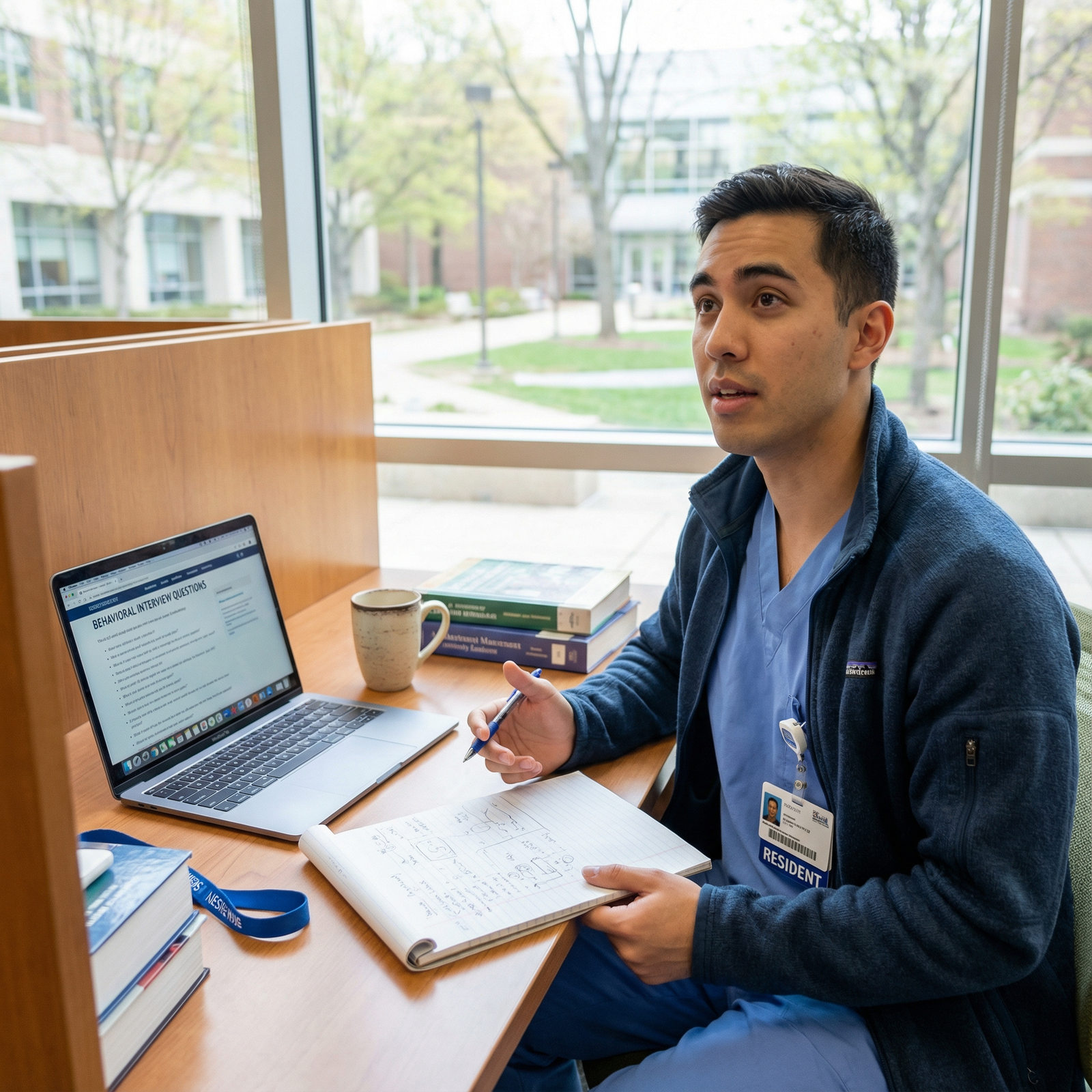
Understanding the Pediatrics Residency Interview Landscape for DO Graduates
As a DO graduate pursuing a pediatrics residency, you sit at the intersection of two important narratives: the growing recognition of osteopathic training and the consistently high demand for compassionate pediatricians. Program directors value your whole-person approach, OMT training, and primary care orientation—but you still need to demonstrate that you’re ready for residency through a polished, thoughtful interview performance.
For many DO applicants, the behavioral interview medical style used in pediatrics can feel different from traditional Q&A. You’ll be asked not just what you know, but also who you are, how you work with teams, and how you respond under pressure. In a competitive osteopathic residency match environment (now fully integrated in the NRMP), your interview is often the deciding factor.
This guide walks through common interview themes and questions for DO graduates applying to pediatrics, with sample answers, frameworks, and DO-specific advice to help you stand out in the peds match.
1. “Tell Me About Yourself” and Other Opening Questions
The opening of your interview often sets the tone. Pediatric faculty want to see that you are:
- Clear about why you chose medicine and pediatrics
- Confident but humble
- Able to communicate simply and warmly (a great sign you’ll connect with families)
1.1 The Classic: “Tell Me About Yourself”
This is arguably the most important of all residency interview questions. It’s not your entire life story. It’s a concise, structured professional narrative that ties directly to pediatrics and your fit for their program.
Goal: 60–90 seconds, present –> past –> future structure.
Sample structure for a DO pediatrics applicant:
- Present – Who you are now
- Past – Key experiences that led you here
- Future – What you’re looking for in a residency and career
Example answer (for a DO graduate in pediatrics):
“I’m a fourth-year DO student at [School], currently on my sub-internship in pediatrics, where I’ve confirmed that caring for children and families is where I feel most at home.
I originally became interested in pediatrics during a community health outreach program in osteopathic school, where we did well-child visits and parent education in underserved neighborhoods. That experience, combined with my DO training in holistic, family-centered care, made me realize pediatrics aligns perfectly with how I want to practice medicine.
Looking ahead, I’m excited to train in a program that emphasizes strong primary care pediatrics, but also exposes me to complex cases and multidisciplinary teamwork. I’m particularly interested in [developmental pediatrics/advocacy/underserved medicine], and I’m looking for a residency where I can grow into a well-rounded, compassionate pediatrician who advocates for children at both the bedside and the community level.”
Tips for DO graduates:
- Explicitly mention your DO training in a way that feels natural: whole-person care, mind-body-spirit approach, OMT when relevant.
- Link your osteopathic perspective to pediatrics: growth and development, prevention, family systems, functional concerns (feeding, mobility, etc.).
- Practice out loud until it sounds conversational, not memorized.
1.2 Variations of the Opening Question
Programs may phrase this opener in other ways:
- “Walk me through your journey in medicine.”
- “How did you end up choosing pediatrics?”
- “If I only remember three things about you after today, what should they be?”
Prepare 2–3 versions of your personal narrative (30 seconds, 60 seconds, 2 minutes) that you can adapt depending on how the question is asked.

2. Pediatrics-Specific Motivation and Fit Questions
Programs want to know why you’ve chosen pediatrics—and whether that choice is genuine and informed.
2.1 “Why Pediatrics?”
This is a core question in every pediatrics residency interview.
Key elements to include:
- A specific, personal reason (a story or moment)
- Understanding of what pediatricians actually do (not just “kids are cute”)
- Alignment between pediatrics and your values/strengths
Example framework:
- Origin story – A clinical or pre-clinical experience
- What you’ve learned – Reality of pediatric care
- Fit – Why your personality/skills suit pediatrics
Sample answer:
“I was initially open-minded about many specialties, but during my third-year pediatrics rotation, I took care of a toddler admitted with new-onset type 1 diabetes. Watching the team not only stabilize her medically but also spend hours educating and supporting the family really struck me.
I realized that pediatrics is about partnering with families over years, guiding growth and development, and being present during both crises and everyday milestones. It combines longitudinal relationships, preventive care, and complex decision-making in a way that fits how I want to practice.
My DO background in holistic, family-centered care and my tendency to communicate in clear, simple language make me a natural fit for pediatrics. I enjoy explaining, coaching, and empowering parents, and I leave clinic days feeling energized rather than drained.”
2.2 “Why Our Program?”
This question helps them see if you did your homework—and whether you’re a good match.
Research the program:
- Patient population and community (urban, rural, underserved)
- Unique educational features (simulation center, advocacy track, global health, osteopathic recognition if applicable)
- Strengths (NICU exposure, primary care focus, fellowship match, research)
Structure your response:
- Personal/professional goals
- Program features that match those goals
- Evidence you’ve researched the program
Example tailored answer:
“I’m looking for a program with strong training in general pediatrics, robust exposure to underserved populations, and mentorship in advocacy work. From speaking with your residents and reviewing your curriculum, I was impressed by your community clinic network and your longitudinal advocacy curriculum.
As a DO graduate, I also appreciate your emphasis on multidisciplinary, family-centered care and the fact that your residents are involved in school-based health initiatives. The combination of diverse patient exposure, supportive faculty, and opportunities for advocacy aligns very well with my long-term goal of practicing as a general pediatrician in a medically underserved community.”
2.3 “Where Do You See Yourself in 5–10 Years?”
They’re assessing your direction, not demanding certainty.
Possible directions:
- General pediatrics (outpatient/inpatient/hospitalist)
- Subspecialty interests (e.g., PICU, endocrinology, adolescent medicine)
- Academic vs. community practice
- Advocacy, public health, medical education
Tips:
- It’s okay to be undecided; emphasize exploration and openness.
- Show alignment with what their program can offer.
3. Behavioral and Situational Questions: How You Work and Think
Many behavioral interview medical questions follow the STAR method: Situation, Task, Action, Result. Practicing this format helps keep your answers clear and concise.
Common behavioral themes in the peds match:
- Teamwork and communication
- Conflict and feedback
- Dealing with stress and mistakes
- Ethical challenges
- Working with children and families from diverse backgrounds
3.1 Teamwork and Communication
Typical questions:
- “Tell me about a time you had a conflict with a team member. How did you handle it?”
- “Describe a situation where you had to give difficult feedback to a peer.”
- “Tell me about a time you worked in an interprofessional team to care for a patient.”
Sample answer (STAR) – conflict with a peer:
Situation: “On my pediatrics rotation, I was paired with another student for a complex patient with multiple chronic conditions. My peer would often leave the floor early without updating the team, which led to gaps in sign-out.
Task: I felt responsible for ensuring safe patient care and also wanted to preserve our working relationship.
Action: I asked my colleague to step aside after rounds and shared my concerns using ‘I’ statements, emphasizing that when one of us left early without communicating, it made it harder for the team and could affect patient care. I listened to his perspective—he felt overwhelmed with notes and was trying to finish them at home. We agreed to divide tasks differently and to let the senior resident know if either of us needed to step away.
Result: Over the next week, our communication improved significantly. Our senior resident commented that our sign-outs were more consistent, and our relationship actually strengthened because we had addressed the issue directly but respectfully.”
DO-specific angle: Highlight your training in communication, empathy, and holistic care—skills that make you a strong team player.
3.2 Handling Stress, Burnout, and Resilience
Residency is demanding. Programs want to know how you cope.
Questions you may hear:
- “Tell me about a time you felt overwhelmed. What did you do?”
- “How do you take care of yourself outside of medicine?”
- “Describe a setback you’ve had in medical school and how you responded.”
Key points:
- Choose a real but manageable example (not a catastrophic event you haven’t processed).
- Emphasize insight, growth, and specific coping strategies.
Example:
“During my third-year core rotations, I had a period where I was studying for COMLEX Level 2 while on a busy inpatient service. I noticed I was becoming more irritable and having trouble sleeping.
I realized this wasn’t sustainable, so I made several changes: I spoke with my attending about my exam schedule, created a more realistic study plan focused on high-yield topics, and re-prioritized sleep and exercise. I also started brief mindfulness exercises, which I’d learned through our DO wellness curriculum.
As a result, my mood and focus improved, and I performed better clinically and on the exam. The experience taught me to recognize early signs of stress and to proactively adjust my approach rather than pushing through until burnout.”

4. Clinical Scenarios, Ethics, and Working With Children and Families
Beyond generic behavioral questions, pediatrics interviews often incorporate child- and family-centered scenarios.
4.1 Working With Children of Different Ages
Questions might include:
- “How do you approach talking to a scared 4-year-old versus a teenager?”
- “Tell me about a memorable interaction with a pediatric patient.”
What they’re looking for:
- Developmentally appropriate communication
- Respect for both the child and caregivers
- Ability to build trust
Example approach:
“With younger children, I get down to their eye level, use simple language, and often incorporate play or distraction—like examining a stuffed animal first. I involve the parents heavily in the conversation.
With adolescents, I speak directly to them, ask open-ended questions, and, when appropriate, request private time with them to discuss sensitive topics, while still respecting family dynamics and confidentiality laws. My DO training in whole-person care has reinforced the importance of addressing not just the physical complaint but also the social and emotional context.”
4.2 Ethical and Difficult Scenarios
Common themes:
- Non-adherent parents or caregivers
- Suspected abuse or neglect
- End-of-life situations in children
- Cultural or language barriers
Example question:
“Tell me about a time you faced an ethical dilemma in patient care.”
Sample answer:
“On my pediatrics rotation, we had a child with poorly controlled asthma who frequently missed follow-up appointments. The parents insisted they were using the medications as prescribed, but pharmacy records showed infrequent refills.
I struggled with whether this was neglect or a more complex social situation. I discussed it with my attending, who encouraged me to explore barriers non-judgmentally. In talking with the family, I learned they had limited transportation, inconsistent work schedules, and trouble understanding the inhaler instructions.
As a team, we involved social work, arranged for a closer clinic, and used teach-back to ensure understanding of the medication plan. This experience reinforced that many situations that initially seem like ‘non-compliance’ are rooted in social determinants of health, and it highlighted the importance of approaching families with curiosity and empathy before making assumptions.”
4.3 Handling Difficult Families or Conflicts With Parents
Typical question:
“Tell me about a time you had to deal with a difficult family member or an angry parent.”
Tips:
- Show empathy first, not defensiveness.
- Emphasize listening, de-escalation, and clarity.
- Don’t make the family sound unreasonable; demonstrate understanding of their fears.
5. DO-Specific and Application-Related Questions
As a DO graduate in the residency match, you may face questions related to:
- Your osteopathic training
- Licensing exams (COMLEX and/or USMLE)
- Any gaps, leaves, or red flags
5.1 “Why Did You Choose a DO Program?” / “How Has Being a DO Shaped You?”
Programs increasingly value osteopathic graduates, especially in primary care fields like pediatrics. Be ready to articulate what your DO background adds.
Possible answer:
“I chose a DO program because I was drawn to the philosophy of treating the whole person—mind, body, and spirit—and viewing the patient within their family and community context. Throughout my training, we consistently approached patients with this holistic lens.
In pediatrics, this perspective is extremely powerful. When evaluating a child with recurrent abdominal pain, for example, I’m trained to consider not only organic causes, but also stress at home or school, sleep, nutrition, and family dynamics. My OMT training has also given me a deeper appreciation for musculoskeletal development and function, which is particularly relevant in growing children and adolescents.
Overall, being a DO has strengthened my communication skills, empathy, and ability to integrate multiple aspects of a child’s life into their care.”
5.2 Exams, Scores, and Red-Flag Questions
Potential questions:
- “Can you tell us about your performance on COMLEX/USMLE?”
- “We noticed a gap/leave of absence—can you talk about that?”
- “You failed/passed a course or exam on the second attempt—what happened and what did you learn?”
Key principles:
- Be honest, concise, and non-defensive.
- Take ownership.
- Focus on what changed and how you improved.
Example (for a lower exam score):
“My COMLEX Level 1 score was lower than I had hoped. In retrospect, I realized that my study strategy focused too heavily on passive review and not enough on active question practice.
For Level 2, I completely redesigned my approach: I created a disciplined study schedule, prioritized question banks and timed blocks, and regularly reviewed missed questions. I also sought advice from upperclassmen and used spaced repetition tools.
As a result, my Level 2 score improved significantly, and I felt much more confident clinically. The experience taught me how to critically evaluate my study habits and adapt, which I believe will be equally important in residency as I continue to grow.”
6. “Do You Have Any Questions for Us?” – Closing Strong
This isn’t just a formality. Your questions reveal your priorities, maturity, and how seriously you’re considering the program.
6.1 Principles for Good Questions
- Avoid anything you could easily find online.
- Focus on resident experience, culture, and education.
- Show that you’re imagining yourself there.
Examples of strong questions:
- “How does your program support residents who are interested in advocacy or community outreach in pediatrics?”
- “Can you describe how feedback is given to residents and how often formal evaluations occur?”
- “What qualities have you seen in residents who thrive in this program?”
- “How does the program support DO residents in integrating their osteopathic background into clinical care, if they’re interested in that?”
6.2 Questions to Avoid
- Salary/benefits (unless raised by them or discussed on a separate call).
- Overly aggressive questions about board pass rates or fellowships on the first pass (ask diplomatically if needed).
- Anything that suggests you haven’t read the website.
Practical Preparation Strategy for DO Applicants in Pediatrics
To succeed in a pediatrics residency or osteopathic residency match, your preparation should be targeted and deliberate.
Step 1: Build Your Core Stories
Prepare 8–10 STAR stories that cover:
- Teamwork challenges
- Conflicts and resolutions
- Times you made a mistake or received critical feedback
- Leadership experiences
- Working with children and families
- Adapting to change or heavy workload
- Ethical dilemmas or complex social situations
You can reuse these stories across multiple questions.
Step 2: Practice the High-Yield Questions
At a minimum, rehearse:
- “Tell me about yourself.”
- “Why medicine? Why pediatrics?”
- “Why our program?”
- “What are your strengths and weaknesses?”
- 2–3 behavioral questions (“Tell me about a time when…”)
- A DO-focused question about your training.
Record yourself (video or audio) and refine your pacing, clarity, and body language.
Step 3: Prepare for Virtual and In-Person Formats
- Virtual interviews:
- Test camera, lighting, and background.
- Look at the camera when speaking to simulate eye contact.
- Have notes nearby but avoid reading.
- In-person interviews:
- Plan logistics well in advance.
- Bring a simple folder with a notepad and extra copies of your CV.
- Dress professionally and comfortably; pediatrics allows some warmth (e.g., subtle colors) but stay within standard professional norms.
Step 4: Reflect on Your DO Identity
As a DO graduate, be ready to articulate:
- How osteopathic principles shape your patient care.
- How you would use that lens in pediatrics specifically.
- Your experience with OMT and whether/how you envision using it (honesty is key; it’s okay if you don’t plan to use OMT extensively).
Frequently Asked Questions (FAQ)
1. Do DO graduates have a disadvantage in the pediatrics residency match?
In pediatrics, DO graduates are generally well-received, especially since the AOA and ACGME have merged into a single accreditation system. Many programs already have DO residents and value their primary care orientation and holistic training. While some highly competitive academic programs may historically have had fewer DOs, strong clinical performance, solid letters, thoughtful answers to residency interview questions, and a clear fit with the program can more than offset any perceived disadvantage.
2. How should I handle “Tell me about yourself” without rambling?
Keep it to 60–90 seconds and use a clear structure: present (who you are now), past (key experiences that led you to pediatrics and osteopathic medicine), and future (what you’re looking for in residency and your career goals). Practice out loud until it feels smooth but not memorized. Make sure your answer highlights your DO background and your specific interest in pediatrics.
3. What are some weaknesses I can safely mention in a pediatrics interview?
Choose a real but manageable weakness that does not directly contradict core residency competencies. For example: difficulty saying no and overcommitting, initial discomfort with delegating tasks, or tendency to over-prepare documentation. Follow with specific steps you’ve taken to improve and concrete evidence of progress. Avoid framing personality traits that are essential in pediatrics (e.g., “I don’t really like working with families” or “I hate dealing with emotions”) as weaknesses.
4. How many behavioral examples should I prepare for a pediatrics interview?
Aim for 8–10 well-thought-out STAR stories from your clinical rotations, volunteer work, research, or personal life. Each story should be adaptable to multiple behavioral questions. For example, one story about handling an anxious parent on your pediatrics rotation might demonstrate communication skills, empathy, managing conflict, and professionalism all at once. Practicing these in advance will help you respond confidently when faced with various behavioral interview medical questions.
Preparing thoughtfully for your pediatrics residency interviews as a DO graduate means knowing both your story and your specialty. By honing your responses to common questions, especially “tell me about yourself,” behavioral questions, and pediatrics-specific scenarios, you can present yourself as the kind, capable, and reflective physician that program directors want caring for children and families.