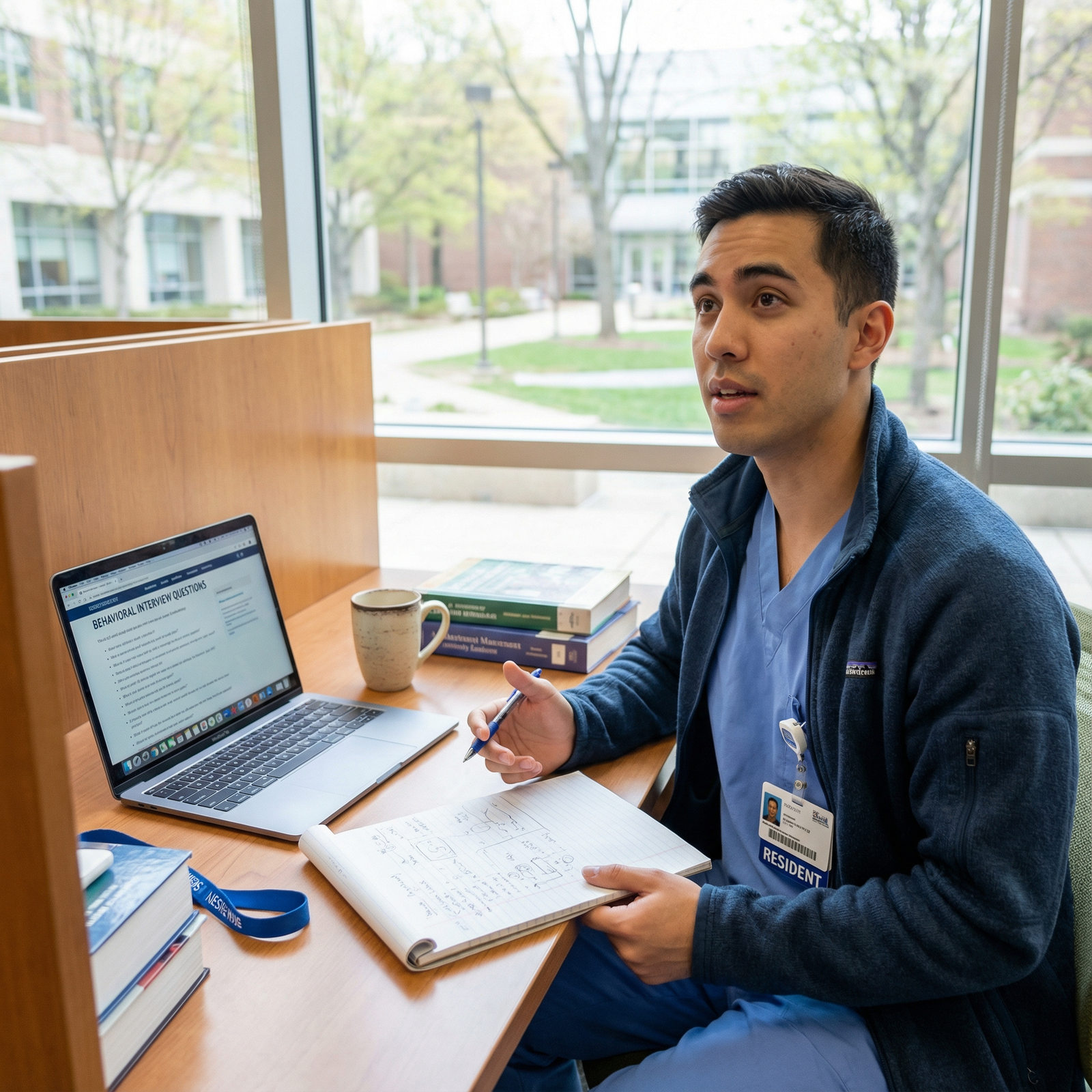
Why Behavioral Interviews Matter So Much in Plastic Surgery
Plastic surgery is one of the most competitive specialties in the United States. As a US citizen IMG (American studying abroad), you face strong competition from US MD and DO grads for a limited number of integrated plastic surgery residency spots. Programs want much more than board scores and research—they want colleagues they can trust in the OR, advocate for patients, and represent the specialty well.
That’s where behavioral interview questions become critical. These questions—“Tell me about yourself,” “Describe a time you failed,” “Give an example of a conflict with a team member”—help programs understand how you think, react under pressure, and function in a team.
This guide focuses specifically on common interview questions for US citizen IMGs applying to plastic surgery residency, and how to answer them convincingly. You’ll see:
- Core behavioral and fit questions you will almost certainly face
- Plastic surgery–specific questions that distinguish your commitment
- How to adapt your IMG background into a strength
- Sample frameworks and answer outlines (not scripts)
- Tips for practicing and avoiding common mistakes
Throughout, assume you’re preparing for an integrated plastics match interview in the US as an American studying abroad.
1. Foundational Questions: Setting the Tone of Your Interview
These questions often come early and shape the interviewer’s first impression. As a US citizen IMG, your answers should connect your story, your training abroad, and your motivation for plastic surgery in a coherent narrative.
“Tell me about yourself”
This is not your life story or a recitation of your CV; it’s a 60–90 second, structured pitch highlighting:
- Who you are professionally now
- How your path (including being an IMG) has shaped you
- Why plastic surgery and why now
- Where you’re headed and how their program fits
Simple structure you can use:
- Present – Who you are today
- Past – Key experiences that led you here
- Future – What you want and how this program fits
Example outline (adapt, don’t memorize):
“I’m a US citizen IMG who completed medical school at [School] in [Country], where I developed an early interest in reconstructive surgery during rotations in burns and trauma.
Before medical school, I studied [undergrad major] at [University] and did [briefly mention a formative research, leadership, or service experience]. In medical school, I gravitated to opportunities that combined precision, creativity, and longitudinal patient care, which led me to plastic surgery. I joined a reconstructive surgery research group focusing on [topic], and completed US clinical electives in [institutions] that confirmed I want a career in academic plastic surgery with an emphasis on [e.g., hand surgery, craniofacial, microsurgery].
Going forward, I’m looking for a program with strong [research/microsurgery/trauma exposure] and a collaborative culture. I’m particularly drawn to your program’s [specific features], and I’d be excited to grow here as a surgeon, educator, and advocate for patients needing complex reconstruction.”
Tips for US citizen IMGs:
- Mention being a US citizen IMG briefly and confidently—no apology, no defensiveness.
- Connect your international training to concrete strengths: adaptability, resourcefulness, exposure to diverse pathology.
- Practice until it feels natural, not rehearsed.
“Why plastic surgery?”
Every integrated plastics match interview will include this, explicitly or implicitly. Avoid generic answers like “I like surgery and working with my hands.” Show that you understand:
- The breadth of plastic surgery (reconstructive + aesthetic)
- The longitudinal patient relationships
- The technical demands and creativity
- The psychosocial impact of restoring function and form
High-yield elements to include:
- Clinical moment(s) that sparked your interest
- Sustained involvement – research, electives, observerships
- Understanding of the field’s complexity
- Your long-term vision (e.g., academic surgeon, subspecialty interests)
Sample structure:
- Hook: specific patient or case that impacted you
- Development: what you did afterward to explore plastics
- Insight: what you learned about the specialty
- Direction: how that shapes your career goals
“Why our program?”
Programs know many applicants want “any plastics spot.” You need to show you’ve done careful homework.
Do:
- Mention 2–3 program-specific details:
- Microsurgery volume
- Burn or trauma center role
- Hand surgery exposure
- Resident-run cosmetic clinic
- Research infrastructure (e.g., outcomes research lab, 3D printing)
- Connect them to your prior experiences and goals
- Reference conversations with residents/fellows if applicable
Avoid:
- Vague statements: “You’re a top-tier program.”
- Copy-paste language that could apply anywhere.
Example elements for US citizen IMGs:
“As a US citizen IMG, I’m especially drawn to your program’s structured mentorship for junior residents and the clear progression of responsibility in the OR. When I spoke with Dr. [X] and Dr. [Y], they both emphasized the supportive culture and early exposure to microsurgery, which aligns with my goal of pursuing complex reconstruction.”

2. Behavioral Interview Questions: How You Think, Act, and Relate
Plastic surgery residency interview questions often follow the classic behavioral interview medical format: “Tell me about a time when…”. Programs assume past behavior predicts future behavior, especially under stress.
Use the STAR framework:
- Situation – brief context
- Task – your role
- Action – what you did (focus here)
- Result – outcome + what you learned
Common Behavioral Questions and How to Approach Them
1. “Tell me about a time you failed.”
Aim: Assess resilience, self-awareness, and growth.
Good examples for US citizen IMG applicants:
- Not performing well on an early exam or clinical rotation, then improving
- Failing to communicate clearly with a team, leading to near-miss
- A research setback (e.g., rejected manuscript, lost data)
What to show:
- You take responsibility (no blame-shifting)
- You analyzed what went wrong
- You changed your behavior, with measurable improvement
Avoid:
- “I study too hard”–type fake weaknesses
- Examples that imply serious professionalism issues you haven’t clearly resolved
2. “Tell me about a conflict with a team member and how you resolved it.”
Aim: Gauge diplomacy, communication skills, and professionalism.
As an American studying abroad, you might highlight:
- Cultural or communication differences on a team
- Interdisciplinary conflicts (e.g., surgery vs. medicine, nursing staff)
- Scheduling or responsibility disputes
Key points:
- Show you listened actively to the other perspective
- Demonstrate respectful, direct communication
- Emphasize patient safety and team function over “winning”
- Conclude with the positive result and what you’d do next time
3. “Describe a stressful situation in the clinical setting and how you handled it.”
Aim: Evaluate composure under pressure.
High-yield examples:
- Managing multiple sick patients on call with limited resources (common IMG experience)
- Being first to recognize a deteriorating patient and escalating care
- Handling a complication or near-miss
Show:
- Prioritization and clear communication
- Appropriate escalation (to seniors, attendings)
- Emotional regulation
- Reflection on how you’d respond even better now
4. “Give an example of a time you led a team.”
Plastic surgery values leadership—in the OR, research, and interdisciplinary care.
Possible scenarios:
- Leading a student research team
- Organizing a free clinic or surgical mission
- Serving as class representative or committee chair
Highlight:
- How you set goals and expectations
- How you delegated and supported others
- How you navigated setbacks
- What the outcome was (e.g., publication, grant, improved clinic workflow)
5. “Tell me about a time you had to give or receive critical feedback.”
Aim: Assess your maturity around feedback. As a US citizen IMG, you may have experienced different feedback cultures abroad.
For receiving feedback:
- Describe a candid critique from a supervisor
- Show you were initially surprised/uncomfortable but chose curiosity over defensiveness
- Give specifics on how you changed and improved
For giving feedback:
- A scenario where you needed to correct a peer kindly but firmly
- How you framed it in terms of patient care and team goals
- How the relationship evolved afterward
General Strategies for Behavioral Questions
- Prepare 8–10 versatile stories (clinical, research, leadership, personal) you can adapt.
- Make sure at least a few showcase:
- Ethical reasoning
- Teamwork in diverse settings (helpful for an IMG)
- Longitudinal commitment to a project or patient
- Resilience after a setback
3. Plastic Surgery–Specific Behavioral and Technical Questions
Beyond generic residency interview questions, integrated plastic surgery programs will probe your understanding of the specialty and how your experiences align with it.
“Tell me about a plastic surgery patient who impacted you.”
Strong answers:
- Clearly plastic surgery–related (reconstructive or aesthetic)
- Highlight the functional and psychosocial aspects of care
- Show your appreciation for expectation management, shared decision-making, and follow-up
Example focus areas:
- A burn patient requiring staged reconstruction
- A child with cleft lip/palate and family counseling
- Post-mastectomy reconstruction and body image discussion
Frame your role honestly (student, sub-I, observer) and show what you learned about communication, vulnerability, and patient autonomy.
“What aspects of plastic surgery interest you most?”
You don’t need a fully formed subspecialty choice, but you should know what excites you:
- Microsurgery (free flaps, limb salvage)
- Craniofacial/pediatric plastics
- Hand surgery
- Burn reconstruction
- Gender-affirming surgery
- Aesthetic surgery and body contouring
Where possible, connect interest to:
- Cases you’ve seen
- Research you’ve done
- Mentors you’ve worked with
“What are the biggest challenges facing plastic surgery today?”
Programs want to see you thinking beyond the OR.
Potential topics:
- Public misconceptions (cosmetics vs. reconstruction)
- Access to care for reconstructive needs
- Insurance and reimbursement issues
- Ethical considerations in cosmetic surgery and social media
- Burnout and wellness in a highly demanding field
- Diversity and representation in plastic surgery
Offer a balanced, nuanced take and, if possible, reference reading, society meetings, or podcasts you follow.
“Tell me about a plastic surgery case you read about or researched recently.”
Aim: Gauge intellectual curiosity and depth.
- Choose a specific paper or case within the last 1–2 years.
- Summarize succinctly: aim, methods, key findings.
- Share what intrigued you and how it might influence practice.
As a US citizen IMG, this is a prime opportunity to bridge your international experience to US practice, such as comparing reconstructive approaches in limited-resource vs. tertiary US centers.

4. Addressing Your IMG Background with Confidence
As an American studying abroad, you should expect plastic surgery residency interview questions that explore your path:
- “Why did you choose to study medicine abroad?”
- “How has training outside the US shaped you as a physician?”
- “What challenges have you faced as a US citizen IMG, and how have you addressed them?”
Turning IMG Status into a Strength
1. Frame your decision as intentional, not second-best.
Examples:
- Broader exposure to global health, trauma, or reconstructive needs
- Unique educational model (early clinical exposure, anatomy, surgical skills)
- Personal/family reasons, framed maturely
2. Emphasize skills gained from international training:
- Comfort with limited resources and creative problem-solving
- Experience with high-acuity patients and varied pathology
- Cultural humility and communication across language barriers
- Adaptability in unfamiliar systems
3. Demonstrate successful transition to US clinical settings:
- US clinical electives/sub-internships
- Strong letters from US plastic surgeons or surgical departments
- Clear understanding of US healthcare systems and team structures
Common IMG-Focused Questions and Strategies
“How do you think your training abroad compares to US medical training?”
Avoid defensiveness or criticism of either system.
Balanced approach:
- Acknowledge differences in structure (e.g., earlier clinical exposure, different assessment methods).
- Highlight what you gained: independence, procedural exposure, resilience.
- Show you’ve successfully bridged any gaps through US rotations, self-study, and research.
“Have you had any challenges with communication or cultural differences with patients?”
As a US citizen IMG, you might have:
- Practiced medicine in a different primary language or culture
- Managed patients with limited health literacy
- Navigated cultural norms around consent, gender, or disclosure
Use this to show:
- Growth in clear, jargon-free communication
- Skill in using interpreters
- Respect for patient values while prioritizing safety and autonomy
Tie it back to caring for diverse US populations.
“What will be the biggest transition for you starting residency in the US?”
Be honest and solution-focused.
Potential challenges:
- EMR differences, documentation styles
- System-based practice (billing, coding, quality metrics)
- Different expectations around hierarchy and autonomy
Then show your plan:
- Proactive reading and online modules
- Seeking mentorship
- Observing and asking questions early
- Using feedback deliberately in the first months
5. Evaluating You as a Future Plastic Surgery Colleague
Programs also ask broader questions to understand your personality, professionalism, and long-term fit in plastic surgery.
Values and Professional Identity
Common questions:
- “What are you most proud of in your medical education?”
- “What three words would your classmates use to describe you?”
- “What do you do outside of medicine?”
Use these to reinforce a consistent image: hard-working, collaborative, ethical, and resilient, with genuine interests beyond medicine.
As a US citizen IMG, discussing life abroad (hobbies, language acquisition, travel, volunteering) can highlight:
- Openness to new experiences
- Balance and well-being
- Maturity and perspective
Ethical Scenarios and Professional Judgment
Some programs ask situational or ethics-based questions:
- “What would you do if you saw a senior resident behaving unprofessionally toward staff?”
- “How would you handle a patient requesting a cosmetic procedure you believe is not in their best interest?”
- “How do you approach consent for complex reconstructive surgery?”
Key principles to show:
- Patient safety and autonomy
- Honesty and transparency
- Respect for hierarchy, but willingness to act when needed
- Use of institutional resources (ethics committee, program leadership)
Handling Red Flags and Sensitive Topics
If you have perceived or real red flags (e.g., step failure, gap year, leave of absence), be prepared:
- “Can you tell us about the [exam failure/leave] on your application?”
Respond:
- Briefly describe context (without oversharing).
- Take full responsibility where appropriate.
- Explain concrete corrective actions and growth (study strategies, wellness, time management).
- Highlight evidence of sustained improvement (later scores, performance, letters).
For a US citizen IMG, also be prepared for:
- “You completed medical school in [country]. Why return to the US for training rather than stay there?”
This is your opportunity to reaffirm:
- Long-term commitment to practicing in the US
- Desire for high-volume, high-complexity plastic surgery training
- Interest in US academic or community practice models
6. Practical Preparation Strategies for US Citizen IMG Applicants
To stand out in plastic surgery residency interviews as a US citizen IMG, preparation must be structured and intentional.
Build a Story Bank
Create a document with 8–10 core stories categorized by:
- Leadership
- Team conflict/resolution
- Failure and resilience
- Research and innovation
- Ethical challenges
- Patient-centered care
- Cross-cultural experiences (leverage your IMG background)
For each, outline:
- Situation
- Your role
- Actions
- Outcome
- What you learned
Then practice mapping each story to multiple residency interview questions.
Practice High-Yield Questions Aloud
At minimum, rehearse:
- “Tell me about yourself”
- “Why plastic surgery?”
- “Why this program?” (customize for each)
- “Why did you study abroad?”
- “How has being an American studying abroad shaped you?”
- 5–7 behavioral questions (failure, conflict, stress, leadership, feedback)
Record yourself on video to evaluate:
- Clarity and concision
- Nonverbal communication
- Filler words (“um,” “like”)
- Eye contact and posture (for in-person and virtual interviews)
Prepare Thoughtful Questions to Ask Programs
Plastic surgery interviews are two-way. Thoughtful questions help show maturity and genuine interest.
Examples:
- “How do junior residents gain early operative experience in your program?”
- “Can you tell me about mentorship and how residents are supported in choosing fellowships?”
- “How does the program support research for residents interested in outcomes or basic science?”
- “As a US citizen IMG, I’m particularly interested in how new interns are onboarded to your clinical systems and documentation—what support is available in the first few months?”
Avoid questions easily answered on the website.
Manage Logistics and Professionalism
As a US citizen IMG:
- Confirm visa status is clearly communicated if relevant (many US citizen IMGs don’t need visas, which is an advantage—make sure this is understood).
- For virtual interviews, ensure:
- Stable internet and backup plan
- Professional background and attire
- Time zone accuracy (critical if you’re still abroad)
For in-person:
- Dress conservatively professional
- Bring printed CV, ERAS application, and list of publications
- Be prepared for informal evaluations at dinners and social events
FAQs: Common Questions from US Citizen IMG Applicants in Plastic Surgery
1. As a US citizen IMG, will I get more questions about my background than US grads?
You will likely receive a few targeted questions about why you studied abroad and how that experience shaped you. This is not inherently negative. Programs are trying to understand your path and how you’ll transition into their culture. Prepare confident, concise answers that highlight strengths—adaptability, global perspective, and diverse clinical exposure—while clearly affirming your commitment to practicing plastic surgery in the US.
2. How can I stand out in behavioral interview questions compared to US MD applicants?
You can stand out by leveraging your unique international experiences:
- Use stories that showcase managing patients with limited resources, navigating language or cultural differences, or leading teams in unfamiliar settings.
- Emphasize resilience in adapting to a new country and health system.
- Connect these experiences directly to skills valued in plastic surgery: creative problem-solving, communication, and calmness under pressure.
Thoughtful, specific examples will differentiate you more than generic “hard-working team player” statements.
3. Will programs ask technical plastic surgery questions, or only behavioral ones?
Most integrated plastic surgery interviews are heavily behavioral and fit-focused, but some programs may probe:
- Your understanding of basic surgical principles (wound healing, flap design concepts).
- Your exposure to and interest in plastic surgery subspecialties.
- Your familiarity with recent research or landmark studies.
You are not expected to function as a fellow, but you should be able to discuss plastic surgery cases you’ve seen or read about intelligently, and demonstrate genuine engagement with the field.
4. How should I answer if I’m asked about backup plans or applying to other specialties?
This can be delicate. For a competitive field like plastic surgery, programs want to see strong commitment, but also realism.
If asked:
- Emphasize that your primary goal is plastic surgery because of specific reasons (reconstruction, aesthetics, microsurgery, etc.).
- If you have a backup specialty, keep it brief and related (e.g., general surgery, ENT), and frame it as a contingency rather than a co-equal preference.
- Avoid long discussions that make it sound like plastics is your second or third choice.
For US citizen IMGs especially, clarity about your dedication to the integrated plastics match helps reassure programs of your seriousness and focus.
With deliberate preparation, honest reflection, and strategic use of your international background, you can turn the interview from a hurdle into a powerful opportunity to demonstrate that you’re ready to become a trusted, high-performing plastic surgery resident in the US.