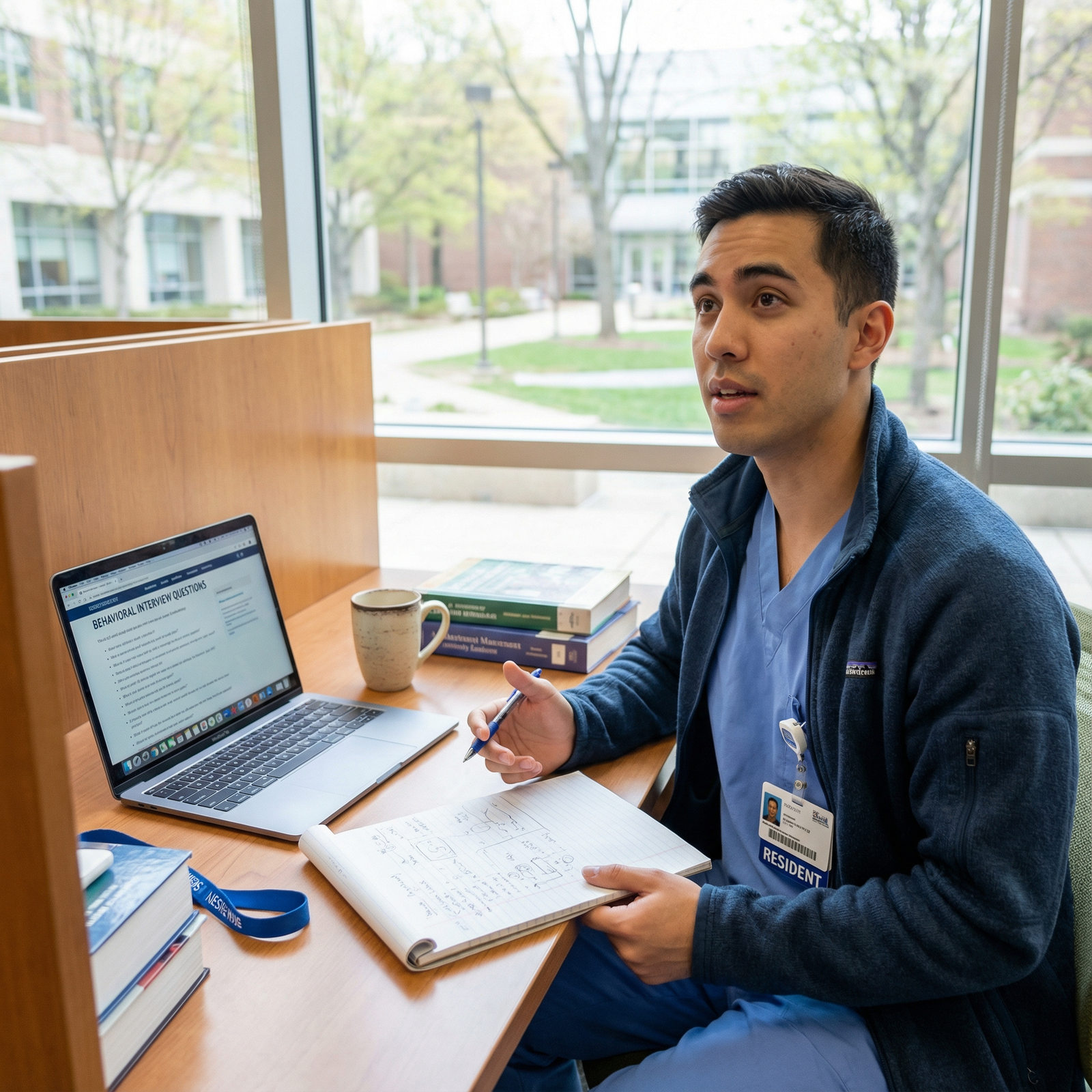
Preparing for a PM&R residency interview means more than memorizing a list of answers. Programs are evaluating how you think, how you communicate, and how you will fit into a multidisciplinary rehabilitation team. This guide walks you through the most common Physical Medicine & Rehabilitation (PM&R) residency interview questions, what programs are really asking, and how to craft strong, authentic responses.
Understanding the PM&R Residency Interview
PM&R residency interviews tend to be conversational, reflective, and highly behavior-based. Because physiatry is a team-oriented and patient-centered specialty, you can expect:
- Emphasis on behavioral interview medical questions (tell-me-about-a-time…)
- Questions about teamwork, communication, and conflict management
- Close attention to your nonverbal communication and listening skills
- Exploration of why PM&R—and why you’ll thrive specifically in this field
Your goal is not to deliver perfectly polished lines, but to demonstrate self-awareness, maturity, curiosity, and a genuine commitment to rehabilitation medicine.
Three core dimensions every PM&R residency interview evaluates:
- Fit for the specialty – Do you understand what a physiatrist does? Do you appreciate longitudinal care and functional outcomes?
- Fit for the program – Do your interests, values, and working style align with their training environment and patient population?
- Fit for the team – Are you someone faculty, therapists, and residents want to work with on long, complex cases?
Telling Your Story: “Tell Me About Yourself” and Related Questions
The most predictable opening to almost any physiatry match interview is:
“Tell me about yourself.”
This sounds simple but sets the tone for the entire conversation. It is not your entire life story; it’s your professional narrative in 60–90 seconds.
How to Structure “Tell Me About Yourself”
Use a clear, three-part structure:
- Present – Who are you now as a trainee?
- Past – How did you get here? Key experiences that shaped you.
- Future – What you’re looking for in PM&R residency and career.
Example framework:
- One sentence about your background and current role
- 2–3 sentences about experiences that pushed you toward PM&R
- 1–2 sentences about your current interests and goals
- Brief link to the program: what you’re seeking and why their setting fits
Sample PM&R-Oriented Response
“I’m a fourth-year medical student at Midcity University with a strong interest in neurorehabilitation and musculoskeletal medicine. I grew up in a bilingual household, which made me very aware of how communication and function shape people’s independence. During medical school, I was initially drawn to neurology, but my early exposure to inpatient rehab—particularly working with a patient recovering from a traumatic brain injury—showed me how much satisfaction there is in guiding patients through long-term functional recovery. That experience, along with my work in adaptive sports and MSK clinics, really solidified my interest in PM&R. I’m now looking for a residency where I can get strong training in both inpatient neurorehab and outpatient MSK/pain, with a collaborative, interdisciplinary culture like the one I’ve seen here.”
Common Variants of “Tell Me About Yourself”
- “Walk me through your CV.”
- “Can you summarize your journey to medicine and PM&R?”
- “If I read your application, what are three things I should remember about you?”
Tips to stand out:
- Avoid redundancy: Don’t simply list what’s on your CV; give context and motivation.
- Stay focused: 60–90 seconds is enough. Long monologues can signal poor self-awareness.
- Highlight PM&R-relevant traits: resilience, empathy, communication, systems thinking, adaptability.
Core PM&R Residency Interview Questions and How to Answer Them
1. “Why PM&R?” / “Why physiatry?”
Every program will ask this in some form. It’s central to the physiatry match decision.
They want to know:
- Do you understand what PM&R actually entails day-to-day?
- Are you drawn to functional outcomes and long-term relationships?
- Did you explore alternatives (e.g., neurology, orthopedic surgery, internal medicine) thoughtfully?
Answer structure:
- Exposure – How you discovered PM&R.
- Insight – What clicked for you about the field.
- Fit – How your strengths, values, and interests align with PM&R.
Example:
“I was initially considering orthopedics because I liked MSK anatomy and helping patients regain mobility. Then on my PM&R rotation, I realized what I really enjoyed was the broader view of function—seeing how a stroke survivor’s mobility, mood, social support, and equipment all interact. I loved the team-based approach with therapists, social workers, and psychologists. PM&R fits my strengths in communication, patient education, and problem-solving across systems, rather than focusing solely on procedures or acute diagnoses. I’m particularly drawn to the way physiatrists can follow patients across settings—acute care, inpatient rehab, and outpatient—helping them meet changing functional goals over time.”
2. “Why our program?”
Programs want to hear more than, “You’re a strong program with great training.” They’re assessing how seriously you’ve thought about fit.
Do your homework:
- Know their inpatient vs outpatient balance
- Key clinical strengths: SCI, TBI, amputee, pain, sports, pediatric rehab, spasticity, EMG
- Call structure, research opportunities, unique rotations
- Culture: small vs large program, mentorship model, city considerations
Answer structure:
- Name 2–3 specific, unique features of their program.
- Connect those features to your past experiences and future goals.
- Add a brief comment about culture and environment.
Example:
“I’m particularly interested in your strong SCI and TBI services and the opportunity to rotate at multiple rehab settings, including the VA. My most meaningful experience in medical school was following a young patient with SCI from acute care through rehab, and I’d like to train in a program with high SCI volume. I’m also drawn to your structured EMG curriculum and early exposure to outpatient MSK clinics, since I see myself in a mixed inpatient–outpatient practice. Finally, when I spoke with your residents, they described a very supportive environment where faculty are approachable and committed to teaching, which is the kind of culture where I know I’ll thrive and grow.”
3. “What are your strengths and weaknesses?”
Programs use this to assess insight and honesty. Vague answers like “I’m a perfectionist” are clichés and unhelpful.
Strengths
Pick 2–3 strengths that are:
- Genuine
- Demonstrated by specific examples
- Directly relevant to PM&R (communication, teamwork, resilience, patience, systems thinking, adaptability, procedural skills, teaching)
Example responses:
“One of my strengths is collaborative communication. On my inpatient rehab rotation, I made a point of checking in with PT, OT, and nursing daily, which helped me anticipate issues like equipment needs before discharge. Another strength is my comfort with ambiguity; in rehab, problems are complex and don’t have quick fixes, and I’ve found I can stay patient and focused on incremental progress rather than getting frustrated.”
Weaknesses
Choose a real but non-fatal area for growth:
- Time management
- Delegation
- Overcommitting
- Discomfort with uncertainty (if you can show progress)
- Public speaking, documentation efficiency, etc.
Then show:
- How you recognized it
- What you’re doing to improve
- Evidence of progress
Example:
“In the past, I struggled with overcommitting to too many projects at once. During my second year, I was involved in multiple interest groups and research projects, and I found myself staying up late to keep up with coursework. I recognized that I wasn’t being sustainable. Over the last year I’ve been much more deliberate about setting limits: I prioritize projects aligned with my long-term goals, use a weekly planning system, and check in with mentors before taking on new commitments. This has helped me maintain reliability while preserving time for clinical work and rest.”
4. Behavioral Questions: “Tell Me About a Time…”
Behavioral interview questions aim to predict future behavior based on concrete past experiences. These are central in behavioral interview medical formats.
Common themes include:
- Conflict with a team member
- A mistake or failure
- Handling a difficult patient or family
- Managing stress or burnout
- Advocating for a patient
- Working in a multidisciplinary team
Use the STAR framework:
- Situation – Brief context
- Task – Your role or responsibility
- Action – What you did (focus here)
- Result – What happened; what you learned
Example: Conflict with a Team Member
“Tell me about a time you had a conflict with a colleague. How did you handle it?”
STAR answer:
- Situation: “During my inpatient medicine rotation, a nurse and I disagreed about whether a patient was ready for discharge.”
- Task: “As the student on the team, I needed to help clarify the plan and maintain a good working relationship.”
- Action: “I asked the nurse if we could talk briefly. I listened to her concerns about the patient’s mobility and home support, then shared the medical team’s reasoning for discharge. I realized we hadn’t fully considered the patient’s functional status. I brought her concerns to the resident, and we arranged a PT reassessment and a family meeting.”
- Result: “The plan changed to one more day of hospitalization with additional home services arranged. The nurse later thanked me for listening, and I learned how vital it is in rehab to incorporate nursing and therapy perspectives into discharge planning.”
Example: Handling a Difficult Patient/Families
“Tell me about a difficult patient or family interaction and how you managed it.”
Look for opportunities to show empathy, patience, and communication skills—core to PM&R.
STAR answer snippet:
“On my rehab rotation, I cared for a stroke patient whose family was angry about his slow progress. I met with them, listened without interrupting, validated their frustration, and then used clear, non-technical language to explain the typical recovery trajectory and how fatigue affects participation. We agreed on short-term, measurable goals and scheduled regular check-ins. The family’s expectations became more realistic, and they became more supportive in therapy sessions.”
PM&R-Specific Interview Questions You Should Expect
PM&R interviews often probe your understanding of functional medicine, disability, and interdisciplinary care. Be prepared for specialty-specific questions such as:
1. “What does a physiatrist do?”
Your answer should include:
- Focus on function and quality of life, not just disease
- Work in inpatient and outpatient settings
- Leadership of interdisciplinary rehab teams
- Knowledge of MSK, neuro, pain, spasticity management, prosthetics/orthotics, adaptive equipment
- Use of procedures: EMG, injections, ultrasound-guided procedures, etc.
2. “Tell me about a patient who influenced your interest in PM&R.”
Have at least one PM&R-related patient story ready.
Structure:
- Brief clinical summary (no identifiers)
- What made the case meaningful
- What you learned about rehab, teamwork, or patient-centered care
- How it shaped your interest in PM&R
Example:
“I worked with a young man after a TBI from a motor vehicle accident. Initially he was impulsive and frustrated, and his family was overwhelmed. Over several weeks in inpatient rehab, I watched how the team—PT, OT, SLP, neuropsychology, nursing—addressed not only his mobility, but his cognition, mood, and family education. I saw the physiatrist coordinate all of this, adjust medications for spasticity and mood, and help the family plan for return to school. That longitudinal process of restoring function and identity really solidified my desire to become a physiatrist.”
3. “How do you define ‘function’?”
This question probes whether you think like a physiatrist.
Include:
- Physical function (mobility, strength, ADLs)
- Cognitive and communication function
- Emotional and social function
- Participation in roles (work, school, family, community)
- Use of patient-centered goals and outcome measures
4. “How do you see the role of the rehab team?”
Demonstrate understanding of:
- Physiatrist as team leader and coordinator
- Unique roles of PT, OT, SLP, nursing, psychology, social work, recreation therapy, prosthetists/orthotists
- Importance of communication, respect, and shared goals
Challenging Topics: Red Flags, Stress, and Ethics
Addressing Red Flags (Gaps, Step/COMLEX Scores, Remediation)
If you have concerns in your application, programs may ask:
- “I noticed you took some time off. Can you tell me about that?”
- “Can you explain your Step/COMLEX score?”
- “Tell me about a time you struggled academically or clinically.”
Principles to follow:
- Be honest but concise; don’t overshare irrelevant personal details.
- Take ownership, avoid blaming others.
- Emphasize growth, insight, and specific steps you’ve taken to improve.
- End on a forward-looking note.
Example (academic difficulty):
“During my first year, I failed one course. At the time, I was adjusting to a new learning environment and didn’t recognize early enough that my study strategies weren’t effective. I worked with academic support services, adopted active-learning techniques, and built a more structured schedule. Since then, I’ve passed all subsequent courses and performed strongly in my clinical rotations. This experience humbled me and made me more proactive about seeking help, which I believe will serve me well in residency.”
Handling Stress and Burnout
Common questions:
- “How do you manage stress?”
- “Tell me about a time you felt overwhelmed and what you did.”
- “What do you do for wellness?”
Programs want residents who are resilient and have healthy coping strategies.
Mention:
- Specific, sustainable strategies (exercise, hobbies, social support, boundaries)
- How you recognize early signs of stress
- Openness to seeking help when needed
Avoid: Statements that dismiss stress (“I don’t get stressed”) or glorify overwork.
Ethical and Professional Scenarios
PM&R interviews may include hypothetical questions:
- “What would you do if a team member seemed impaired at work?”
- “How would you handle a patient requesting opioids that you feel are not indicated?”
- “What if you see another resident treating staff disrespectfully?”
General approach:
- Prioritize patient safety.
- Communicate respectfully and directly when appropriate.
- Escalate concerns through appropriate channels (senior resident, attending, program leadership).
- Document if required by policy.
- Acknowledge the complexity and your willingness to seek guidance.
Practical Preparation Strategies for PM&R Residency Interviews
Build Your PM&R Knowledge Base
You don’t need to be an expert, but showing familiarity with core PM&R topics makes you more credible:
- Common rehab diagnoses: stroke, TBI, SCI, amputee, MS, CP, orthopedic injuries, chronic pain
- Basic concepts: ADLs/IADLs, gait training, spasticity, neurogenic bladder, pressure injury prevention
- Rehab settings: acute inpatient rehab vs SNF vs LTAC vs outpatient
- Basics of EMG, injections, and pain management philosophy
You’re not being “pimped,” but you may get:
- “What types of patients do you see on an inpatient rehab unit?”
- “What do you find interesting about EMG or ultrasound in PM&R?”
Rehearse Common Residency Interview Questions
Practice aloud responses to:
- “Tell me about yourself.”
- “Why PM&R?”
- “Why this program?”
- “What are your strengths and weaknesses?”
- At least 5–7 behavioral questions, such as:
- “Tell me about a time you made a mistake.”
- “Tell me about a time you worked with someone whose style differed from yours.”
- “Tell me about a time you had to give difficult feedback.”
Record yourself or practice with a mentor; refine for clarity and concision.
Prepare Questions to Ask Programs
Interviews are a two-way evaluation. Thoughtful questions show engagement and help you rank programs intelligently.
Examples tailored to PM&R:
- “How do residents get exposure to both inpatient and outpatient settings over the four years?”
- “What opportunities exist for residents interested in sports medicine/pain/SCI/etc.?”
- “How would you describe the collaboration between residents and therapists?”
- “How does your program support resident wellness and work–life balance?”
- “Can you describe your graduates’ typical career paths?”
Avoid questions easily answered on the website, and avoid focusing too heavily on vacation, moonlighting, or salary early in the conversation.
Virtual Interview Etiquette (If Applicable)
Many PM&R programs now use virtual or hybrid formats. For virtual interviews:
- Test your technology, camera, and microphone beforehand.
- Choose a neutral, well-lit background.
- Maintain eye contact by looking at the camera, not the screen.
- Close other applications; reduce distractions.
- Keep a printed copy of your CV and program notes nearby (but avoid reading verbatim).
FAQs: PM&R Residency Interview Questions
1. Are PM&R residency interviews more behavioral than other specialties?
PM&R interviews often emphasize behavioral questions more heavily because the specialty relies on communication, teamwork, and longitudinal relationships. You will still get traditional questions (“Why PM&R?”, “Why this program?”), but you should expect multiple “tell me about a time…” prompts exploring conflict, resilience, teamwork, and difficult patient situations.
2. How much do I need to know about EMG, ultrasound, and procedures before the interview?
You are not expected to have procedural skills yet. You should, however, understand that many physiatrists perform EMG, ultrasound-guided injections, and other interventions, and be able to articulate whether and why these aspects interest you. Basic familiarity with what EMG is used for and how ultrasound can aid MSK diagnosis is sufficient for the interview stage.
3. What if I haven’t had a full PM&R rotation yet?
Be honest about your exposure while emphasizing what you did experience: shadowing, elective time, patient encounters that illustrate functional rehabilitation, or related fields like neurology, orthopedics, or pain clinics. Highlight your understanding of PM&R gained from reading, mentors, and informational interviews, and show that you’ve made an informed, deliberate choice.
4. How can I stand out in PM&R interviews if my application is average on paper?
You can distinguish yourself through self-awareness, communication skills, and genuine enthusiasm for rehab. Strong answers to residency interview questions, thoughtful questions for the program, clear examples in behavioral stories, and demonstrated understanding of what physiatrists do can make a major impression. Programs often value reliability, teachability, and team fit as highly as board scores or research output.
Use this guide to organize your thoughts, rehearse key themes, and prepare authentic, thoughtful answers. With preparation and reflection, you can approach your PM&R residency interviews with confidence—and present yourself as the kind of collaborative, patient-centered physician that rehabilitation medicine needs.