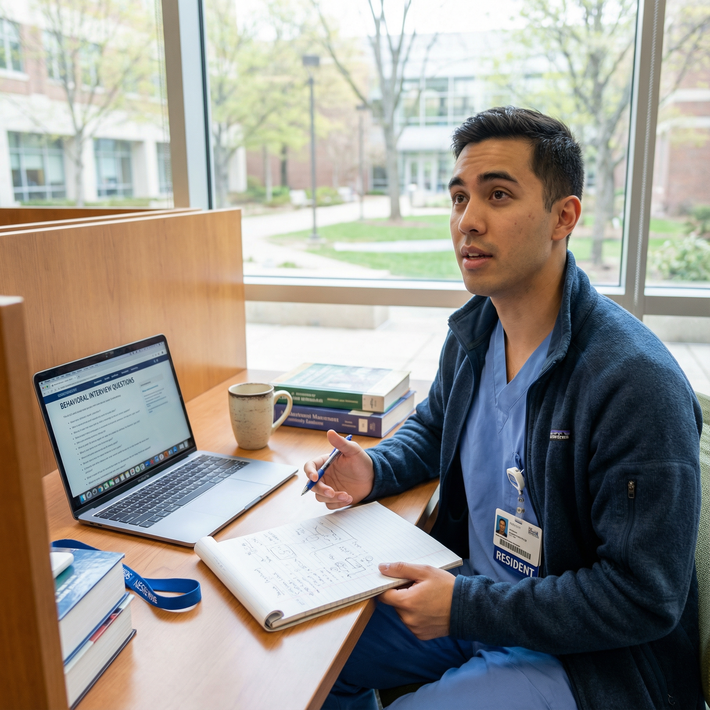
As an MD graduate pursuing a preliminary surgery year, you sit in a uniquely competitive and nuanced corner of the match process. Whether you’re aiming for an advanced position in a surgical subspecialty, radiology, anesthesiology, or using a prelim surgery residency year as a stepping stone into categorical surgery, your interview performance is critical.
This guide breaks down common preliminary surgery residency interview questions, explains what programs are really assessing, and gives you frameworks and sample answers tailored to an MD graduate residency applicant from an allopathic medical school.
Understanding the Preliminary Surgery Interview Landscape
Preliminary surgery positions are different from categorical slots:
- They are often one-year positions.
- Residents may be a mix of:
- Future radiologists, anesthesiologists, ophthalmologists, dermatologists, etc.
- Applicants hoping to transition into categorical general surgery.
- International graduates seeking U.S. experience before reapplying.
Program directors know many prelims are “just passing through”—so your motivation, reliability, and team mentality matter enormously.
What Programs Are Really Looking For
Across allopathic medical school match interviews in surgery, but especially for prelim spots, you are being assessed on:
Work ethic and resilience
- Can you handle surgical hours, volume, and acuity?
- Do you maintain professionalism under stress?
Team compatibility
- Are you coachable?
- Will you support categorical residents, not compete destructively with them?
Clarity of goals
- Why preliminary surgery specifically?
- How does this fit into your long-term career?
Self-awareness and maturity
- Can you reflect honestly on mistakes and learning?
- Are you emotionally intelligent and reliable?
Communication skills
- Essential for sign-outs, consults, and patient/family conversations.
- Strong behavioral interview medical responses demonstrate this.
Understanding those priorities will help you craft answers that are honest, targeted, and compelling.
Core “Tell Me About Yourself” and Motivation Questions
These are almost guaranteed to come up in a prelim surgery residency interview.
1. “Tell me about yourself.”
This question opens the majority of residency interview questions and is often where interviewers form their first real impression. For a preliminary surgery applicant, your answer should:
- Be 2–3 minutes max.
- Connect your background → interests → why prelim surgery → what you hope to contribute.
- Avoid simply repeating your CV.
Framework (3-part):
- Brief background: Where you’re from, medical school, key identity elements.
- Development of interest: Clinical/research/experiences that led to surgery or your ultimate field.
- Current goal: Why you’re here interviewing for a preliminary surgery year at this kind of program.
Example (MD graduate aiming for radiology after prelim surgery):
I grew up in Ohio and completed my MD at an allopathic medical school, the University of X, where I initially thought I’d pursue internal medicine. During third year, I was unexpectedly drawn to the OR—the pace, the teamwork, and the immediate impact of interventions—during my general surgery rotation.
At the same time, I became very interested in radiology through a longitudinal imaging elective, especially how imaging guided surgical decision-making. Over the last two years, I’ve been involved in a quality-improvement project looking at preoperative imaging protocols to reduce unnecessary intraoperative surprises. That experience confirmed my long-term goal in radiology, but also highlighted how valuable a strong surgical foundation would be.
I’m pursuing a preliminary surgery year because I want to build robust clinical and procedural skills, understand perioperative care from the inside, and learn to function as an effective member of a surgical team. I see this year as critical training that will make me a better imaging consultant and colleague to surgeons, and I believe I can contribute strong work ethic, reliability on call, and an interest in QI to your program.
Common pitfall: Giving a generic autobiography with no clear arc or rationale. Always link back to why you’re applying for preliminary surgery and what you bring.
2. “Why preliminary surgery and not categorical surgery?”
Programs want to know if you’re:
- Truly aligned with a prelim surgery residency, or
- Using it as a vague backup with no plan.
They also want assurance you won’t be disengaged once you secure an advanced spot or decide on another path.
Key points to hit:
- Be transparent but strategic about your long-term plans.
- Show you value the prelim year, not view it as disposable.
- Emphasize how their training environment aligns with your goals.
Example (targeting anesthesiology):
My long-term goal is to practice anesthesiology, and I’m currently in the process of reapplying after not matching last cycle. I chose to pursue a prelim surgery year because I want to deepen my understanding of perioperative care, hemodynamics, and critical care from the surgeon’s perspective.
I think my future effectiveness as an anesthesiologist will be much stronger if I’ve truly lived the surgeon’s workflow, participated in pre-op planning and post-op management, and understood firsthand what surgeons need and worry about.
I’m not here just to “get through” a year; I want to work hard, take ownership of my patients, and be a reliable teammate so that when I move into anesthesiology, I bring a solid surgical foundation and strong professional relationships.
Avoid: Saying “I just need a spot to stay in the system,” or appearing indifferent to the surgical learning itself.
3. “Why our program?” (for a preliminary year)
Even though the year is short, programs want fit. Prepare specifics:
- Case volume and complexity.
- Rotations in ICU, trauma, or subspecialties.
- Support for prelims: mentoring, help with future applications.
- Culture: how residents describe teamwork and wellness.
Actionable tips:
- Review the website: identify 2–3 unique features.
- Ask current residents how prelims are integrated.
- Connect these to your professional goals and learning style.

Behavioral Interview Questions in Preliminary Surgery
Most programs now use behavioral interview medical questions to predict how you will function on busy surgical services. These often start with:
- “Tell me about a time when…”
- “Give me an example of…”
- “Describe a situation where…”
Use the STAR method:
- Situation – brief context
- Task – your role/responsibility
- Action – what you did
- Result – what happened and what you learned
Below are common behavioral questions tailored to a prelim surgery residency context.
4. “Tell me about a time you made a mistake in patient care.”
This probes your honesty, maturity, and ability to self-correct.
What they’re looking for:
- Ownership, not blame.
- Concrete steps you took to fix or prevent recurrence.
- Emotional insight—how you handled guilt/anxiety.
Strong response components:
- Choose a real, moderate mistake (not trivial, not catastrophic).
- Show immediate responsibility and escalation when needed.
- End with a clear behavioral change you adopted.
Example outline:
- Situation: On surgery clerkship, you delayed calling the senior about a patient’s worsening pain because you thought it was “expected post-op pain.”
- Action: When the pain escalated and vitals changed, you called; CT showed early leak.
- Result: Patient managed appropriately; you now call earlier with concerning patterns and use structured sign-outs.
Link to how you’ll behave as a preliminary surgery intern: “This reinforced that as an intern, my threshold to escalate must be low when something feels off.”
5. “Describe a time you had a conflict with a team member.”
Surgical teams are intense; interpersonal conflict is inevitable.
Assessing:
- Professionalism under stress.
- Ability to listen and compromise.
- Respect for hierarchy and communication norms.
Strategy:
- Avoid stories where you sound self-righteous.
- Highlight understanding the other person’s perspective.
- Focus on process, not just outcome.
Example scenario:
- A senior resident frequently snapped at you during sign-out.
- You initially felt resentful but later sought a calm, private conversation:
- Acknowledged their workload.
- Expressed that you wanted feedback but struggled with the tone.
- Asked for specific ways to improve.
- Result: Communication improved, you learned to ask for expectations upfront, and your evaluations later reflected better teamwork.
6. “Tell me about a time you had to manage multiple competing priorities.”
This maps directly to intern life: cross-cover, pages, consults, discharges.
Strong points to include:
- How you prioritized clinically (e.g., ABCs, acuity).
- How you communicated delays to others.
- How you organized yourself (lists, checklists, time-blocking).
Example structure:
- On sub-internship, you had:
- A new consult in the ED
- A post-op patient with tachycardia
- Multiple discharge summaries due
- You:
- Assessed vitals/triage: first checked on the tachycardic patient (high risk problem).
- Notified senior of both issues, delegated tasks to medical students where appropriate.
- Communicated expected delays to nursing and ED.
- Stayed late to complete discharge summaries and asked for feedback on your triage decisions.
End by explicitly connecting: “This experience gave me a framework I will use as a prelim surgery intern during busy call nights.”
7. “Describe a situation where you advocated for a patient.”
Preliminary residents interact with vulnerable patient populations; advocacy shows compassion and initiative.
Possible examples:
- Ensuring adequate pain control for a non-English-speaking patient.
- Clarifying goals of care when there was family confusion.
- Coordinating social work or case management to ensure safe discharge.
Avoid turning it into a story where you “saved the day” by opposing everyone. Emphasize collaborative advocacy and communication.
Clinical and Knowledge-Based Questions in a Prelim Surgery Interview
Unlike some other fields, surgery programs may test basic clinical thinking, even in a short allopathic medical school match interview format.
You’re not expected to be a chief resident, but you should demonstrate:
- A systematic approach.
- Awareness of red flags.
- Willingness to ask for help.
8. “Walk me through your approach to a post-op patient with tachycardia.”
They’re assessing your prioritization and safety, not obscure pathophysiology.
Answer structure:
- Immediate assessment: Vitals, mental status, ABCs.
- Focused history & exam: Pain, bleeding, chest pain, SOB, urine output, surgical site.
- Differential: Pain/anxiety, hypovolemia/bleeding, PE, sepsis, arrhythmia.
- Initial orders: IV access, fluids if appropriate, EKG, basic labs; call senior early if serious concerns.
- Escalation: Clear reference to involving senior/attending and rapid response if unstable.
Emphasize: “As a preliminary surgery intern, I would have a low threshold to involve my senior early if the patient appeared unstable or if the cause was not immediately apparent.”
9. “How would you handle being on call alone overnight with multiple sick patients?”
Even if your program doesn’t do solo calls, they want to see how you think.
Show that you:
- Recognize limits of your training.
- Use backup systems appropriately.
- Triage effectively and communicate clearly.

Prelim-Specific Questions About Goals, Resilience, and “Plan B”
Preliminary positions naturally raise questions about uncertainty, backup plans, and persistence.
10. “What are your long-term career goals?”
Clarity is more important than certainty. Acceptable answers include:
- Categorical general surgery (if reapplying).
- An advanced specialty (e.g., anesthesiology, radiology, urology, derm, etc.).
- Still deciding between a short list, with a concrete exploration plan.
Key:
- Show that the preliminary surgery year aligns with your goals, regardless of final specialty.
- Avoid sounding indifferent about your future.
11. “You didn’t match in your desired field. What did you learn from that experience?”
If applicable, this question assesses resilience and insight.
Do:
- Acknowledge the disappointment without self-pity.
- Identify concrete changes you’ve made (CV strengthening, research, mentorship, application strategy).
- Show that you’ve matured, not become bitter.
Example highlights:
Not matching was one of the most difficult experiences of my training, but it forced me to take a hard, honest look at my application. I sought feedback from mentors, recognized I needed more clinical letters and stronger home institution support, and I’ve since taken on more responsibility on rotations and become involved in a prospective study.
Most importantly, I realized how much I value being a reliable member of the team regardless of my title. That’s a mindset I’m bringing into this prelim surgery residency—to contribute fully while also building the skills and relationships that will support my reapplication.
12. “If you don’t secure a categorical or advanced position after this year, what is your plan?”
They want to know you are:
- Realistic about the process.
- Committed to making this year count.
- Not likely to disengage or quit when stressed.
A balanced answer might include:
- Continuing to strengthen your application with additional research/clinical work.
- Being open to broadening your application strategy (e.g., geography, program type).
- Re-emphasizing that regardless, you’ll give 100% to the current program and its patients.
13. “How do you manage stress and prevent burnout?”
Surgery is demanding; prelim surgery residency can be especially intense due to uncertainty about the future.
Instead of generic responses (“I exercise”), be specific:
- Concrete routines: running before call, debriefing with peers, structured reflection.
- Boundary-setting where possible: protecting minimal sleep blocks, limiting social media during intense rotations.
- Use of institutional resources: wellness programs, mentors.
You don’t need to sound invincible; it’s better to show humanity plus coping strategies.
Questions You Should Ask the Program (and Why They Matter)
Your questions at the end of the interview signal what you value. Thoughtful questions help you assess fit and show you understand the unique aspects of a prelim surgery residency.
Strong topic areas:
Role of Prelim Residents
- “How are preliminary residents integrated into the team compared to categorical residents?”
- “Do prelims have opportunities for leadership roles, such as chief of the floor team or QI projects?”
Support and Mentorship
- “Is there a designated faculty advisor for prelim residents to discuss career planning and applications?”
- “How does your program support prelims who are reapplying to another specialty?”
Outcomes of Prelim Residents
- “Where have your recent preliminary surgery residents gone after this year—in terms of both categorical surgery and other specialties?”
- “Do prelims from your program typically obtain strong letters and interview opportunities?”
Workload and Education
- “How do you balance service needs with education for preliminary residents, especially on high-volume services?”
- “Are prelims able to attend didactics and simulation/lab sessions regularly?”
Avoid questions you can easily answer from the website. Focus on culture, support, and realistic expectations.
Practical Preparation Strategies for MD Graduates
1. Build a Personal Question Bank
List 20–25 likely residency interview questions, especially:
- “Tell me about yourself”
- “Why prelim surgery?”
- Behavioral questions (“tell me about a time…”)
- “What are your long-term goals?”
- “What are your strengths and weaknesses?”
Write bullet point outlines, not scripts, to keep your delivery natural.
2. Practice Behavioral Stories Aloud
Prepare 6–8 versatile STAR stories that can flex to different prompts:
- A clinical challenge.
- A teamwork conflict.
- A leadership experience.
- A time you made a mistake.
- A time you went above and beyond.
- A moment of resilience or bouncing back from failure.
Each story should be 2–3 minutes, with a clear lesson learned.
3. Know Your Application Inside Out
For an MD graduate residency applicant:
- Be ready to discuss any research, QI, or leadership experience in detail.
- Anticipate questions about gaps or changes in specialty interest.
- If your ERAS mentions a specific interest (e.g., trauma, critical care), expect follow-ups.
4. Prepare for “Red Flag” Topics
If applicable:
- USMLE/COMLEX failures or low scores.
- Academic probation or professionalism concerns.
- Extended medical school duration.
Be concise, take responsibility, and pivot to what you changed and how you improved.
5. Practice Video Interview Etiquette (If Virtual)
Many allopathic medical school match programs still use virtual interviews:
- Professional background and lighting.
- Camera at eye level.
- Test connection and audio beforehand.
- Maintain eye contact by looking at the camera when speaking.
Frequently Asked Questions (FAQ)
1. Do preliminary surgery residents get asked different interview questions than categorical surgery applicants?
Many questions overlap, especially core behavioral interview medical questions and clinical scenarios. However, prelim-specific questions focus more on:
- Your long-term career goals outside of general surgery (if applicable).
- Why you are choosing a preliminary surgery year instead of a transitional year or other path.
- How committed and engaged you will be despite the position being time-limited.
Expect more questions about resilience, future plans, and how you’ll handle the uncertainty inherent to prelim positions.
2. How should I answer “Tell me about yourself” as a preliminary surgery applicant?
Connect three elements:
- Who you are (brief background and training).
- How your interest in surgery and/or your final specialty developed (key rotations, research, or mentors).
- Why a prelim surgery residency fits your path (skills you want, perspective you’ll gain, how you’ll contribute).
Keep it to 2–3 minutes, and avoid simply listing your CV. Tailor your answer to highlight why a preliminary surgery year specifically advances your goals.
3. Is it okay to be honest that I want to match into another specialty after my prelim year?
Yes—programs expect that many prelims are heading to other fields. The key is how you frame it:
- Be clear about your long-term specialty.
- Emphasize how surgical training will make you better in that field.
- Reassure them you will fully commit to the responsibilities and learning of the prelim year, not treat it as a placeholder.
Candor paired with professionalism is usually respected and builds trust.
4. What are the most important qualities programs seek in a preliminary surgery resident?
Common themes from program directors include:
- Reliability and work ethic: Showing up, following through, owning your patients.
- Teamwork and humility: Being coachable, respectful, and supportive of categorical residents.
- Clinical judgment and safety: Knowing when to escalate and ask for help.
- Resilience: Handling long hours, setbacks, and uncertainty without disengaging.
- Clear, honest communication: With patients, families, nurses, and the surgical team.
Craft your answers to the common residency interview questions in this article to demonstrate these traits authentically.