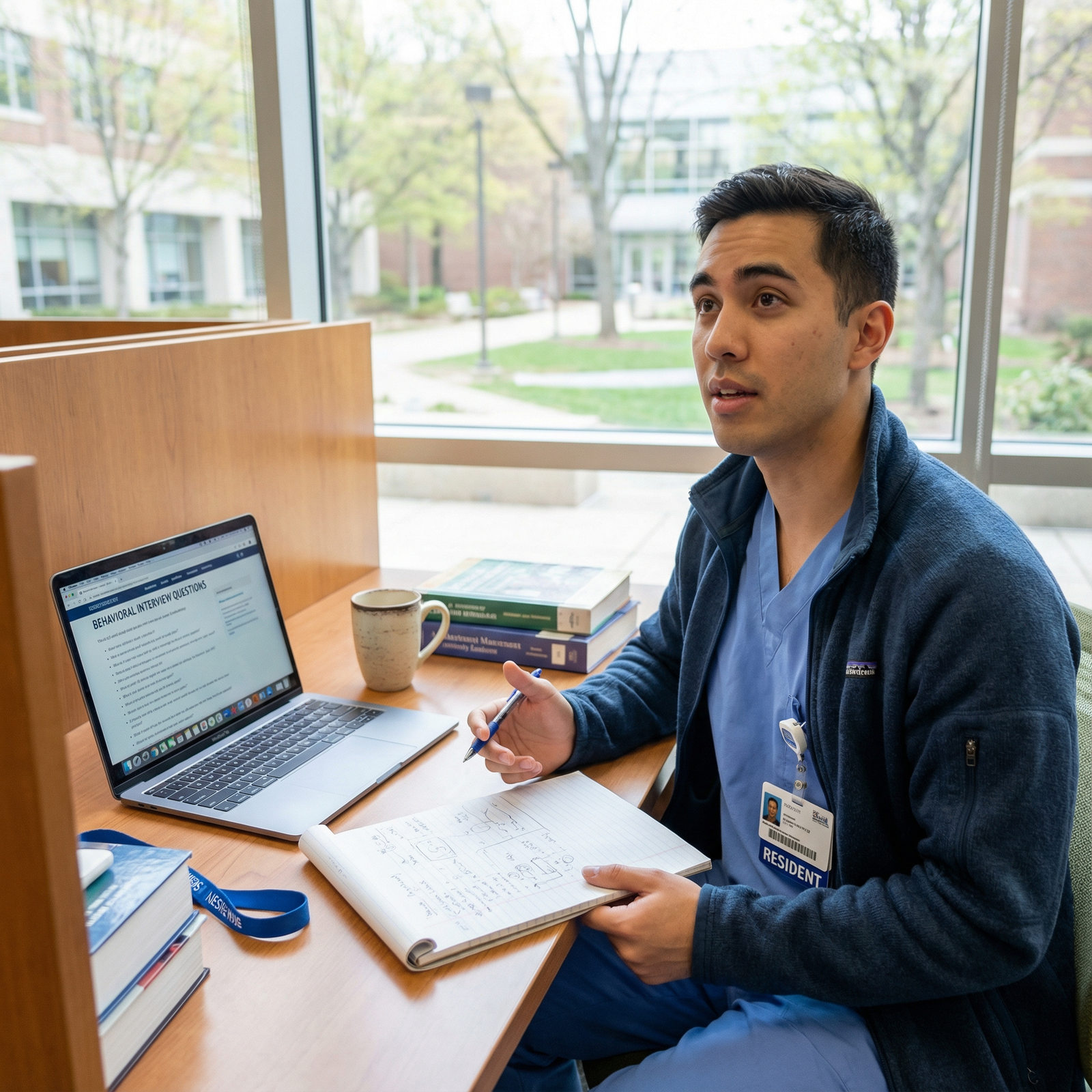
Understanding Psychiatry Residency Interviews as an MD Graduate
Psychiatry residency interviews are uniquely conversational, introspective, and heavily focused on how you think, reflect, and relate to others. As an MD graduate from an allopathic medical school, you’ve already shown academic ability; now programs want to know whether you’ll be a thoughtful, reliable, empathic psychiatrist who fits their culture.
Across programs, you’ll see consistent patterns in common interview questions—especially behavioral interview medical questions that start with “Tell me about a time…” and openers like “Tell me about yourself.” Knowing these patterns lets you prepare targeted, authentic answers that distinguish you from other applicants in the psych match.
This guide walks through high-yield psychiatry residency interview questions, how to structure responses, and practical examples tailored to MD graduates aiming for an allopathic medical school match in psychiatry.
Core Psychiatry Interview Questions You’ll Almost Certainly Be Asked
These are the questions you should be prepared to answer smoothly, thoughtfully, and consistently.
1. “Tell me about yourself.”
This is almost always the first question and shapes the interviewer’s first substantive impression. For psychiatry, they’re not just checking your CV—they’re listening to your narrative, insight, and self-awareness.
Goal of the question:
- Understand your background and identity as an MD graduate
- See how you organize your thoughts and highlight what matters
- Get a sense of your interpersonal style and professional priorities
Structure your answer (3-part framework):
- Brief background & training
- Where you’re from, MD graduate from which allopathic medical school, brief academic anchor
- Key experiences that led you to psychiatry
- 2–3 experiences or themes that naturally build your story
- Current goals and what you’re looking for in a residency
- What you want in a psychiatry residency and how you see your future
Example (approx. 60–90 seconds):
I grew up in Chicago and completed my MD at Northwestern, where I initially thought I’d go into internal medicine. During third-year clerkships, I realized that the encounters I remembered most were the ones where I had time to sit, listen, and understand a patient’s story—especially on my psychiatry rotation.
Working on the inpatient psychiatry unit, I was struck by how quickly the team formed therapeutic alliances, even with patients in acute crisis. Later, I joined a collaborative care project integrating mental health into primary care, and that really solidified my interest in psychiatry’s intersection with medicine, public health, and social determinants of health.
Now I’m looking for a psychiatry residency that combines strong psychotherapy training with evidence-based psychopharmacology, exposure to severe mental illness, and opportunities in integrated care and academic work. Ultimately, I hope to practice as a clinician-educator in an academic center, focusing on improving access to care for underserved populations.
Tips:
- Avoid reciting your entire CV; choose 2–3 defining experiences.
- Make it clear why psychiatry rather than generic “I like talking to patients.”
- Practice out loud until it feels natural, not memorized.
2. “Why psychiatry?”
This is the cornerstone of your psych match narrative. As an MD graduate, the bar is higher than “I like mental health” or “I enjoyed my rotation.”
What programs are listening for:
- A genuine, specific interest in psychiatry
- Evidence that you understand the realities and challenges of the specialty
- A good match between your temperament and psychiatric practice
Elements of a strong answer:
- Origin story – When did the idea first take root?
- Clinical validation – Experiences during clerkships, sub-internships, electives
- Fit with your strengths – Communication, reflection, tolerating ambiguity, etc.
- Future vision – How you see yourself in the field
Example themes to incorporate:
- Enjoyment of longitudinal relationships and watching patients’ trajectories
- Interest in mind–brain–behavior relationships and neuroscience
- Commitment to addressing stigma, inequities, or severe mental illness
- Fascination with complex diagnostic formulation and psychosocial context
Example answer snippet:
Psychiatry appeals to me because it sits at the intersection of medicine, neuroscience, and human experience. On my third-year psychiatry rotation, I realized that the part of clinical work I found most meaningful was understanding how patients’ life events, traumas, and social contexts shaped their symptoms and their engagement with care.
I’m drawn to a field where listening is diagnostic, where the therapeutic relationship is an intervention, and where longitudinal work can transform a patient’s trajectory over years. My experiences in collaborative care and inpatient psychiatry have shown me the complexity, but also the impact, of this work. I see myself building a career that combines clinical care, teaching, and advocacy for patients with serious mental illness.
3. “Why our program?”
In every psychiatry residency interview, you’ll field some version of this question. Generic answers (“strong clinical training,” “diverse patient population”) sound forgettable and can hurt you.
To answer well, you must:
- Research each program specifically in advance
- Identify 2–3 specific features that match your goals and values
- Tie these features to your past experiences and future plans
Examples of specific, psychiatry-relevant features:
- Strong psychotherapy training with varied modalities (CBT, psychodynamic, DBT)
- Community psychiatry opportunities or public-sector rotations
- Focused training in addiction, CL (consult-liaison), child & adolescent, forensics
- Integrated care or collaborative care models
- Research in psychosis, mood disorders, trauma, health disparities, or neuroscience
- Culture: mentorship, resident well-being, advocacy, diversity and inclusion initiatives
Answer structure:
- Brief statement of overall fit
- Two to three concrete program features
- Connection to your background and goals
4. “What are your strengths and weaknesses?”
Psychiatry interviewers pay particular attention to insight, self-awareness, and capacity for growth.
Strengths
Choose strengths that clearly relate to psychiatry, and back each with a brief example:
- Ability to build rapport quickly with diverse patients
- Comfort sitting with distress, ambiguity, or uncertainty
- Strong communication and team collaboration
- Reflective, thoughtful clinical reasoning
- Reliability and follow-through with patient care
Example:
One of my key strengths is my ability to build rapport with patients quickly, especially those who are initially guarded. On my inpatient psychiatry sub-I, several patients who had refused prior interviews gradually engaged after I spent time consistently checking in, reflecting their concerns, and negotiating small goals together. This helped the team gather better collateral and adjust treatment plans more effectively.
Weaknesses
Weaknesses should be:
- Genuine but not disqualifying
- Something you have clearly worked to improve
- Relevant to residency but not central psychiatric competencies like empathy or professionalism
Examples:
- Tendency to over-prepare or over-document, learning to prioritize efficiently
- Taking on too many responsibilities, working on boundary setting and delegation
- Initial discomfort with managing conflict on teams, now seeking feedback and using communication strategies
Avoid clichés like “I’m a perfectionist,” unless you explain it in a specific, believable way with a clear growth narrative.
Example:
Earlier in my clinical rotations, I struggled with delegating tasks and sometimes took on more than was sustainable, especially on busy inpatient services. I worried that asking for help would burden my team. After feedback from my attending, I started using team huddles more intentionally, clarified roles, and practiced asking co-residents or students for support when appropriate. I’ve noticed that this not only improves my own efficiency and well-being but also helps the team function more smoothly.

Behavioral Interview Questions in Psychiatry: “Tell Me About a Time…”
Psychiatry programs increasingly use behavioral interview medical questions to assess how you function in real situations. These questions often start with:
- “Tell me about a time when…”
- “Give me an example of…”
- “Describe a situation where…”
They help interviewers evaluate your professionalism, communication, ethics, and emotional resilience.
The STAR Method for Behavioral Questions
Use the STAR framework to structure your answers:
- S – Situation: Brief context
- T – Task: Your role or responsibility
- A – Action: What you actually did
- R – Result/Reflection: Outcome and what you learned
Keep answers focused, concrete, and reflective.
Common Psychiatry-Focused Behavioral Questions
1. “Tell me about a time you dealt with a challenging patient interaction.”
Psychiatry programs want to see how you manage risk, boundaries, and strong emotion.
Good examples:
- A patient who was angry, distrustful, or non-adherent
- A patient with suicidal ideation or self-harm behavior
- A patient making inappropriate or boundary-testing comments
Key points to highlight:
- Maintaining calm, empathy, and respect
- Ensuring safety and following protocols
- Using team resources (attending, nursing, psychiatry consults)
- Reflection on what you might do differently next time
2. “Describe a time you made a mistake in clinical care.”
This question assesses honesty, accountability, and growth.
Choose:
- A real mistake (communication lapse, ordering error, follow-up issue)
- One that did not harm the patient severely, but was meaningful to you
- A story where you recognized the issue, corrected it, and changed behavior afterward
Avoid blaming others; focus on what you learned and implemented.
3. “Tell me about a time you had a conflict on a team.”
Psychiatry demands strong teamwork, often across disciplines.
Possible scenarios:
- Disagreement with a colleague about management or disposition
- Difficulty with a supervisor’s communication style
- Navigating family vs. patient preferences in ethically complex cases
Emphasize:
- Respectful communication
- Advocacy for patient welfare
- Willingness to seek supervision or mediation
- Collaborative problem-solving
4. “Describe a time you handled a high-stress situation.”
Residency is stressful—psychiatry included (e.g., suicide risk assessments, involuntary admissions, agitated patients). Programs want to know how you maintain composure and function under pressure.
Examples:
- Emergency psychiatry or ED situations
- Code situations where you were part of the team
- Managing multiple critically ill patients at once
Show:
- How you prioritized tasks
- How you used the team effectively
- What strategies you use to manage stress and maintain performance
Psychiatry-Specific Questions You Should Anticipate
Psychiatry residency interviews often probe your understanding of specific aspects of the field.
1. “What areas of psychiatry are you most interested in?”
Have a few authentic interests, but don’t worry if you’re undecided.
Examples:
- Severe mental illness / psychosis
- Mood and anxiety disorders
- Addiction psychiatry
- Child and adolescent psychiatry
- CL (consult-liaison) psychiatry
- Forensic psychiatry
- Integrated care / collaborative care
Show that you’ve had some exposure, even if brief, and remain open to exploration.
2. “How do you take care of your own mental health and well-being?”
Psychiatry programs pay close attention to burnout risk and your capacity for self-care.
Good responses:
- Concrete habits: exercise, sleep routine, hobbies, therapy, supervision
- Healthy boundaries: learning to say no, using time off appropriately
- Use of support systems: peers, mentors, therapy if comfortable disclosing
Avoid implying that you never feel stressed or don’t need support.
3. “How would you handle a patient expressing suicidal thoughts?”
Even if you haven’t done full psychiatric evaluations, as an MD graduate you should have a structured, safety-focused approach:
- Take any mention seriously; ask directly and nonjudgmentally
- Assess ideation, plan, intent, means, past attempts, protective factors
- Involve supervisors and follow institutional protocols
- Ensure immediate safety: observation level, environment checks, consultation
- Document clearly and communicate with the team
You don’t need to present a detailed suicide risk assessment, but you should show awareness of the process and your responsibilities.
4. “How do you feel about working with patients whose beliefs or values differ from yours?”
Psychiatry requires working across cultures, belief systems, and lifestyles. Programs assess your cultural humility and professionalism.
Strong answers emphasize:
- Respect for patient autonomy and dignity
- Curiosity rather than judgment
- Awareness of your own biases
- Willingness to seek supervision and education when needed

Academic, Research, and Career-Oriented Questions
As an MD graduate, particularly in the allopathic medical school match, programs will often probe your academic background and long-term goals.
Questions About Your Application and CV
Expect detailed questions about:
- Your personal statement (especially “Why psychiatry?” and any personal stories)
- Research projects, posters, or publications
- Leadership roles and extracurricular activities
- Any gaps or changes in your trajectory
Be ready to:
- Summarize research projects in 2–3 sentences, emphasizing your role and what you learned
- Explain any academic issues (LOA, remediation, USMLE attempts) honestly and succinctly, focusing on growth and systems you’ve built to prevent recurrence
- Connect previous experiences with skills relevant to psychiatry—communication, empathy, teaching, or advocacy
“Where do you see yourself in 5–10 years?”
Psychiatry programs aren’t asking for a rigid blueprint; they want to know you’ve considered a direction.
Possible visions:
- Academic psychiatrist with interests in teaching and clinical care
- Community psychiatrist working with underserved populations
- Specialist in addiction, child and adolescent, forensic, or geriatric psychiatry
- Clinician involved in quality improvement, health equity, or systems-based work
Show:
- Openness to different paths
- Commitment to staying in psychiatry and growing within the field
- Interest in mentorship, continued learning, and contributing beyond your own clinic panel
Preparing for Your Psychiatry Residency Interview: Practical Strategies
1. Build a “Question Bank” and Practice Out Loud
Create a personal bank of:
- 3–4 strong patient stories (challenging cases, ethical dilemmas, successes and failures)
- 2–3 team-based stories (conflict, leadership, teaching)
- 2–3 personal stories (resilience, identity, growth)
Then practice answering:
- “Tell me about yourself.”
- “Why psychiatry?”
- “Why this program?”
- At least 6–8 behavioral interview questions using the STAR method
Practice with:
- A mentor or advisor
- Peers also applying to psychiatry or other specialties
- Video or audio recording (to review tone, pace, and clarity)
2. Prepare Thoughtful Questions to Ask Programs
You will almost always be asked, “What questions do you have for us?” This is a core part of psychiatry interviews because it showcases your curiosity and priorities.
Examples of strong, psychiatry-specific questions:
- “How does your program structure psychotherapy training across PGY years?”
- “Can you tell me about supervision and feedback—how often and in what formats?”
- “How does the program support resident well-being and burnout prevention?”
- “What kinds of opportunities exist for residents interested in integrated care or community psychiatry?”
- “How have residents historically been involved in advocacy or quality improvement projects here?”
Avoid questions you can easily answer by reading the website, like basic call schedule details (unless you’re clarifying something specific).
3. Managing Virtual vs. In-Person Formats
Many psychiatry interviews are still virtual. For MD graduate residency applicants, presentation and environment matter.
Virtual-specific tips:
- Test audio, video, and internet beforehand
- Choose a neutral, uncluttered background and good lighting
- Position the camera at eye level; look into the camera when speaking
- Keep notes nearby, but avoid obvious reading—use brief keywords, not scripts
For in-person interviews:
- Plan your route and timing
- Bring copies of your CV and personal statement
- Take notes after each interview day to help with rank list decisions
4. Demonstrating Fit with Psychiatry as a Specialty
Across all questions, programs are looking for:
- Empathy without overidentification
- Curiosity about people, systems, and behavior
- Ability to tolerate complexity and ambiguity
- Commitment to lifelong learning and reflective practice
- Respect for interdisciplinary work and for patients’ autonomy
You don’t need to be fully formed as a psychiatrist—that’s what residency is for—but you should convincingly show that psychiatry is where your skills and values align.
FAQs: Common Questions About Psychiatry Residency Interview Questions
1. How different are psychiatry residency interview questions from other specialties?
Psychiatry interviews tend to be:
- More conversational, less rapid-fire
- More focused on insight, self-awareness, and interpersonal style
- Heavier on behavioral and reflective questions (“Tell me about a time…”)
You will still get standard residency interview questions, but expect more emphasis on how you think about patients as people, how you manage emotions (yours and others’), and how you see your own growth.
2. How long should my answer to “Tell me about yourself” be?
Aim for 60–90 seconds. That’s enough time to:
- Introduce your background as an MD graduate
- Highlight 2–3 key experiences that shaped your path to psychiatry
- Briefly state what you’re looking for in a residency
Too short can feel underdeveloped; too long can feel unfocused. Practice with a timer until your answer is concise but complete.
3. What if I get a question I haven’t prepared for?
Use these strategies:
- Pause briefly and think; it’s okay to say, “Let me think about that for a moment.”
- Break the question into parts and address each systematically.
- Rely on STAR (Situation, Task, Action, Result/Reflection) for experiential questions.
- If you truly don’t know, say something like, “I haven’t encountered that exact situation, but in a similar context, I would…” and then outline a thoughtful, safety-oriented approach.
Interviewers in psychiatry often value how you think through uncertainty more than having a perfect answer.
4. Do I need to tailor my answers for each program?
Yes—especially for:
- “Why our program?”
- Any questions about your future plans and training priorities
Your core story (why psychiatry, who you are) stays consistent, but highlight different program features based on:
- Their psychotherapy training
- Community vs. academic orientation
- Special tracks (research, public psychiatry, integrated care)
- Any specific faculty, clinics, or initiatives you resonate with
This level of tailoring signals genuine interest and maturity as an applicant in the psych match.
Preparing thoroughly for these common interview questions for MD graduate in psychiatry will help you show programs not just that you are capable of matching, but that you are ready to thrive in their training environment and grow into a thoughtful, compassionate psychiatrist.