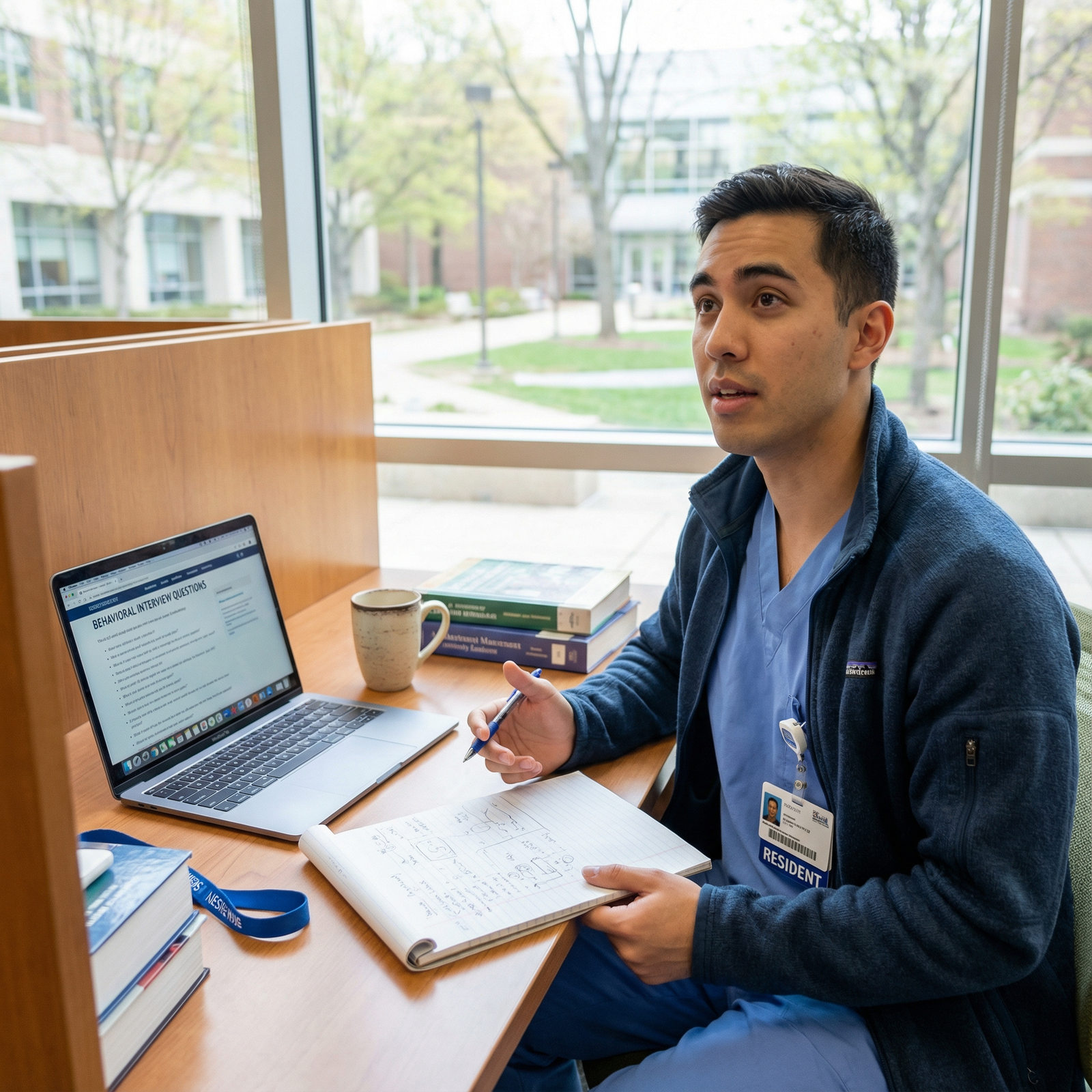
Understanding the Preliminary Medicine Interview Landscape
Preliminary Medicine is a unique space in the Match: one intensive year of internal medicine—often followed by a categorical residency in another specialty such as neurology, anesthesiology, radiology, ophthalmology, or dermatology. As an MD graduate, you’re applying with a clear long‑term goal, but programs still expect you to function like any other intern, providing safe, reliable patient care from day one.
That’s exactly what your residency interview questions are designed to test.
This article focuses on common interview questions you’ll encounter as an MD graduate applying to Preliminary Medicine positions, especially in the allopathic medical school match. You’ll find:
- Typical and high‑yield questions
- How program directors think about your answers
- Sample frameworks and phrases you can adapt
- Special considerations for a prelim IM year versus a categorical IM spot
Throughout, remember that prelim programs want three things:
- Clinical reliability – Will you be a safe, hardworking intern?
- Professionalism and teamwork – Will you strengthen or disrupt team culture?
- Alignment with their role in your career – Do you understand and value the prelim year?
1. Foundational “Getting to Know You” Questions
These are almost guaranteed. Interviewers use them to warm up and to see how you frame your identity, choices, and goals.
1.1 “Tell Me About Yourself”
This is arguably the most important question. It sets the tone and often shapes the rest of the conversation.
What they’re looking for:
- A concise, coherent professional story
- Evidence you can communicate clearly
- A bridge between your background and why you’re pursuing a preliminary medicine year
Suggested structure (3–4 minutes):
Brief background
- Where you’re from or formative experiences
- Undergrad and med school highlights (one line each)
Key clinical/academic interests
- What you enjoy clinically and any standout experiences
Why your target ultimate specialty + why a prelim IM year matters
- How a strong medicine foundation supports your long‑term goals
Why this program or similar settings fit you
- One or two features that connect you to the program (teaching style, patient population, geography)
Example (for an MD graduate):
“I grew up in Chicago and completed my undergraduate degree in biology at Northwestern, where I first became interested in systems‑level physiology. I went on to attend an allopathic medical school at the University of Illinois, where I found myself consistently drawn to the diagnostic reasoning and longitudinal relationships in internal medicine, especially during my clerkship on the general medicine wards.
Over time, I developed a particular interest in neurology, and I see a solid preliminary medicine year as foundational to becoming the kind of neurologist who can manage complex comorbidities and acute inpatient issues. During my sub‑internship in medicine, I especially enjoyed cross‑cover and triaging admissions, which reinforced how crucial intern‑level medicine skills are for any specialty.
I’m looking for a prelim IM program with strong bedside teaching, high acuity, and a culture that values teamwork and efficiency. From what I’ve learned about your program—particularly your night float structure and the emphasis on direct supervision in the first few months—I think it would be an excellent environment for me to grow into a reliable, clinically strong intern while preparing for my neurology training.”
Practical tips:
- Avoid reciting your CV. Tell a story with a logical arc.
- Use one concise phrase that captures your professional identity: e.g., “I’m a future anesthesiologist with a strong interest in perioperative medicine and patient safety.”
- Practice out loud. This is one of the core residency interview questions you should rehearse.
1.2 “Walk Me Through Your CV” or “Tell Me About Your Journey to Medicine”
This is more detailed than “tell me about yourself,” but similar principles apply.
Key elements:
- Chronological, but selective: highlight decisions, not just events.
- Link each stage to how it shaped your interests or values.
- End by clearly stating why you’re pursuing Preliminary Medicine and your intended categorical field.
Pitfalls to avoid:
- Excessive detail about early years (high school, unrelated jobs).
- Monologue >5 minutes without pausing for engagement.

2. Motivation, Fit, and Program‑Specific Questions
Programs want to know if your goals align with what a preliminary medicine year actually provides.
2.1 “Why Preliminary Medicine?” / “Why a Prelim IM Year?”
This is central for you as a prelim applicant.
Programs are asking:
- Do you understand what a prelim year entails?
- Are you using it strategically—as a “gap year” or with purpose?
- Will you be motivated even though your long‑term specialty is elsewhere?
Answer framework:
- Name your ultimate specialty clearly.
- Explain how strong medicine training is crucial to being excellent in that specialty.
- Highlight specific skills you want from prelim IM (e.g., managing sepsis, complex comorbidities, communication with families, cross‑cover comfort).
- Acknowledge the intensity—you understand it’s a demanding year and you’re prepared.
Sample answer:
“I’m matching into anesthesiology as my ultimate specialty, and I see a Preliminary Medicine year as essential to becoming the kind of anesthesiologist who can manage complex inpatients confidently. So much of perioperative medicine involves recognizing and stabilizing decompensating patients, managing multi‑system disease, and communicating clearly with the primary team and consultants.
I specifically want the high volume and breadth that a prelim IM year provides: cross‑covering multiple teams, handling admissions, and managing problems like sepsis, acute kidney injury, and diabetic emergencies. I think that experiencing medicine from the intern perspective will make me more effective and collaborative when I’m the consultant later on.
I don’t view this as a placeholder year—I see it as a critical training period that will directly shape how I practice throughout my career.”
Avoid saying:
- “I just need a year before my real residency.”
- “My categorical program requires it, so I’m just here for the year.”
- Anything that implies you plan to put in minimal effort.
2.2 “Why Our Program?” / “What Attracted You to Our Institution?”
This is where generic answers hurt you. Program directors know when you’re giving the same answer to everyone.
Research in advance:
- Case mix (community vs. tertiary/quaternary, underserved populations)
- Teaching structure (firm system, night float, academic half day)
- Prelim‑specific elements (protected time for interviews in your categorical specialty, how they integrate prelims vs. categoricals)
- Size and culture (smaller tight‑knit vs. large academic center)
Answer framework (2–3 tailored points):
- Patient population and learning environment
- Educational structure or support that matches your needs
- How the prelim year here specifically supports your long‑term specialty
Example:
“What stood out to me about your program was the combination of high‑acuity tertiary care and a very structured approach to teaching on inpatient services. I appreciate that interns here manage complex patients with advanced heart failure and multi‑organ disease, but with close resident and attending supervision early on.
Second, your explicit support for preliminary year trainees is appealing—protected interview time, faculty advisors who understand the needs of prelims, and the fact that prelims are integrated into the same rotations and conferences as categorical interns. As someone planning to go into radiology, I think this environment will give me the clinical depth I’m seeking while still allowing me to prepare for the transition to my advanced program.
Lastly, your commitment to serving a diverse, largely underserved patient population aligns with my experiences in medical school and my values of equity and patient‑centered care.”
2.3 “What Are You Looking for in a Prelim Year?”
Be honest but thoughtful; programs want alignment and realism.
Strong points to mention:
- Volume and complexity that will prepare you for your specialty
- Supportive supervision and accessible faculty
- A culture of teamwork, efficiency, and mutual respect
- Reasonable structure for duty hours and wellness (without appearing fragile)
Weaker or risky points:
- “Light workload” as a priority
- “I want to have a lot of time for research,” unless the program explicitly markets that
- Overemphasis on geographic preference without educational reasons
3. Behavioral and Situational Questions: How You Act Under Pressure
Behavioral interview medical questions are increasingly common in the allopathic medical school match. They typically start with phrases like:
- “Tell me about a time when…”
- “Describe a situation where…”
- “Give me an example of…”
The classic STAR method works well:
- Situation – Brief context
- Task – What you needed to do
- Action – What you did (focus here)
- Result/Reflection – Outcome and what you learned
3.1 Common Behavioral Questions You Should Prepare For
- “Tell me about a time you had a conflict with a team member.”
- “Describe a challenging patient encounter and how you handled it.”
- “Tell me about a time you made a mistake.”
- “Tell me about a time you were overwhelmed. What did you do?”
- “Describe a situation where you had to give or receive difficult feedback.”
Example: Conflict with a Team Member
Question: “Tell me about a time you had a conflict with a team member and how you handled it.”
Sample framework:
- S: Briefly describe rotation setting (e.g., inpatient medicine clerkship).
- T: You needed to maintain patient care while addressing the conflict.
- A: You used direct, respectful communication, checked assumptions, involved a senior if needed.
- R: Conflict was resolved or improved, and you learned a principle about team dynamics.
Sample answer excerpt:
“During my third‑year medicine clerkship, I was working with another student on a busy inpatient team. We had overlapping responsibilities for a complex patient, and there was miscommunication about who would follow up on a critical lab. When the lab wasn’t acted on as quickly as it should have been, the resident expressed concern.
I asked my co‑student if we could step aside briefly. I framed it as us both wanting the best for the patient and clarified how we each had interpreted the plan. We realized we had different understandings of the resident’s instructions. We agreed to divide tasks more explicitly going forward and to summarize our plans with the resident at the end of rounds each day.
The situation improved quickly—we didn’t miss important tasks again, and we both felt more comfortable speaking up. It reinforced for me that direct but non‑accusatory communication prevents escalation and keeps patient care at the center.”
Example: Mistake and Professional Growth
Programs are particularly attentive to how you answer: “Tell me about a time you made a mistake.”
What they want:
- Honesty and accountability
- Focus on system‑based thinking and learning
- No overt blame of others
Avoid:
- “I can’t think of any mistakes.” (automatic red flag)
- Overly trivial mistakes that feel evasive
- Disclosing severe unsafe behavior without showing growth or appropriate remediation
Answer structure:
- Briefly describe the mistake (no patient identifiers, protect privacy).
- Emphasize your immediate action to mitigate harm.
- Discuss how you debriefed (with senior, faculty, or team).
- Share concrete changes you made to avoid recurrence.
3.2 Situational Scenarios for Prelim IM
Preliminary Medicine interviews may include scenarios tied to intern realities:
- “You’re the intern on night float, covering multiple teams. Two nurses call you at the same time—one for a patient with chest pain, and one for a patient with a blood pressure of 190/100. What do you do?”
- “You’re feeling overwhelmed on day 4 of a long stretch. How do you maintain safe patient care?”
Programs want to hear about:
- Prioritization: Recognizing that chest pain with concerning features is more urgent.
- Teamwork: Appropriately calling for help from senior residents or rapid response when indicated.
- Self‑awareness and communication: Letting your senior know when you’re at capacity.

4. Clinical Readiness, Work Ethic, and Professionalism
As a prelim IM intern, you are frontline from day one. Expect questions probing your readiness, resilience, and reliability.
4.1 “What Do You See as the Role of a Prelim Intern?”
Programs want to make sure you don’t see the role as “temporary and peripheral.”
Strong themes to convey:
- Frontline patient care provider: reliable H&Ps, daily notes, cross‑cover management.
- Team communicator: with nurses, consultants, families.
- Learner and teacher: learning from seniors, teaching students and peers.
- Bridge to your ultimate specialty: actively connecting what you see in prelim IM to your future field.
4.2 “How Do You Handle Stress, Fatigue, and Long Hours?”
You’re not expected to be superhuman, but you are expected to have strategies.
Effective response includes:
- Specific techniques: prioritized task lists, debriefing with co‑residents, micro‑breaks, structured handoff systems.
- Healthy coping strategies: exercise, sleep hygiene when possible, support systems.
- Self‑monitoring: recognizing early signs of burnout and seeking help appropriately.
Weaker responses:
- “I just power through it” (suggests lack of self‑care or insight).
- “I’ve never really been stressed” (not credible in residency context).
4.3 “Tell Me About a Time You Had to Learn Something Quickly”
This assesses adaptability and your ability to function safely when you’re outside your comfort zone.
For prelim IM:
- Use a story from a rotation where you had to manage an unfamiliar condition or procedure.
- Emphasize seeking help, using evidence‑based resources, and debriefing afterward.
5. Addressing Red Flags and Unique Circumstances
If you have any potential red flags—loans of time off, exam issues, leaves of absence, or significant gaps—be ready with a clear, composed explanation.
5.1 Common Red‑Flag Topics
- USMLE Step failures or low scores
- Course or clerkship failures
- Leave of absence (personal, health, or academic)
- Unexplained gaps between MD graduate year and application
- Professionalism concerns on MSPE
Programs in the allopathic medical school match are generally understanding if they see:
- Honest acknowledgment
- Clear remediation or improvement
- Insight and growth
Example framework for an exam failure:
- Acknowledge the result without being defensive.
- Briefly explain contributing factors (without making excuses).
- Describe concrete changes you made (study strategy, resources, time management).
- Highlight improved performance since then (e.g., subsequent exams, clinical performance).
5.2 “We Noticed You Took Time Off. Can You Tell Us About That?”
Be honest while maintaining boundaries:
- Clarify whether it was for personal, family, medical, or research reasons.
- Emphasize how you maintained or updated your clinical knowledge.
- Share what you learned and how it will make you a more resilient intern.
6. Questions You Should Ask the Program
Your questions can be as revealing as your answers. They show what you value and how well you understand the preliminary medicine year.
6.1 High‑Yield Questions for Prelim IM Applicants
Consider asking:
- “How are prelim IM interns integrated with categorical interns on ward teams and call schedules?”
- “What support do prelims receive during interview season for their advanced positions (schedule flexibility, days off, advising)?”
- “How does the program provide feedback to interns, especially in the first three months?”
- “How are night float and cross‑cover structured for prelim interns?”
- “What have prior prelims going into my intended specialty appreciated most and least about their year here?”
These questions emphasize that you understand the demands and are actively thinking about how to thrive.
7. Final Preparation Strategy for MD Graduates
To prepare effectively for residency interview questions in Preliminary Medicine:
Build and rehearse your core answers:
- “Tell me about yourself”
- “Why Preliminary Medicine?”
- “Why this program?”
- 4–5 behavioral stories (conflict, mistake, difficult patient, teamwork, leadership)
Align your message with your future specialty:
- Tie everything back to how a strong prelim year will make you a better anesthesiologist, neurologist, radiologist, ophthalmologist, etc.
Practice behavioral interview medical questions:
- Use STAR format
- Focus on reflection and growth, not self‑promotion alone
Be ready to discuss your application honestly:
- Any gaps, exam challenges, or major changes in career direction
Prepare thoughtful questions for interviewers:
- Especially around how prelims are supported, evaluated, and integrated
A well‑prepared MD graduate can turn the prelim IM interview into a clear demonstration of maturity, insight, and purpose—showing programs you’re not just passing through, but committed to making the most of this critical year.
FAQ: Common Questions from MD Graduates About Prelim Medicine Interviews
1. How different are prelim IM interviews from categorical internal medicine interviews?
Prelim interviews focus more heavily on your long‑term specialty goals and how a preliminary medicine year fits into your trajectory. You’ll still face the usual questions about teamwork, clinical reasoning, and professionalism, but programs will also probe your motivation—they want reassurance that you’ll be engaged and reliable despite planning to move on after a year.
2. Will programs ask about my advanced specialty choice during the prelim interview?
Yes, almost always. They want to know your target field (e.g., neurology, anesthesiology, radiology) and how medicine training supports that. Be specific: explain how managing complex comorbidities, inpatient emergencies, and longitudinal issues in medicine will directly make you better in your chosen specialty.
3. How should I handle the question if I’m applying to both prelim and categorical positions?
Be transparent but thoughtful. You can say that you’re exploring both options while emphasizing what you value about a dedicated prelim year. For categorical IM programs, focus on your interest in long‑term general medicine; for prelim programs, emphasize the strengths of an intensive single year and tie it closely to your long‑term plans.
4. Are there specific question types I should prioritize practicing?
Yes. For a Preliminary Medicine MD graduate, prioritize:
- “Tell me about yourself” and “Walk me through your CV.”
- “Why Preliminary Medicine?” and “Why this program?”
- Behavioral questions about conflict, mistakes, difficult patients, and managing stress.
- Simple clinical prioritization scenarios (e.g., multiple cross‑cover pages).
If you can answer these confidently, you’ll be well‑positioned for most residency interview questions that come your way.