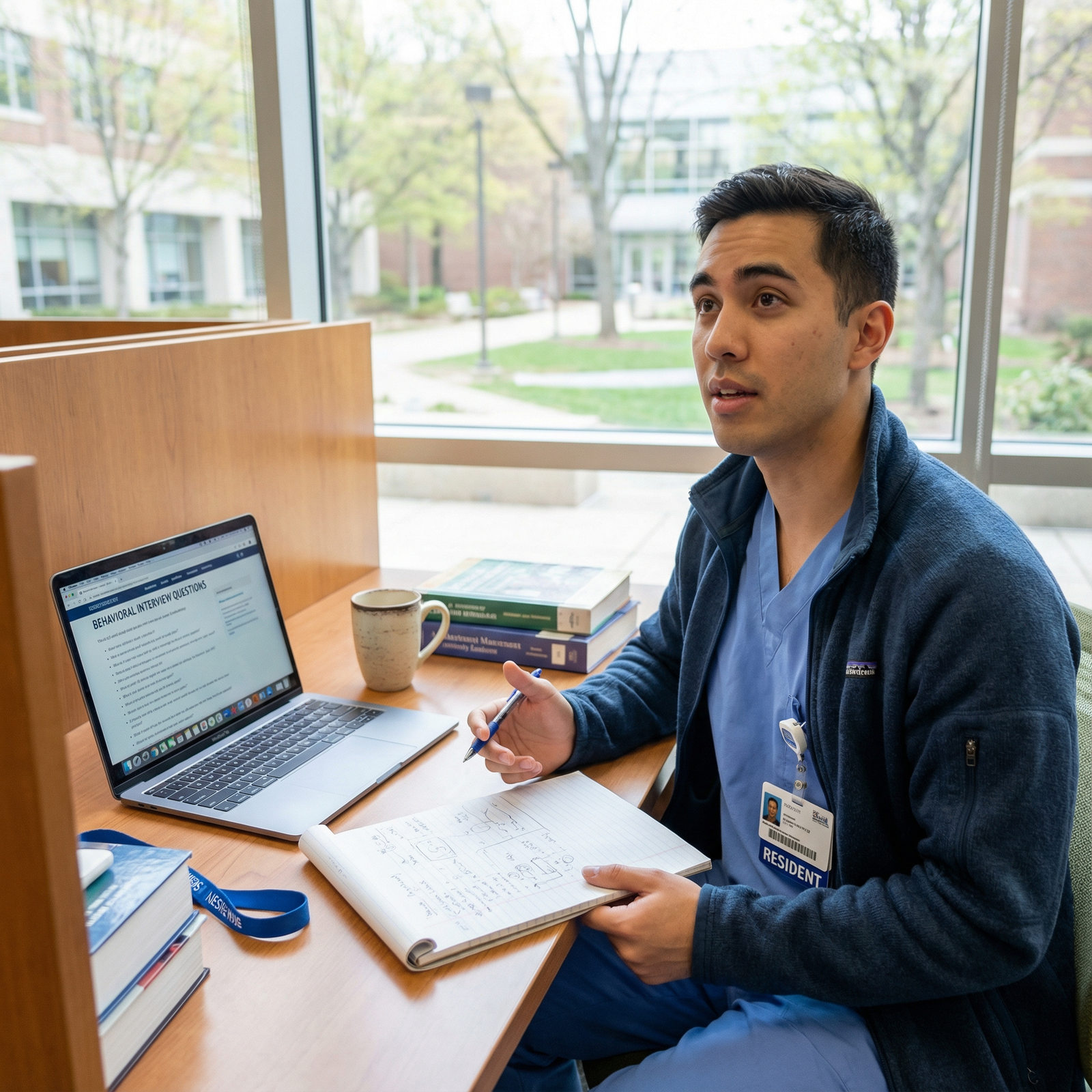
Preparing for residency interviews as a US citizen IMG (international medical graduate) comes with unique challenges—and real advantages. You understand the US system socially and culturally, but you trained abroad, so programs will test both your clinical readiness and your long‑term commitment to practicing in the United States.
This guide breaks down common residency interview questions, why they’re asked, what program directors are really looking for, and how you—as an American studying abroad—can answer them strategically and confidently.
Understanding the Residency Interview as a US Citizen IMG
Residency interviews are not oral exams; they’re behavioral, conversational assessments of fit. Most questions—especially in a behavioral interview (medical) context—aim to evaluate:
- How you think under pressure
- How you interact with patients, colleagues, and staff
- How you’ve handled real-world situations in the past
- Your reliability, professionalism, and resilience
- Your motivation to train and stay in the US long term
As a US citizen IMG, you’ll often face a few predictable lines of questioning:
- Why did you go abroad for medical school?
- Why are you coming back now?
- Are your clinical skills and communication at the level expected in US residency?
- How do we know you will complete the program and thrive here?
Your job is to anticipate these questions and respond with clear, structured, and evidence‑based stories from your experience.
A core tool for most behavioral interview medical questions is the STAR format:
- Situation – Brief background
- Task – Your role and responsibility
- Action – What you did (focus here)
- Result – What happened and what you learned
You should have at least 8–10 well‑polished STAR stories ready before interview season.
Mastering “Tell Me About Yourself” and Other Opening Questions
Nearly every interview starts with some version of:
- “Tell me about yourself.”
- “Walk me through your journey in medicine.”
- “Can you briefly introduce yourself?”
These opening questions set the tone for the interview. Many US citizen IMGs either ramble through their whole life story or immediately dive into board scores and CV points. Instead, use a simple, strategic structure that connects who you are to why you fit this specialty and this program.
Strategy for “Tell Me About Yourself”
Think of a 60–90 second professional narrative:
- Present – Who you are now (year, status, specialty interest)
- Past – Key experiences that shaped your path (include your IMG story)
- Future – What you’re looking for in residency and your career goals
Example structure for a US citizen IMG
“I’m a US citizen who completed medical school at [School] in [Country], and I’m currently applying to internal medicine with a strong interest in continuity care and chronic disease management.
I grew up in [City/State] and completed my undergraduate degree in [Major] at [US University]. During college I became very involved in [e.g., community health, tutoring, EMS], which really sparked my interest in hands‑on clinical work and patient‑centered care. Because I wanted early clinical exposure and a more global perspective, I chose to study medicine in [Country], where I’ve cared for patients from very diverse backgrounds and often with limited resources.
Over the last year, I’ve completed US clinical rotations at [Hospitals], which confirmed my commitment to training in the US and showed me how much I value team‑based care, strong teaching, and a structured, evidence‑based environment. In residency, I’m looking for a program where I can grow into a well‑rounded internist, contribute to resident education, and continue working with underserved communities.”
Key points for you as an American studying abroad:
- Briefly but confidently explain your decision to study abroad as a deliberate choice, not “plan B.”
- Emphasize experiences that connect your international training to skills valued in US residency (adaptability, resourcefulness, communication across cultures).
- End by linking your path to what you want in a program so interviewers see alignment from the start.
Other Common Opening Questions
You may also hear:
- “How did you become interested in [specialty]?”
- “Why did you choose to attend medical school abroad?”
For both, connect your story to:
- Specific clinical experiences (e.g., patients, mentors)
- Traits that make you suited for the specialty
- How international training strengthened your perspective and skills
Avoid:
- Complaining about US admissions, Step changes, or “not getting into a US school.”
- Vague answers like “I’ve always wanted to be a doctor” without concrete experiences.

Behavioral and Scenario-Based Questions: How to Answer Like a Resident
Most residency interview questions now include behavioral interview medical elements:
- “Tell me about a time you had a conflict on a team.”
- “Describe a situation where you made a mistake.”
- “Give an example of when you went above and beyond for a patient.”
As a US citizen IMG, these questions are an opportunity to prove you’re ready for the US clinical environment—even if much of your training was abroad.
Core Principles for Behavioral Answers
- Use the STAR format every time (Situation–Task–Action–Result).
- Focus on your actions, not what everyone else did.
- Show insight and growth—what you learned, what you’d do differently.
- Protect confidentiality—no real names or specific identifiers.
Common Behavioral Categories and Sample Approaches
1. Teamwork and Communication
Examples:
- “Tell me about a time you had a disagreement with a colleague.”
- “Describe a time you had to work with a difficult team member.”
Program directors want to know: Will you be safe, professional, and constructive under stress?
Sample approach (brief):
Situation/Task: “During my internal medicine rotation in [Country], a senior resident and I disagreed about whether a patient with sepsis should be transferred to ICU. I was the junior on the team responsible for monitoring vitals and labs.”
Action: “Instead of confronting him in front of the team, I asked if we could step aside to discuss my concerns. I presented the patient’s escalating lactate, worsening blood pressure, and need for increasing oxygen support, referencing the hospital’s sepsis protocol. I acknowledged his experience and asked if we could involve the attending to get another perspective.”
Result: “The attending agreed that transfer was appropriate; the patient was moved to ICU and stabilized. Later, the resident thanked me for speaking up respectfully. I learned that as the most junior person I still have a responsibility to advocate for patients, and that combining objective data with respectful communication is usually the best way to handle disagreements.”
Highlight: respectful advocacy, following protocol, and patient‑centered thinking—universal values in US training.
2. Dealing With Mistakes
Examples:
- “Tell me about a time you made a mistake.”
- “Have you ever missed something important?”
They are probing your honesty, insight, and professionalism—not looking for perfection.
Guidelines:
- Choose a real, but not catastrophic mistake.
- Show you recognized it, took responsibility, and changed behavior.
Sample outline:
- Situation: Brief clinical or academic context
- Mistake: What you overlooked or didn’t do well
- Action: How you addressed it and communicated with the team
- Result/Learning: Concrete changes you made (checklists, asking for help earlier, double‑checking orders)
As a US citizen IMG, you can add how this experience prepared you for a higher‑acuity US setting where systems and expectations may be more formalized.
3. Handling Stress and Burnout
Examples:
- “Tell me about a time you were overwhelmed and how you handled it.”
- “Residency is demanding. How do you manage stress?”
They want to know if you have healthy coping mechanisms and realistic expectations.
Use a specific story—e.g., exam period during rotations, caring for a critically ill patient while managing other tasks. Explain:
- What was at stake
- How you prioritized and delegated
- How you maintained patient safety
- How you used support systems, time management, or self‑care
Connect this to residency: “This taught me to…” and mention building routines, recognizing early signs of burnout, and seeking help appropriately.
Specialty and Program-Fit Questions
Programs want to see that you know what you’re signing up for and that you’ve thought through your specialty choice.
Common Residency Interview Questions About Specialty Choice
- “Why [specialty]?”
- “What are you looking for in a [specialty] program?”
- “What aspects of [specialty] do you find most challenging?”
Strategy:
- Tie your personality and strengths to core features of the specialty.
- Use concrete patient or rotation stories from both abroad and US rotations.
- Show self‑awareness about challenges (e.g., emotional demands of oncology, pace of emergency medicine, uncertainty in internal medicine).
Example (Internal Medicine, US citizen IMG)
“I’m drawn to internal medicine because I enjoy complex problem‑solving and building long‑term relationships with patients. During my training in [Country], I often followed patients over multiple admissions, which showed me how much chronic disease management and preventive care can change outcomes over time. In my US rotations at [Hospital], I especially appreciated morning report and the emphasis on evidence‑based decision‑making as a team.
I also recognize the challenge of managing diagnostic uncertainty and balancing time between very sick inpatients and outpatient continuity. That’s why I’m seeking a program with strong teaching, diverse pathology, and a commitment to mentorship, where I can grow into a thoughtful, thorough internist.”
Program-Specific Questions and How to Prepare
Expect:
- “Why our program?”
- “What do you know about our program?”
- “How do you see yourself contributing here?”
Preparation steps:
- Review the program’s website, curriculum, tracks, and hospitals.
- Identify 2–3 specific features (e.g., strong outpatient focus, global health pathway, simulation center, robust fellow‑led teaching).
- Connect these features to your background and goals as a US citizen IMG.
Example:
“Your program stands out to me for its strong community hospital experience combined with tertiary care exposure, and for your emphasis on mentoring IMG residents. As a US citizen IMG who has trained in both resource‑limited and high‑acuity environments, I appreciate that your residents rotate through [specific clinics/hospitals] and serve a diverse patient population. I’m particularly interested in your [e.g., resident‑led quality improvement curriculum] because I hope to work on improving transitions of care for patients with limited access to follow‑up. I see myself contributing by bringing my experience working across systems, my interest in teaching, and my long‑term commitment to practicing in this region.”
This shows: You did your homework, you know what you’re seeking, and you’re serious about fit.

Addressing IMG-Specific Questions as a US Citizen IMG
Programs may not say it outright, but they often have specific concerns about any IMG, including US citizens:
- Are your clinical skills aligned with US expectations?
- Can you work effectively in a US hospital system?
- Are you ready for the workload and pace?
- Are there gaps in your training timeline?
You can often anticipate certain residency interview questions that indirectly address these concerns.
“Why Did You Choose to Study Medicine Abroad?”
As an American studying abroad, this is almost guaranteed.
Pitfalls to avoid:
- “I couldn’t get into a US school” as your core message
- Speaking negatively about US admissions or exam systems
- Making your choice sound purely default or accidental
Stronger framing:
- Combine practical reasons (admissions competitiveness, cost, timeline) with intentional benefits (early clinical exposure, cultural competence, global health perspective).
- Emphasize how your path has prepared you for US residency, not why it was a consolation.
Example answer:
“I did apply to US schools initially, but I also explored international programs that offered early clinical exposure and a strong record of placing graduates into US residency. I chose [School] in [Country] because it allowed me to start seeing patients from my first year and work in a very diverse, often resource‑limited environment.
Training abroad challenged me to be resourceful, to communicate clearly across language and cultural barriers, and to really rely on history and physical exam skills. Over the last year, I’ve complemented that with US clinical rotations at [Hospitals], where I’ve become comfortable with US electronic medical records, interdisciplinary teams, and evidence‑based protocols. So while my path is non‑traditional, I feel it’s given me a broader perspective and strong preparation for residency here in the US.”
“Do You Plan to Practice in the US Long-Term?”
Residency is an investment for programs. They want reassurance you’re likely to stay and serve the US healthcare system.
As a US citizen IMG, this is a place where you have an advantage—lean into it.
Example:
“Yes. I’m a US citizen, my family is based in [State/Region], and my long‑term goal is to practice [specialty] in the United States. Training abroad gave me valuable experience, but I’ve always planned to build my career here. I’m particularly interested in working in [type of practice or population—community hospitals, academic centers, underserved communities], and I see residency as the foundation for that long‑term commitment.”
Be direct, confident, and specific about where and how you want to contribute.
Explaining Gaps, Scores, and Red Flags
If you have:
- A gap in training (research year, exam preparation, personal leave)
- A failed exam attempt
- A late graduation
You should prepare a concise, honest, and growth‑focused explanation. Many interviewers will ask:
- “Can you tell me about this gap in your timeline?”
- “Can you explain your [Step] performance?”
Strategy:
- Own it – Don’t be defensive or evasive.
- Explain briefly – 1–2 sentences of context.
- Show what changed – Study strategies, support systems, time management.
- Demonstrate current readiness – Recent rotations, letters, improved scores, or clinical evaluations.
Example (failed Step attempt):
“I did have a failed attempt on Step [X]. At the time, I underestimated how different the exam style would be from my school’s tests and didn’t use enough practice questions. After that experience, I significantly changed my study approach—working with a mentor, creating a structured schedule, and focusing on high‑yield question banks. On my next attempt, I improved my score by [X] points, and I’ve since applied the same disciplined approach to my clinical rotations and Step [Y]. While it was a setback, it taught me a lot about self‑assessment and preparation that I now carry into my clinical work.”
The goal is to make the interviewer think: “This is no longer an active problem.”
Practical Preparation Strategies for US Citizen IMGs
Content alone isn’t enough; how you deliver your answers matters.
1. Build a Personal Story Bank
Before interviews, write out bullet‑point versions (not scripts) of 8–10 STAR stories that cover:
- Team conflict
- Difficult patient or family interaction
- Mistake or near miss
- Ethical dilemma
- Working with limited resources
- Leadership or teaching experience
- Time you went above and beyond for a patient
- Handling stress or a heavy workload
Include both international and US clinical experiences to show breadth and US readiness.
2. Practice Out Loud—Especially for Virtual Interviews
As a US citizen IMG, you’re likely doing many virtual interviews. Practice:
- Looking into the camera while answering
- Keeping answers to 1–2 minutes for most questions
- Varying tone and pace so you don’t sound memorized
Use mock interviews with:
- Peers
- Mentors
- Your school’s career office
- US-based physicians if possible
Record some practice sessions and review:
- Are you clearly understandable?
- Do you smile and appear engaged?
- Are you rambling or going off-topic?
3. Prepare Questions to Ask Interviewers
Most interviews end with:
“Do you have any questions for us?”
Avoid generic questions that are easily answered on the website. Instead, ask about:
- Resident culture and support
- How IMGs are integrated and supported
- Teaching structure and feedback
- Opportunities for research or QI projects
- Long-term career outcomes for graduates
Example:
“As a US citizen IMG, I’m particularly interested in how your program supports residents who trained internationally in transitioning to the US system. Can you tell me about the orientation or mentorship structures you have in place?”
This signals insight into your needs and shows you’re serious about thriving, not just matching.
4. Highlight Your Dual Perspective as an Asset
Throughout your answers, subtly reinforce:
- You understand US culture and healthcare expectations as a US citizen.
- You bring international clinical experience, adaptability, and cultural competence as an IMG.
This combination is valuable for programs serving diverse communities, underserved populations, or global health initiatives.
FAQs: Common Questions from US Citizen IMGs About Residency Interviews
1. Should I mention that I’m a US citizen early in the interview?
Yes, but naturally. You don’t need to lead with your passport status, but it’s helpful to weave it early into your “tell me about yourself” or “why did you study abroad?” answers. This reassures programs about visa issues and underscores your long-term commitment to the US.
Example:
“I’m a US citizen who chose to attend medical school in [Country] because…”
2. How different are interviews for US citizen IMGs compared to US graduates?
Many standard residency interview questions are the same—behavioral scenarios, “why this specialty,” “strengths and weaknesses.” The main differences for US citizen IMGs are:
- More frequent questions about why you studied abroad
- Greater focus on how you adapted to US clinical rotations
- Occasional probing of gaps, exam attempts, or clinical readiness
If you prepare strong, structured answers to these areas, the rest of the interview will feel very similar.
3. How do I answer if asked directly about weaker scores or a failed attempt?
Be honest, concise, and growth‑focused. Briefly explain the context, avoid blaming others, and spend most of your time on:
- What you learned
- What you changed
- Evidence that you’ve improved (scores, evaluations, letters)
Programs are more concerned about patterns than isolated missteps. Your goal is to show that this is a closed chapter and you’re now performing at the level required for residency.
4. What if I have limited US clinical experience as an American studying abroad?
Focus on:
- The quality of your US experiences (even if short)
- How quickly you adapted to EMR, team dynamics, and documentation
- Parallels between your international training and the US environment (teamwork, resource management, patient communication)
Also emphasize any ongoing US connections: mentors, virtual electives, observerships, or research with US faculty. Frame your international training as a foundation that you’ve actively supplemented to prepare for residency in the US.
Approaching interviews with this level of preparation—understanding the questions, the reasoning behind them, and how to frame your IMG journey as a strength—will help you present as a confident, thoughtful, and residency‑ready US citizen IMG.