Understanding the Landscape: DO Graduates in Radiation Oncology
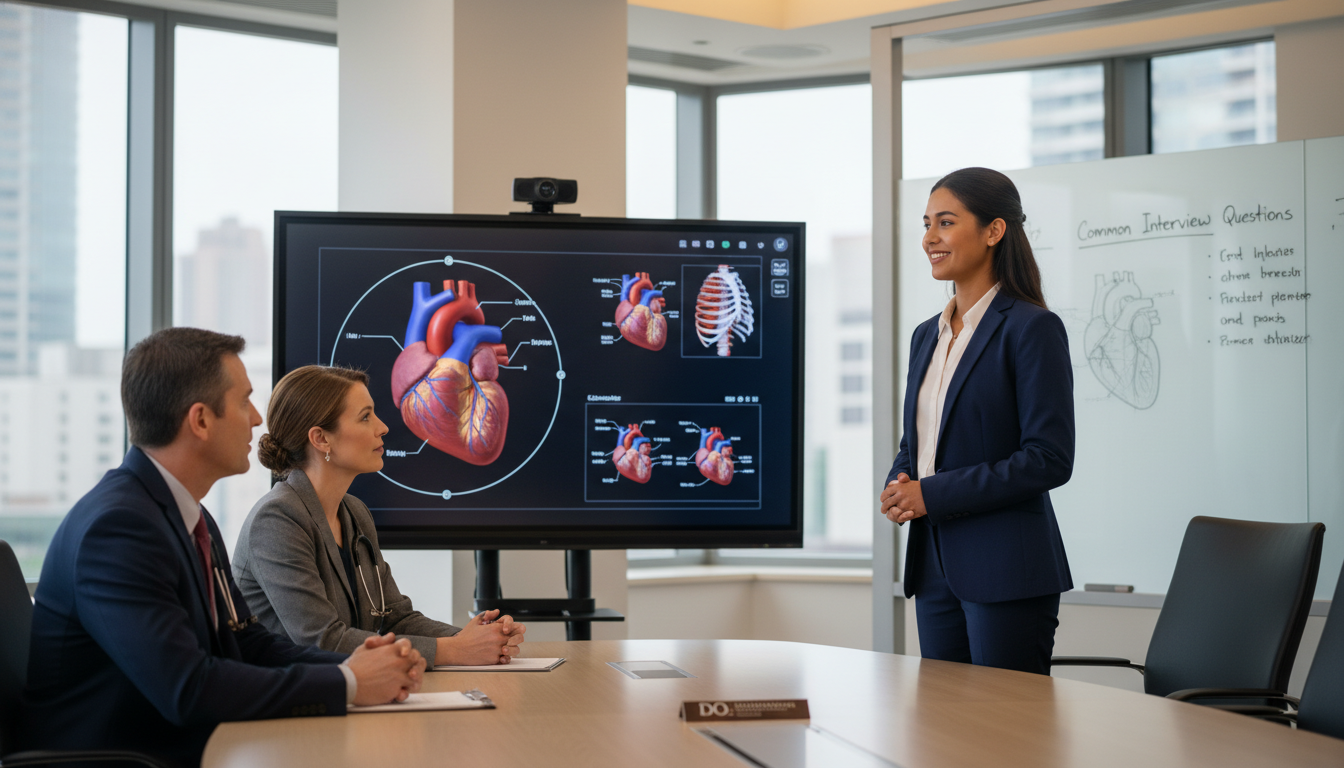
Radiation oncology is a small, intensely competitive specialty—and the interview carries enormous weight in the rad onc match. As a DO graduate, you bring a valuable osteopathic perspective to patient care, but you also need to be intentional in how you present your training, experience, and fit for this field.
Programs will not only assess your academic record and research, but also how you think, communicate, and behave under pressure. That’s why so many radiation oncology residency interview questions are behavioral in nature: they’re designed to reveal how you handle real-world clinical scenarios and interpersonal challenges.
This guide focuses on:
- The most common interview questions for DO graduates applying to radiation oncology
- How to structure effective answers (including for “tell me about yourself”)
- Sample tailored responses and talking points
- Special considerations for DO applicants in the osteopathic residency match era
- Practical tips for behavioral interview medical questions
Throughout, remember: the goal is to show you are:
- Clinically grounded and teachable
- Thoughtful and compassionate with patients
- Curious and engaged with radiation science
- A collaborative, low-drama teammate
- A professional ambassador for osteopathic medicine
Core Foundation Questions: Telling Your Story as a DO Applicant
These are the questions you will almost certainly encounter. Your answers need to be clear, concise, and consistent with your application.
1. “Tell me about yourself.”
This is often the first question and shapes the rest of the conversation. It is not an invitation to recite your CV. It’s a chance to give a focused, 1–2 minute overview that connects your background to radiation oncology.
Use a simple three-part structure:
- Past – Who you are and what shaped you
- Present – Where you are now and what you’re doing
- Future – Where you’re headed and how this residency fits
Example (DO-specific, rad onc focused):
“I’m a fourth-year DO student at [School], originally from a small town in [State], where access to cancer care was limited. Seeing family members travel hours for treatment drew me to oncology early.
In medical school, I gravitated toward radiology and physics-based disciplines, and my third-year rotation in radiation oncology at [Institution] really brought it together—combining imaging, longitudinal patient relationships, and team-based care. As a DO graduate, I’ve appreciated how osteopathic training emphasizes the whole person, which has been powerful when counseling patients about complex treatment decisions and quality of life.
Right now, I’m finishing a research project on toxicity outcomes in patients receiving concurrent chemoradiation for head and neck cancer, and I’ve enjoyed the process of asking questions that really matter to patients. Looking forward, I hope to train at a program like yours that values evidence-based practice, multidisciplinary collaboration, and education, so I can grow into a radiation oncologist who brings both technical expertise and a strong human connection to patient care.”
Key points to highlight as a DO graduate:
- Explicitly mention your osteopathic perspective (holistic care, function, quality of life).
- Show that you’ve thought deeply about the specialty, not just stumbled into it.
- Connect your story directly to why this program and this field make sense for you.
2. “Why radiation oncology?”
Programs expect a sophisticated answer that reflects you understand what rad onc actually involves—beyond “I like oncology” or “I enjoy physics.”
You might structure your answer around 3–4 core reasons:
- Intellectual appeal – imaging, physics, treatment planning
- Patient relationships – longitudinal care, survivorship
- Teamwork – collaboration with surgeons, medical oncologists, physicists, dosimetrists, therapists
- Alignment with your values/skills – communication, problem-solving, empathy
Sample answer:
“Radiation oncology appeals to me because it sits at the intersection of technology, careful decision-making, and longitudinal patient care. I enjoy interpreting imaging, understanding dose distributions, and thinking about the physics behind treatment delivery. At the same time, my rotations showed me how closely radiation oncologists follow patients over months or years, managing side effects and survivorship issues.
I also value the multidisciplinary nature of the field—working with surgeons, medical oncologists, physicists, and therapists to create individualized plans. My osteopathic training has emphasized understanding the whole patient in the context of their life and function, which fits naturally with helping patients weigh complex treatment options and quality-of-life considerations.
Ultimately, I’m drawn to radiation oncology because it allows me to combine technical rigor with compassionate, long-term relationships during a very vulnerable time in patients’ lives.”
Make sure you:
- Reference specific experiences (clinic, tumor board, contouring, planning) to prove you know the day-to-day reality.
- Show that you understand both technical and humanistic aspects of rad onc.
3. “Why did you choose osteopathic medicine?” / “How has being a DO influenced your approach?”
For a DO graduate, this question is a frequent topic in both osteopathic residency match programs and ACGME-only programs. It’s not a trap; it’s an opportunity.
Key themes to hit:
- Holistic, patient-centered care
- Emphasis on function, quality of life, and prevention
- Osteopathic principles that align with oncology (body-mind unity, self-healing, structural/functional relationships)
- If you use OMT — be realistic about its role in oncology (supportive care, symptom management, but not a cure)
Sample framework:
“I chose osteopathic medicine because I was attracted to its explicit emphasis on treating the whole person, not just the disease. In my training, we’ve learned to consider how physical, psychological, and social factors interact to influence health and recovery.
In oncology, and radiation oncology in particular, I’ve seen this play out when discussing treatment trade-offs with patients—how radiation will affect their ability to work, care for family, or engage in activities that give them meaning. My osteopathic background helps me frame these conversations in terms of the patient’s overall function and quality of life, not just local control or survival curves.
While I don’t see OMT as a primary cancer treatment, I do believe some osteopathic manipulative techniques can have a role in symptom management and improving comfort in select situations, and more broadly, my training has reinforced a mindset of looking beyond the imaging to understand the full human experience of illness.”
Be confident and matter-of-fact. Avoid sounding defensive about being a DO graduate; instead, position it as a strength that complements radiation oncology’s patient-centered nature.
Behavioral Interview Questions: How You Think and Act
Most modern programs use a behavioral interview medical approach: they ask you to describe what you actually did in past situations as a predictor of future behavior.
Use the STAR method:
- Situation – Brief context
- Task – Your goal/responsibility
- Action – What you did
- Result – What happened / what you learned
Below are common categories of behavioral questions in a radiation oncology residency interview.
4. “Tell me about a time you had a conflict with a colleague or team member.”
They want to see professionalism, communication skills, and emotional maturity, not drama.
Example (structured):
Situation: “On my medicine sub-internship, I worked with another student who consistently arrived late to prerounds, which delayed our team and affected patient care.”
Task: “I felt responsible for the quality of our work and for maintaining a good learning environment, but I also wanted to avoid creating tension.”
Action: “I first checked in with them privately between patients, expressed that I’d noticed the late arrivals, and asked if something was going on. It turned out they were struggling with transportation after a family situation changed. We problem-solved together, and I suggested we talk to the chief resident for support. I also offered to share some tasks temporarily to keep the team on track.”
Result: “With the chief’s help, they adjusted their schedule and transportation, and their punctuality improved significantly. Our team functioned better, and I learned the importance of approaching conflict with curiosity and support rather than assumptions or judgment.”
Key tips:
- Keep it professional, not personal.
- Show empathy and problem-solving, not blame.
- Demonstrate a bias toward speaking up respectfully and involving appropriate supervisors when needed.
5. “Tell me about a time you made a mistake.”
Every resident will make errors; programs want to know whether you are honest, reflective, and proactive in preventing recurrence.
Avoid catastrophic errors that might raise major red flags, but don’t dodge the question by claiming you’ve never made a mistake.
Example:
Situation: “During my third-year surgery rotation, I was responsible for calling a patient with postoperative lab results. I misread the instructions and didn’t realize the attending wanted to adjust a medication that day.”
Task: “My responsibility was to accurately convey the plan and ensure the patient understood the medication changes.”
Action: “When I realized my error later during chart review, I immediately notified the resident, documented what had happened, and we called the patient together to correct the instructions and confirm they were doing well. I apologized directly to the patient for the confusion and discussed the case with my attending.”
Result: “Fortunately, no harm came to the patient, but the situation highlighted the risk of assumptions. Since then, I’ve developed a habit of repeating back plans to the team, clarifying all medication changes, and documenting communication in real time. It’s made me more careful and systematic, which I know is particularly important in radiation oncology where small details can have large consequences.”
For radiation oncology specifically, you can highlight how this experience made you appreciate:
- The need for precise communication
- Double-checking details in orders, contours, and plans
- A culture where it’s safe to speak up about concerns
6. “Describe a time you had to deliver bad news or discuss a difficult topic with a patient.”
Even if you’re early in training, you’ve likely participated in serious conversations. Programs want to see empathy, structure, and self-awareness.
Example approach:
Situation: “On my oncology rotation, I worked with a resident to inform a patient that their cancer had progressed despite first-line therapy.”
Task: “My role was to help prepare the room and support the patient during and after the discussion.”
Action: “Before entering, we reviewed the imaging and the plan for the conversation. In the room, I made sure we had privacy, sat down at eye level, and allowed pauses for the patient to process information. I used open-ended questions like, ‘What are you hearing me say?’ to assess understanding and ‘What worries you most right now?’ to explore concerns. After the resident and attending discussed next steps, I stayed longer to answer questions, clarified what the upcoming treatments would involve, and made sure the patient knew we were available for follow-up questions.”
Result: “The patient expressed sadness but also relief at understanding the situation clearly. I learned how important it is to create space for emotion, avoid overwhelming patients with jargon, and work as a team to support them. This is one reason I’m drawn to radiation oncology—having ongoing relationships allows us to walk with patients through these challenging conversations over time.”
Programs want to hear that you:
- Are comfortable with emotions and not overly mechanical
- Use clear, honest language with patients
- Value team-based communication and follow-up
7. “Give an example of a time you had to work with someone very different from you.”
Radiation oncology teams include diverse professions, backgrounds, and personalities. This question probes your adaptability and respect for others.
Consider examples involving:
- Interprofessional teams (nurses, therapists, physicists)
- Culturally diverse patient populations
- Colleagues with very different communication styles
Emphasize:
- Openness to learning
- Respect for other roles and expertise
- Ability to adjust your style without compromising professionalism
Rad Onc–Specific and Academic Questions
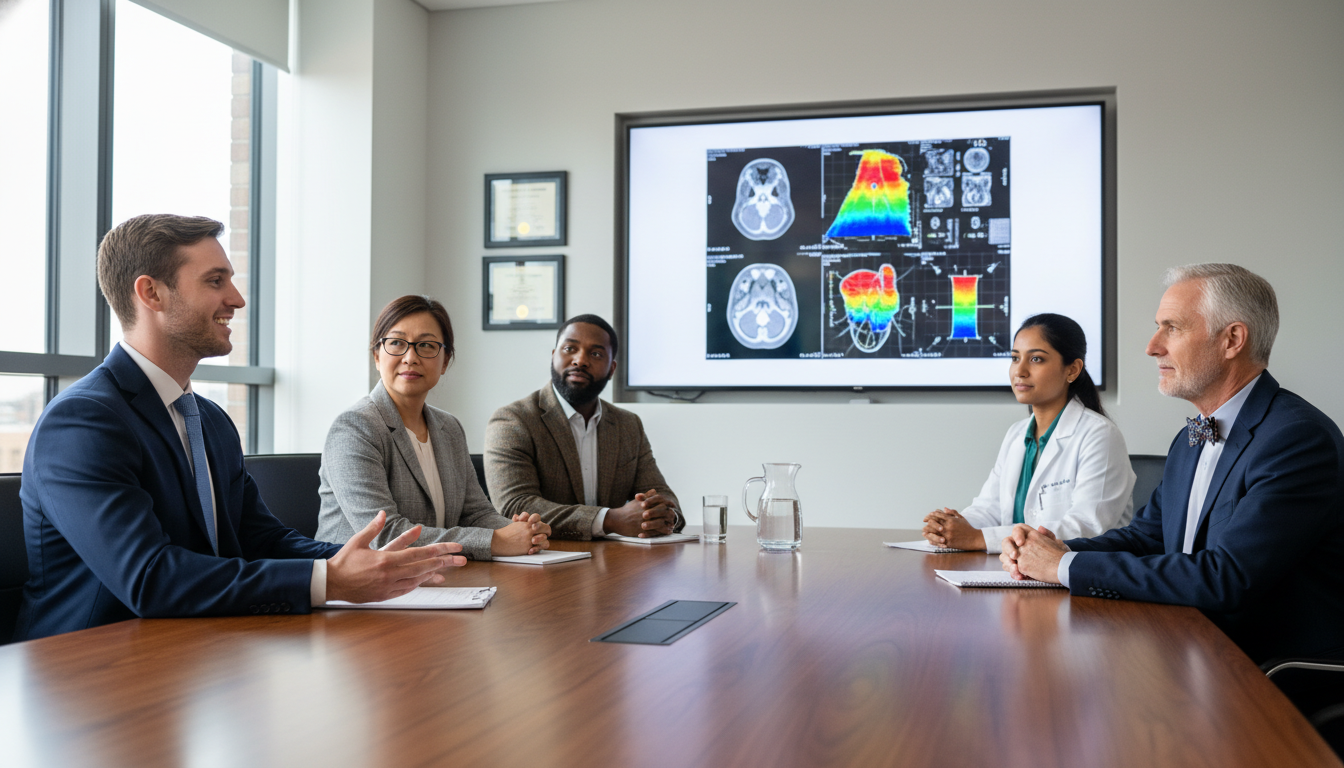
Radiation oncology residency interviews also explore your understanding of the field, research interest, and readiness for rigorous training. Even if you are not aiming to be a physician-scientist, you should be prepared.
8. “What aspects of radiation oncology interest you the most?” (Sites, techniques, research)
Be honest but flexible—programs know interests evolve. They mainly want to see curiosity and exposure.
Potential areas to mention:
- Disease sites: breast, GU, GI, thoracic, head and neck, CNS, pediatrics
- Techniques: IMRT, SBRT/SABR, brachytherapy, proton therapy, adaptive RT
- Research themes: toxicity reduction, quality of life, health disparities, AI in planning, outcomes research
Sample answer:
“I’m particularly interested in thoracic and head and neck radiation oncology, largely because of my exposure on rotations and through my research on toxicity and functional outcomes. I’m fascinated by how we balance dose escalation for local control with sparing critical structures to preserve swallowing, speech, and lung function.
From a technique standpoint, I’m excited by the potential of image-guided radiotherapy and adaptive planning to refine treatments in real time. I also have a strong interest in patient-reported outcomes and quality-of-life research—something that resonates with my osteopathic training—and I’d love to contribute to projects that better capture how our treatments impact daily living.”
9. “Tell me about your research” / “What was your role in your projects?”
Many rad onc programs are heavily academic. Even community-based programs value residents who can interpret and apply evidence.
Be prepared to:
- Explain your research question in plain language
- Clarify your specific role (design, data collection, analysis, writing)
- Summarize key findings and relevance
- Reflect on what you learned (statistics, IRB, teamwork, perseverance)
Avoid exaggerating your role—faculty can usually tell.
Example closing line:
“This project taught me how complex real-world data can be and gave me a deeper appreciation for study design and confounders. It also reinforced how important it is to critically appraise literature to inform treatment decisions in radiation oncology.”
10. “How do you handle the physics and quantitative side of radiation oncology?”
Programs know that residents vary in comfort with physics and math. They want reassurance that you can engage with these concepts and are willing to work hard.
If you’re strong in this area, demonstrate enthusiasm but stay humble. If it’s more of a challenge, emphasize your work ethic, strategies, and improvement.
Example answer (balanced):
“I’ve always enjoyed problem-solving and pattern recognition, which helped me in courses like radiology and physiology. Radiation oncology’s physics component is challenging but appealing because it underpins safe and effective treatment.
During my rad onc elective, I made a point to spend time with physicists and dosimetrists, asking them to walk me through treatment planning and QA processes. I found that breaking concepts down, drawing diagrams, and revisiting the material multiple times helped a lot.
I don’t claim to be a physicist, but I’m motivated to understand the principles well enough to communicate effectively with the team, evaluate plans critically, and recognize when something doesn’t look right. I’m very willing to put in the work during residency—reading, attending physics lectures, and doing practice problems—to strengthen this foundation.”

Program Fit, DO Identity, and Practical Interview Strategy
Beyond your CV, programs are evaluating: “Would I want to work with this person for four years?” Your answers should convey reliability, humility, curiosity, and collegiality.
11. “Why our program?” (Critical for rad onc match success)
This is foundational in any osteopathic residency match or ACGME interview. Always prepare a specific answer for each program.
Research:
- Clinical strengths (e.g., strong brachytherapy, proton center, specific disease-site volume)
- Research focus
- Resident culture, mentorship structure
- Community, patient population
Example structure:
- One clinical/academic reason
- One educational/culture reason
- One personal fit reason
Sample answer:
“I’m drawn to your program for several reasons. Clinically, your high-volume head and neck and thoracic services, along with your strong brachytherapy program, align with my interests and would provide broad exposure.
Educationally, I appreciate your structured physics curriculum and the emphasis on resident involvement in multidisciplinary tumor boards. The opportunity for protected research time and mentorship through the [specific lab or faculty] is also very appealing.
Finally, in talking with your residents and seeing how they interact, I get the sense that there’s a strong culture of teamwork, humility, and support. As a DO graduate who values a collaborative, patient-centered environment, I think I would learn a great deal here and contribute positively to the team.”
12. “What are your strengths and weaknesses?”
Avoid clichés like “I’m a perfectionist.” Instead, choose a real but manageable weakness and show how you’re addressing it.
Strength example (aligned with rad onc):
“One of my strengths is clear, empathetic communication with patients. My osteopathic training has emphasized listening to patients’ stories and explaining medical information in a way that connects with their values and goals. On my oncology rotations, I’ve often stayed after visits to ensure patients understood their treatment schedule and what to expect, and I received positive feedback from both patients and attendings for my clarity and empathy.”
Weakness example (with growth):
“A weakness I’ve been working on is my tendency to overprepare before presenting cases, which initially made me slower to speak up in rounds. I realized that in a fast-paced clinical environment—especially in radiation oncology, where decisions must be made efficiently—I needed to be more comfortable sharing my assessment even if I didn’t have every detail perfect.
To address this, I’ve practiced summarizing cases concisely and forcing myself to commit to a plan before asking for feedback. My attendings have noticed that my presentations are more focused, and I feel more confident participating in discussions while still maintaining attention to accuracy.”
13. “How do you see your DO background fitting into radiation oncology?”
This question allows you to bridge your identity as a DO graduate with the culture and needs of rad onc programs.
Potential points:
- Emphasis on whole-person care in symptom management, survivorship, and end-of-life care
- Orientation toward function and quality of life, highly relevant to radiation side effects
- Skills in building rapport, which help with adherence and patient satisfaction
- Interest in integrative approaches (when appropriately evidence-based) to support patients through treatment
You can add:
“In a field that can easily become very technology-focused, I think my osteopathic training helps keep patient experience and function at the center of my practice.”
14. Practical Interview Tips for DO Applicants in Radiation Oncology
- Practice core questions aloud, especially “tell me about yourself,” “why radiation oncology,” and “why our program?”
- Prepare 2–3 patient stories that highlight compassion, communication, or clinical insight.
- Prepare 2 conflict stories and 1–2 mistake stories using STAR.
- If you have COMLEX-only scores or took USMLE later, be prepared to explain your testing path briefly and confidently if asked.
- Anticipate questions about your research and be able to talk about it at both a layperson and scientific level.
- Have thoughtful questions ready for faculty and residents that show you understand the field and are thinking ahead (e.g., mentorship, teaching, case mix, opportunities for DO graduates in academic vs community tracks).
Frequently Asked Questions (FAQ)
1. Are the residency interview questions different for DO graduates vs MDs in radiation oncology?
Most core questions are the same: “tell me about yourself,” “why radiation oncology,” behavioral scenarios, research, and program fit. However, as a DO graduate, you are more likely to be asked:
- Why you chose osteopathic medicine
- How your DO background influences your approach to patients
- Occasionally, about board exam choices (COMLEX vs USMLE)
The key is to answer confidently and frame your osteopathic training as an asset that complements radiation oncology’s focus on whole-person care and quality of life.
2. How can I best answer “tell me about yourself” as a DO applying to radiation oncology?
Keep it 1–2 minutes, organized into:
- Past: Your background and what drew you to medicine/oncology
- Present: Your current training, key experiences in radiation oncology, research or leadership
- Future: Your goals in rad onc and how their program fits
Make sure to:
- Mention being a DO in a purposeful way (holistic care, patient communication, function)
- Connect your experiences directly to why you’re choosing radiation oncology
- Avoid detailed personal life stories that don’t relate back to your path or professional identity
3. What behavioral interview medical questions should I expect in a rad onc match interview?
Common behavioral questions include:
- A time you had a conflict with a team member and how you resolved it
- A time you made a mistake and what you learned
- A challenging patient encounter or delivering bad news
- Working with someone very different from you
- Handling a high-pressure or ethically complex situation
Prepare 5–6 strong examples from your clinical rotations, leadership, or research, and practice telling them using the STAR method so your answers are structured and efficient.
4. How much do radiation oncology residency interviews focus on research?
It varies by program, but in general:
- Academic rad onc programs place a strong emphasis on research interest and experience. Expect detailed questions about your projects, your role, and what you learned.
- Community or clinically focused programs still value evidence-based thinking and may ask more about how you interpret literature, your interest in QI projects, or your comfort with lifelong learning.
As a DO graduate, demonstrating that you can participate in and critically appraise research helps signal that you’ll contribute meaningfully, regardless of whether you pursue a heavily academic career.
By anticipating these common interview questions and crafting thoughtful, authentic answers, you can present yourself as a well-rounded DO graduate ready to thrive in a radiation oncology residency. Focus on aligning your osteopathic identity with the values of the field, showcasing your communication and teamwork skills, and demonstrating genuine curiosity about both the science and humanity of cancer care.