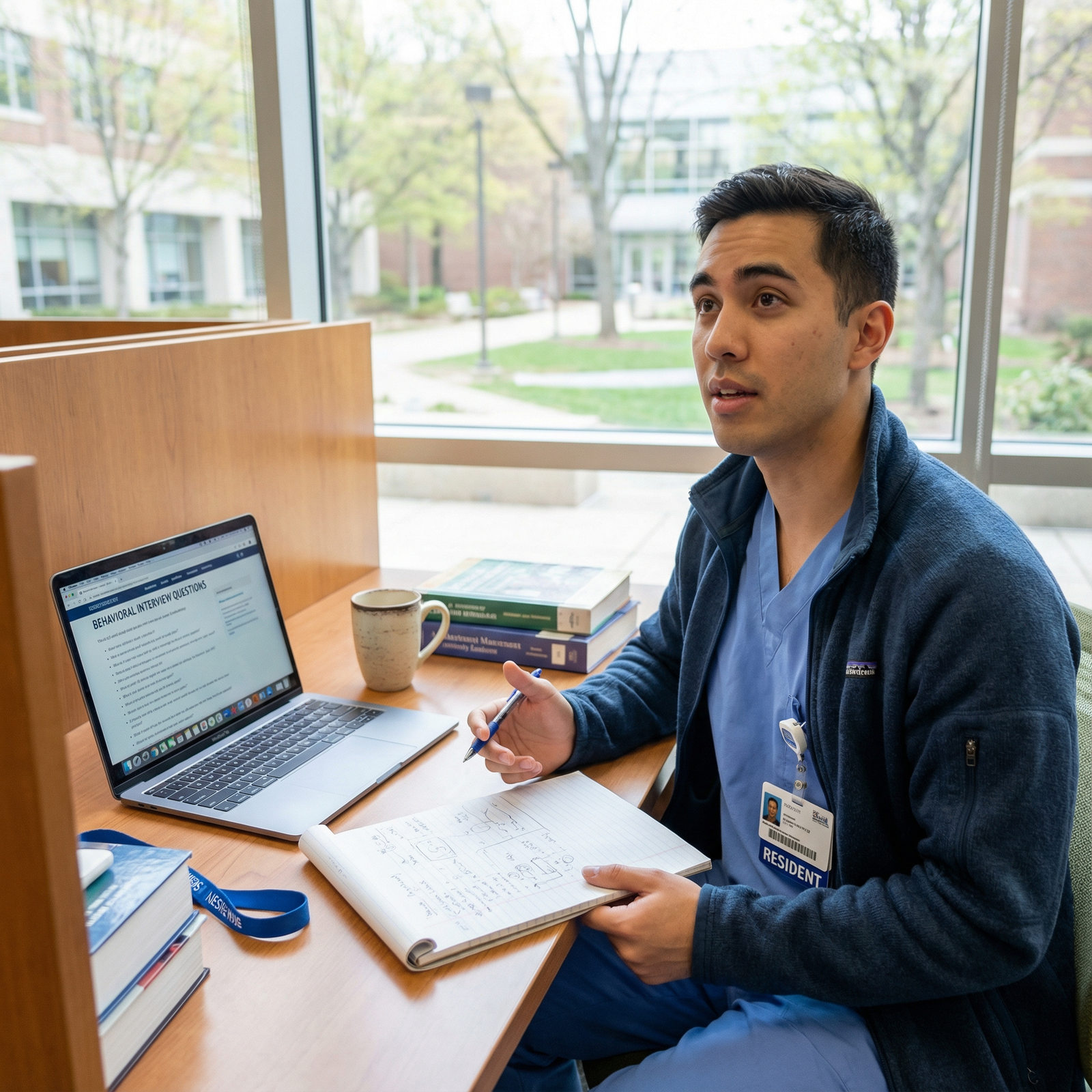
Preparing for a medical genetics residency interview requires more than reviewing chromosome structures and inheritance patterns. Program directors increasingly emphasize communication skills, professionalism, and your readiness to care for complex patients and families. This guide walks you through the most common interview questions in medical genetics, what programs are really assessing, and how to structure strong, authentic responses.
Understanding What Medical Genetics Programs Look For
Before tackling specific residency interview questions, it helps to understand why programs ask them and how medical genetics is different from many other specialties.
Core traits programs are assessing
Across interviews, expect questions to probe:
Motivation for medical genetics
Why this field, and why now? Do you understand what a career in medical genetics actually looks like?Longitudinal patient care mindset
Genetics patients and families are often followed for life. Programs look for empathy, patience, and comfort with uncertainty.Interdisciplinary collaboration
Geneticists work closely with neonatology, oncology, neurology, obstetrics/MFM, pathology, and primary care. Your ability to function on teams is critical.Communication of complex information
Can you explain risk, probability, and uncertainty in an understandable, compassionate way?Ethical reasoning
Genetics routinely raises ethical issues around testing, disclosure, reproductive decision-making, and incidental findings.Resilience and self-awareness
The field can be emotionally heavy: undiagnosed conditions, limited treatments, and devastating prognoses.
Understanding these goals will help you shape answers that align with what faculty seek in the genetics match.
Foundational Questions: Telling Your Professional Story
These are the core questions almost every candidate encounters, including the classic opener: “Tell me about yourself.”
1. “Tell me about yourself.”
This question often opens the interview and sets the tone. Programs are evaluating how you frame your professional identity and how well you communicate concisely.
How to structure your answer (2–3 minutes):
Present (who you are now)
- Your current role and status: “I’m a PGY-1 in pediatrics…” or “I’m a final-year medical student at…”
- Your core clinical/research interests in medical genetics.
Past (how you got here)
- A brief narrative of key experiences that drew you toward medical genetics (e.g., patient encounter, research, personal/family experience).
- Highlight patterns: curiosity about rare disease, enjoyment of puzzling cases, passion for counseling families.
Future (where you’re heading)
- Your broad career direction: clinician-educator, physician-scientist, lab-based geneticist, undiagnosed diseases clinic, etc.
- How this specific field—and ideally, this type of program—fits those goals.
Example response approach (condensed):
- Present: “I’m a fourth-year medical student at X, with a strong interest in pediatric-onset genetic disorders and translational research.”
- Past: “During my second-year genetics elective, I worked with a family whose child had an undiagnosed neurodevelopmental disorder…”
- Future: “Long-term, I hope to practice as a clinical geneticist in an academic center with a focus on rare disease diagnostics and teaching residents and students.”
Avoid a purely personal autobiography; keep it professionally anchored and relevant to medical genetics residency.
2. “Why medical genetics?”
You will almost certainly be asked this in some form. The key is to show a mature, realistic understanding of the specialty.
Programs want to hear:
- You know what day-to-day practice looks like (clinics, multidisciplinary conferences, inpatient consults, lab interactions).
- You appreciate the non-procedural, deeply cognitive and counseling-focused nature of the work.
- You value longitudinal relationships and complex family dynamics.
Strong elements to include:
- A specific case or patient that left an impact.
- A clear thread connecting your prior experiences to genetics (e.g., fascination with pathophysiology, love of pattern recognition).
- Recognition of both promise (advancing therapeutics, gene therapies) and limitations (many disorders without curative options).
Pitfalls:
- Answering with only “I like rare diseases” or “I enjoy puzzles” without emphasizing patient care.
- Focusing solely on research without acknowledging clinical responsibilities (or vice versa).
3. “Why this program?”
Programs are evaluating genuine interest and fit. Generic answers hurt you here.
Research beforehand:
- Program structure: combined or categorical tracks (e.g., pediatrics–genetics, IM–genetics, categorical genetics).
- Unique clinics: cancer genetics, metabolic, neuromuscular, neurogenetics, adult vs pediatric emphasis.
- Research: genomic medicine, pharmacogenomics, gene therapy, population genetics.
- Educational features: dedicated didactics, variant interpretation curriculum, lab exposure.
Answer structure:
- One or two program-specific features that truly excite you.
- How those features support your training goals.
- What you, in turn, bring that aligns with their mission (e.g., interest in QI, teaching, or a certain patient population).

Core Behavioral Interview Questions in Medical Genetics
Many residency interview questions today are behavioral: “Tell me about a time when…” These assess how you actually behave in real situations, not just what you know.
Use the STAR method (Situation, Task, Action, Result) to structure your responses.
4. “Tell me about a time you faced a challenging patient or family interaction.”
Medical genetics involves difficult discussions: uncertain diagnoses, poor prognoses, reproductive risk, or variants of uncertain significance (VUS). Programs want to know how you navigate emotion and complexity.
What to demonstrate:
- Empathy and active listening.
- Respect for cultural and personal values.
- Ability to explain complex information clearly.
- Maintaining professionalism under stress.
Example scenario topics:
- A family reacting strongly to the possibility of a genetic diagnosis (anger, denial, guilt).
- Parents disagreeing about genetic testing for their child.
- A patient misunderstanding risk (e.g., believing a carrier state is a disease).
Focus on:
- How you prepared for the conversation.
- How you tuned your language to the patient’s level.
- How you checked understanding and validated emotions.
- Any follow-up steps (e.g., involved social work, genetic counseling, or ethics).
5. “Describe a time you handled uncertainty or incomplete information.”
Genetics is full of uncertainty: VUS results, unclear phenotype–genotype correlations, and evolving guidelines. This is a classic behavioral interview medical question.
Key points to convey:
- Comfort acknowledging uncertainty honestly.
- Use of evidence, consultation with experts, and shared decision-making.
- Avoiding false reassurance or overstating certainty.
Example experience:
- Explaining a VUS result to a patient.
- An undiagnosed condition despite extensive workup.
- Choosing between multiple possible testing strategies with trade-offs.
Show that you:
- Communicate uncertainty without causing undue alarm.
- Stay up to date with guidelines.
- Work within an interdisciplinary team for complex cases.
6. “Tell me about a conflict on a team and how you handled it.”
Geneticists work across departments—oncology, MFM, NICU, neurology, and labs. Team conflicts are inevitable.
Programs are looking for:
- Respectful, non-defensive communication.
- Ability to see others’ perspectives.
- Focus on patient-centered solutions.
Sample genetics-relevant conflicts:
- Disagreement with another service about whether a genetic test is indicated or cost-effective.
- Dispute over who should disclose a sensitive test result.
- Differing opinions on how urgent a consult is.
Use STAR to explain:
- Situation: What happened and who was involved?
- Task: What was your role?
- Action: How did you communicate? Did you seek clarification, schedule a brief huddle, involve a supervisor?
- Result: What changed, and what did you learn?
Avoid blaming individuals; frame it as a systems and communication problem that you helped address constructively.
7. “Tell me about a time you made a mistake or missed something.”
This question evaluates humility, accountability, and growth—crucial traits in a field where misinterpretation can have serious implications.
Strong answers include:
- A specific, real example (but not something catastrophically dangerous or currently unresolved).
- Clear ownership: no deflecting or blaming.
- Steps you took to fix the issue.
- Concrete changes in your practice afterward.
For genetics, examples might include:
- Misunderstanding a family’s pedigree and needing to clarify.
- Delaying a referral for genetic testing that, in hindsight, should have happened earlier.
- Not recognizing a subtle dysmorphic feature initially.
Programs care less about the exact error and more about your capacity for insight and improvement.
Clinical & Specialty-Specific Questions in Medical Genetics
Beyond behavioral questions, you should anticipate specialty-focused topics that probe your clinical judgment and understanding of the field.
8. “Describe a case that solidified your interest in medical genetics.”
This is an opportunity to showcase your clinical reasoning and your connection to patients and families.
Choose a case that allows you to illustrate:
- Diagnostic thinking (differential, workup, reasoning).
- Communication with the patient/family.
- Collaboration with genetics professionals (genetic counselors, lab specialists, etc.).
- The emotional or intellectual impact the case had on you.
Avoid sharing unnecessary identifiers. Emphasize:
- How the case shaped your understanding of genetic practice.
- How it influenced your career trajectory or scholarly interests.
9. “How do you see the future of medical genetics evolving?”
Programs want candidates who are thinking beyond residency and who are aware of the field’s trajectory.
Consider mentioning:
- Expansion of genomic sequencing in primary care and specialty clinics.
- Growth of pharmacogenomics and gene-based therapies.
- Ethical challenges of data sharing, privacy, and population genomics.
- Increased use of telehealth for genetic counseling.
- Integration of AI in variant interpretation (with ongoing human oversight).
Connect the future to your interests: for example, interest in translational research, public health genetics, or developing educational tools for non-geneticist clinicians.
10. “How do you explain complex genetic concepts to patients?”
Communication is central to clinical genetics. Programs may ask how you’d explain:
- Autosomal recessive inheritance.
- Carrier status.
- A VUS result.
- Risk percentages for future pregnancies.
Answer approach:
- Emphasize using plain language (e.g., “changes in genes” instead of “pathogenic variants”).
- Use analogies and visual aids (family trees, diagrams).
- Check understanding by asking patients to repeat concepts in their own words.
- Tailor language to health literacy and cultural context.
- Reinforce that misunderstanding is common and questions are welcome.
You can also briefly mention how you work with genetic counselors and other team members to reinforce information.
11. “What areas of genetics are you most interested in?”
Programs want to see curiosity and thoughtfully considered interests, not rigid inflexibility.
Examples:
- Neurogenetics and neurodevelopmental disorders.
- Cancer genetics and hereditary cancer syndromes.
- Metabolic genetics/inborn errors of metabolism.
- Prenatal and reproductive genetics.
- Adult-onset disorders and cardio-genetics.
- Lab-based interests: molecular diagnostics, cytogenetics, bioinformatics.
Connect these interests to any prior experiences—electives, research, case conferences, or quality improvement projects. Also signal openness: “While I’m particularly drawn to neurogenetics, I’m genuinely excited to build a broad foundation across all areas during residency.”

Evaluating Fit, Values, and Professionalism
Many interview questions are designed to determine whether you’re someone they want to work with for several years.
12. “What are your strengths and weaknesses?”
Programs are assessing your self-awareness and how you pursue improvement.
Strengths:
Choose 2–3 that are clearly relevant to genetics, such as:
- Pattern recognition and attention to detail.
- Patience in working through complex diagnoses.
- Empathy and comfort with difficult conversations.
- Enjoyment of interdisciplinary collaboration.
- Curiosity and commitment to lifelong learning.
Weaknesses:
Pick a real but manageable area:
- Tendency to take on too many projects at once.
- Initial discomfort with end-of-life discussions, now improved with deliberate practice.
- Over-reliance on written communication instead of picking up the phone for complex issues.
Always pair the weakness with:
- Specific steps you’ve taken to improve.
- Evidence of progress.
Avoid “fake” weaknesses (“I care too much,” “I’m a perfectionist without downside”).
13. “How do you handle stress and prevent burnout?”
Medical genetics can involve emotionally intense cases and heavy cognitive load.
You might discuss:
- Your strategies for maintaining boundaries and self-care (exercise, hobbies, family time).
- How you reflect on challenging cases (journaling, debriefing with colleagues, supervision).
- Use of institutional resources (wellness programs, mentorship).
- Your approach to time management and prioritization.
Programs want residents who are resilient and proactive, not those who pretend never to feel stressed.
14. “Describe your ideal learning environment.”
This question probes how well you will fit into their structure and culture.
Consider:
- A balance of autonomy and supervision.
- Constructive, specific feedback.
- Opportunities for scholarly work (research, QI, education).
- Exposure to both outpatient and inpatient consult experiences.
- Formal teaching (lectures, case conferences) and informal bedside teaching.
Connect your preferences to what you’ve learned about their program: “I really value structured feedback and protected didactic time, and I appreciate that your program has a weekly case conference focused on variant interpretation.”
Logistical, Ethical, and Closing Questions
Some questions address practical concerns and ethics; others are your chance to leave a final impression.
15. “What are your career goals after residency?”
Your answer doesn’t have to be perfectly defined, but it should be plausible and thoughtful.
Examples:
- Academic clinical geneticist with a focus on a specific patient population.
- Physician-scientist working on gene discovery or therapeutic trials.
- Community-based geneticist improving access to genomic medicine.
- Medical educator training non-geneticist physicians in basic genetic literacy.
- Lab-based physician in molecular diagnostics or cytogenetics.
Tie your goals to features of medical genetics residency training: exposure to diverse cases, mentorship, research opportunities.
16. Ethics-focused prompts
Expect questions like:
- “How would you approach a situation where parents want genetic testing for their child that you feel is not in the child’s best interest?”
- “What would you do if a patient does not want to share critical genetic information with at-risk family members?”
- “How do you think about predictive testing for adult-onset conditions in minors?”
Programs are evaluating:
- Familiarity with core ethics principles: autonomy, beneficence, nonmaleficence, justice.
- Respect for guidelines (e.g., professional statements on testing minors).
- Willingness to consult ethics committees and colleagues.
- Non-judgmental, patient-centered reasoning.
You don’t need perfect answers; you need to show structured ethical thinking and humility.
17. “Do you have any questions for us?”
Never say “No.” Thoughtful questions show engagement and help you assess fit.
Consider asking about:
- Structure of didactics and board preparation.
- Opportunities for research or QI specific to genetics.
- How the program supports residents pursuing dual interests (e.g., lab and clinic).
- How they integrate genetic counselors and lab colleagues into training.
- Typical graduate careers from their program (academic, community, lab-based).
Avoid questions easily answered on the website unless you’re asking for elaboration or updates.
Practical Preparation Strategies for Genetics Interviews
To perform well in a medical genetics residency interview, preparation should be deliberate and tailored.
Build a preparation framework
Draft your core stories.
Have 6–8 STAR-based stories ready illustrating:- Teamwork and conflict.
- A challenging patient/family interaction.
- A time you made a mistake.
- Leadership or initiative.
- A time you handled uncertainty or ambiguous information. Adapt these to different questions.
Rehearse key questions out loud.
Especially:- “Tell me about yourself.”
- “Why medical genetics?”
- “Why this program?”
- Strengths and weaknesses.
Review your application.
Anything listed—research, experiences, hobbies—may generate residency interview questions. Be prepared to speak about methods, limitations, and impact of any research you’ve done, especially genetics-related.Refresh core genetics knowledge.
Not a formal exam, but be ready to discuss:- Basic inheritance patterns and counseling points.
- Common clinical scenarios you’ve seen.
- Your role in any genetics rotations, clinics, or consults.
Prepare program-specific notes.
For each program:- 2–3 reasons you’re genuinely interested.
- Faculty or clinics that align with your interests.
- Questions you’ll ask them.
FAQs: Medical Genetics Interview Questions
1. Will I be asked detailed technical genetics questions during the interview?
Most programs focus primarily on your motivation, communication skills, and fit, not detailed board-level genetics. Some faculty may casually explore your exposure to genetics (e.g., cases you’ve seen, electives you’ve done), but interviews are not usually structured as oral exams. Be prepared to discuss your experiences and how you explain concepts to patients rather than reciting pathways.
2. How much do behavioral questions really matter in the genetics match?
They matter a lot. Medical genetics is a relationship- and communication-heavy specialty. Your ability to handle difficult conversations, work on interdisciplinary teams, and cope with uncertainty is essential. Programs often use behavioral interview medical questions to distinguish between applicants with similar academic records.
3. How can I stand out when answering “Tell me about yourself”?
Anchor your answer to a clear narrative: who you are now, how you arrived at an interest in genetics, and where you hope to go. Use one or two specific experiences that illustrate your curiosity about genetics and your commitment to patients and families. Avoid a generic chronological rehash of your CV; instead, present a coherent professional identity aligned with medical genetics residency.
4. What if I’m applying to combined programs (e.g., peds–genetics or IM–genetics)?
Be prepared to articulate why the combined path fits your goals. Expect questions about how you see yourself integrating both disciplines in your future practice, and how your experiences to date reflect interest in both. When discussing cases, it can help to highlight scenarios where your core specialty and genetics intersect (e.g., NICU cases with suspected metabolic disorders for peds–genetics).
By anticipating and thoughtfully preparing for these common interview questions, you can present a clear, authentic picture of who you are and why you belong in medical genetics. Use your interviews not just to impress programs, but also to genuinely assess where you will thrive as a future geneticist and trusted resource for patients, families, and colleagues.