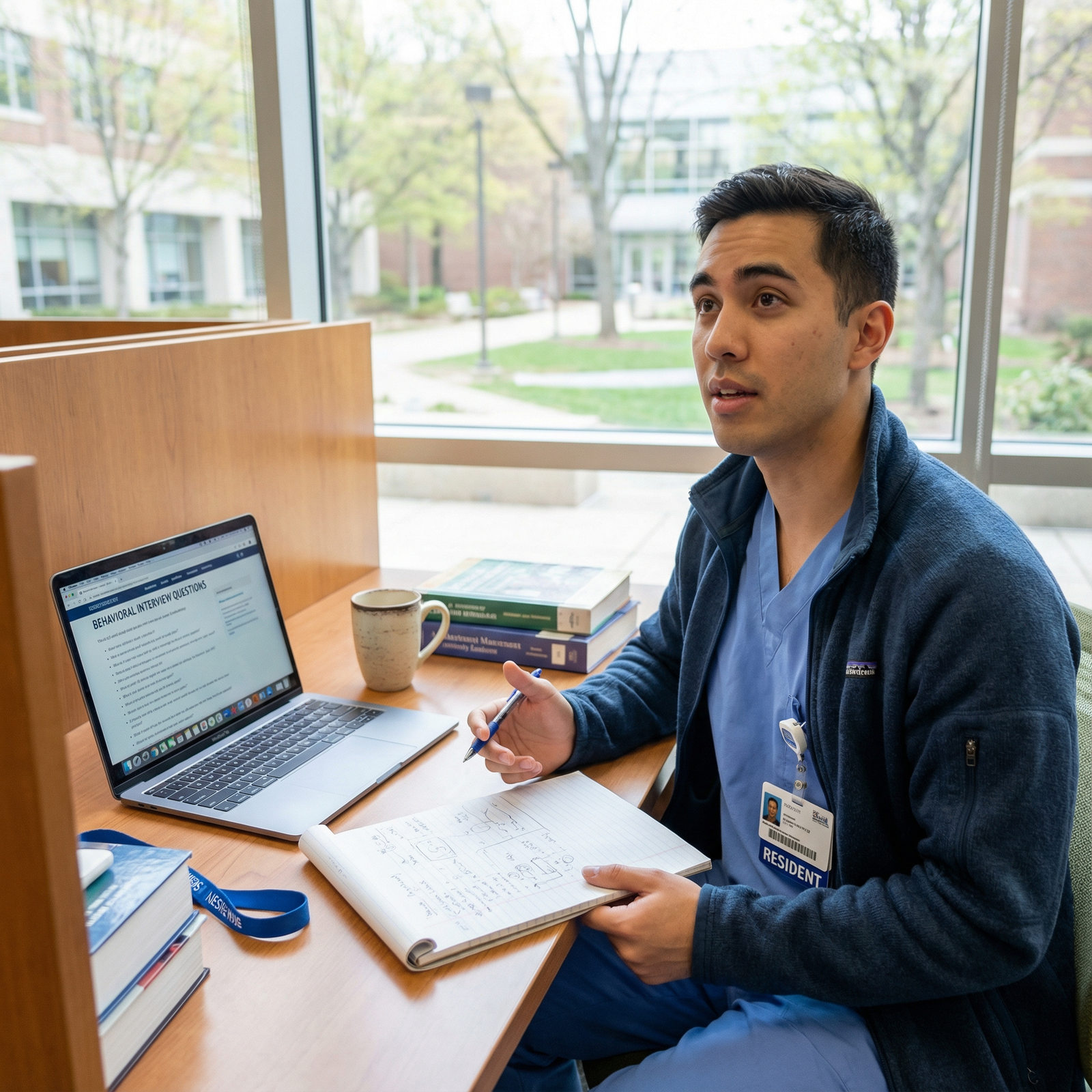
Understanding the Global Health Residency Interview Landscape as a Non-US Citizen IMG
For a non-US citizen IMG (international medical graduate), interviews for global health–focused residency positions can feel like navigating two challenges at once: proving you’re a strong clinical candidate and demonstrating that you understand the realities of international medicine and the US training system. Programs want residents who can thrive clinically and contribute meaningfully to their global health residency track or international medicine initiatives.
This article breaks down the most common residency interview questions you’re likely to face as a foreign national medical graduate applying to global health–oriented programs in the US. You’ll see:
- Why each question is asked
- What interviewers are really assessing
- Strong and weak answer patterns
- Practical frameworks and sample answer structures
- Specific tips for non-US citizen IMGs
Throughout, keep in mind that behavioral interview medical questions (“Tell me about a time when…”) are increasingly common in global health–oriented programs, because they test your judgment, ethics, and ability to work in complex systems.
Foundational “Getting to Know You” Questions
These questions usually appear at the start of the interview and set the tone. They are especially important for a non-US citizen IMG, because they are often your first chance to frame your background, explain your path, and address any “hidden questions” about visas or training differences without sounding defensive.
1. “Tell me about yourself”
This is almost guaranteed. Programs use it to assess:
- How clearly and concisely you communicate
- Whether you have a coherent professional narrative
- How your background fits global health and their program
Common pitfalls for IMGs:
- Reciting your CV chronologically with no theme
- Spending too long on early education or personal life
- Ignoring your status as a non-US citizen IMG when it’s clearly relevant
- Sounding memorized or robotic
A simple 3-part framework:
Identity & background (who you are)
- One to two sentences about your current status and origin
- Example: “I’m a foreign national medical graduate from [Country], currently completing a clinical research fellowship in infectious diseases at [Institution] in the US.”
Trajectory & focus (what you’ve done and why)
- Pick 2–3 defining experiences that tie together: clinical excellence, global health, leadership, or research in international medicine
- Highlight one global health and one US-based clinical or research experience
Future direction & fit (why this program, why now)
- One to two sentences on how their global health residency track or international medicine focus aligns with your long-term goals
- Explicitly connect your background to program strengths
Mini example structure (adapt, don’t copy):
“I’m a non-US citizen IMG from Kenya, and I completed medical school at [University], followed by a year of work in a rural district hospital where I managed high volumes of HIV, TB, and maternal health cases with limited resources. That experience led me to pursue a global health research fellowship focused on implementation of TB screening programs, which I’ve been conducting in collaboration with [US Institution] over the last year. I’m now looking for an internal medicine residency with a strong global health residency track, where I can deepen my clinical training in complex infectious diseases and health systems, while continuing to work in resource-limited settings. Your program’s longstanding partnership with [Country/NGO] and emphasis on bidirectional exchanges aligns closely with my goal of ultimately leading international medicine initiatives focused on TB and HIV care in East Africa.”
Your response should be about 1.5–2 minutes: long enough to be meaningful, short enough to invite follow-up questions.
2. “Why did you choose this specialty?” (with a global health angle)
Programs want to see that you:
- Understand the specialty in the US context
- Have realistic expectations
- Can link your specialty choice to your global health commitments
For global health–oriented roles in internal medicine, family medicine, pediatrics, OB/GYN, or emergency medicine, they’re listening for:
- Exposure to relevant conditions in low- and middle-income countries
- Awareness of systemic and social determinants of health
- Long-term commitment, not “I just want to travel”
Answer structure:
- Initial interest – Brief origin story (clinical case, mentor, or community experience)
- Deeper understanding – What you’ve learned about the specialty in both your home country and in the US
- Global health connection – How this specialty is central to international medicine and health equity
- Future vision – How this specialty enables your long-term global health goals
Avoid clichés like “I like to work with people” or “I like continuity of care” unless you can make them specific and tied to real experiences.
3. “Why this program?” (and “Why our global health track?”)
This is often a make-or-break question. Interviewers want to know:
- Have you researched their program seriously?
- Do you understand what their global health residency track actually offers?
- Are you likely to stay engaged long-term, or just using “global health” as a buzzword?
For non-US citizen IMGs, this is also where they evaluate:
- Whether you understand training and licensing pathways
- If your long-term goals are compatible with US training and visa realities
Before the interview, research:
- Program’s global health initiatives, electives, and partner sites
- Faculty with international medicine work
- Types of residents they’ve matched (alumni stories, research, fellowships)
- Structure of formal global health residency track (scholarly projects, didactics, field time)
Answer outline:
- Specific features – Name 2–3 concrete aspects: e.g., “four-week yearly international rotation,” “partnership with [Country hospital],” “global health equity curriculum,” “refugee health clinic.”
- Alignment with your experiences – Connect those features to what you’ve already done.
- Alignment with your goals – How this program’s structure positions you to reach your long-term global health objectives.
- Mutual benefit – Briefly note how you will contribute: language skills, lived experience in low-resource settings, research, teaching.

Global Health–Specific Interview Questions
Programs with a global health residency track or a strong international medicine focus will test whether your interest is genuine, informed, and ethical.
4. “What does global health mean to you?”
They are probing your conceptual understanding, not just travel experience.
Strong answers emphasize:
- Health equity and social determinants of health
- Systems-level thinking, not just individual missions
- Partnership and local leadership
- Sustainability and respect for local context
Weaker answers overemphasize:
- “Medical missions” without context
- “I like to travel” or “I want to see different cases”
- One-time, short-term experiences as the main goal
Suggested structure:
- Definition – Your concise, values-based definition (e.g., “Global health is about improving health equity worldwide by addressing structural, social, and economic determinants of health, both across and within countries.”)
- Scope – Mention that global health includes domestic marginalized populations (e.g., migrants, refugees, underserved urban or rural communities).
- Your role – How you see yourself contributing (clinical care, research, policy, education).
- Ethical lens – Highlight partnership, capacity-building, and avoiding “voluntourism.”
5. “Tell me about your global health or international medicine experience.”
For a non-US citizen IMG, your entire early training is already “global” compared with US systems, but interviewers want more detail:
- Specific settings: rural vs. urban, public vs. private, resource constraints
- Population served: refugees, migrants, low-income communities
- Scope of responsibility: independent decision-making, supervision, procedures
- Evidence of reflection: what you learned, changes in your practice
Key tip: Translate your experience for a US audience. For example:
- Instead of: “I did a rural internship.”
- Say: “I completed a year-long internship at a 100-bed district hospital in [Region], where I often served as the first-line physician overnight, managing undifferentiated emergencies with limited imaging and lab support. This taught me to prioritize stabilization, make decisions with incomplete data, and adapt guidelines to resource constraints.”
Emphasize how those experiences prepared you for both US training and ongoing global health engagement.
6. “How do you think global health work intersects with care for underserved patients in the US?”
Programs want residents who don’t see “global health” as only happening abroad.
In your answer, connect:
- Social determinants of health you’ve seen overseas and among underserved US patients
- Immigrant, refugee, or undocumented populations in the US
- Structural barriers (insurance, language, transportation, racism, immigration status)
Highlight:
- Your language skills
- Cultural humility and cross-cultural communication
- Any experience you have in US safety-net clinics or community health
Behavioral Interview Questions Tailored to Global Health
Behavioral interview medical questions are designed to reveal how you act under pressure, handle ethical complexity, and work in teams. For global health residency positions, these often involve cross-cultural, ethical, and limited-resource scenarios.
Use the STAR method: Situation, Task, Action, Result. Keep answers structured and specific.
7. “Tell me about a time you worked in a resource-limited setting. How did you adapt?”
For a non-US citizen IMG, this is a major strength—many of your clinical experiences occurred in limited-resource environments.
They are assessing:
- Clinical reasoning when ideal tests or treatments are unavailable
- Creativity and adaptability
- Ethical decision-making when you cannot provide “standard” care
- Emotional resilience
Example outline:
- Situation: Brief description of the setting and patient scenario (e.g., rural hospital without CT or specialist backup).
- Task: What you were responsible for (e.g., managing a trauma patient, triaging multiple sick patients).
- Action: How you prioritized, what alternatives you used, how you communicated with the team and patient/family.
- Result: Clinical outcome if appropriate, plus what you learned.
Avoid implying that “low-resource” automatically means “poor quality” or that you “rescued” patients. Show respect for your colleagues and systems where you trained.
8. “Tell me about a time you disagreed with a supervisor or team member.”
Global health work requires navigating hierarchies, different clinical norms, and sometimes conflicting guidelines. Programs want to see:
- Professionalism
- Communication skills
- Ability to handle power differentials respectfully
- Openness to learning and compromise
As a foreign national medical graduate, it’s especially important to demonstrate that you can respectfully question and discuss concerns—even in a culture where challenging authority may be uncommon.
Tips:
- Choose a situation that’s not trivial but also not extreme misconduct.
- Show that you first sought to understand before insisting on your view.
- End with what you learned about communication and teamwork.
9. “Describe a situation where you faced an ethical dilemma in a global health or low-resource setting.”
Common themes:
- Limited ICU beds or dialysis slots
- Transparent informed consent with language barriers
- Balancing cultural practices with medical safety
- Who gets scarce medications or oxygen
Your answer should show:
- Awareness of ethical principles (autonomy, beneficence, justice)
- Respect for local norms and team decisions
- A process-based approach: consultation, guidelines, discussion with seniors
- Reflection on how this shaped your practice

Questions Specific to Non-US Citizen IMGs
Residency programs will ask questions that indirectly assess your readiness for US training and your immigration status, without explicitly discriminating. You should be prepared to address these areas with clarity and confidence.
10. “Why are you seeking residency training in the United States?”
They need to know:
- That you appreciate both the opportunities and challenges of US training
- You are not treating the US solely as a gateway to leaving your region permanently (unless that is your honest long-term plan, framed thoughtfully)
- You will realistically complete licensing and board exams
Strong answers might include:
- Desire for structured, supervised training with robust subspecialty exposure
- Access to research opportunities that apply to your global health interests
- Opportunity to train in diverse, multicultural patient populations
- Commitment to eventually applying this training either globally or in underserved US communities
Avoid:
- Saying your home country’s training is “bad” or inferior
- Sounding as if you only want a better salary or lifestyle
11. “What challenges do you expect as a non-US citizen IMG, and how will you handle them?”
They are checking:
- Self-awareness regarding cultural, linguistic, and system differences
- Resilience and coping strategies
- Capacity to ask for help
You can mention:
- Adapting to electronic medical records and documentation requirements
- Communicating with patients who have different expectations about physicians
- Navigating visa/immigration logistics (without going into legal detail)
- Moving far from family or support systems
Follow up immediately with concrete strategies:
- Seeking mentorship from other IMGs or global health faculty
- Participating in communication skills workshops
- Actively learning about US healthcare systems, payment models, and legal responsibilities
- Building a local support network
12. “What are your long-term career goals?” (and possible visa subtext)
Programs are listening for:
- A realistic, coherent path: residency → possibly fellowship → role in academia, public health, NGOs, or clinical practice
- A plan that makes sense whether you stay in the US or work abroad
- Alignment with their program type (e.g., community vs academic, research-intensive vs clinically focused)
For a global health residency track applicant, your answer might emphasize:
- Developing expertise in a key area (e.g., infectious diseases, maternal-child health, health systems, refugee health)
- Maintaining long-term partnerships with institutions in low- and middle-income countries
- Combining clinical work with policy, implementation science, or education
- Serving as a bridge between institutions in your home country and your US training environment
You’re not required to have your visa path fully planned out in your answer, but avoid sounding vague or uncertain about whether you want to practice clinically at all.
Common Clinical and Scenario-Based Questions with a Global Health Lens
Beyond behavioral questions, you may be asked clinical or scenario-based questions that integrate global health concepts.
13. “How would you approach caring for a refugee or recently arrived immigrant with complex medical and social needs?”
Interviewers are assessing:
- Cultural humility
- Trauma-informed care
- Ability to coordinate with social work, community resources, and interpreters
- Understanding of barriers such as insurance, legal status, and language
Outline how you would:
- Ensure communication via professional interpreters
- Take a sensitive social and trauma history
- Screen for infectious diseases and mental health conditions common in displaced populations
- Collaborate with social work, case managers, or community organizations
- Address follow-up, transportation, and affordability issues
14. “How do you handle uncertainty in diagnosis or management?”
In global health and international medicine, uncertainty is common due to incomplete data and limited resources. As a non-US citizen IMG, you likely have direct experience here.
Demonstrate:
- Systematic clinical reasoning
- Use of guidelines and evidence where possible
- Seeking help and second opinions appropriately
- Transparent communication with patients about uncertainty
- Avoiding overconfidence and anchoring bias
Link back to how your training in low-resource environments taught you to think carefully and independently while knowing when to escalate concerns.
Practical Preparation Strategies for the Global Health Residency Interview
Beyond knowing the common residency interview questions, your preparation process should be strategic and tailored to both your status as a foreign national medical graduate and your global health focus.
1. Build your personal “Global Health Portfolio”
Prepare concise talking points about:
- 2–3 major global health or international medicine experiences (home country or abroad)
- 1–2 key research or quality improvement projects in global health
- Specific populations you’ve served (e.g., HIV/TB, refugees, rural communities, urban slums)
- Skills you bring: language, cultural competence, systems-thinking, research methods
2. Practice “US Translation” of Your Experience
Shift from:
- Local terms (“house officer,” “SHO,” “internship year”)
- Unfamiliar hospital structures
To:
- Clear, comparative descriptions: “supervised general medical ward physician caring for 20–30 inpatients daily,” “night float with primary responsibility for all new admissions”
Show interviewers that your experience is relevant and understandable in US terms.
3. Prepare for the “Tell me about yourself” and 3–4 core stories
Have well-practiced but natural answers for:
- “Tell me about yourself”
- A challenging case in a low-resource setting
- A conflict or disagreement, especially across cultures or hierarchies
- An ethical dilemma
- A time you demonstrated leadership or advocacy in a global health context
4. Anticipate Practical Questions You’ll Ask Them
As a candidate for a global health residency track, you should also ask thoughtful questions, such as:
- “How are your global health electives structured, and how do residents balance them with core training requirements?”
- “Can you describe any long-term partnerships and how residents contribute over multiple years?”
- “How are international electives funded and supported for non-US citizen IMG residents?”
- “Are there visa-related considerations on international travel or extended electives for foreign national medical graduates?”
Your questions signal that you’re thinking practically and long-term about international medicine.
FAQs: Global Health Residency Interviews for Non-US Citizen IMGs
1. Do global health programs prefer US graduates over IMGs?
Many competitive programs do have a high proportion of US graduates, but well-prepared IMGs with strong clinical skills, clear global health experience, and excellent communication can be highly attractive. Your lived experience in low- and middle-income settings, language abilities, and familiarity with resource constraints can be major strengths—if you articulate them clearly in response to common residency interview questions.
2. How should I address visa issues during the interview?
You don’t need to lead with visa discussion, but you should know what visas the program sponsors (J-1, H-1B) and be prepared to answer briefly and confidently if asked. For example: “I am currently eligible for a J-1 visa and have no pending immigration issues.” Save detailed legal discussions for after you receive an offer or in communication with the program coordinator, not during behavioral interview medical conversations.
3. How can I show that my interest in global health is genuine and not just for my CV?
Be specific and reflective. Talk about particular patients, projects, and partnerships, not just “I went on a mission trip.” Emphasize long-term engagement, learning from local colleagues, and a commitment to health equity that includes underserved communities in the US. Concrete actions—research, quality improvement, language learning, or sustained work with a specific community—speak louder than generic claims.
4. What if I have limited formal global health experience outside my home country?
As a non-US citizen IMG, your home-country training is global health-relevant. Focus on:
- Resource constraints you navigated
- Populations you served (rural, underserved, marginalized)
- Systemic challenges (infrastructure, financing, access)
- Lessons you’ll bring to international medicine and to caring for underserved patients in the US
You don’t need multiple overseas electives to be a strong global health residency candidate. You need thoughtful reflection, clear communication, and an authentic long-term commitment to health equity.
By understanding and preparing for these common interview questions for non-US citizen IMGs in global health, you can present yourself not just as a qualified applicant, but as a future leader in international medicine—someone who will use residency training as a platform for meaningful, ethical, and sustained global health impact.