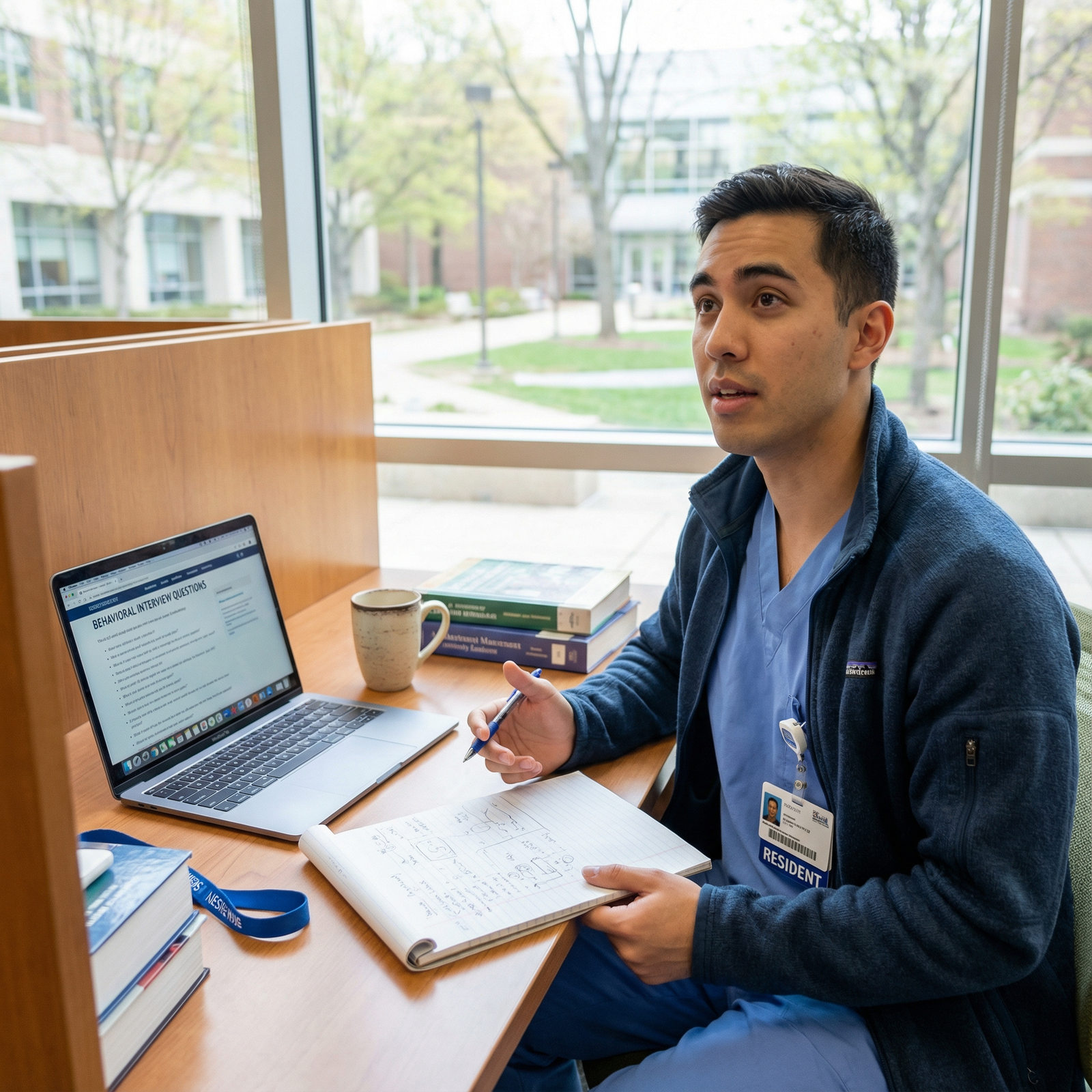
Understanding the Global Health Residency Interview Landscape as a US Citizen IMG
As a US citizen IMG (American studying abroad or who completed medical school internationally), you bring a unique perspective to any global health–focused residency. Programs value your adaptability, cross-cultural exposure, and often your language skills—but they will probe carefully to understand why you trained abroad, how you’ve prepared for US clinical practice, and how serious you are about a career in international medicine.
Behavioral interview medical questions are increasingly common in global health–oriented programs and global health residency tracks. Expect a mix of:
- Standard residency interview questions
- IMG-specific questions
- Global health–focused questions
- Behavior-based and situational questions
- Targeted follow-ups exploring your path as an American studying abroad
Below is a comprehensive guide to the most common interview questions you’re likely to face, what programs are really asking, and how to answer clearly and confidently.
1. Core “Tell Me About Yourself” and Background Questions
These questions set the tone for the interview and are almost guaranteed to appear.
1.1 “Tell me about yourself.”
This is not an invitation to recite your CV; it’s a structured, concise professional narrative.
What they’re really asking:
- Can you organize your thoughts clearly?
- Do you understand your own story as a US citizen IMG?
- How do your experiences connect logically to a career in global health?
How to structure your answer (2–3 minutes):
- Present – Who you are now as a trainee
- Past – Key education and experiences (including why you trained abroad)
- Global Health Focus – How international medicine became central for you
- Future – Why this specialty/track and this program
Example outline for a US citizen IMG in Global Health:
- Start with your clinical interests and current status (e.g., recent graduate doing US observerships).
- Briefly explain why you went abroad for medical school (be honest, but frame it positively).
- Highlight 1–2 formative global health or cross-cultural experiences.
- Connect it all to your long-term goals in global health and why you’re applying here.
Pitfalls to avoid:
- Rambling or reciting your life story chronologically from high school
- Over-explaining “why abroad” in a defensive tone
- Failing to mention global health interests early
1.2 “Walk me through your CV.”
Similar to “tell me about yourself,” but more linear and focused on transitions.
Focus on:
- Major transitions (US → international medical school → US clinical training)
- Rationale for each move (academics, cost, cultural exposure, global health interest)
- How each step prepared you for residency and international medicine
Keep it concise (3–4 minutes) and emphasize:
- Increasing responsibility
- Evidence of commitment to underserved care/global health
- Research, quality improvement, or public health experiences related to international medicine
1.3 “Why did you choose to attend medical school abroad as a US citizen?”
This is a critical question for an American studying abroad.
What they’re really asking:
- Was this a thoughtful choice or just a last resort?
- Did you make the most of the opportunity?
- Are you realistic about re-entering the US system?
Strong ways to frame your answer:
Academic/Opportunity-based:
“I wanted a rigorous clinical curriculum with early patient contact, and this school provided extensive hands-on opportunities in diverse health systems, which aligned with my interest in global health.”Global Health Motivation:
“I knew early that I wanted to work in international medicine. Training abroad allowed me to learn health care delivery in multiple systems, develop cultural humility, and understand global health disparities firsthand.”Personal & Practical Factors (briefly, without apology):
“I applied broadly, and my strongest option was at [School]. Initially I was disappointed, but it became a powerful opportunity—I gained exposure to [X, Y, Z] that I couldn’t have had in a traditional US pathway.”
Avoid:
- Blaming US schools, the match system, or “luck”
- Dwelling on perceived stigma of being an IMG
- Sounding like you “ended up there” without intention
Link this answer to your advantages as a US citizen IMG—adaptability, cultural competence, language skills, resilience.

2. Global Health–Focused Interview Questions
For a global health residency track or programs with strong international medicine components, expect direct questions about your global health vision and experience.
2.1 “Why are you interested in global health or international medicine?”
What they want:
- Evidence of genuine, sustained interest—not “mission trip tourism”
- Understanding that global health is complex and longitudinal
- Awareness of ethical issues and health equity
Answer framework:
- Origin story: Brief experience that sparked your interest
- Deepening commitment: Courses, rotations, research, or sustained work
- Mature understanding: Mention equity, partnership, capacity-building, systems
- Future goals: How this residency fits into realistic long-term global health work
Stronger response elements:
- Referring to longitudinal work with a community or organization
- Acknowledging that global health is “here and there” (local underserved + international)
- Describing learned lessons: humility, collaboration, sustainability
2.2 “Describe a meaningful global health or cross-cultural experience you’ve had.”
This is a classic behavioral interview medical question with a global focus.
Use the STAR method:
- Situation – Where and what was happening?
- Task – What was your role?
- Action – What did you do?
- Result/Reflection – What changed, and what did you learn?
What to emphasize:
- Respect for local systems and colleagues
- Learning rather than “rescuing”
- Cultural humility and adaptability
- Specific skills relevant to residency (communication, resourcefulness, teamwork)
Avoid:
- Hero narratives (“I saved the clinic with my idea…”)
- Criticizing local practices without context
- Romanticizing poverty or suffering
2.3 “How do you envision global health fitting into your long-term career?”
Programs want to know if your goals match what they can provide.
Key elements:
- Realism: You understand global health work is often part-time, project-based, and integrated with clinical roles, academics, or public health
- Flexibility: You’re open to different models (short-term, long-term, implementation science, capacity-building)
- Specific interests: e.g., non-communicable diseases in low-resource settings, refugee health, maternal and child health, implementation of health systems innovations
Link your answer to:
- Their global health residency track offerings
- Mentors or projects you’re excited about at that program
- A plan for balancing US board certification, income, and family with global work
2.4 “What ethical challenges have you encountered or considered in global health?”
Global health–oriented programs often probe your ethical reasoning.
Potential themes:
- Working beyond your level of training in low-resource settings
- Short-term rotations and concerns about sustainability
- Informed consent, language barriers, and autonomy
- Power dynamics between visiting teams and local staff
Show that you:
- Recognize these complexities
- Value long-term partnership and local leadership
- Prioritize patient safety and informed consent
- Are willing to be supervised and follow local protocols
3. Behavioral Interview Questions: How You Work and Think
Behavioral questions help programs assess how you act under pressure, in teams, and with patients from diverse backgrounds—central to global health and residency.
3.1 Common Behavioral Interview Medical Questions
Expect variations of:
- “Tell me about a time you made a mistake.”
- “Describe a time you had a conflict with a team member and how you resolved it.”
- “Tell me about a time you received critical feedback and how you responded.”
- “Describe a time you had to work with limited resources.”
- “Tell me about a challenging patient interaction and what you learned.”
- “Describe a situation where you advocated for a patient.”
Use the STAR method consistently. Prepare 6–8 stories you can adapt to different prompts.
Aim for stories that highlight:
- Cultural sensitivity and cross-cultural communication
- Flexibility in resource-limited environments
- Collaboration across disciplines or cultures
- Initiative with respect for hierarchy and local norms
- Integrity and accountability
3.2 Example: “Tell me about a time you worked in a resource-limited setting.”
As a US citizen IMG applying to global health, this is powerful territory.
Stronger answer components:
- Specific context: “Rural clinic in [Country], limited imaging, few specialists.”
- Clinical uncertainty: How you approached diagnosis and management safely.
- Collaboration: How you relied on local staff’s knowledge and experience.
- Ethical reflection: Recognizing system constraints, avoiding overstepping your role.
- Learning: What changed in your practice or mindset afterward.
Avoid:
- Portraying the setting as “primitive” or “backward”
- Suggesting that low-resource means low standard of care
- Overemphasizing your personal heroism
3.3 Handling “Weakness,” “Mistake,” and “Challenge” Questions
Programs care less about the specific mistake and more about your insight and growth.
For “weakness”:
- Choose a real but non-fatal trait (e.g., overcommitting, difficulty delegating).
- Provide specific steps you’ve taken to improve.
- Show measurable progress.
For “mistake”:
- Describe what happened succinctly, without blaming others.
- Emphasize what you learned and how you changed behavior.
- Include a patient-safety or systems perspective if relevant.
For “challenge/failure”:
- Focus on resilience and adjustment.
- For US citizen IMGs, you might discuss navigating new systems, language, or cultural norms—but end with growth, not victimhood.

4. IMG-Specific and US System–Focused Questions
Programs will probe your readiness for US training and your understanding of the system.
4.1 “What unique strengths do you bring as a US citizen IMG?”
This is your opportunity to reframe the “IMG” label as an advantage.
Examples of strengths:
- Adaptability and resilience from training in a different system
- Strong clinical exposure and hands-on skills (if true)
- Multilingual abilities and cultural competence
- Experience with different health care financing and delivery models
- Perspective on health disparities across countries
Tie these strengths specifically to what’s useful in:
- Global health residency tracks
- Safety-net or diverse patient populations
- Quality improvement and systems thinking
4.2 “How have you prepared for practicing in the US health care system?”
They want evidence you can transition smoothly.
Include:
- US clinical experience (USCE): electives, sub-internships, observerships
- Familiarity with EMRs, multidisciplinary teams, residency structure
- Participation in US-based research, quality improvement, or public health projects
- Understanding of US-specific guidelines, standard of care, and patient expectations
If your USCE is limited:
- Emphasize how your experiences abroad mirrored or prepared you for US practice.
- Discuss proactive steps: online courses, guideline review, case-based learning, mentorship from US-based physicians.
4.3 “Tell me about your US clinical experience.”
Be specific:
- Where, when, how long, and in what roles
- Types of patients seen and systems used
- Concrete skills practiced (notes, presentations, plans)
- Direct attending feedback, especially about your adaptation and communication
- Any global health components (refugee clinics, immigrant health, telehealth with international partners)
4.4 “Do you foresee any challenges transitioning from your international medical school to US residency?”
This tests insight and humility.
Good approach:
- Acknowledge 1–2 realistic challenges (e.g., documentation expectations, pace, EMR systems).
- Explain how you’ve already started adapting.
- Express confidence grounded in evidence from your USCE or past transitions.
Avoid saying:
- “No challenges at all.” (comes across as naive)
- “I’m worried I won’t be as good as US grads.” (undermines your candidacy)
Instead: calm, thoughtful self-awareness plus proactive solutions.
5. Program Fit, Motivation, and Logistics
Every residency wants to know: Why us? Why here? Why now?
5.1 “Why this specialty?” (e.g., internal medicine, family medicine, pediatrics)
Even with a global health focus, you must show you’re solid on your core specialty.
Connect:
- Patient populations you’re drawn to
- Clinical problems and settings you enjoy
- Role of your specialty in health systems and global health
- Your long-term plan (e.g., IM → infectious diseases, FM → community-based global health, Peds → child health in LMICs)
5.2 “Why this program and this city/region?”
Do specific homework:
- Global health residency track structure and partners
- International electives, research, or GME-supported trips
- Local underserved populations (refugees, migrants, rural communities)
- Faculty whose work aligns with your interests
As a US citizen IMG, also address:
- Roots or connections to the region (family, mentors, previous rotations)
- Your understanding of the patient population and how your background will help you serve them
5.3 “Do you have any questions for us?”
This is not optional. Show you’re serious about global health and this residency.
Examples of thoughtful questions:
- “How do residents in the global health residency track balance international rotations with core clinical requirements?”
- “What are examples of longitudinal international medicine projects residents have led or contributed to?”
- “How does the program support residents who want to work with local immigrant or refugee communities?”
- “What mentorship is available for residents interested in global health research or implementation science?”
Avoid questions that are easily answered on the website or that focus only on lifestyle.
6. Strategy and Practice Tips for US Citizen IMGs in Global Health
6.1 Build a Story Bank
Before interview season:
- Write out 6–8 key experiences you can adapt across questions:
- One major global health clinical experience
- One cross-cultural communication challenge
- One serious mistake and what you learned
- One conflict or difficult team interaction
- One leadership or advocacy example
- One example of working in a resource-limited setting
- One research or QI project related to international medicine
- One situation where you adapted quickly to a new system
Practice telling each story using STAR, in 1.5–3 minutes.
6.2 Practice Common Residency Interview Questions Aloud
Especially focus on:
- “Tell me about yourself.”
- “Why did you go to medical school abroad?”
- “Why global health?”
- “How have you prepared for US residency?”
- “What are your long-term career goals in international medicine?”
Practice with:
- Mock interviews (friends, mentors, your school’s career office)
- Video recording yourself to refine pacing, clarity, and nonverbal communication
- Online question banks specifically targeting residency interview questions
6.3 Show, Don’t Just Tell
When talking about values important in global health—like cultural humility or commitment to underserved populations—back them up with:
- Specific stories and outcomes
- Longitudinal commitments rather than one-off experiences
- Reflections showing complex understanding (e.g., health systems, ethics)
Programs can tell when someone’s interest in global health is superficial. As a US citizen IMG, your lived experiences abroad are powerful evidence; use them thoughtfully.
6.4 Managing Tough or Unexpected Questions
You may face uncomfortable or blunt questions, such as:
- “Why should we take a chance on an IMG when we have many US grads?”
- “What would you do if you don’t match this year?”
Respond with:
- Calm, respectful tone
- Brief acknowledgement of the reality
- Focus on strengths, preparation, and resilience
- Clear, practical back-up plans (e.g., additional USCE, research, MPH, further Step prep)
Avoid defensiveness, long justifications, or criticizing the system.
FAQs: Global Health Residency Interviews for US Citizen IMGs
1. How should I answer “tell me about yourself” as a US citizen IMG interested in global health?
Frame it as a concise narrative linking your path as an American studying abroad to your commitment to international medicine. Start with where you are now, explain why you trained abroad and how it shaped your skills and perspective, highlight key global health or cross-cultural experiences, and end with your future goals and why this specialty/program is the right next step.
2. What are the most common global health–specific residency interview questions?
Common questions include:
- “Why are you interested in global health or international medicine?”
- “Describe a meaningful cross-cultural or global health experience.”
- “How do you see global health fitting into your long-term career?”
- “What ethical issues have you encountered or considered in global health work?”
- “Tell me about a time you worked in a resource-limited setting.”
Preparing structured STAR stories around these themes is crucial.
3. How can I stand out as a US citizen IMG applying to a global health residency track?
Emphasize the unique advantages of your background: real experience navigating different health systems, cultural competence, language skills, and evidence of sustained commitment to underserved populations. Show you’ve prepared thoughtfully for US training (USCE, guideline familiarity, mentorship) and that your global health interests match the program’s specific opportunities.
4. What if I don’t have extensive “traditional” global health experience but still want to pursue international medicine?
Many applicants lack long-term overseas work but still present strong global health profiles. Focus on:
- Longitudinal work with local immigrant, refugee, or underserved communities
- Research or quality-improvement projects addressing health disparities
- Coursework in global health, public health, or health policy
- Demonstrated interest in health equity and systems of care
Use your interviews to show depth of understanding and genuine commitment, not just number of trips abroad.
Preparing thoughtfully for these common interview questions—especially as a US citizen IMG with a clear interest in global health—will help you communicate your story with confidence and clarity, and demonstrate you’re ready to thrive in a global health–oriented residency.