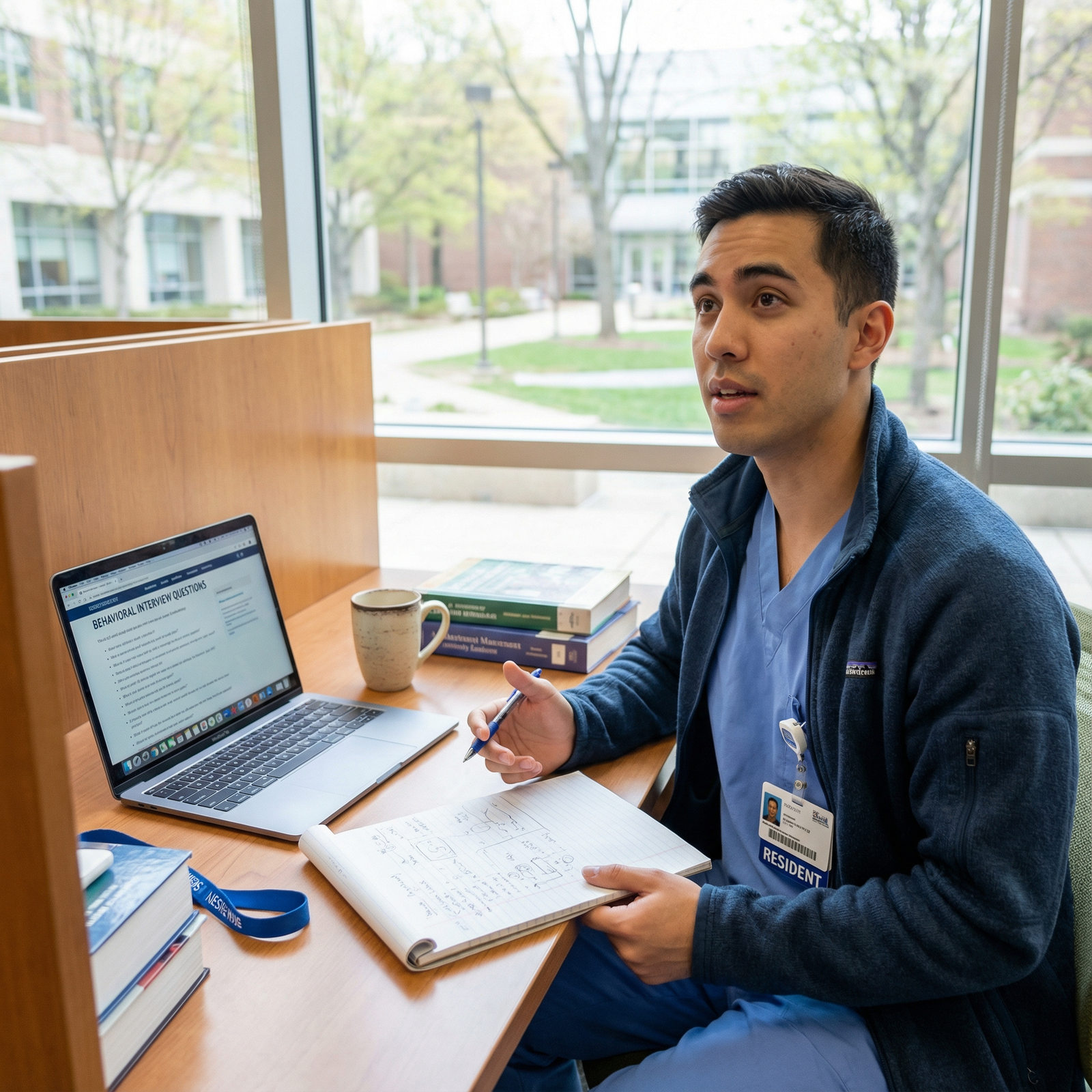
Preparing for a urology residency interview as an MD graduate requires more than knowing your CV and Step scores. Programs are assessing your clinical maturity, self-awareness, professionalism, and true fit for a demanding surgical subspecialty. This guide walks you through the most common urology residency interview questions, why they’re asked, and how to answer them strategically.
Understanding the Urology Residency Interview Landscape
Urology is a small, competitive field. As an MD graduate from an allopathic medical school, you are likely well-prepared clinically, but the allopathic medical school match in urology has distinct nuances:
- Most programs are relatively small; your behavior and personality carry extra weight.
- Faculty are looking for future colleagues they can trust in the OR and on call.
- Interview days are heavily behavior-based, with a strong emphasis on teamwork, integrity, resilience, and teachability.
Many programs use behavioral interview medical frameworks—questions beginning with “Tell me about a time when…”—to predict how you’ll perform as a resident. The more you understand this style, the better your answers will land.
Key goals of the interview day:
- Confirm you are safe, professional, and trustworthy.
- Assess if you will work well in their team and culture.
- Understand your genuine interest in urology and in their specific program.
- Evaluate your capacity for growth, feedback, and resilience under pressure.
Keep this lens in mind as we walk through common questions and ideal strategies.
1. Classic Icebreakers and “Tell Me About Yourself”
These questions often set the tone. Many MD graduate residency applicants underestimate how important the opening impression is. It’s usually your first chance to demonstrate structure, clarity, and maturity.
“Tell me about yourself”
This is almost guaranteed. Programs want to see how you frame your story and what you choose to highlight.
What they’re really asking:
- Can you summarize your background succinctly?
- Do you understand what’s most relevant to urology residency?
- Do you sound authentic and reflective, or rehearsed and generic?
Structure to use (2–3 minutes max):
- Brief background – Education, where you’re from, key identity points.
- Medical school arc – Major themes: what you explored, what you learned, key urology-relevant experiences.
- Why urology / now – How your experiences led you to urology.
- Who you are as a colleague – One or two defining strengths or roles you take on in teams.
Example outline answer:
- Origin and undergrad: 2–3 sentences
- Medical school and clinical interest evolution: 4–5 sentences
- Pivot to urology: 3–4 sentences with specific experiences
- End with a professional snapshot: 2–3 sentences about your role on teams and what you’re seeking in residency
Avoid reciting your CV. Focus on your story arc.
“Walk me through your CV” / “How did you get here today?”
Similar to “tell me about yourself,” but more chronological. Still avoid reading line-by-line.
Tips:
- Choose 3–4 “anchor points” (e.g., gap year research, leadership, sub-I in urology, major project).
- Briefly connect each to a skill or insight relevant to residency (teamwork, persistence, communication, etc.).
- Finish with a forward-looking statement: how those experiences prepared you for residency.
“Why urology?”
This is crucial in the urology match. Programs want to know you understand what the specialty entails beyond “surgery plus clinic.”
Key elements:
- Exposure: Concrete clinical experiences (cases, patient populations, mentors).
- Fit: What aspects of urology specifically align with your personality and interests (e.g., intricate surgery, continuity of care, oncologic complexity, minimally invasive technology).
- Reflection: Evidence you understand both the highs and the less glamorous parts (night call, emergencies, long OR days).
Stronger answer components:
- Reference specific patients or cases that shaped you (de-identified).
- Mention the diversity of urology: oncology, reconstruction, stones, pediatric, functional, men’s health, female pelvic medicine, etc.
- Show awareness of lifestyle realities, not just perceived perks.
“Why did you choose to apply for urology residency instead of another surgical field?”
They want to ensure you consciously chose urology, not just “any surgery.”
Strategies:
- Respectfully differentiate urology from other surgical fields you considered.
- Highlight urology’s unique mix of long-term relationships, breadth of procedures, rapidly evolving technology (robotics, endourology), and impactful cancer care.
- Avoid disparaging other specialties.
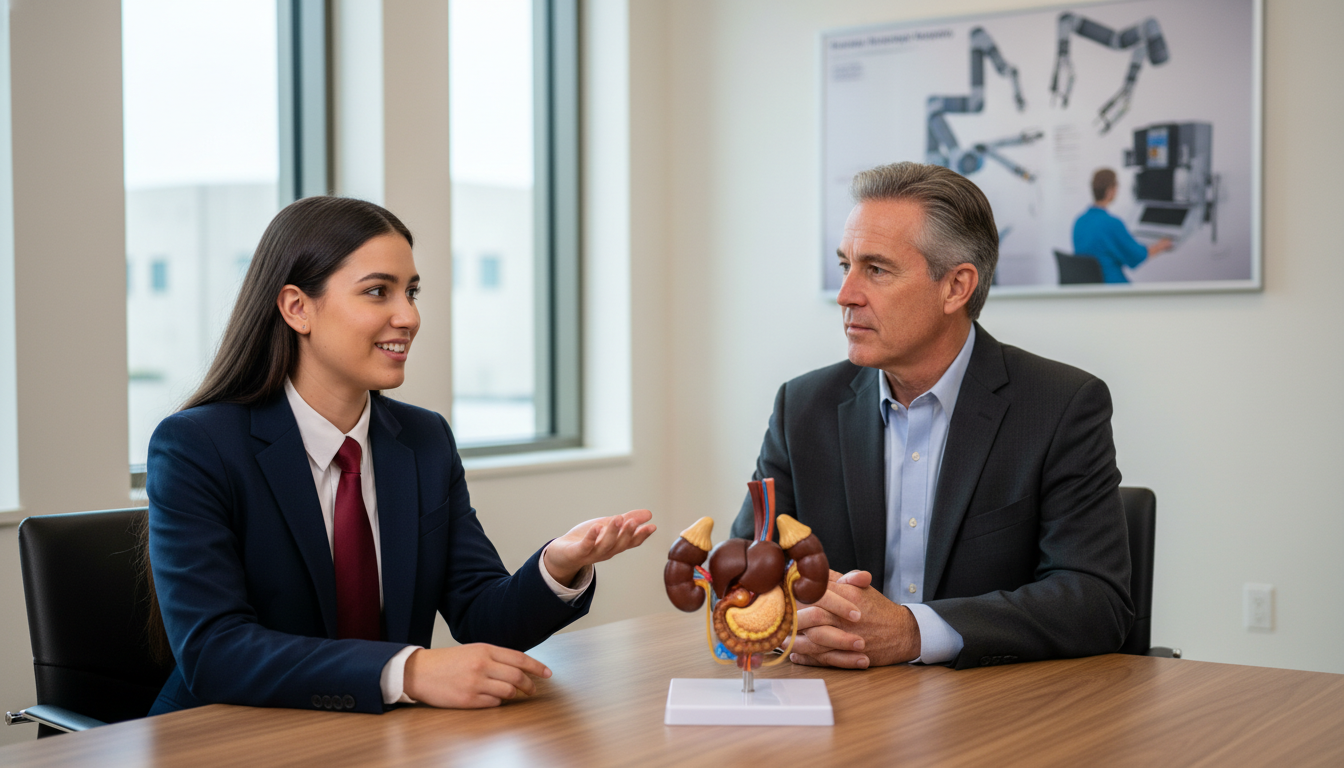
2. Common Behavioral and Situational Questions in Urology Interviews
Most residency interview questions in urology are behavioral. Programs assume past behavior predicts future performance. Use the STAR method:
- Situation – Brief context
- Task – Your role or responsibility
- Action – What you did
- Result/Reflection – What happened and what you learned
“Tell me about a time you made a mistake.”
This is almost universal in a behavioral interview medical context.
What they’re assessing:
- Honesty and accountability
- Ability to self-reflect and grow
- Emotional regulation after failure
Guidelines:
- Pick a real mistake, but not a catastrophic ethical or safety violation.
- Own your role without blaming others.
- Focus heavily on what you changed afterward.
Example types of scenarios:
- Miscommunicating a follow-up plan.
- Delayed escalation of a concerning finding.
- Time management failure that affected your team.
Avoid: “I care too much and work too hard” disguised as a mistake.
“Tell me about a conflict you had on a team.”
Urology is team-heavy—OR staff, anesthesia, consult services, nursing, residents.
Focus on:
- How you identified the conflict.
- How you approached the other person (respectfully, directly, timely).
- How you listened and adjusted.
- Outcome and lesson learned about interprofessional collaboration.
Red flags: Being overly negative about others, sounding inflexible, or implying you always “won” the conflict.
“Tell me about a time you received critical feedback.”
Program directors care deeply about how residents respond to feedback, especially in a surgical training environment.
Elements of a strong answer:
- Clearly state the feedback (e.g., about your notes, efficiency, OR etiquette, communication).
- Share your initial emotional reaction honestly but professionally (“I felt defensive at first…”).
- Describe concrete steps you took to improve.
- If possible, show evidence of improvement or follow-up feedback.
“Tell me about a challenging patient or family interaction.”
Communication and empathy are central in urology—fertility, continence, sexuality, cancer diagnoses, chronic pain.
Target themes:
- Navigating emotions (anger, fear, denial).
- Explaining complex or sensitive issues in understandable terms.
- Managing your own reactions while preserving boundaries.
Choose a case that shows:
- Respect for patient autonomy and values.
- Use of interpreter services when appropriate.
- Collaboration with the team (e.g., involving palliative care, social work, or attending).
“Describe a time you were under significant pressure. How did you handle it?”
Residency involves call, emergencies, OR stress, and fatigue.
Consider examples like:
- Managing multiple sick patients on call.
- Handling a sudden decompensation while already busy.
- Balancing Step exams with clinical rotations or major personal stressors.
Highlight:
- How you prioritized tasks.
- How you sought help appropriately.
- How you used systems (checklists, sign-out structures, or team resources).
- Healthy coping and reflection, not just “I put my head down and powered through.”
3. Motivation, Fit, and Program-Specific Questions
Programs need to know if you are genuinely interested in their environment and culture. This is especially important in a smaller field like urology, where fit is critical.
“Why our program?”
A lazy or generic answer is a major red flag.
Before the interview:
- Study the program website (rotations, research, call structure, resident wellness, fellowship outcomes).
- Note what is distinctive about that program: early operative autonomy, high-volume robotics, strong reconstruction, mentorship model, resident-run clinic, etc.
- Talk to current residents if possible.
In your answer, include:
- 2–3 program-specific elements.
- 1–2 ways your background and interests align with those elements.
- A comment on culture/people (“I really appreciated how candid the residents were about support from faculty…”).
“What are you looking for in a urology residency program?”
This allows you to communicate both your values and your understanding of training.
Examples of thoughtful priorities:
- Strong operative experience and graduated independence.
- Robust mentorship and feedback.
- Breadth of subspecialty exposure (oncology, endourology, reconstruction, pediatrics, FPMRS, andrology).
- Research infrastructure if you are academically inclined.
- Supportive, collaborative culture and attention to resident wellness.
Avoid listing only prestige or fellowship placement. Those matter, but balance them with evidence you care about personal and professional growth.
“Where else are you interviewing?” (or “Are we your top choice?”)
These can be awkward. Be honest but diplomatic.
Tips:
- Avoid naming specific competing programs unless explicitly asked, and then stay general (“I’m interviewing at a mix of large academic centers and a few mid-sized university programs in the Northeast and Midwest”).
- If you know you would rank them highly, say so genuinely but avoid match-violating promises (e.g., “I plan to rank your program very highly because…”).
- Never lie; programs and applicants both dislike insincerity.

4. Technical, Academic, and Ethical Questions
While most urology interviews are not formal oral boards, some faculty will probe your clinical thinking or professional judgment.
Clinical/technical style questions
These are usually broad rather than detailed pimping:
- “Tell me about an interesting urology case you were involved in.”
- “What aspects of urologic surgery have you found most engaging?”
- “How would you explain a prostate cancer diagnosis to a newly diagnosed patient?”
Strategies:
- Choose a case that reflects common urologic problems (stones, BPH, prostate or bladder cancer, hematuria workup).
- Explain at a high level: presentation, evaluation (labs/imaging), general management options.
- Emphasize patient education and shared decision-making more than advanced technical details.
If you don’t know an answer: say so frankly, then walk through how you would think about it logically or how you would look it up or ask for help.
Research and academic questions
Especially in academic centers, expect:
- “Tell me about your research.”
- “What did you actually do on that project?”
- “What was the most challenging part of your research experience?”
Key points:
- Be prepared to discuss aims, methods, your role, key results, and limitations.
- Own your contribution honestly—don’t overstate.
- Highlight skills transferable to residency: critical thinking, persistence, collaboration, handling setbacks, presenting at meetings.
If you have urology-specific research, tie it to your interest in the field. If not, frame how your research skills still apply.
Ethical and professionalism scenarios
Programs may explore ethics to gauge judgment and integrity:
- “What would you do if you saw a resident or attending behaving unprofessionally?”
- “Have you ever witnessed something that concerned you from an ethical standpoint?”
- “How would you handle a situation where a senior asks you to do something you’re uncomfortable with?”
Strong answers:
- Acknowledge the complexity and power dynamics.
- Prioritize patient safety and professionalism.
- Emphasize seeking guidance (trusted attending, program leadership, institutional policies) while avoiding gossip or impulsive reactions.
- Show understanding of institutional mechanisms (GME office, ombudsperson, reporting structures) without sounding punitive.
5. Personal Qualities, Strengths/Weaknesses, and Career Goals
These questions test your self-awareness and long-term vision—essential in any MD graduate residency applicant, especially in a small surgical specialty.
“What are your strengths?”
Avoid generic buzzwords without proof.
Better approach:
- Pick 2–3 strengths relevant to urology (e.g., calm under pressure, team-oriented, meticulous, good communicator, resilient).
- Provide 1 concrete example for each.
- Briefly connect them to residency tasks (e.g., call nights, OR teamwork, patient counseling).
“What are your weaknesses?” / “What is an area you’re working on?”
This is not a trap, but they can tell if you’re being evasive.
Guidelines:
- Choose a real, non-catastrophic area (e.g., delegating, overcommitting, public speaking, asking for help late).
- Describe when and how it shows up.
- Most importantly, describe specific steps you’re taking to improve and some evidence of progress.
Avoid: “I’m a perfectionist,” “I work too hard,” unless you can concretely show how it actually created a problem and what you’ve done to manage it.
“Where do you see yourself in 5–10 years?”
They’re assessing your career direction and whether their program can help you get there.
Consider:
- Do you envision an academic, community, or hybrid practice?
- Are you drawn to a subspecialty (e.g., oncology, endourology, reconstruction, pediatrics), or are you open?
- Are education, research, advocacy, or leadership important to you?
You don’t have to be certain about a subspecialty—especially as an MD graduate just entering residency—but you should show curiosity and a sense of purpose.
Personal life and resilience
Some programs will explore how you maintain balance:
- “What do you like to do outside of medicine?”
- “How do you manage stress?”
Be honest. Describe specific hobbies or interests (exercise, music, cooking, reading, family time, etc.) and how they help you stay grounded. They’re looking for signs you have healthy coping strategies and a life outside the hospital.
6. Practical Preparation Strategies and Sample Responses
Understanding common questions is only half the battle. Here’s how to prepare effectively for your urology interviews.
Use your application as your script
Anything on your CV, personal statement, or ERAS application is fair game:
- Review every research project and know the basics.
- Re-read your personal statement—be ready to expand on any story or theme.
- Recall details about urology rotations, away rotations, and mentors you’ve mentioned.
If an interviewer asks, “You wrote in your personal statement that X—can you elaborate?”, you should be ready with specifics.
Develop structured answers, not memorized speeches
For high-frequency questions—especially “tell me about yourself” and “why urology”—outline bullet-point structures rather than word-for-word scripts. This keeps you:
- Natural
- Flexible
- Less likely to panic if interrupted
Practice aloud so you can answer in 1.5–3 minutes per major question.
Practice behavioral questions with the STAR method
Make a list of 8–10 core experiences that you can adapt to many questions:
- A time you failed or made a mistake.
- A time you handled conflict.
- A time you led a team.
- A time you were a good follower.
- A challenging patient interaction.
- A high-pressure clinical situation.
- A research or project setback.
- A time you advocated for a patient or colleague.
For each, write out the Situation, Task, Action, Result/Reflection in brief form. This bank of stories will help you answer most behavioral questions smoothly.
Prepare your own questions for programs
Interviews are two-way. Asking thoughtful questions shows insight and helps you assess fit. You might ask about:
- Operative autonomy and how it progresses across PGY levels.
- Resident involvement in clinic and continuity of care.
- Mentorship structure (formal/informal).
- Support for research and conference attendance.
- Approach to wellness and managing burnout.
- Recent changes or improvements in the program.
Avoid questions that are easily answered on the website or that suggest you haven’t read basic information.
Handling virtual interviews
Many urology programs use virtual formats at least partially. Treat them as seriously as in-person:
- Test your technology, camera, and microphone ahead of time.
- Choose a quiet, neutral background and professional attire.
- Position the camera at eye level and look into it when speaking.
- Keep notes nearby, but don’t read from them; use them only as quick prompts.
FAQ: Common Concerns About Urology Residency Interviews
1. How different are urology interviews from other allopathic medical school match interviews?
Urology interviews emphasize many of the same core competencies (professionalism, teamwork, communication) as other surgical fields, but the small size of the field and programs means “fit” often carries more weight. Faculty may know each other nationally, and your reputation matters. There is usually a strong focus on your genuine interest in urology, your understanding of the specialty’s realities, and your potential to be a future colleague in a close-knit community.
2. How should I answer if I’m asked about my Step scores or an academic difficulty?
Be honest, brief, and focused on growth. Acknowledge the issue without excuses, describe contributing factors, and then spend most of your time on what you changed—study strategies, wellness habits, time management—and how your subsequent clinical performance reflects your growth. Programs care less about the number itself and more about your insight and trajectory.
3. What if I get a question I truly don’t know how to answer?
Pause, take a breath, and it’s acceptable to say, “That’s a great question; let me think for a moment.” For clinical questions, admit when you don’t know, then walk through how you would approach the problem or find the answer. For personal/behavioral questions, you can say, “I don’t have that exact experience, but a related situation was…” and pivot to a similar example. Composure under uncertainty is an asset.
4. How important are social events and informal interactions during urology interviews?
Very important. Pre-interview dinners, resident-only sessions, and informal chats are often where programs assess your interpersonal style and where you can assess theirs. Treat these as part of the interview day: be yourself, be kind and inclusive, avoid negative talk about other programs or applicants, and show genuine curiosity about residents’ lives and satisfaction. Programs frequently discuss impressions from these settings when forming their rank lists.
By anticipating these common urology residency interview questions and preparing structured, authentic responses, you position yourself as a mature, reflective MD graduate ready to thrive in a demanding and rewarding field. Focus on telling your story clearly, illustrating your growth with concrete examples, and showing that you understand both the opportunities and the realities of a urology residency.