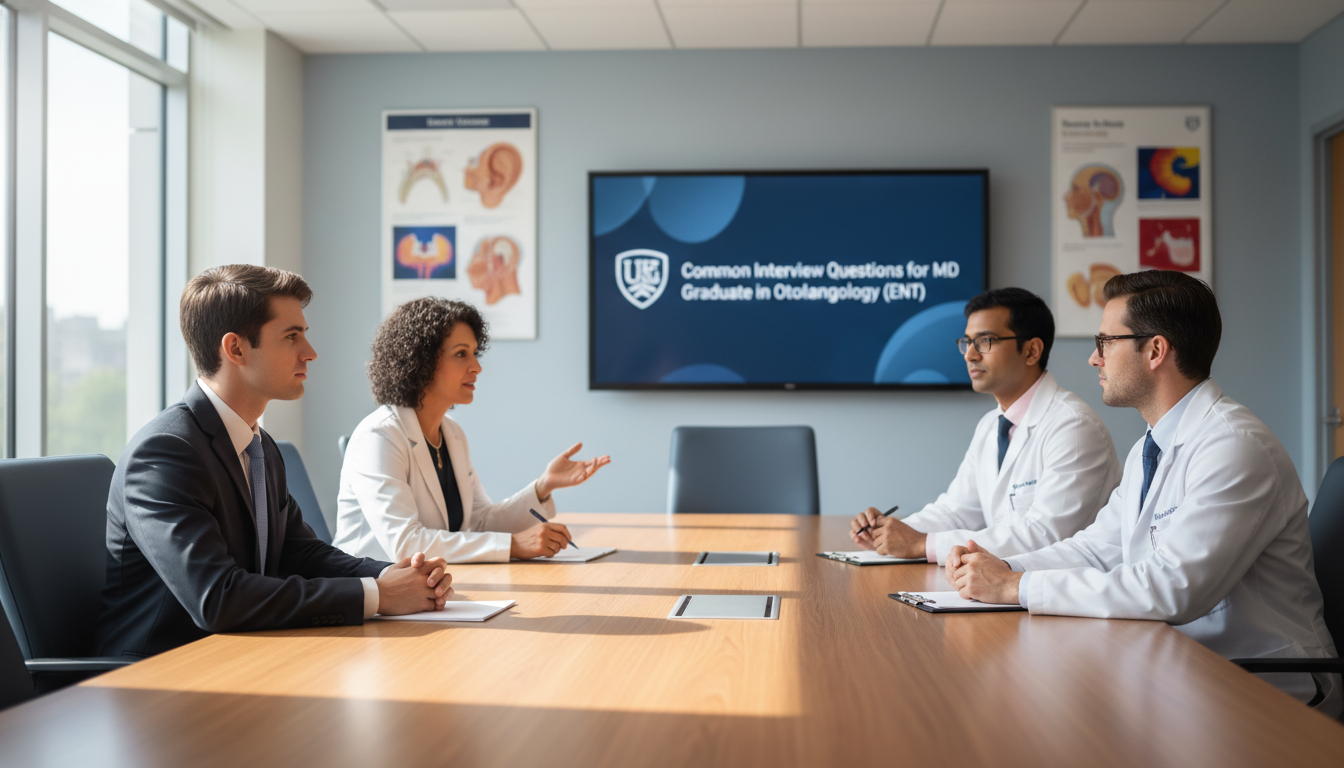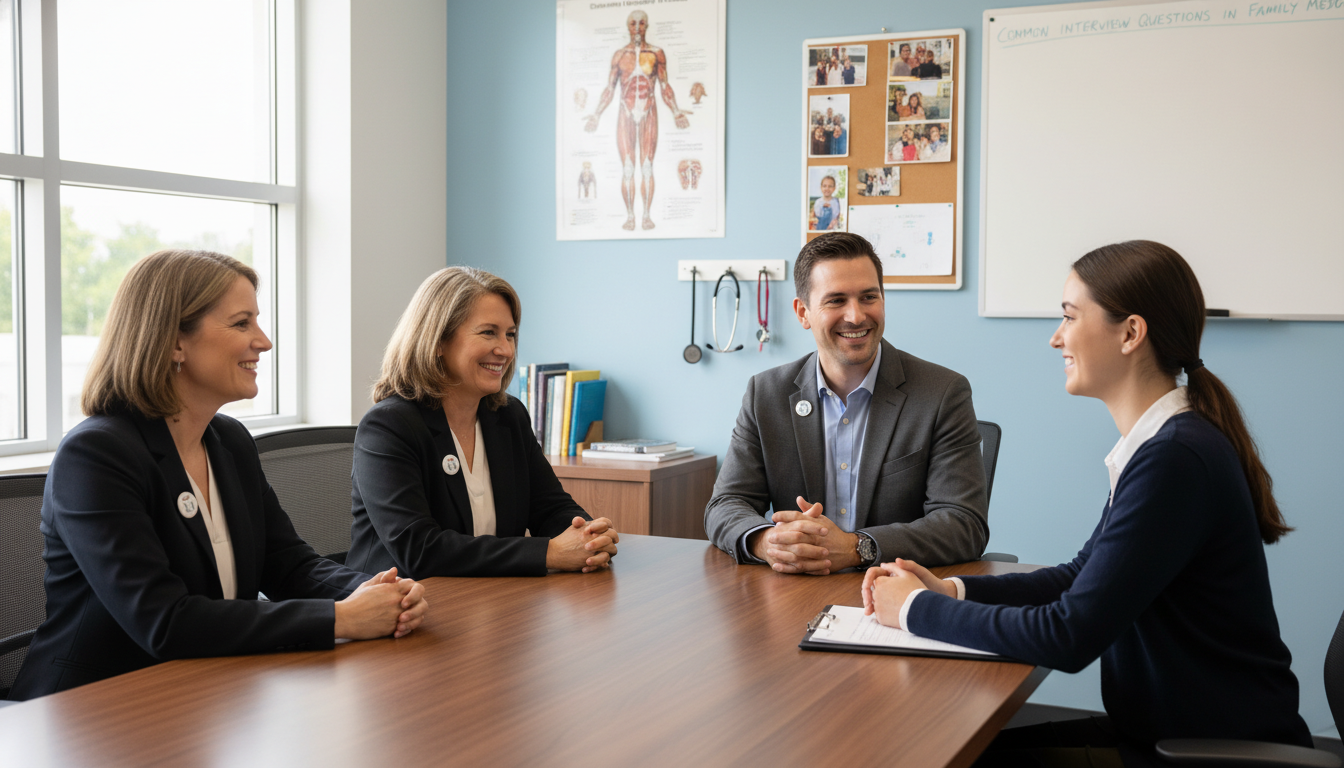
As a US citizen IMG and American studying abroad, you sit in a unique—and often misunderstood—position in the vascular surgery residency match. You’re fluent in US culture and the health care system, but your medical training is outside the U.S. That combination shapes the residency interview questions you’re likely to face.
This guide focuses specifically on common interview questions you’ll encounter when applying to an integrated vascular program, with a special emphasis on behavioral interview medical questions and how to tailor your answers as a US citizen IMG.
Understanding Your Unique Interview Landscape as a US Citizen IMG
Vascular surgery residency interviews are already intense: 0+5 integrated vascular programs are small, competitive, and highly selective. As a US citizen IMG, you’ll frequently be asked to explain and justify two things:
- Why vascular surgery?
- Why medical school abroad / IMG pathway—especially as a U.S. citizen?
Programs are not “against” US citizen IMGs by default. However, they will probe more deeply into:
- Your clinical readiness for U.S. training
- Your operative potential in a technically demanding field
- Your resilience and adaptability
- Your understanding of U.S. surgical culture
No matter what the residency interview questions look like on the surface, they often aim to answer three big issues:
- Can you do the work? (knowledge, technical aptitude, work ethic)
- Can we trust you? (professionalism, integrity, reliability)
- Do we want to work with you for 5–7 years? (personality, teamwork, humility)
You’ll see these themes woven through both traditional and behavioral interview medical questions.
Core Traditional Questions: Your Story, Motivation, and Fit
These are the “classic” questions every applicant hears—but as a US citizen IMG in vascular surgery, how you answer them matters even more.
1. “Tell me about yourself”
This is almost guaranteed. It sets the tone for the entire interview and is often the first question.
What they’re really asking:
- Can you summarize your story clearly and confidently?
- Do you understand your unique identity as a US citizen IMG?
- Are you intentional about your interest in vascular surgery?
Strong structure for your answer (2–3 minutes):
- Brief background – where you’re from and your path as an American studying abroad
- Medical journey – key milestones in your training, especially US clinical experiences
- Vascular hook – how you became interested in vascular surgery
- Current goal – why you’re applying to integrated vascular programs now
Example (adapted to a US citizen IMG):
“I grew up in Texas and completed my undergraduate degree in biomedical engineering, which first exposed me to vascular devices and stents. I chose to attend medical school in [Country] both for the opportunity to learn in a resource-limited setting and because of family connections there. During medical school, I proactively sought out U.S.-based clinical rotations, including vascular surgery electives at [Hospital A] and [Hospital B]. Those experiences highlighted how much I enjoy longitudinal relationships with patients, complex anatomy, and the mix of open and endovascular procedures. Now I’m looking for an integrated vascular surgery residency where I can build on my engineering background, my international training, and my strong work ethic to become a technically skilled, thoughtful vascular surgeon.”
Avoid reciting your CV. Think: story, not summary.
2. “Why vascular surgery?”
Programs want to separate “I think surgery is cool” from a deep, specific commitment to this exact field.
What they’re really asking:
- Do you understand what vascular surgeons actually do day-to-day?
- Are you choosing vascular for the right reasons (not just because you liked one rotation)?
- Have you had enough exposure, especially in the U.S. setting?
Key elements to include:
- A personal clinical experience that sparked your interest
- Specific features of vascular surgery:
- Longitudinal patient care (e.g., PAD, dialysis access)
- Mix of open and endovascular skills
- High-acuity emergencies (ruptured AAAs, acute limb ischemia)
- Multi-morbid patients (cardiac, renal, diabetes) that require thoughtful perioperative care
- Evidence of consistent engagement: research, shadowing, electives, vascular conferences
Good response outline:
- A short story (patient or case)
- What you learned about vascular as a specialty
- Why those features resonate with your values and skills
- How your IMG background adds value (e.g., exposure to advanced disease, resource constraints, multidisciplinary care)
3. “Why did you go to medical school abroad as a US citizen?”
This is a high-yield question for US citizen IMG applicants. You should rehearse this thoroughly.
They’re probing:
- Was this a “fallback” or impulsive decision?
- Can you explain it maturely without being defensive or apologetic?
- Did you still maintain a strong connection to U.S. medicine?
Your answer should:
- Be honest and straightforward
- Show you made a thoughtful choice
- Highlight how this experience strengthened you as a future vascular surgeon
Example themes:
- Family responsibilities or financial considerations
- Desire for global health exposure and diverse pathology
- Limited U.S. acceptance first cycle, followed by a deliberate plan B
What to avoid:
- Blaming U.S. schools or “the system”
- Criticizing your overseas school or country
- Overexplaining; answer clearly, then pivot to how it made you stronger
Example phrasing:
“I didn’t gain admission to U.S. medical schools on my first attempt, and after reflecting with mentors, I chose to attend [School] abroad rather than delay my training. It turned out to be a valuable experience: I learned to care for patients with very advanced vascular disease in resource-limited environments, and I had to be independent and proactive to secure U.S. clinical electives. I’ve maintained strong ties to U.S. medicine through rotations at [Hospital names], where I confirmed that I want to train in the U.S. and contribute as a vascular surgeon.”
4. “Why this program / Why our integrated vascular program?”
Integrated vascular residency is small and intimate; every program wants residents who actually want to be there, not just anywhere.
Do your homework on:
- Case volume and distribution of open vs endovascular
- Vascular lab exposure
- Research focuses (e.g., limb salvage, outcomes research, device trials)
- Call structure and ICU experience
- Culture: mentorship, resident autonomy, program size
Effective answer components:
- 1–2 specific features of the program (not generic)
- How those features align with your goals
- A brief nod to fit: location, culture, patient population
Example:
“I’m particularly drawn to your integrated vascular program because of the strong open aortic volume and the dedicated limb salvage clinic that residents staff longitudinally. Coming from a medical school where I saw a lot of delayed presentations and critical limb ischemia, I’m especially interested in comprehensive limb salvage strategies. I also appreciate that your department encourages early resident involvement in research and quality improvement—I’m eager to build on my outcomes research background and apply it here.”
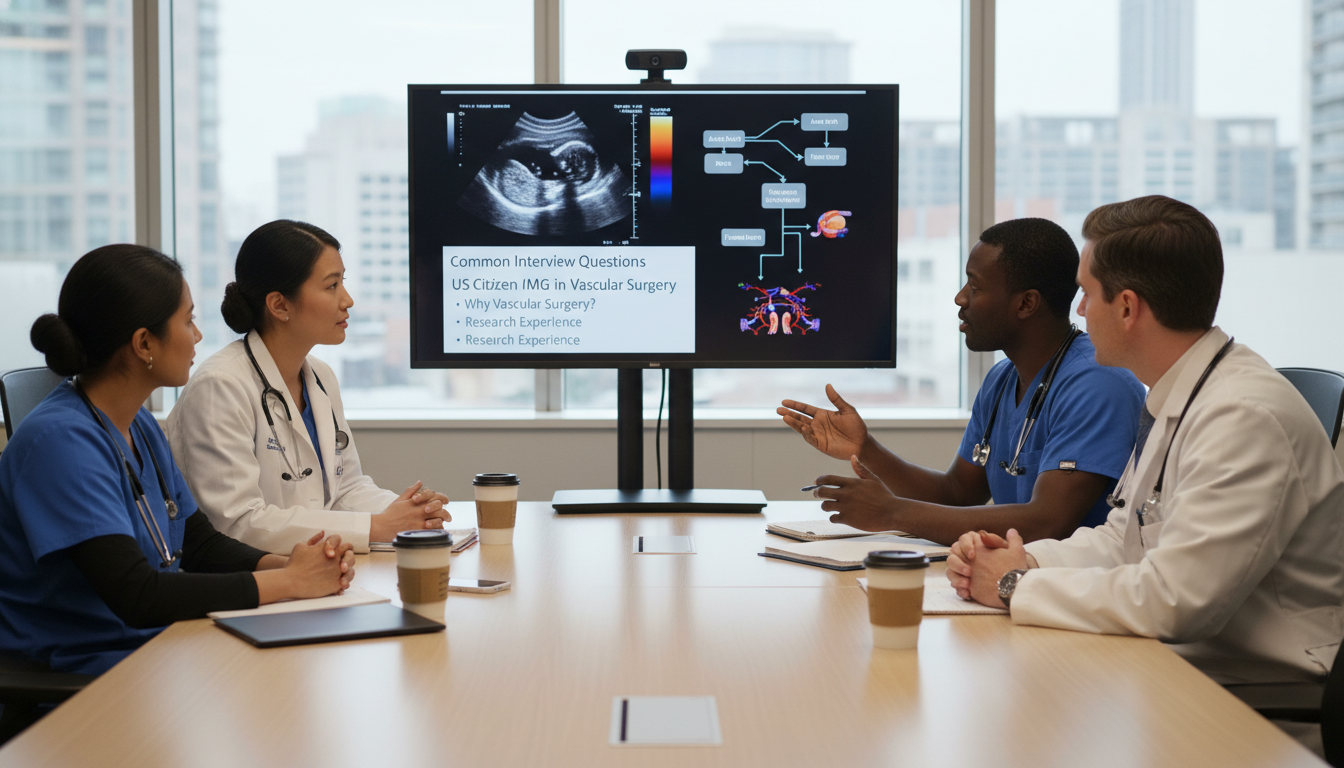
High-Yield Behavioral Interview Questions in Vascular Surgery
Behavioral interview medical questions are increasingly common in surgical specialties. They often start with:
- “Tell me about a time when…”
- “Give an example of…”
- “Describe a situation where…”
Programs use these to predict your future behavior, especially under stress.
Using the STAR Method
For any behavioral question, organize your answer with STAR:
- S – Situation (brief context)
- T – Task (your role)
- A – Action (what you did)
- R – Result (outcome + what you learned)
Keep answers structured, concise, and reflective.
Common Behavioral Themes (With Sample Questions)
1. Teamwork and Communication
Vascular surgery requires tight coordination with anesthesia, radiology, cardiology, nephrology, podiatry, and nursing.
Examples:
- “Tell me about a time you had a conflict with a team member. How did you handle it?”
- “Describe a situation when you had to work with someone very different from you.”
- “Tell me about a time you had to deliver bad news or difficult information.”
Tips for US citizen IMG applicants:
- Choose examples from both abroad and U.S. rotations to show you function well in both environments.
- Emphasize clarity of communication, especially if you trained in a different language or system.
Sample answer sketch (conflict with a resident):
- S: Busy vascular service during your U.S. elective; fellow frustrated that notes weren’t done.
- T: You needed to maintain patient care quality and team harmony.
- A: You clarified expectations, acknowledged the delay, proposed a plan to finish current tasks and reorganize workflow, began pre-charting earlier the next day.
- R: Tension decreased, tasks completed efficiently, you learned to ask early about priorities and communicate your bandwidth.
2. Stress, Workload, and Resilience
Vascular training is demanding, with long cases, middle-of-the-night emergencies, and high-stakes decision-making.
Common questions:
- “Tell me about a time you were overwhelmed. What did you do?”
- “Describe the most stressful situation you faced in clinical training.”
- “How do you cope with burnout or fatigue?”
What they’re listening for:
- Do you collapse under pressure or become disorganized?
- Can you prioritize, ask for help, and still function safely?
- Do you have healthy coping strategies (exercise, support systems, hobbies) rather than only “working harder”?
US citizen IMG angle:
You’ve likely handled:
- Language barriers
- Adapting to different health care systems
- Distance from home/family
Use these to highlight adaptability and resilience, not victimhood.
3. Ethics, Professionalism, and Integrity
Vascular surgery often involves high-risk decisions, complex consent, and long-term consequences.
Typical questions:
- “Tell me about a time you saw something you thought was wrong. What did you do?”
- “Describe a situation where you made a mistake in patient care.”
- “Have you ever had to advocate for a patient against resistance?”
Tips:
- It’s okay to admit mistakes—programs worry more about people who never admit errors.
- Focus on ownership, communication, and system-level improvements (what you changed afterward).
Example sketch (mistake in patient care):
- S: You forgot to re-check a potassium result on a vascular patient admitted with AKI.
- T: Ensure patient safety after recognizing the oversight.
- A: Immediately informed senior, checked labs, monitored ECG, wrote an incident note, proposed checklist change.
- R: Patient remained stable; you instituted habit/checklist to review critical labs at sign-out; emphasize humility and vigilance.
4. Leadership and Initiative
Even as a junior, vascular residents often coordinate teams during emergencies, manage services, and guide medical students.
Sample residency interview questions:
- “Tell me about a time you led a team.”
- “Describe a time when you identified a problem and took the lead to fix it.”
- “Give an example of how you’ve improved a process or workflow.”
US citizen IMG opportunity:
- Highlight initiatives you started to connect IMG classmates with U.S. opportunities, research coordination, or improving teaching during your electives.
Example:
- You noticed inconsistent documentation of ankle-brachial indices on your vascular rotation abroad; you created a simple form/checklist, taught interns how to fill it out, and it reduced missing data on follow-ups.

Clinical, Technical, and Specialty-Specific Questions
Vascular surgery interviewers will test not only who you are, but also how you think clinically. As a US citizen IMG, this is your chance to show that your training abroad translates effectively into U.S.-style clinical reasoning.
1. Clinical Reasoning Questions
These are not full oral boards, but short scenarios to assess how you approach common vascular problems.
Common scenarios:
- Acute limb ischemia
- Ruptured abdominal aortic aneurysm
- Critical limb-threatening ischemia (CLI)
- Carotid stenosis with TIA
- Infected graft or access
Example question:
“A 68-year-old smoker with diabetes presents with a cold, painful left foot, no palpable pulses, and onset 6 hours ago. How would you approach this case?”
They want to hear:
- Recognition of emergency and limb threat
- Brief but organized approach:
- History and exam (Rutherford classification, motor/sensory, doppler)
- Urgent imaging (usually CTA with runoff, depending on context)
- Anticoagulation (IV heparin)
- Early vascular surgery team involvement
- Consideration of thrombectomy, thrombolysis, bypass, or hybrid approach
As an IMG, avoid country-specific constraints unless you contextualize them; show you understand standard U.S. practice patterns.
2. Knowledge of the Field and the Future of Vascular Surgery
Programs want residents who are curious and informed.
You might be asked:
- “How do you see the future of vascular surgery evolving?”
- “What excites you most about current developments in vascular care?”
- “Where do you see yourself in 10 years in this specialty?”
Good areas to reference:
- Growing role of endovascular therapies and device innovation
- Importance of multidisciplinary limb salvage teams
- Expansion of outpatient endovascular centers (with risks and benefits)
- Use of AI and big data in outcome prediction and surveillance
- Quality improvement, registries (e.g., VQI), and outcomes-based metrics
As an American studying abroad, you might add:
- Contrast between vascular care in your training country and the U.S., and how that shaped your focus on prevention, access, or education.
3. “Red Flag” / Sensitive Questions for US Citizen IMG Applicants
Certain topics appear more frequently for US citizen IMG candidates:
- “Why should we choose you over a U.S. grad?”
- “How have you prepared yourself for the transition to U.S. residency?”
- “Do you anticipate any difficulties adapting to our system?”
Suggested approach:
- Stay calm, non-defensive, and direct.
- Emphasize preparation:
- Multiple U.S. clinical electives
- Familiarity with EMR systems (Epic, Cerner, etc.)
- Understanding of ACGME expectations, duty hours, and team structures
- Highlight added value: adaptability, broad pathology exposure, resilience, maturity.
Practical Preparation Strategies for Your Vascular Surgery Interview
Knowing the common questions is only half the work; the other half is deliberate preparation.
1. Build and Practice Your Core Narrative
You should be able to answer the following fluidly and confidently:
- “Tell me about yourself”
- “Why vascular surgery?”
- “Why are you a US citizen IMG / why did you study abroad?”
- “Why this specific integrated vascular program?”
Record yourself on video. Pay attention to:
- Rambling vs concise answers
- Filler words (“um,” “like”)
- Eye contact, posture, tone
2. Prepare a Bank of 10–12 Behavioral Stories
Before interview season, write bullet points for situations that illustrate:
- A difficult team interaction
- A mistake you made or near-miss
- Time you were overwhelmed
- Time you resolved a conflict
- Time you led a project or team
- Time you advocated for a patient
- Time you adapted quickly to a new situation (great for IMG experience)
- A research or QI challenge you overcame
- A cross-cultural or language barrier you helped bridge
Then practice reshaping each story to fit different behavioral questions using STAR.
3. Anticipate and Prepare for “Weakness” Questions
Common phrasing:
- “What is your greatest weakness?”
- “Tell me about an area you’re working to improve.”
- “What negative feedback have you received, and how have you addressed it?”
Choose a real but manageable weakness (e.g., over-detailing notes, difficulty delegating, initial discomfort speaking up in large conferences). Pair it with:
- Specific feedback you received
- Concrete changes you made
- Evidence of improvement
Avoid clichés like “I care too much” or “I work too hard.”
4. Prepare Questions to Ask the Interviewers
As a US citizen IMG, your questions can subtly show that you understand the field and the demands of integrated vascular training.
Good examples:
- “How do junior residents gain early exposure to endovascular skills here?”
- “How does the program support residents interested in outcomes research or device trials?”
- “What characteristics have you seen in your most successful vascular residents?”
- “How are residents supported when they encounter setbacks, whether academic, clinical, or personal?”
Avoid questions easily answered by the website (e.g., “How long is the program?”).
5. Addressing Gaps or Red Flags Proactively
If you have:
- A gap year
- USMLE failures or repeats
- Limited U.S. clinical experience
- Long distance between graduation and application
Prepare honest, concise, non-defensive explanations that end with what you learned and how you are now better prepared for integrated vascular residency.
FAQ: Common Questions About Vascular Surgery Interviews for US Citizen IMGs
1. As a US citizen IMG, will I be at a major disadvantage for integrated vascular programs?
Being a US citizen IMG can be a challenge at some programs, but it is not automatically disqualifying. You can offset potential concerns by:
- Strong USMLE scores (especially Step 2 CK, if available)
- Robust U.S. vascular-specific clinical experience
- Strong letters from U.S. vascular surgeons
- Demonstrated interest in vascular surgery (research, electives, case logs)
- Clear, confident explanations for your IMG path and readiness for U.S. training
Programs that have previously matched IMGs or US citizen IMGs are often more IMG-friendly; research past match lists where possible.
2. How can I tailor my “tell me about yourself” answer as a US citizen IMG?
Link your identity, your international training, and your commitment to vascular surgery:
- Start with your background (U.S. upbringing, undergrad, personal influences).
- Explain your decision to study abroad succinctly and positively.
- Highlight how you navigated training in another system and still built strong U.S. clinical connections.
- Finish with your specific vascular interests and why you’re excited about integrated vascular programs.
Keep it under 2–3 minutes and practice it until it feels natural, not memorized.
3. Will I be asked more behavioral interview medical questions because I’m an IMG?
Not necessarily because you’re an IMG, but behavioral questions are increasingly standard across surgical programs. However, interviewers may deliberately explore:
- How you adapted to new systems and cultures
- How you handled limited resources
- How you managed stress and distance from home
Use those questions to show resilience, flexibility, and resourcefulness, not just hardship.
4. How should I handle questions I really don’t know the answer to?
For clinical or technical questions you can’t answer:
- Stay calm and honest.
- Say something like: “I’m not entirely sure of the full answer, but my approach would be…” and then reason through what you do know.
- Emphasize your willingness to look things up, learn, and ask for help.
Programs are less worried about you not knowing everything and more worried about overconfidence, guessing dangerously, or becoming defensive.
By anticipating these common vascular surgery residency interview questions—and tailoring your responses to your identity as a US citizen IMG and American studying abroad—you position yourself as not just a competitive candidate, but a thoughtful future colleague. Use your unique path to showcase maturity, adaptability, and genuine commitment to integrated vascular training.