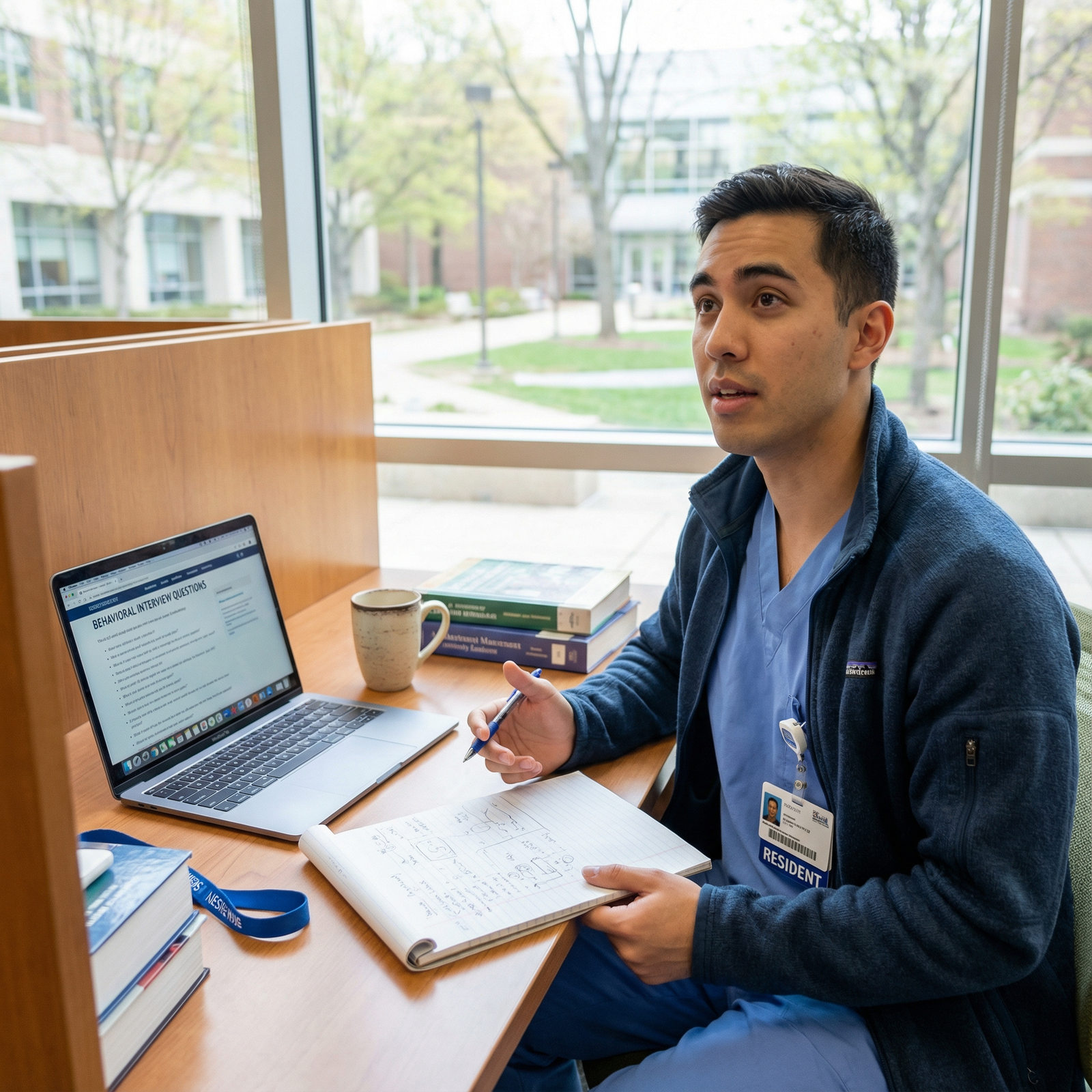
Preparing for a vascular surgery residency interview is as much about understanding the questions as it is about demonstrating your fit for an intensive, high-acuity surgical specialty. Whether you are applying to an integrated vascular program (0+5) or an independent fellowship (5+2), the questions you face will probe your clinical judgment, professionalism, resilience, and motivation to choose such a demanding field.
This guide breaks down the most common vascular surgery residency interview questions, with specific examples, strategy tips, and sample responses tailored to this specialty. Use it to structure your preparation, practice aloud, and refine how you present your best professional self.
Understanding the Purpose of Vascular Surgery Interviews
Before diving into specific residency interview questions, it helps to know what programs are really trying to assess.
What programs want to learn about you
Vascular surgery is unique among surgical fields: it combines open operations, advanced endovascular techniques, longitudinal patient relationships, and often very sick patients with multiple comorbidities. Faculty are asking themselves:
- Can you handle high-stakes, time-sensitive decisions?
- Do you understand what a vascular surgery career actually looks like?
- Will you be coachable in the OR and on call?
- Will you function well in a team during long, stressful cases?
- Are you reliable, ethical, and emotionally stable enough for this field?
- Do your career goals align with what our program offers?
Most questions—whether labeled “behavioral interview medical” style, clinical, or personal—are designed to answer those core concerns.
Interview formats you may encounter
You may experience:
- Traditional one-on-one interviews with program leadership, faculty, and fellows
- Panel interviews with multiple faculty at once
- Behavioral interviews using structured questions focused on specific past behaviors
- Multiple mini-interviews (MMI) in some institutions
- Informal sessions with residents/fellows where you are still being evaluated
Regardless of format, the content of vascular surgery residency interview questions is fairly consistent—and predictable.
Core Personal Questions: Telling Your Story Effectively
Almost every vascular surgery interview will start with broad, open-ended questions. Your answers set the tone and frame your narrative.
“Tell me about yourself”
This is the most consistently asked question, yet often the worst prepared. For vascular surgery, you want a concise, focused answer that highlights your path to surgery, then to vascular specifically, and ends with why you’re a strong fit for an integrated vascular program or independent fellowship.
Strategy:
- 2–3 minutes max
- Use a past → present → future structure
- Connect your story to vascular surgery-specific qualities: problem-solving, anatomy, longitudinal care, perseverance
Example structure:
- Past: Where you’re from, key formative experiences, medical school or general surgery residency highlights
- Present: What you’re doing now (sub-I’s, research year, chief year, current vascular exposure)
- Future: Why vascular surgery, why this training path (integrated vs independent), and what you hope to become
Sample response (integrated applicant):
I grew up in a small town where access to specialty care was limited, and I first became interested in medicine watching my grandfather struggle with complications from peripheral artery disease. In medical school at X University, I found myself drawn to anatomy-heavy specialties and loved the immediate impact of procedures. My third-year surgery rotation really crystallized that, but it wasn’t until I spent an elective with the vascular surgery team that everything clicked—seeing patients come in with limb-threatening ischemia and then following them in clinic months later, walking again, was incredibly powerful.
Right now, I’m in my fourth year serving as the surgery interest group president and working on a research project involving outcomes after endovascular aneurysm repair. That experience has shown me how vascular surgeons integrate imaging, endovascular tools, and complex open operations to tailor treatment to each patient.
Looking forward, I’m seeking an integrated vascular program where I can be immersed early in vascular care, develop strong open and endovascular skills, and train in an environment that values clinical excellence, mentorship, and outcomes research. That’s what drew me to your program—especially your limb salvage work and robust endovascular volume.
“Why vascular surgery?”
This question often follows “tell me about yourself” and must go beyond “I like surgery and vascular anatomy.”
Emphasize:
- Specific aspects of vascular surgery (e.g., mix of open/endovascular, high-stakes decision-making, longitudinal care)
- Clinical/operative experiences that confirmed your interest
- Personal values that align with the specialty (e.g., perseverance, attention to detail, comfort with uncertainty)
Avoid:
- Generic “I like surgery” answers
- Focusing only on lifestyle or technology
- Bashing other specialties (“I didn’t like ortho because…”)
Sample response (independent applicant):
During my general surgery residency, I initially thought I would pursue trauma. But during my PGY-2 year, I rotated on vascular and was struck by how often vascular surgeons were the ones called for the most complex, time-sensitive problems—ruptured aneurysms, acute limb ischemia, carotid stenosis with stroke. I enjoyed the intensity and the need to make quick decisions based on incomplete information.
Over the next few years, I found I was increasingly drawn to vascular cases, especially those that required a combination of open and endovascular skills. I appreciate the intellectual challenge of interpreting imaging, planning a repair that accounts for a patient’s overall comorbidities, and then following them long term.
Ultimately, I’m choosing vascular surgery because it aligns with how I like to work: collaboratively with other specialties, using both my hands and my analytical skills, and building long-term relationships with patients whose lives can be dramatically improved by our interventions.
“Why an integrated vascular program?” or “Why independent training after general surgery?”
Programs want to know you understand the implications of your chosen path.
For integrated (0+5) applicants:
- Highlight desire for early immersion in vascular
- Emphasize your commitment to vascular despite being early in training
- Acknowledge the value of broad surgical foundation you’ll still receive
For independent (5+2) applicants:
- Describe how general surgery prepared you (critical care, emergency management, operative judgment)
- Clarify why you now want subspecialty training in vascular
- Show you’ve reflected on timing and career direction

Behavioral and Situational Questions in Vascular Surgery Interviews
Many programs increasingly use behavioral interview medical techniques: “Tell me about a time when…” These questions aim to predict future performance by examining how you behaved in real situations.
Use the STAR method:
- Situation – brief context
- Task – your role or responsibility
- Action – what you did
- Result – outcome and reflection
Common behavioral questions and how to approach them
1. “Tell me about a time you made a mistake in patient care.”
They’re not looking for perfection; they want honesty, insight, and accountability.
Tips:
- Choose a real but non-catastrophic example
- Emphasize immediate steps you took to address the issue
- Focus on what you learned and how you changed your practice
Example themes:
- Missed lab value or test result
- Delay in communicating a change in patient status
- Incomplete pre-op preparation
Sample outline:
- Situation: Night float; busy cross-coverage
- Mistake: Missed a trending up creatinine before ordering contrast CT
- Action: Recognized error, informed senior and attending, adjusted management
- Result: Patient outcome, system change (e.g., now you double-check labs before imaging orders), personal learning
2. “Tell me about a time you had a conflict with a team member.”
Vascular services are high-pressure; team dynamics matter.
Show:
- Ability to communicate respectfully under stress
- Willingness to seek understanding, not “win”
- Focus on patient-centered solutions
Avoid stories that depict you as inflexible, disrespectful, or dismissive of nursing, anesthesia, or other residents.
3. “Describe a stressful situation and how you handled it.”
Vascular emergencies—ruptured AAA, acute limb ischemia, massive GI bleed—are inherently stressful. You might not have led these cases yet, but you can still show:
- How you prioritize tasks
- How you use resources (senior residents, attendings, nurses)
- How you maintain composure
Example: Managing multiple crashing patients on call, triage decisions, calling for help early, and ensuring clear communication.
4. “Tell me about a time you had to give or receive difficult feedback.”
Vascular surgeons need to be both coachable and able to coach others.
Angles:
- A resident or attending gave you tough feedback about your performance; you reflected and improved
- You gave feedback to a medical student or peer about professionalism or patient safety
Focus on humility, growth mindset, and maintaining relationships.
Clinical and Specialty-Specific Questions in Vascular Surgery
Vascular surgery interviews often probe your clinical reasoning and understanding of the specialty, especially for independent applicants, but integrated applicants should also be prepared.
Common clinical-style questions
These are usually conceptual rather than detailed oral board level.
“Walk me through how you would evaluate a patient with acute limb ischemia.”
Key elements to mention:
- History: onset, duration, prior claudication, atrial fibrillation, recent procedures
- Physical: 6 Ps (pain, pallor, pulselessness, paresthesia, paralysis, poikilothermia)
- Vascular exam: pulses, Doppler signals, ankle-brachial index if stable
- Diagnostics: urgent imaging (CTA) vs proceeding directly to OR depending on severity
- Management: anticoagulation, emergent consult to vascular surgery (if you’re not the vascular surgeon yet), options for thrombectomy, catheter-directed thrombolysis, fasciotomy consideration
They are less interested in perfect details than in seeing a logical, structured approach.
“How would you counsel a patient with asymptomatic carotid stenosis?”
Focus on:
- Explaining stroke risk and what stenosis means in layperson terms
- Medical management (statins, antiplatelets, blood pressure control, smoking cessation)
- Indications for intervention and types (CEA vs stenting)
- Shared decision-making and respect for patient preferences
Questions about the nature of vascular practice
Expect questions about your understanding of:
- Case mix (aneurysms, PAD, carotids, dialysis access, trauma, venous disease)
- Open vs endovascular balance
- Longitudinal follow-up and chronic disease management
- Interdisciplinary care (cardiology, nephrology, interventional radiology, neurology)
Example questions:
- “What do you think will be the biggest challenge for you in vascular surgery?”
- “How do you see the balance between open and endovascular surgery evolving?”
- “What kind of practice do you envision—academic vs community, open-heavy vs endovascular-heavy?”
Programs want to see that you’re thinking realistically about the future of the field and your place in it.

Program Fit, Goals, and “Soft” Questions
Beyond clinical skills, faculty want to know who you are as a colleague and trainee. Many vascular surgery residency interview questions explore your values, career plans, and fit with the program culture.
“What are your career goals?”
Be honest but flexible. It’s okay not to have every detail defined, but you should have a general direction.
Examples:
- Academic vascular surgeon with interest in outcomes research or device innovation
- Community-based vascular surgeon with broad open and endovascular practice
- Focused interest in limb salvage, aortic disease, or cerebrovascular disease
Signal:
- That you understand what different practice types look like
- That this particular program aligns with your goals (e.g., strong aortic volume, research infrastructure)
“What are your strengths?” / “What are your weaknesses?”
Avoid clichés like “I’m a perfectionist” unless you can back them up with insight and examples.
For strengths, consider:
- Calm under pressure
- Strong communicator with patients and staff
- Highly organized and reliable
- Persistent and detail-oriented, especially with follow-up
For weaknesses:
- Choose something real but modifiable
- Show insight and active efforts to improve
Example: “I tend to take on too many responsibilities because I don’t like disappointing others” followed by specific strategies you’re using to set boundaries and prioritize.
“How do you handle work-life balance and burnout risk?”
Vascular surgery has demanding call and emotionally taxing cases. Programs want to know you’re not naive and that you have coping strategies.
Discuss:
- Healthy habits (exercise, hobbies, relationships)
- Support systems (family, friends, mentors)
- Self-awareness (recognizing early signs of burnout)
Avoid implying that you “never get stressed” or that you rely solely on unhealthy coping mechanisms.
“Why our program?”
This is critical. Generic answers suggest you haven’t done your homework.
Before interviews, know:
- Program’s strengths: aortic volume, limb salvage, research, endovascular technology, case complexity
- Unique features: longitudinal clinic structure, early OR exposure, international rotations, QI projects
- Culture: collegiality, mentorship, resident autonomy
Structure your answer:
- Repeat your core training needs (e.g., robust open aneurysm experience, strong mentorship, outcomes research)
- Connect those needs to specific features of their program
- Briefly mention program culture or location factors that genuinely matter to you
Applicant Questions, Logistics, and Final Impressions
Your questions are also part of the interview. They show what you value and how seriously you are considering the program.
Strong questions to ask faculty
- “How do you see the balance of open vs endovascular cases evolving at your institution over the next 5–10 years?”
- “Can you describe how autonomy develops for trainees in the OR and endovascular suite over the course of training?”
- “What kind of support do residents/fellows receive for research or quality improvement projects?”
- “How do graduates from your integrated vascular program typically structure their practices after completion?”
Strong questions to ask residents/fellows
- “What do you see as the biggest strengths and weaknesses of this program?”
- “How responsive is leadership to resident/fellow feedback?”
- “What does a typical call night look like here?”
- “How is the relationship between vascular surgery and other services like interventional radiology and cardiology?”
Avoid questions you could easily answer with a simple look at the website.
Managing virtual vs in-person interviews
For virtual interviews:
- Test camera, microphone, and internet in advance
- Neutral background, good lighting, professional attire
- Close all non-essential tabs; keep a copy of your CV and personal statement handy
- Maintain eye contact by looking at the camera, not just the screen
For in-person interviews:
- Arrive early; know parking and building logistics
- Bring a simple folder with a copy of your CV, paper, and pen
- Be professional and kind to everyone—from coordinators to residents and support staff
Remember: everything counts—pre-interview socials, informal resident chats, and email interactions with coordinators.
Frequently Asked Questions (FAQ)
1. How should I practice answers to common vascular surgery residency interview questions?
- Create a list of likely questions (especially “tell me about yourself,” “why vascular surgery,” “why this program,” and several behavioral questions).
- Outline bullet-point answers and then practice aloud, ideally with a mentor or peer.
- Record yourself to check pacing, clarity, and body language.
- Don’t memorize exact scripts; aim for structured, natural answers you can adapt.
2. Do integrated vascular program interviews differ from independent fellowship interviews?
Yes, though there is significant overlap:
- Integrated applicants are evaluated more on potential, insight into the specialty, academic interest, and professionalism. Clinical questions may be more basic.
- Independent applicants are expected to demonstrate more advanced clinical reasoning, operative experience, and understanding of real-world vascular practice after general surgery.
- Both groups, however, will face similar behavioral and program-fit questions.
3. How much vascular-specific knowledge do I need for the interview?
You don’t need to be at board-prep level, but you should:
- For integrated: know basic concepts (PAD, aneurysms, carotid disease, acute limb ischemia) and be able to reason through initial steps.
- For independent: be ready to walk through structured approaches to common vascular problems and discuss perioperative management.
Remember, they are evaluating your thought process and curiosity more than esoteric details.
4. What if I get a residency interview question I truly can’t answer?
- Stay calm; acknowledge the limits of your knowledge.
- State what you do know and how you would find the answer or who you would involve.
- For clinical scenarios, emphasize seeking help early from seniors/attendings and ensuring patient safety.
Programs do not expect you to know everything; they expect you to be honest, safe, and teachable.
Approach your vascular surgery residency interviews as an opportunity to show that you understand the realities of this demanding specialty, that you’ve reflected seriously on your path, and that you’re ready to grow. With thoughtful preparation around these common interview questions—and honest, structured responses—you can present yourself as a future colleague that any vascular team would be proud to train.