
The worst career mistakes physicians make do not happen in the OR or the clinic. They happen at their kitchen table, signing contracts they barely understand.
You have 90 days before graduation. That is just enough time to not get trapped in a bad deal—if you move deliberately. Here is the timeline.
90–75 Days Before Graduation: Get Oriented and Gather Your Documents
At this point you should stop thinking “I’ll deal with it later” and start treating your first job like a multi-year procedure. You would not walk into a complex case without a plan. Same here.
Step 1: Build your “contract file” (Day 90–85)
Create one place—digital or physical—where everything lives.
Include:
- Latest version(s) of each job offer / contract
- Any term sheets or offer letters
- Benefit summaries and policy manuals
- Call schedules (even if “sample” or “tentative”)
- Malpractice policy details if provided
- Any non-compete / restrictive covenant language sent separately
Name files clearly: “Hospital_A_SalaryModel_2026-06-01.pdf”, not “scan0032.pdf”. You will thank yourself later.
Step 2: Snapshot your financial baseline (Day 88–83)
You can’t judge a contract without knowing what you need.
Spend one afternoon to:
- Estimate your post-residency budget:
- Loan payments (project realistic IDR / refinanced numbers)
- Housing where you plan to live
- Insurance increases (disability, life, own malpractice if 1099)
- Decide your minimum acceptable take-home per month
- List your “non-negotiables”:
- Geographic limit?
- No more than X calls per month?
- Need PSLF eligibility?
This is the line you won’t cross. You negotiate much better when that line is clear.
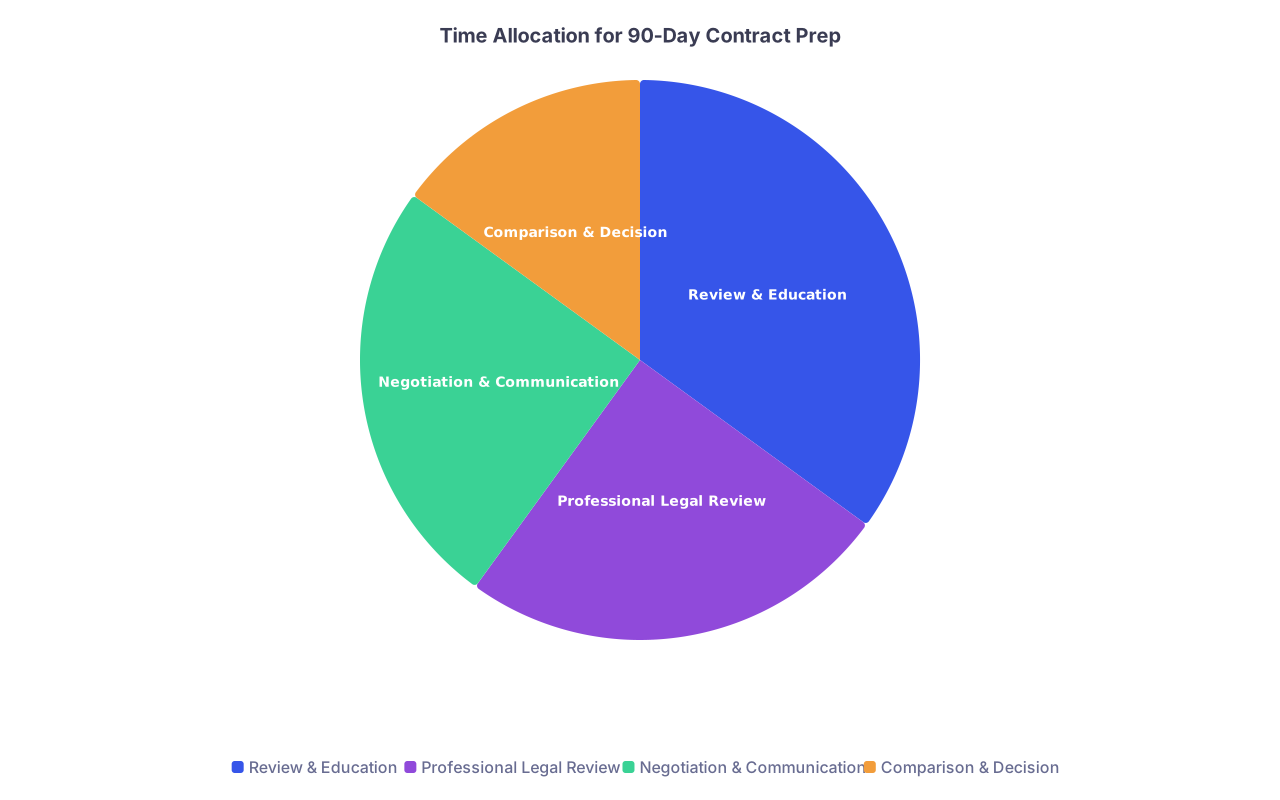
| Category | Value |
|---|---|
| Review & Education | 35 |
| Professional Legal Review | 25 |
| Negotiation & Communication | 25 |
| Comparison & Decision | 15 |
75–60 Days Before Graduation: First Deep Read and Red Flags
Now you stop skimming and start reading like a lawyer who happens to be a doctor.
Step 3: First full pass of each contract (Day 75–70)
At this point you should spend uninterrupted time with each contract.
On the first read, do not try to “fix” anything. Just mark:
- Anything you do not understand
- Anything that feels unfair or extreme
- Any blanks or “to be determined” sections
Use three highlighters or digital colors:
- Yellow – “Clarify this”
- Orange – “Potential problem / negotiate”
- Red – “Hard no / dealbreaker unless changed”
Step 4: Screen for major red flags (Day 70–65)
These are the big ones. I’ve seen people ignore them because the signing bonus looked good. That’s how you end up trapped.
Look specifically for:
Non-compete / restrictive covenants
- Radius: more than 10–15 miles in urban area or >30 miles in rural often too broad
- Duration: more than 12–24 months is usually aggressive
- Scope: “any practice of medicine” is worse than “outpatient cardiology”
Call expectations
- Vague language like “as reasonably required” without caps
- No written differential or comp for extra call
Termination terms
- “Without cause” notice period: less than 60–90 days is a problem for you
- Asymmetry: employer can leave with short notice; you are locked in heavily
Malpractice
- Who pays tail if you leave?
- Is coverage occurrence or claims-made?
Compensation vagueness
- “Per wRVU compensation to be determined by employer policy” with no schedule attached
- Productivity thresholds not defined
If you see more than two serious red flags in one contract, mentally mark that job as “proceed with caution.”

60–45 Days Before Graduation: Bring in the Professionals and Compare Offers
This is where you stop guessing and involve someone who has read hundreds of these.
Step 5: Hire a contract review attorney (Day 60–55)
Not your cousin who does estate law. A healthcare / physician employment attorney.
At this point you should:
- Identify 2–3 attorneys who:
- Regularly review physician / NP / PA contracts
- Know your state’s non-compete and labor laws
- Can commit to a review within 10–14 days
- Ask for:
- Flat review rate (common: $400–$1,200 depending on depth and region)
- Whether they include one follow-up call and/or written memo
- Experience with your specialty
Send:
- The contract(s)
- Any related policy or compensation documents
- Your priorities and non-negotiables (so they know what to focus on)
Step 6: Build a basic comparison grid (Day 55–50)
You need the options on one page. Otherwise you’ll chase the wrong shiny objects.
| Feature | Job A - Hospital Employed | Job B - Private Group | Job C - Academic Center |
|---|---|---|---|
| Base Salary (Year 1) | $310,000 | $260,000 + bonus | $230,000 |
| Non-Compete Radius | 20 miles / 2 years | 5 miles / 1 year | None |
| Call per Month | 7 | 4 | 6 |
| Tail Coverage | Employer pays | Physician pays | Not needed (occurrence) |
| PSLF Eligible | Yes | No | Yes |
Do not obsess over a $10–20k difference in base salary if:
- The call is heavier
- The non-compete is brutal
- You’re buying your own tail
Total package > headline salary.
45–30 Days Before Graduation: Detailed Issue List and Negotiation Strategy
By now you should have your attorney’s feedback. Time to turn that into an actual negotiation plan.
Step 7: Create a “must-fix / nice-to-fix” list (Day 45–40)
On one page, list for each offer:
Dealbreakers (must-fix)
- E.g., “Non-compete reduced from 25 miles / 3 years to 10 miles / 1 year”
- “Tail coverage fully employer-paid if separated without cause”
Priority negotiations (strongly desired)
- Higher base or guaranteed income duration
- Clearer call expectations and caps
- Defined wRVU rate and threshold in writing
Wish list (optional)
- Signing bonus amount
- Relocation package details
- Extra PTO / CME money
If you go in trying to “fix everything,” you’ll get nowhere. Focus on the top 3–5 asks.
Step 8: Plan your communication strategy (Day 40–35)
At this point you should not be firing off angry emails or legalese. You are a professional negotiating with other professionals.
Approach:
- Decide if first pass is by email or call
- Email is good for clarity and a written trail
- Call is better when relationship is strong or contract is flexible
- Script your framing:
- “I’m very interested in this position; there are just a few contract items I’d like to discuss so we can make this a long-term fit.”
- Never lead with “My lawyer says…”
- Translate legal concerns into practical ones: lifestyle, stability, fairness
30–21 Days Before Graduation: First Round Negotiations
Now you actually negotiate. Not hint. Not vaguely complain. Negotiate.
Step 9: Tackle the big three first (Day 30–26)
Most physicians should prioritize:
- Non-compete and termination
- Malpractice and tail
- Compensation structure
In practice, that might look like:
Non-compete:
- Ask to narrow scope (“outpatient cardiology only” vs “any medical practice”)
- Reduce radius and duration
- Add carve-outs (e.g., if terminated without cause, non-compete void)
Termination:
- Seek mutual without-cause notice (e.g., 90 days both ways)
- Clarify what counts as “cause”
Malpractice:
- Ask for employer-paid tail, especially if they control patient base / referrals
- Or a vesting schedule: employer pays increasing share the longer you stay
Then:
- Schedule a call (20–30 minutes) with the recruiter/admin contact
- Send a concise email beforehand listing 3–5 bullet point topics so they aren’t blindsided
Step 10: Get revisions in writing (Day 25–21)
Verbal agreements are charming and worthless.
At this point you should:
- Request a revised contract draft or at least an addendum
- Confirm that:
- wRVU rates, thresholds, and bonuses are explicitly listed
- Call schedules and differential pay appear in writing
- Any agreed changes to non-compete or tail are spelled out
Do not accept “We’ll work that out later.” That usually means “You’ll lose this argument later.”
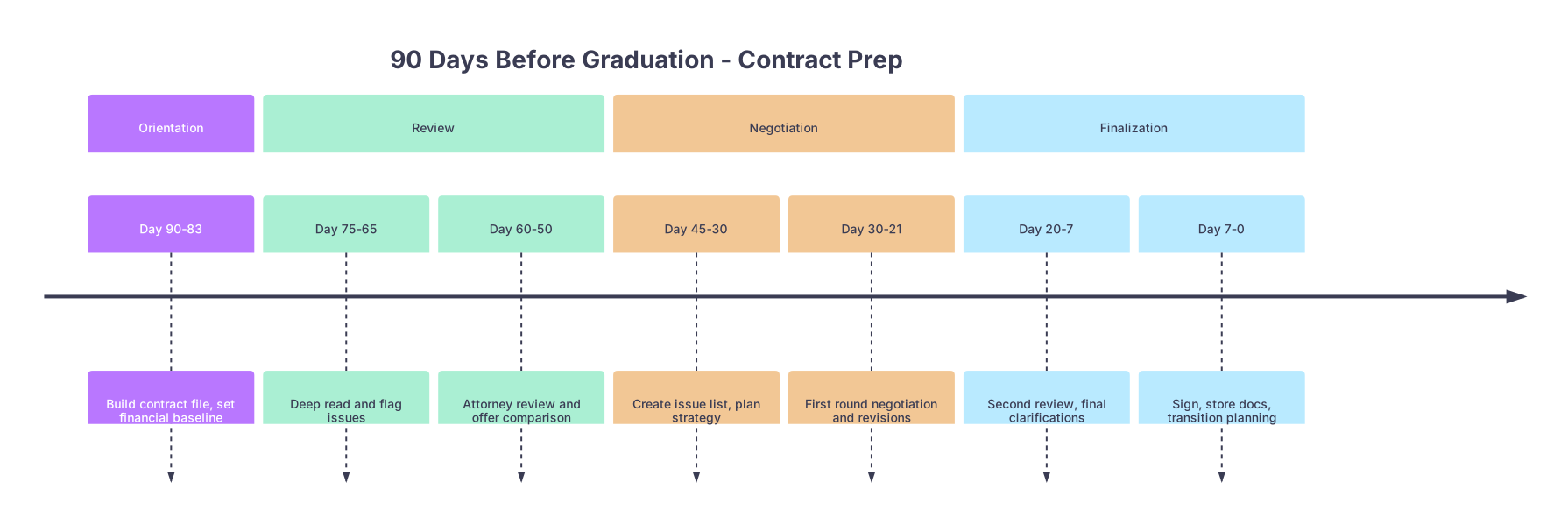
| Period | Event |
|---|---|
| Orientation - Day 90-83 | Build contract file, set financial baseline |
| Review - Day 75-65 | Deep read and flag issues |
| Review - Day 60-50 | Attorney review and offer comparison |
| Negotiation - Day 45-30 | Create issue list, plan strategy |
| Negotiation - Day 30-21 | First round negotiation and revisions |
| Finalization - Day 20-7 | Second review, final clarifications |
| Finalization - Day 7-0 | Sign, store docs, transition planning |
20–7 Days Before Graduation: Second Review and Final Clarifications
You should now be looking at near-final documents. This is the “measure twice, cut once” window.
Step 11: Second pass with your attorney (Day 20–16)
Send the revised versions back. Ask them to focus on:
- Whether revisions actually match what was promised
- Any unintended consequences of new language
- Remaining risks that you are knowingly accepting
Have a brief call (15–30 minutes) to:
- Walk through any “landmines” that are still there
- Ask directly:
- “If this were your contract, would you sign it?”
You do not have to follow their answer, but if a seasoned healthcare attorney hesitates, pay attention.
Step 12: Clean up loose ends (Day 15–10)
At this point you should pin down all the vague stuff that will otherwise bite you:
- Start date (exact date)
- Orientation and credentialing expectations
- Location(s) you’ll work (not just “as assigned”)
- Expected clinic sessions per week
- Expected OR / procedure time
- Clear call schedule or at least written ranges
Also confirm:
- How and when you receive signing bonus / relocation funds
- What happens if start date is delayed (visas, credentialing, personal reasons)
If anything is still hand-wavy, either:
- Get it on paper now
- Or accept that it may not happen and adjust your expectations

Final 7 Days Before Graduation: Signing and Safeguards
Now you make the call. You pick a job and sign something with your actual name on it.
Step 13: Final check before signature (Day 7–3)
At this point you should block 60 minutes, turn off your phone, and:
- Read the actual version you will sign line by line
- Verify:
- Job title and specialty
- Compensation numbers match your last discussion
- Non-compete EXACT language
- Malpractice and tail coverage section
- Termination clauses and notice periods
- Attachments and exhibits are present and correct
Compare the PDF / paper against your own notes. If a number has mysteriously “reverted” to an earlier version, stop and get it corrected before signing.
Step 14: Sign, store, and document everything (Day 3–1)
Once you’re satisfied:
- Sign electronically or in ink as instructed
- Save:
- Final executed contract (with signatures from both sides)
- Any addenda or side letters
- Email thread summarizing agreements
Store in at least three places:
- Secure cloud (personal, not employer-owned)
- Encrypted local drive / USB
- Printed copy in a safe file at home
Write yourself a one-page summary:
- Start date
- Salary / wRVU rate / bonus structure
- Non-compete details
- Tail coverage responsibility
- Notice period and termination basics
You’ll reference this during the first year more than you think.
After Graduation: 30–90 Days into the Job (Reality Check)
Quick look ahead, because this is where reality and paper meet.
Step 15: Compare reality to contract (Month 1–3 on the job)
You should quietly track:
- Actual clinic hours vs contract expectations
- Actual call burden vs what was described
- wRVU or production statements vs your pay
If there are discrepancies:
- Re-read the contract section involved
- Start a documented list of examples
- Have an early, calm conversation with your supervisor or admin
Most misalignments come from sloppy communication, not malice. But the longer you ignore them, the more “normal” they become.
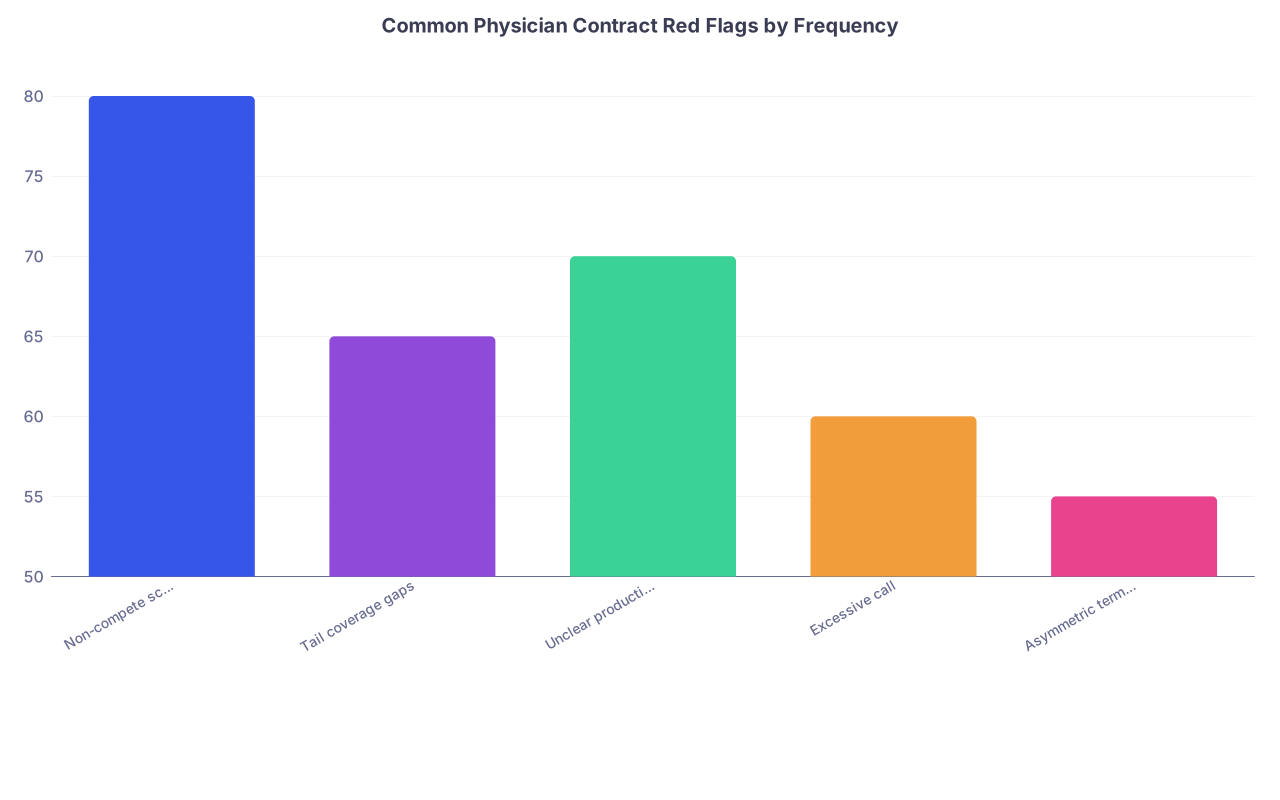
| Category | Value |
|---|---|
| Non-compete scope | 80 |
| Tail coverage gaps | 65 |
| Unclear productivity model | 70 |
| Excessive call | 60 |
| Asymmetric termination | 55 |
Quick 90-Day Checklist (Condensed)
If you skimmed everything else, use this.
By Day 75
- All offers collected and organized
- Personal financial baseline and non-negotiables defined
By Day 60
- Full read of every contract done
- Obvious red flags identified
- Healthcare/physician attorney hired and documents sent
By Day 45
- Written issue list (must-fix vs nice-to-have) created
- Negotiation strategy and talking points drafted
By Day 30
- First negotiation round completed with employer
- Revised contracts received in writing
By Day 20
- Second legal review of revised drafts completed
- Remaining ambiguities clarified or consciously accepted
By Day 7
- Final line-by-line pass completed
- Contract signed, stored safely, and summarized for your future self
Two things matter most in this whole process:
- You move on a timeline, not in last-minute panic.
- You understand what you’re signing well enough to say, “I chose this tradeoff,” instead of “I had no idea.”
Do that, and you’re already ahead of half of your graduating class.