
You’re sitting at your kitchen table, phone in one hand and a half-crumpled bus schedule in the other.
The free clinic you want is 40 minutes away by car. You do not have a car.
Uber each week would cost more than your grocery budget. The bus route requires two transfers and gets you there an hour after the clinic shift starts. The hospital near you either wants a 4-hour weekday shift you cannot make around classes, or they require a year-long commitment, which you cannot guarantee.
You still need meaningful clinical experience for your premed or early medical school journey. You know “shadowing and clinical volunteering” are non-negotiables. You also know “just find a hospital nearby” is not a real solution for you.
So the question becomes: How do you build strong clinical experience when transportation is limited or unreliable?
This guide is designed to give you concrete, step-by-step fixes:
- Remote opportunities that count and how to find them
- Local, low-transport options you probably have not considered
- Scripts for emails and calls to create your own roles
- How to package and explain non-traditional setups to admissions
You are not going to magically get a car. So we fix the problem from the other side.
Step 1: Define Your Real Constraints (No Wishful Thinking)
Before you hunt for opportunities, lock down what is actually feasible. This prevents wasted time chasing roles that will fall apart later.
Write this out clearly:
Transportation reality
- Do you:
- Have no car?
- Occasionally have access to a family member’s car?
- Have public transit within walking distance?
- Rely on rideshare for emergencies only?
- How far can you realistically go:
- By walking (minutes, not miles)?
- By bus/train (max total commute time each way)?
- What you can promise:
- “I can reliably reach places within a 20-minute walk.”
- “I can take one 20-minute bus ride but cannot transfer lines.”
- “I have a ride on Saturdays only.”
- Do you:
Time blocks
- When are you actually available:
- One long block/week (e.g., Saturdays 8–1)?
- Several short blocks (e.g., Mon–Thu 4–7 PM)?
- How many hours/week can you sustain all semester without burning out?
- When are you actually available:
Tech access
- Computer with camera and mic?
- Quiet space for phone or video work?
- Stable internet?
- Headphones for privacy?
Your constraints tell you what types of volunteering you should target:
- If you have no reliable transit but good internet → prioritize remote clinical-adjacent roles and hyper-local options.
- If you have some weekend transit → target Saturday clinics, nursing homes, hospice.
- If you have only walking access → think pharmacies, nursing homes, home health agencies, and small practices within walking radius.
Write this in 3 lines you can tell a coordinator:
- “I am available Saturdays 9–2 in person, within a 20-minute bus ride.”
- “I can volunteer remotely via phone or video on weekdays after 4 PM.”
- “I can commit to at least 6 months.”
You will use this later when negotiating roles.
Step 2: Understand What “Counts” as Clinical Exposure
You are trying to solve a logistics issue without undermining the core goal: genuine exposure to patients and clinical environments.
Admissions committees care about:
- Direct or indirect patient interaction
- Medical environments: hospitals, clinics, hospice, nursing facilities, telehealth
- Understanding illness, healthcare systems, and what clinicians actually do
They do not require:
- A specific building type (only major academic hospitals)
- Fancy titles
- Paid positions vs unpaid
They do respect:
- Consistency (e.g., 3–6+ months)
- Reliability
- Roles where you see and hear patient stories, challenges, and systems issues
When transportation is limited, your strategy is:
- Maximize proximity to patients (even virtually or by phone)
- Broaden the definition of “clinical environment” beyond inpatient units
- Stack several smaller roles instead of chasing a single “perfect” one that is logistically impossible
Step 3: Remote and Near-Remote Options That Actually Work
You cannot take vitals through a screen. But you can interact with patients, help clinics run, and gain real insight remotely.
Here are practical options and how to access them.
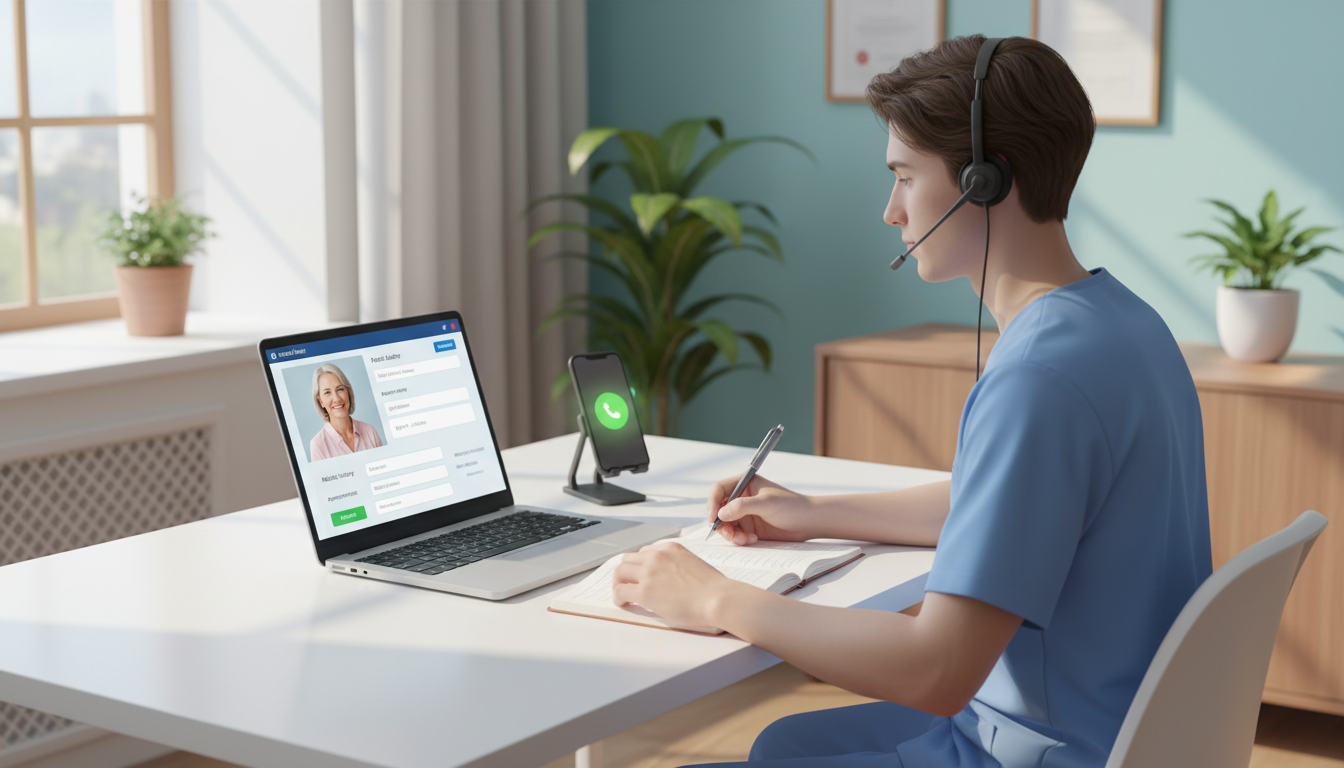
1. Remote Patient Navigator / Care Coordinator Assistant
Many clinics, FQHCs (Federally Qualified Health Centers), and non-profits use volunteers to:
- Call patients with appointment reminders
- Help schedule follow-ups
- Ask screening questions (transportation issues, food insecurity, insurance problems)
- Do basic education (e.g., reminding diabetic patients about glucose logs)
These can often be done:
- From home via a secure platform or clinic phone software
- In a hybrid model: initial training in-person, later remote shifts
How to find them:
- Search terms:
- “patient navigator volunteer remote”
- “[Your city] community health worker volunteer”
- “telehealth volunteer premed”
- Look at:
- FQHCs and community health centers
- Free clinics
- Non-profits focused on chronic disease (e.g., diabetes coalitions, cancer support orgs)
Email script you can adapt:
Subject: Volunteer Inquiry – Remote or Hybrid Patient Support
Dear [Name or Volunteer Coordinator],
My name is [Name], and I am a premedical student at [School]. I am very interested in supporting patient-facing work with your clinic, including tasks such as appointment reminders, follow-up calls, or screening for resource needs.
My transportation is limited, but I have reliable internet access and can commit [X hours/week] for at least [Y months]. I am available for required in-person training, but I am hoping to complete most shifts remotely or in a hybrid format.
Would your team be open to discussing any remote or phone-based volunteer roles that support your clinical staff and patients?
Thank you for your time,
[Name]
[Phone]
2. Crisis Text Line / Phone-Based Support
Crisis hotlines (text or phone) and warm lines provide:
- Real-time interaction with individuals in distress
- Training in active listening, boundaries, and crisis response
- Deep exposure to mental health, social determinants, and healthcare access issues
While this is not “clinic-based,” it is patient-centered and high-impact.
Examples:
- Crisis Text Line (text-based, remote training and shifts)
- Local/state crisis hotlines
- University-based peer support hotlines
Pros:
- Fully remote
- Structured training
- Direct, intense human interaction
Cons:
- Emotionally heavy (you must be in a stable place mentally)
- Sometimes requires night or weekend shifts
Admissions framing:
- Emphasize understanding of mental health crises and system gaps
- Reflect on communication skills, boundaries, and interprofessional referrals
3. Remote Health Education & Coaching Programs
Some clinics and non-profits run:
- Group education sessions via Zoom (diabetes, hypertension)
- One-on-one health coaching or check-in calls
- Smoking cessation or weight management programs
Volunteers may:
- Co-facilitate sessions
- Call patients with reminders
- Help patients navigate portals and telehealth platforms
Search:
- “remote diabetes education volunteer”
- “telehealth health coach volunteer”
- “virtual health education [your state]”
Offer:
- Your comfort with technology
- Bilingual skills if applicable
- Stable weekly time blocks
4. Remote Scribing (with Caution and Realism)
Most medical scribe roles are:
- Paid
- Require in-person presence or secure remote setups
- Have minimum hour/week commitments
However, some smaller groups or telemedicine practices use:
- Remote scribes during video visits
- Volunteers in limited, supervised contexts (less common but not impossible)
Action steps:
- Search for:
- “telehealth scribe”
- “remote medical scribe”
- Filter by:
- Part-time
- Evening/weekend
- Be brutally honest about your time capacity—scribing is demanding.
If you land a remote scribe role:
- Protect this experience. It is high-yield.
- Get clear documentation of training and responsibilities.
5. Hospital or Clinic Remote Support Roles
Some hospital volunteer departments have adapted post-COVID:
- Volunteers making follow-up calls to discharged patients (satisfaction, basic check-ins)
- Virtual waiting room support for telehealth visits
- Patient portal activation assistance
This often requires:
- Initial in-person onboarding
- Later remote work using hospital systems
When you contact hospital volunteer offices, ask specifically:
- “Do you have any remote or hybrid volunteer roles involving patient follow-up calls, patient portal support, or telehealth assistance?”
If they say no, ask:
- “Would your team be open to exploring a small pilot role if I commit to [X months]?”
You are not a nuisance; you are a resource. They may never have had someone ask this constructively.
Step 4: Hyper-Local In-Person Options You Probably Overlooked
Remote work alone is not ideal. You still want at least some physical environment exposure. With no car, that means hyper-local: within walking distance or a single, simple bus ride.

1. Map Everything Within a 20–30 Minute Walk
Use Google Maps:
- Put in your home address and your campus address.
- Search nearby for:
- “clinic”
- “family practice”
- “internal medicine”
- “pediatrics”
- “urgent care”
- “nursing home” / “skilled nursing facility”
- “assisted living”
- “hospice”
- “dialysis center”
- “physical therapy”
- “community health center”
- Create a list of every site within:
- 1.5 miles walking
- OR a single bus line with no transfer and total commute < 30 minutes one way
You are building a geography-based list, not prestige-based.
2. Target Settings That Commonly Accept Local Volunteers
Nursing homes / skilled nursing facilities (SNFs):
- Often closest healthcare sites in residential areas
- Have formal or informal volunteer programs
- You can:
- Visit with residents
- Help with group activities
- Assist recreation therapy staff
- Clinical exposure:
- Chronic disease
- End-of-life issues
- Interactions with nurses, therapists, physicians
Assisted living facilities:
- Similar to SNFs but often less medically intense
- Strong exposure to aging, dementia, and long-term care systems
Dialysis centers:
- Patients come 3 times/week, long sessions
- Some centers use volunteers for:
- Patient companionship
- Logistics (non-clinical)
- Exposure to chronic disease management and multidisciplinary care
Small clinics and FQHC satellites:
- Family medicine, internal medicine, pediatrics
- You may be the only volunteer they have
All of these are “clinical environments” even if they are not big-name hospitals.
3. Cold Outreach Script for Local Sites
Call or email. Calls often work better for small facilities.
Phone script:
“Hello, my name is [Name]. I live nearby and I am a premedical student at [School]. I am looking for a consistent volunteer opportunity where I can support patients and staff.
I do not have a car, so I am especially interested in helping at a healthcare facility within walking distance, like yours. I am available on [X days/times] and can commit to at least [Y months].
Do you currently accept volunteers, or is there someone I could speak with about how I might help residents/patients or assist staff with non-clinical tasks?”
If they say:
- “We do not have a formal volunteer program.”
You respond:
“I understand. I would still be interested in discussing a small, consistent role—even if it is just helping with activities, visiting residents, or assisting with front desk tasks. Is there a nurse manager, activities director, or administrator I could briefly speak with?”
Your goal is one short meeting where you can pitch:
- Reliability
- Specific time blocks
- Willingness to do unglamorous tasks
4. Pharmacies and Local Health Businesses
Do not ignore:
- Independent community pharmacies
- Physical therapy clinics
- Home health agencies (office side)
These may offer:
- Customer-facing roles (speaking to patients picking up meds)
- Observational experience (watching pharmacists or PTs interact)
- Possible shadowing add-ons once you prove reliability
These are not substitute for all hospital experience, but they strengthen your overall clinical and patient-facing exposure.
Step 5: Build Hybrid Solutions (Remote + Local + Short-Term Intensive)
When transportation is a problem, your portfolio should not depend on one fragile role. Instead, combine multiple manageable options.
Aim for some mix of:
- Ongoing remote patient interaction
- Hyper-local in-person contact
- Short-term intensive experiences when you can access transport
Example Hybrid Schedules
Scenario A: No car, some bus access
- Year-round:
- Remote: Crisis Text Line 4 hrs/week
- Local: Assisted living facility 3 hrs/week (walking distance)
- Summer:
- Arrange 1–2 weeks of full-day shadowing at a hospital when a family member can drive you
Scenario B: Weekday classes, weekend car only
- During semesters:
- Remote: FQHC telehealth patient navigator 3 hrs/week
- Remote: Virtual diabetes education group assistant 2 hrs/week
- Weekends (when car is available):
- Free clinic Saturday shift 4–5 hrs twice per month
Scenario C: Campus-based student with campus health center nearby
- On campus:
- Volunteer at student health center 2–3 hrs/week (front desk, check-in, health education)
- Remote:
- Crisis hotline or warm line 4 hrs/week
Admissions care about the pattern: sustained contact with patient stories and healthcare environments, not one perfect role.
Step 6: Use Your Constraints as a Strength When You Talk About It
You will eventually write about these experiences in activities sections, secondaries, or interviews. Limited transportation can sound like an excuse if you frame it poorly or like resilience and problem-solving if you frame it well.
Avoid:
- “I could not volunteer at a hospital because I do not have a car.”
- “Transportation made it hard to get clinical hours.”
Use:
- Demonstrated initiative and creativity
- Concrete actions you took to adapt
Example framing in an activity description:
“Without access to a car, I could not rely on traditional hospital volunteer roles. I mapped healthcare facilities within walking distance and contacted local nursing homes and clinics directly. This led to a longitudinal volunteer role at a nearby assisted living facility, where I visited residents weekly and supported group activities. To broaden my clinical exposure, I added a remote patient support role with a community health center, conducting follow-up calls to patients with chronic conditions.”
Or for a secondary essay about challenges:
“Transportation constraints limited my ability to reach large hospitals, but they pushed me to problem-solve. I combined remote crisis counseling and telehealth patient support with hyper-local volunteering at a nursing facility within walking distance. This taught me to design my own opportunities rather than wait for ideal circumstances.”
You are demonstrating:
- Resourcefulness
- Responsibility
- Commitment to caring for patients even under constraint
Step 7: Practical Logistics and Risk Management
Once you have opportunities, do not let logistics sink them.
Make a Transportation Micro-Plan for Each Role
For each in-person site, document:
- Exact route
- Travel time buffer (aim for 15–20 minutes early)
- Backup: What happens if bus is delayed or your ride falls through?
For example:
- Normal: Walk 18 minutes, leave 30 minutes before shift
- Backup:
- If severe weather → call 90 minutes in advance and switch to a remote shift that week (if arranged)
- If recurrent issues → discuss time shift or day change with supervisor
Communicate Clearly with Supervisors
At the start:
“I rely on [walking/public transit/family rides] and do not have a car. I am very committed to being reliable. My plan is [describe your transit plan]. If there is a transit disruption, I will notify you at least [X] hours in advance. Would that be acceptable, and is there a preferred way you would like me to communicate these situations?”
Supervisors appreciate:
- Transparency
- Concrete plans
- Advance notice
Track Hours and Responsibilities Carefully
Because your roles may be scattered:
- Use a simple spreadsheet or app (e.g., Google Sheets) with:
- Date, role, location, hours
- Brief note on what you did (patient calls, group activity, shadowing)
- This helps:
- Accurately report hours on AMCAS/AACOMAS/TMDSAS
- Build detailed, credible descriptions
- Write personal reflections later
Guard Against Overextension
Limited transportation often goes along with work, family responsibilities, and tight budgets. You cannot afford burnout.
Set boundaries:
- Cap total volunteer + work + classes at a sustainable level
- Prefer 1–2 long-term roles over constantly chasing new ones
- Adjust hours down before your grades suffer
Resilience means pacing, not martyrdom.
Step 8: Example “Pathways” You Can Copy and Adapt
To make this as concrete as possible, here are complete blueprints for different common situations.

Pathway 1: Community College Premed, No Car, Urban Bus System
Constraints:
- Lives at home
- 45–60 minutes max on transit each way
- Works part-time 15–20 hrs/week
Plan:
- Remote:
- Crisis Text Line, 4 hrs/week (evening shifts)
- Remote FQHC patient navigator, 2 hrs/week
- Local:
- Assisted living facility 15-minute walk away, 3 hrs/week on Sunday
- Summer:
- 1–2 weeks of shadowing at a large hospital when a relative can drive you consistently
Outcome by application time:
- 200+ hrs of remote patient interaction
- 100+ hrs in a long-term care facility
- 40–80 hrs of in-person shadowing spread across 2–3 specialties
Pathway 2: University Campus, No Car, College Town
Constraints:
- Campus is walkable
- Small hospital 1 mile away
- Limited town bus system
Plan:
- On campus:
- Student health center volunteer, 3 hrs/week
- Public health outreach with campus health promotion office (condom distribution, flu shot campaigns)
- Remote:
- Local community mental health crisis line, 4 hrs/week
- Breaks:
- Winter/summer shadowing at hometown hospital when staying with family
Outcome:
- Continuous multi-year clinical exposure on campus
- Deep mental health experience
- Traditional shadowing added later when transportation is no longer a barrier
Pathway 3: Post-bacc Student, Suburban, Relying on Family Car on Weekends Only
Constraints:
- Can use car Saturday only
- Heavy weekday course load
Plan:
- Weekend:
- Hospital or free clinic shift every Saturday, 4–5 hrs
- Remote:
- Telehealth support (appointment reminder calls, patient portal help), 2–3 hrs/week on weekday evenings
Outcome:
- Classic clinical volunteering through a hospital or clinic
- Stable, weekly pattern that fits limited car access
Key Takeaways
Transportation limits do not eliminate clinical options; they change the strategy. Combine remote, hyper-local, and short-term intensive experiences instead of chasing a single ideal role you cannot reach.
You must be proactive and specific. Map every healthcare site within walking or simple bus distance, contact them with clear availability, and explicitly ask for remote or hybrid roles when reaching out to clinics and hospitals.
Own your story. When you describe these experiences to admissions, frame limited transportation as a solved problem that led you to creative, consistent, patient-centered volunteering—not as an excuse.