It is June 1st. You just checked your CV against a sample successful med school application, and your stomach sinks. Shadowing looks thin, clinical hours are scattered, and there is no clear story that says, “This person lives in the clinical world.” You have 6 months before application season starts for you, and you need to fix this fast, without burning out or signing up for low-yield fluff.
Here is the good news: you can dramatically upgrade your CV in 6 months with the right type of clinical volunteering, if you treat this like a focused project instead of random sign-ups.
(See also: Creative Clinical Volunteering Options for alternative ways to gain experience.)
This is the playbook.
Step 1: Diagnose Your Current CV (2-Hour Deep Dive)
Before adding anything, you need to see what is actually broken.
1.1. Map your current clinical exposure
Take 30–60 minutes and write this out:
- Shadowing
- Total hours
- Specialties
- Settings (community office, tertiary hospital, rural clinic)
- Clinical volunteering
- Total hours
- Level of patient contact (none / limited / direct)
- Types of tasks (transport, triage, scribes, hospice, ED volunteering)
- Non-clinical volunteering
- Tutoring, mentoring, food bank, crisis line, etc.
- Gaps and red flags
- Big time gaps (6–12 months with no activity)
- Completely missing patient-facing roles
- Everything in one specialty only (e.g., dermatology and nothing else)
- One-and-done experiences (e.g., a single health fair day listed prominently)
Create a simple table (even in a Google Doc):
| Category | Activity | Hours | Dates | Clinical? | Direct patient contact? |
|---|---|---|---|---|---|
| Shadowing | Dr. X – Internal Med | 40 | Jan–Mar 2023 | Yes | No (observer only) |
| Clinical Volunteering | Hospital transport | 20 | Jun–Aug 2022 | Yes | Limited |
| Non-clinical | Food bank volunteer | 60 | 2021–2022 | No | N/A |
You are not trying to make it look good. You are trying to make it accurate and brutally clear.
1.2. Compare against a realistic target
For premeds aiming at competitive but realistic MD/DO schools, a solid clinical exposure baseline by application time usually includes:
- 100–150+ hours of true clinical volunteering
- 20–60 hours of shadowing across at least 2 specialties
- Some pattern of consistent involvement (not all in one frantic month)
If you are below that, your 6-month plan is about:
- Hitting minimum thresholds.
- Upgrading quality of experiences (more depth, more responsibility).
- Showing momentum: recency and commitment.
Write down three numbers:
- Current clinical volunteering hours: __
- Current shadowing hours: __
- Months until “application critical date” (when you want your CV strong): __
You now know the gap you must close.
Step 2: Define “High-Yield” Clinical Volunteering
Not all “clinical” experiences are created equal. Some barely move the needle; others become centerpiece stories for your personal statement.
High-yield clinical volunteering checks most of these boxes:
- You interact with actual patients or caregivers.
- You see physicians/nurses/other providers working in real time.
- You are part of a healthcare team, not just a background extra.
- You can describe specific moments where you:
- Communicated difficult information.
- Showed empathy under stress.
- Navigated systems (EMR, triage workflows, discharge planning).
2.1. Examples of high-yield clinical roles
These are generally CV gold when done consistently:
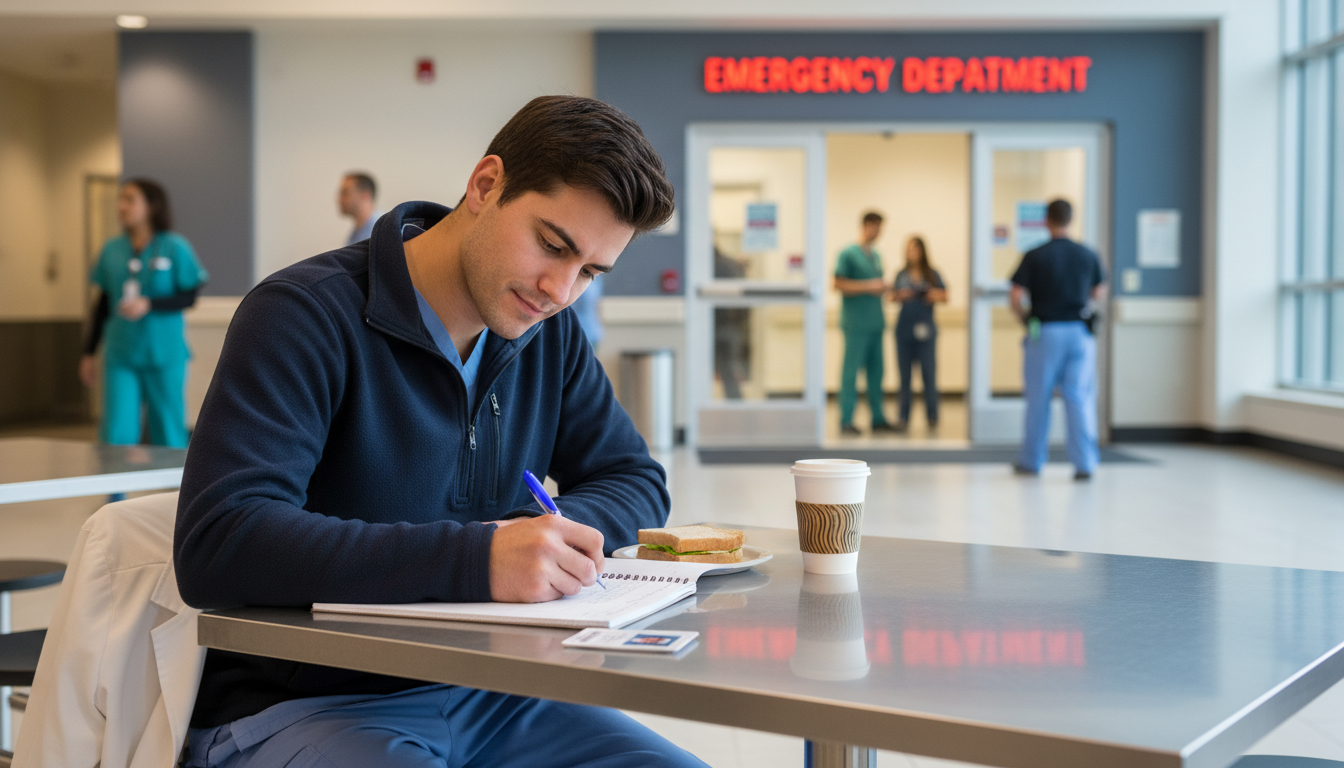
- Emergency Department (ED) volunteer
- Escorting patients, stocking rooms, assisting nurses with non-invasive tasks.
- Constant exposure to acute care, communication under pressure.
- Hospital unit volunteer (med-surg, oncology, ICU support)
- Rounding with nurses, patient comfort rounds, helping with meals, transport.
- Free clinic volunteer
- Intake, vitals (if trained/allowed), translation, patient education.
- Strong for underserved medicine and health equity narratives.
- Hospice or palliative care volunteer
- Direct family/patient interaction, end-of-life conversations.
- Very high impact for maturity and empathy.
- Medical scribe (paid or volunteer)
- Shadowing plus documentation, directly seeing clinical reasoning and EMR use.
- Time intensive but high-yield if you can log multiple months.
2.2. Lower-yield or borderline roles
These are not useless, but they are weaker if they are your main clinical experience:
- Front-desk only, with no patient interaction beyond “sign here”.
- Gift shop only, serving mostly staff and visitors.
- One-day health fairs with no continuity.
- COVID vaccine clinic only entry/exit traffic control (unless you can describe meaningful interaction and systems learning).
You can still include them, but your 6-month rebuild should prioritize moving from peripheral to patient-facing roles.
Step 3: Build a 6-Month Clinical Volunteering Blueprint
You have 6 months. The goal is not to do everything. The goal is:
- 1–2 cornerstone clinical roles.
- Sustained weekly engagement.
- Carefully selected add-ons that round out your story.
Think in weeks, not just months. Six months is ~26 weeks.
3.1. Sample hour targets
If you commit to:
- 4 hours/week of high-yield clinical volunteering
- 2 hours/week of shadowing (average, sometimes more, sometimes less)
Over 24 weeks (leaving 2 weeks buffer):
- Clinical volunteering = 4 × 24 = 96 hours
- Shadowing = 2 × 24 = 48 hours
Layer that on top of what you already have, and you are competitive at many schools.
3.2. Choose your 1–2 anchor experiences
Pick from this short list, based on availability in your area:
- ED volunteer – 1 shift/week, 4 hours
- Free clinic volunteer – weekly clinic night (3–5 hours)
- Hospice volunteer – 3–4 hours/week
- Scribe – 2+ shifts/week if feasible (often 6–12 hours/week; very strong if sustained)
If you are working or in school full time, one solid 3–4 hour shift per week is enough, as long as you stick with it.
Example blueprint:
- Months 1–6:
- ED volunteer, Saturdays 8am–12pm (4 hours/week).
- Months 2–4 (optional layer):
- Free clinic volunteer, Wednesdays 5–8pm (3 hours/week, for 12 weeks).
- Months 1–3:
- Shadow 3 physicians, 15–20 hours each, distributed on off-days.
By the end:
- ED volunteer: ~24 weeks × 4h = 96 hours
- Free clinic: ~12 weeks × 3h = 36 hours
- Shadowing: ~45–60 hours
This transforms a weak CV into one with clear, sustained clinical immersion.

Step 4: Finding and Landing High-Yield Positions Quickly
Time is your constraint. You cannot spend 3 of your 6 months just hunting for roles.
4.1. Use a structured 7-day outreach sprint
For one week, treat finding roles like a job:
Day 1–2: Identify targets
Create three lists:
- Hospitals
- Search: “[Your city] hospital volunteer services”
- Aim for: academic centers, community hospitals, specialty hospitals.
- Clinics
- Search: “free clinic [your city]”, “community health center volunteer [city]”
- Hospice / palliative / long-term care
- Search: “hospice volunteer [your city]”, “nursing home volunteer [city]”
Goal: at least:
- 5 hospitals
- 3–5 clinics
- 3 hospices or long-term care facilities
Day 3–4: Make direct contact
You will use both email and phone.
Email template (modify, do not send verbatim to everyone):
Subject: Clinical Volunteer Availability – [Your Name], Premed Student
Dear [Coordinator’s Name],
My name is [Name] and I am a premedical student at [School] looking to begin consistent, patient-facing clinical volunteering.
I am available [X days/times] for a weekly 3–4 hour shift and I can commit for at least 6 months. I am especially interested in roles with patient interaction (such as in the ED, inpatient units, or free clinics), and I am fully vaccinated and able to complete any required onboarding.
Would you be able to share current volunteer opportunities and approximate timeline from application to starting?
Thank you for your time,
[Name]
[Phone]
Then call:
- Ask for “Volunteer Services” or “Volunteer Coordinator.”
- Script:
- Who you are
- That you are looking for weekly clinical volunteering, with patient contact
- Your timeframe: “I am hoping to start within the next 4–6 weeks.”
Day 5–7: Triage responses
Sort options by:
- Start-time speed
- Start within 2–4 weeks = high priority.
- 2–3 months until orientation = maybe, but only if you have a backup.
- Patient contact level
- Direct interaction roles > purely logistical > gift shop.
- Shift structure
- Stable weekly shifts are ideal.
Apply to multiple programs simultaneously. Do not wait on a single program’s slow onboarding.
4.2. If you live in a smaller city or rural area
If hospital systems are limited:
- Focus on:
- Community health centers
- Nursing homes/assisted living facilities
- Home hospice programs
- Blood donation centers (Red Cross–type) where you interact with donors
- Ask for roles like:
- Activities volunteer
- Companion visitor for elderly or hospice patients
- Intake volunteer at clinics
Admissions committees understand geographical constraints if you still demonstrate consistent, hands-on involvement.
Step 5: Maximize Each Shift (How to Turn Hours into Stories)
Many students show up, do what they are told, and leave. They accumulate hours but not insight. That will not impress an interviewer.
You need a protocol for each shift that turns routine volunteering into meaningful, discussable experiences.
5.1. Pre-shift (5–10 minutes)
Ask yourself:
- “What is one skill I am trying to practice tonight?”
- Examples: initiating conversation with anxious patients, watching how nurses give bad news, observing team communication during busy times.
Write a one-line intention in a notes app.
5.2. During shift
Focus on:
- Communication
- Introduce yourself clearly: “Hi, my name is [Name], I am a volunteer on the unit today. Is there anything I can bring you or help with while you are here?”
- Observe how staff modify language for different patients (elderly, non-English speaking, low health literacy).
- Systems awareness
- Notice what slows care down (bed availability, labs, family communications).
- Ask staff (when appropriate, not during crises): “How does [process] typically work here?”
- Professionalism
- Show up early.
- Dress correctly.
- Say “I do not know, but I can find someone who does” when patients ask questions beyond your scope.
5.3. Post-shift reflection (10 minutes, non-negotiable)
Use a simple template in your phone or notebook:
- Date:
- Location:
- Hours:
- One specific patient encounter (de-identified):
- What happened?
- What did you observe or do?
- What did you learn about medicine, patients, or yourself?
Example:
10/3/2025 – ED volunteer, 4h
Helped transport older patient with suspected stroke from CT back to room. Noticed how the nurse explained each step calmly to wife who was panicked. I realized how much non-medical communication stabilizes a situation. I fumbled when wife asked prognosis; learned the importance of deferring to clinical staff but still being emotionally supportive.
These brief notes become the raw material for:
- Activity descriptions on AMCAS/AACOMAS.
- Secondary essay “clinical experience” examples.
- Interview answers for “Tell me about a meaningful clinical encounter.”
Step 6: Integrate Shadowing Strategically
Shadowing by itself is weaker than clinical volunteering, but combined, it shows you understand physician life at multiple levels.
6.1. Targeted shadowing plan
Instead of random one-day experiences:
- Choose 2–3 specialties:
- One primary care (IM, FM, pediatrics)
- One hospital-based (hospitalist, ED)
- Optional: specialty of interest (OB/Gyn, surgery, psych)
- Aim for:
- 15–25 hours per physician
- Spread over multiple days or weeks
6.2. How to get shadowing efficiently
Leverage your existing or upcoming roles:
- Ask physicians you see regularly on the unit:
“I am a premed volunteer here and have learned a lot from the nursing side. Would it be appropriate for me to ask if any attending physicians allow students to shadow, and if so, what is the best way to request that?”
Use a short email:
Subject: Shadowing Request – Premed Volunteer at [Hospital]
Dear Dr. [Name],
My name is [Name], and I am a premedical student currently volunteering in the [Unit/ED] at [Hospital]. I have become very interested in [specialty] and I am hoping to better understand the day-to-day work and clinical decision-making in this field.
Would you be open to allowing me to shadow you for [X half-days] over the next [timeframe]? I am happy to follow any requirements your department has for observers.
Thank you for considering this request,
[Name]
Shadowing should fit around your anchor clinical role, not replace it.
Step 7: Presenting Your 6-Month Rebuild on Your CV/Application
You are not only doing the work. You must show it clearly.
7.1. Writing strong activity descriptions
For each major role, include:
- Your role and setting
- Specific responsibilities
- Skills demonstrated
- Impact on your understanding of medicine
Weak:
“Hospital volunteer. Helped patients and families. Learned about healthcare.”
Strong:
“Emergency Department Volunteer, [Hospital Name]
- Completed weekly 4-hour shifts in high-volume urban ED, supporting nurses and techs in patient transport, room turnover, and comfort rounds.
- Initiated conversations with patients and families to assess non-medical needs and relayed concerns to clinical staff, especially for elderly patients presenting alone.
- Observed interdisciplinary care for acute conditions (stroke, MI, trauma), gaining insight into triage protocols and the importance of clear communication under time pressure.”
7.2. Handling short timelines on applications
If you are applying while still early in a role (e.g., 1–2 months in), you can:
- List start date and mark “ongoing.”
- Estimate anticipated hours by application submission (be conservative).
- Be ready in interviews to speak honestly about:
- What you have seen so far.
- How you plan to stay in this role over the coming year.
Admissions committees like trajectories. If you can say:
“I started in the ED in August and plan to continue weekly shifts through the year. I am on track to complete over 150 hours in this role alone.”
That signals commitment, not box-checking.
Step 8: Time Management and Burnout Prevention
You have other responsibilities: coursework, MCAT, work, family. Piling on 10 activities will sink you.
8.1. Use a “3-box” activity model
In any 6-month period, have no more than:
- One primary clinical role (3–4h/week).
- One secondary role (shadowing or a second clinical experience, 2–4h/week).
- One non-clinical commitment (tutoring, research, job, etc.)
Everything else is “optional and short-term” (single events, one-off health fairs).
8.2. Decide what to pause or drop
If you are rebuilding your CV, it is reasonable to:
- Pause low-yield clubs with no leadership or clear purpose.
- Reduce hours at unrelated jobs (if financially possible) to free 4h/week.
- Say no to new commitments that do not directly support:
- Clinical exposure
- Academic performance
- MCAT prep
You are not saying “no forever.” You are saying, “For the next 6 months, my priority is fixing my clinical experience gap.”
A Concrete 6-Month Example Plan (You Can Adapt This)
Assume:
- You currently have 20 hours of shadowing and 15 hours of non-patient-facing volunteering.
- You want to be competitive by the next December for primary submissions.
Month 1: Setup
- Week 1–2:
- Reach out to 5 hospitals, 3 clinics, 3 hospices.
- Secure:
- ED volunteer role starting Month 2.
- Free clinic role starting Month 3 (if available).
- Week 3–4:
- Finish paperwork, background checks, immunizations.
- Schedule first shadowing blocks (2–3 days next month).
Months 2–4: Build
- ED volunteer:
- Every Saturday morning, 4 hours.
- Reflection notes after each shift.
- Shadowing:
- One internal medicine physician for 3–4 mornings (15–20 hours).
- One EM physician for 2–3 evening shifts (10–15 hours).
- Start free clinic shifts in Month 3:
- Wednesday evenings, 3 hours, for at least 12 weeks.
Months 5–6: Consolidate and Extend
- Continue ED volunteer weekly.
- Continue or wrap free clinic depending on cycles.
- Add:
- Short hospice or nursing home volunteering if time allows (2–3 hours/week).
- Update CV with accurate hour totals.
- Draft activity descriptions using your reflection notes.
By the end of Month 6, you have:
- ~96 hours ED volunteering.
- ~36 hours free clinic.
- ~30–35 hours new shadowing + previous 20 (total ~50–55).
- A clear narrative: consistent, patient-facing clinical immersion over half a year.
FAQs
1. Is it too late to start clinical volunteering if I am applying in less than a year?
No. Starting now and showing consistent weekly involvement for 6–12 months is far better than waiting or scrambling later. Even if you only have 4–6 months before applications, you can still accumulate 60–100 hours in a meaningful role. Admissions committees look for trajectory and genuine engagement; they do not require years of experience for every applicant, especially if your recent involvement is strong and clearly described.
2. Does paid clinical work (like CNA, MA, EMT, or scribe) “count” the same as volunteering?
Yes, for most schools, paid clinical work is often viewed as equal or stronger than volunteering if it involves direct patient care or close clinical team involvement. The key is:
- Are you interacting with patients in a meaningful way?
- Are you observing and understanding healthcare delivery?
- Can you reflect on what you learned?
If you already work as a CNA, MA, EMT, or scribe, you may not need separate clinical volunteering, but you should still present your role clearly and thoughtfully on your application.
3. What if my only available hospital role is low-contact (like front desk or gift shop)?
Start with what you can access, but do not stop there. You can:
- Take the low-contact role to get your foot in the door and demonstrate reliability.
- After 1–2 months, ask the volunteer coordinator about transferring into higher-contact roles (ED, inpatient units, patient escort).
- Simultaneously pursue more patient-facing options at free clinics, nursing homes, or hospice programs.
You want at least one role where you can describe direct or close patient interaction. Use low-contact roles as stepping stones, not your sole clinical experience.
Key points to remember:
- In 6 months, with one solid weekly clinical role and targeted shadowing, you can rebuild a weak CV into a credible, patient-centered profile.
- Prioritize high-yield, patient-facing opportunities; then extract maximum value through consistent reflection and smart activity descriptions.