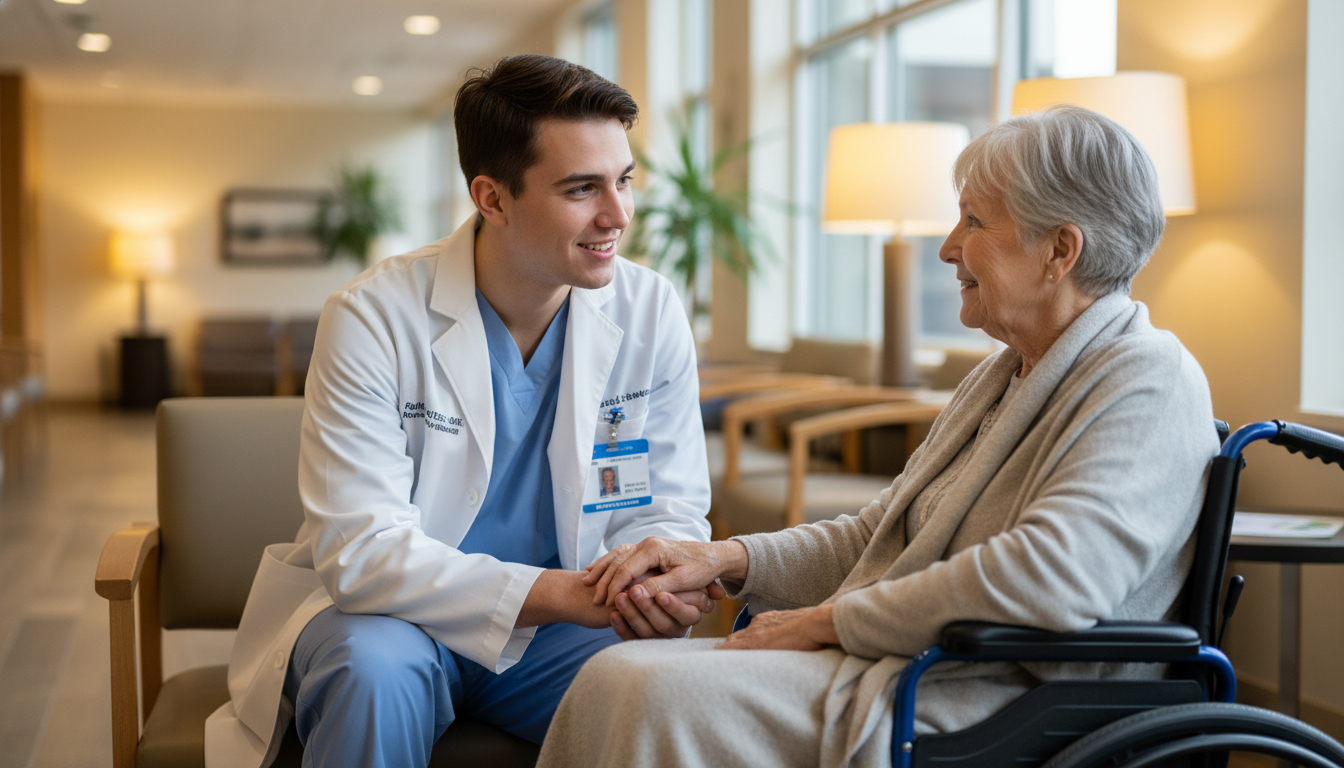
It is Wednesday night, 9:30 p.m. You are logging clinical hours from your hospital volunteer shift and the realization hits: you barely spoke to any patients. You restocked blankets, wheeled charts around, wiped down beds, and stood at a desk while nurses rushed past you. Your application spreadsheet says “clinical volunteering,” but your gut says “I am basically invisible.”
You are not wrong to be worried. Admissions committees can spot the difference between “I saw patients from 20 feet away” and “I sat with a terrified patient before surgery and walked them through what to expect.” The problem is not that you are volunteering. The problem is that your role gives you almost no meaningful patient contact.
This is fixable.
(See also: Creative Clinical Volunteering Options for alternative ways to gain experience.)
Below is a step-by-step system for pivoting from low-contact “busywork” roles into real, hands-on clinical volunteering that actually prepares you for medicine and stands up to application scrutiny.
Step 1: Diagnose Exactly Why Your Role Has Low Patient Contact
Before you bail on your current site or add three new commitments, you need to be clear on why your experience is low-contact. Different causes require different fixes.
Common patterns that lead to low-contact roles
Wrong unit or department
- Front desk in a specialty clinic that mostly processes paperwork
- Back-office roles (medical records, supply rooms)
- Hospital units with strict infection control or privacy rules where volunteers cannot interact directly
Poor role design
- “Ambassador” position that only greets and directs but never stays with patients
- Volunteer description says “patient interaction,” but in practice you stock, clean, and transport
Time and shift mismatch
- You volunteer during low-volume hours (e.g., weekends in some outpatient clinics)
- You chose a shift when no procedures, admissions, or rounds are happening
Institutional restrictions
- Some hospitals explicitly prohibit volunteers from:
- Helping patients walk
- Assisting with meals
- Sitting alone in rooms
- Participating in histories or exams
- Certain states/organizations have strict liability rules
- Some hospitals explicitly prohibit volunteers from:
Your own approach (fixable quickly)
- You stay near the volunteer desk instead of circulating
- You wait for staff to assign tasks rather than proactively asking
- You have not communicated that you want patient-facing responsibilities
Write down, in one or two sentences, why your current experience is low-contact. Be brutally specific:
- “I am a front-desk volunteer in radiology, and I mostly file papers.”
- “I work in the ED but I stand at the check-in and do not enter rooms.”
- “My nursing home role is mostly cleaning the activity room; I rarely sit with residents.”
This “diagnosis” tells you whether you should push for modification, switch units, or pivot to a completely different site.
Step 2: Do a 4-Week Intervention Before You Abandon Your Current Site
You invested time in onboarding, paperwork, background checks, and health clearances. Throwing this away without trying to fix your role first is inefficient. Give yourself a structured, 4-week push to convert your position into more hands-on work.
Week 1: Clarify expectations and ask directly
Schedule a short conversation with your volunteer coordinator or unit supervisor.
Use a script like this:
“I really value being here and I want to contribute more directly to patient care within the boundaries of hospital policy. Are there tasks that involve more patient interaction that I can be trained for, such as:
• Accompanying patients to tests
• Sitting with patients who are alone
• Helping with non-clinical comfort measures (water, blankets, conversation)?”
Ask very specific questions:
- “Am I allowed to enter patient rooms?”
- “Are there any patient comfort programs I could join?”
- “Is there another unit where volunteers have more bedside contact?”
Your goal: Determine if the institution or the position is the barrier.
Week 2–3: Change how you use your time during shifts
Even within restrictive roles, many students under-use the patient contact that is available.
Concrete tactics:
Volunteer on higher-intensity units, if allowed:
- Emergency Department (but not the check-in desk only)
- Oncology floors
- Inpatient rehabilitation
- Medical-surgical floors
- Geriatric units
Circulate intentionally
- At the start of each shift: check in with each nurse on the unit:
- “Do you have any patients who might benefit from company or someone to sit with them for a bit?”
- Ask the charge nurse:
- “Are there any patients isolated or anxious who might like someone to talk with them?”
- At the start of each shift: check in with each nurse on the unit:
Create a micro-role around patient comfort Even if your core duties are logistical, you can layer patient interaction on top:
- When delivering blankets or water, stay for 2–3 minutes:
- Ask open-ended but simple questions:
- “How are you feeling about being here today?”
- “Is there anything non-medical I can help you with while I am here?”
- Ask open-ended but simple questions:
- Offer to read, adjust TV, or help them call family (if allowed)
- When delivering blankets or water, stay for 2–3 minutes:
Use waiting rooms wisely
- In radiology, oncology infusion centers, pre-op areas:
- Introduce yourself: “My name is __, I volunteer with the hospital. If you like, I can sit and chat while you wait.”
- People sitting alone often welcome conversation—this is still real patient contact.
- In radiology, oncology infusion centers, pre-op areas:
Week 4: Reassess with brutal honesty
Ask yourself:
- Over the past 4 shifts, how many individual patients did I actually talk to for more than 2–3 minutes?
- Did my tasks change meaningfully after I spoke with my supervisor?
- Are there clear institutional or legal barriers preventing meaningful patient interaction?
If the answer is: “I spoke briefly to 2–3 patients total and nothing meaningful changed,” you have your answer.
Time to pivot.
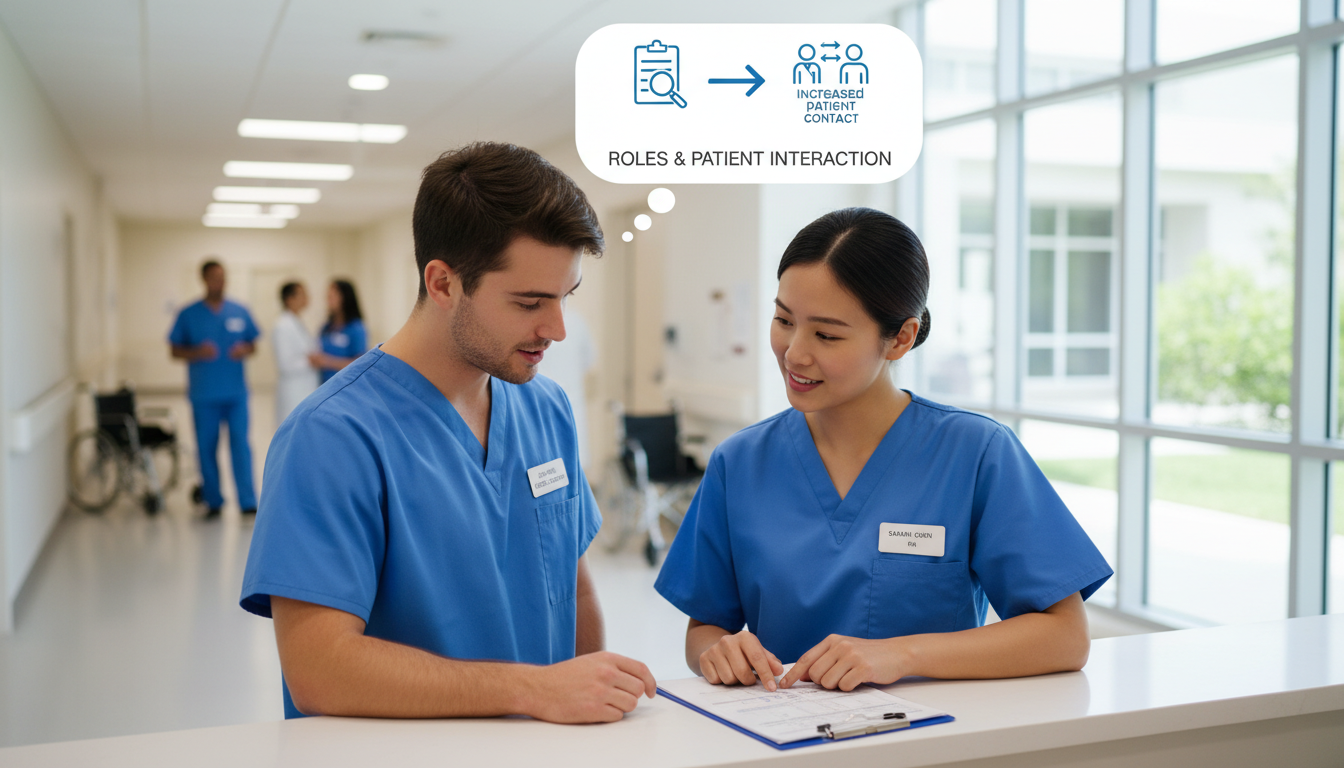
Step 3: Know What Counts as High-Value Hands-On Volunteering
Not all “patient contact” is equal. Before you search for new opportunities, define your target.
Hallmarks of genuinely hands-on clinical volunteering
Look for roles where you routinely:
- Enter patient rooms or sit directly with patients or families
- Have conversations about:
- Their health journey
- Their fears, questions, or experiences
- Perform non-technical but direct-care tasks, for example:
- Helping patients walk (if trained and allowed)
- Feeding assistance or meal setup
- Assisting with activities in a nursing home or rehab center
- Comfort measures: blankets, positioning pillows, oral care kits (if permitted)
- Spend 20–50% of your shift with patients, not just in the same building as them
Examples of strong, hands-on roles:
- Hospital “sitter” programs (non-clinical companionship for at-risk or confused patients)
- Emergency Department volunteer who:
- Rounds on rooms checking non-medical needs
- Escorts patients and families, sits with anxious patients
- Hospice volunteer providing bedside companionship, listening, and support to families
- Nursing home / skilled nursing facility volunteer who:
- Leads or assists with activities
- Visits residents room-to-room
- Helps with mealtimes
- Inpatient rehab volunteer helping patients with non-clinical mobility or exercises (as trained)
- Free clinic or FQHC volunteer checking in patients, rooming them, taking histories if trained
These roles give admissions committees confidence that:
- You have seen real suffering and complexity
- You understand what it feels like to be with patients in vulnerable states
- You did more than transport supplies or fold gowns
Step 4: Pivot Paths – Where to Find More Hands-On Roles
Now the practical build-out: where do you actually go?
Think of this as a 3-tier strategy.
Tier 1: Re-target within your current hospital system
Most large hospitals run multiple volunteer programs. Your current role might be the worst option in a decent system.
Actions:
Check the hospital website for other volunteer tracks
- Look for keywords:
- “Patient support”
- “Companionship”
- “Family liaison”
- “Emergency Department volunteer”
- “Geriatric volunteer”
- “Hospice / palliative care volunteer”
- Look for keywords:
Email or call the volunteer office Use something like:
“I am currently volunteering in [Department], and after a few months I realize that my role is mostly logistical with very limited patient interaction. I am hoping to gain more direct experience with patients, especially in roles that involve bedside communication and non-clinical support. Are there existing positions or units that would be a better fit?”
Ask about off-unit programs Many systems run community-facing programs that still count as clinical:
- Hospital-based home visit programs (accompanied by staff)
- Discharge follow-up calls (under supervision)
- Group education sessions for chronic diseases where volunteers assist
Tier 2: Move to settings inherently designed for interaction
If your hospital system is truly inflexible, shift to environments that are built around patient engagement, not just acute medical care.
High-yield options:
Nursing homes / assisted living / skilled nursing facilities These are gold mines for:
- Longitudinal relationships with residents
- Regular conversation and emotional support
- Observing the functional impacts of chronic disease
Ask specifically:
- “Do you have a program where volunteers visit residents one-on-one?”
- “Can volunteers help during meals or activities?”
Hospice organizations Hospice is intense but incredibly formative. Roles often include:
- Sitting bedside with patients who may be near end of life
- Supporting family members with presence, listening, and simple tasks
- Helping with non-medical comfort (e.g., reading aloud, music)
Many hospices have formal volunteer training programs—documented, structured, and highly respected by adcoms.
Free clinics, mobile clinics, and FQHCs Look for:
- Student-run free clinics affiliated with local med schools
- Federally Qualified Health Centers (FQHCs) that use volunteers for:
- Intake
- Scribing
- Education These often allow more close-up exposure to patient histories and encounters.
Rehabilitation hospitals or units You see:
- Stroke patients relearning to walk or speak
- Spinal cord injury rehab
Volunteers may: - Walk with patients (if trained)
- Assist with therapy sessions under close supervision
- Provide social support between therapies
Tier 3: Structured programs with proven patient contact
If you are in a region with few options, consider formal programs that reliably provide hands-on experience:
Hospital Elder Life Program (HELP)
Volunteers work specifically with older inpatients on delirium prevention—visiting, orienting, walking, assisting with meals. This is about as “hands-on non-clinical” as it gets.Certified Nursing Assistant (CNA) training + work If you have >6–12 months before applying, consider:
- Complete a CNA course (often 4–12 weeks)
- Work 1–2 shifts per week in a nursing home or hospital
Direct patient care: bathing, feeding, toileting, transfers, vital signs.
Medical assistant (MA) roles
Some clinics train premed MAs if you commit long-term. You may:- Room patients
- Take vitals
- Document basic history
This is higher responsibility, but also higher payoff.
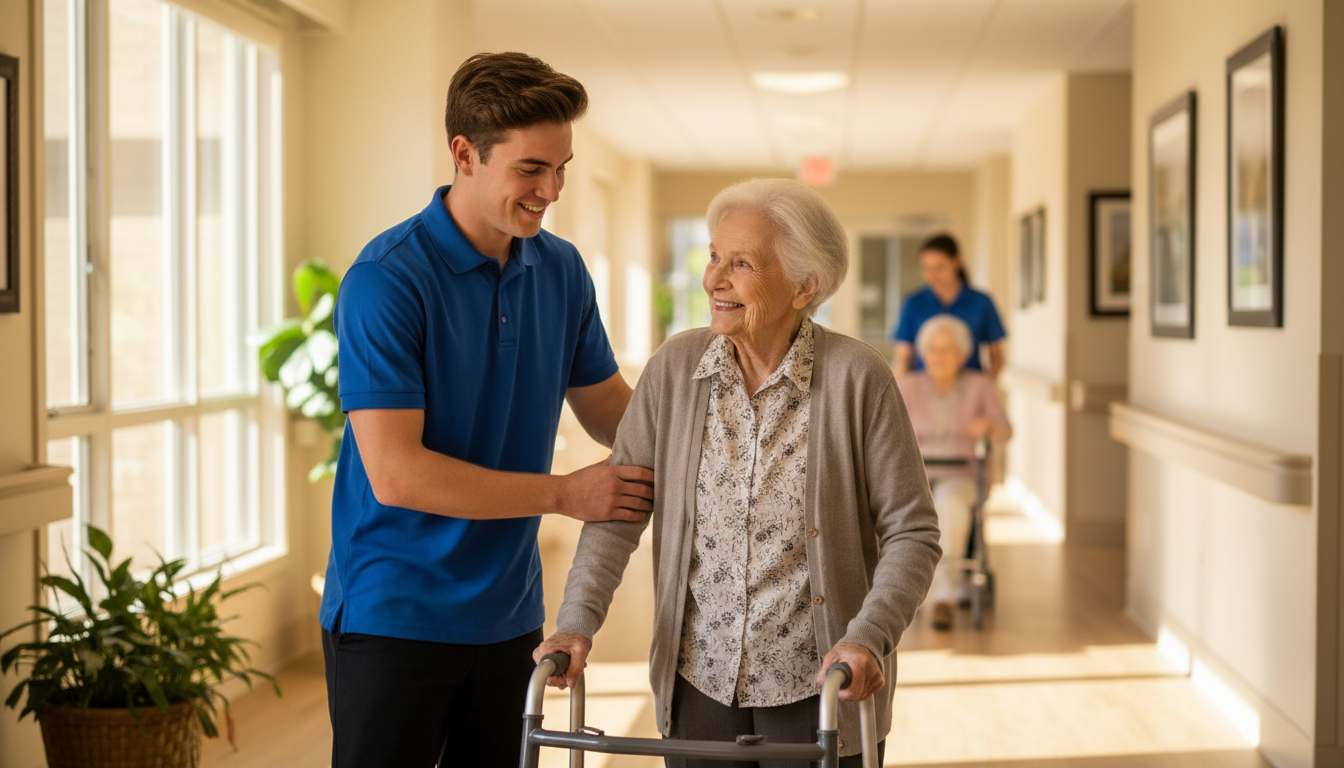
Step 5: Use a “Portfolio” Approach to Balance Hours and Quality
A common mistake: clinging to a single, mediocre, low-contact role simply to maintain a high hour count.
Admissions committees would rather see:
- 120 hours of high-contact hospice + 60 hours of hospital HELP program
than
- 400 hours of transporting specimens and wiping stretchers with almost no patient interaction.
Build a clinical experience portfolio with 2–3 roles
Structure your next 12–18 months (or whatever time you have) like this:
Anchor role (high contact, long-term)
- 4–8 hours per week
- Intended duration: ≥ 9–12 months
Examples: - Hospice volunteer
- CNA at nursing home
- ED volunteer with bedside focus
- HELP program volunteer
Supplementary role (moderate contact, flexible schedule)
- 2–4 hours per week or seasonal
Examples: - Student-run clinic during school semesters
- Free clinic once a month
- Rehab hospital volunteer
- 2–4 hours per week or seasonal
Exploratory/short-term role (1 semester or summer)
- 1–2 hours per week or intensive 1–2 month block
- Purpose: exposure to a different patient population Examples:
- Pediatric hospital unit activities helper
- Behavioral health inpatient unit volunteer
- Palliative care support team assistant
If you currently have a low-contact role:
- Either convert it into a supplementary role (keep 2–4 hours/week if it is easy to maintain)
- Or phase it out entirely once you build a strong anchor experience
Track your actual patient interactions, not just hours:
- After each shift, note:
- How many patients did I talk with?
- How many of those interactions lasted >5 minutes?
- Did I learn anything about their story, fear, or life?
This reflection becomes material for your personal statement and interviews.
Step 6: Communicate Your Needs Without Burning Bridges
You might feel awkward telling coordinators you want more patient contact. Done poorly, it can sound transactional. Done well, it sounds professional and thoughtful.
Principles
- Express appreciation for the opportunity you already have
- Emphasize your desire to both serve patients more meaningfully and prepare for a future in medicine
- Avoid criticizing the program; instead frame it as “fit”
Sample email structure:
Dear [Name],
I have really appreciated the opportunity to volunteer with [Unit/Program] over the past [X] months. It has been helpful to see how [specific thing you have observed].
As I continue preparing for a career in medicine, I am hoping to gain more direct experience interacting with patients and families at the bedside, within the bounds of hospital policy. My current role has been primarily focused on [brief description], which has limited my ability to talk with patients in depth.
I wanted to ask whether:
- There are additional responsibilities I might be trained for that involve more patient contact, or
- There are other units or programs within [Hospital] where volunteers typically have more direct interaction with patients.
I value being part of this system and would appreciate any guidance you can offer on how I can contribute in a more patient-facing capacity.
Sincerely,
[Your Name]
If they cannot accommodate you, you still leave on good terms and can list the experience on your application without awkwardness.
Step 7: Manage Constraints: No Car, Heavy Course Load, Rural Area
You might be thinking, “This all sounds great, but I am stuck with real-life limitations.”
Let’s troubleshoot them.
Problem: No car / limited transportation
Solutions:
- Walkable or campus-based options
- University hospital volunteers
- Campus-based student-run clinics
- Nearby nursing homes reachable by bus or bike
- Virtual or phone-based clinical-support roles (confirm whether your target schools accept these as clinical)
- Patient navigator programs making follow-up calls
- Telehealth support volunteers (helping patients connect, not giving medical advice)
Ask coordinators directly about public transit access or shuttle services—many hospitals that rely on volunteers will help you figure this out.
Problem: Heavy course load or MCAT studying
You do not need to volunteer 15 hours per week to be competitive if the hours you do have are high-quality.
Target:
- 3–4 hours per week in a high-contact role
- Consistency over 9–12+ months
Consider:
- Friday evening or weekend shifts on units with activity (ED, rehab, nursing homes)
- Summer intensives: 15–20 hours/week for 8–10 weeks in one very hands-on setting
Quality + continuity beats sheer quantity.
Problem: Rural area with limited hospitals
Your “shortage” might actually be an opportunity.
Look for:
- The local critical access hospital—often much more flexible about volunteer roles
- Community health centers that rely on volunteers for patient support
- Home health or hospice organizations that cover wide geographic areas
- County health department programs:
- Vaccination clinics
- Chronic disease education classes
Volunteers often help with registration, patient flow, and support.
If all else fails, consider:
- A structured summer in a larger city dedicated to clinical work (sublet a room, work or volunteer intensively for 8–12 weeks).
- CNAs or MAs in rural nursing homes—these positions are often in high demand.

Step 8: Convert Hands-On Volunteering into Strong Application Material
Fixing the problem is not just about feeling useful now. You also need your improved experiences to show up clearly in your application.
Document specifics in activity descriptions
When you log the activity on AMCAS/AACOMAS/TMDSAS, avoid vague language.
Weak description:
“Volunteered in a hospital helping staff and patients.”
Strong description:
“Volunteered on a medical-surgical floor providing non-clinical bedside support to inpatients: visiting rooms, offering conversation and emotional support, assisting with meals, and ensuring patient comfort (blankets, water, repositioning as directed by nurses). Typically interacted with 6–10 patients per shift, including individuals undergoing chemotherapy, post-operative recovery, and managing chronic illnesses.”
Quantify:
- “Visited 3–5 hospice patients per shift for 20–40 minutes each, often at end of life.”
- “Led weekly activities with 8–12 nursing home residents with dementia.”
Highlight:
- What you learned about:
- Patient vulnerability
- Health system barriers
- Communication challenges
Prepare to talk about “Why the pivot?” in interviews
If you changed roles, frame it positively:
“My first hospital volunteer position was primarily logistical—transporting supplies and cleaning rooms. It was helpful, but I realized I was not actually talking with patients. After a few months, I met with the volunteer coordinator to ask about more patient-facing options and transitioned into the Hospital Elder Life Program, where my primary role was bedside interaction, orienting older inpatients, and assisting with meals. That shift confirmed for me how much I value direct patient contact and being present with people when they are vulnerable.”
This shows:
- Insight
- Initiative
- A bias toward action—exactly what you want to project as a future physician.
The Core Fixes, In Brief
Do not accept a low-contact role as “just how volunteering is.” Diagnose why it is low-contact, push for 4 weeks to improve it, and then pivot if nothing changes.
Target environments and roles designed for patient interaction. Hospice, nursing homes, HELP programs, ED bedside roles, rehab units, free clinics, and CNA/MA work all offer genuine patient contact.
Think in terms of a portfolio, not a single line item. A smaller number of hours in high-contact, longitudinal roles is more powerful than hundreds of hours of anonymous scut work.
If you are willing to be intentional, ask the awkward questions, and move toward where patients actually are, you can transform “I never talk to anyone” into “I spent the past year sitting with people at their most vulnerable—and that is why I am sure about medicine.”