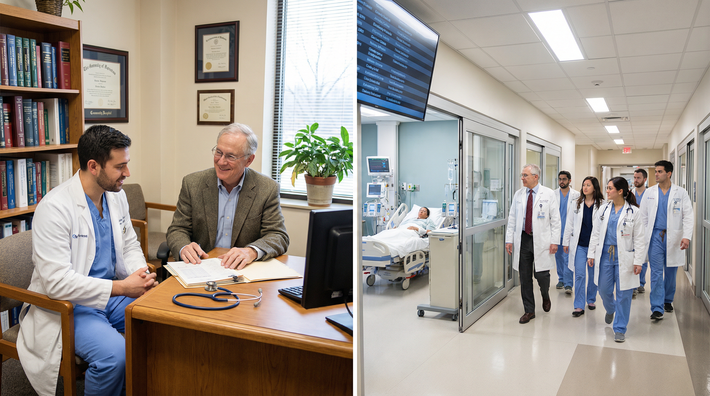
Your program just lost its academic anchor. The board has mandated a shift from ivory tower research to community-driven health outcomes. This is a brutal operational pivot. I have watched prestigious residency programs collapse under this exact weight because leadership attempted to bolt community outreach onto a rigid, traditional academic chassis. It does not work. You cannot simply rebrand an academic department and expect it to function as a population health engine.
This article is for educational purposes only. It is not financial advice, not legal advice, and not tax advice. Figures vary by individual circumstances, so consult a qualified professional before acting.
To better evaluate these career path shifts, review our guide on map your career goals to community vs academic features in 5 steps.
The Pivot: Assessing the Operational Reality of Your Program's Transition
The culture shock of moving from research metrics to community health outcomes is severe. Academic medicine rewards the discovery of the new. Community medicine rewards the reliable delivery of the essential. When your institution mandates this shift, your faculty will experience immediate whiplash. They are used to chasing National Institutes of Health R01 grants and publishing in high-impact journals. Now, they are being asked to reduce regional diabetic amputation rates and manage food insecurity in their patient panels.
You must perform an immediate, ruthless audit of your existing resources. Map every dollar, every protected hour, and every square foot of clinical space. Identify which faculty members actually possess the buy-in to lead community initiatives and which are merely paying lip service to the transition. Local stakeholder expectations will shift rapidly. The county health department and local federally qualified health centers (FQHCs) will expect tangible deliverables, not just academic memorandums.
Establish a strict triage protocol to manage this transition. You must identify which academic remnants to sunset and which community-facing initiatives to fast-track.
Here is your triage protocol:
- Sunset low-yield academic infrastructure. Close wet labs, niche subspecialty clinics with single-digit patient volumes, and administrative committees dedicated solely to academic prestige.
- Fast-track high-impact community workflows. Immediately fund mobile health units, embed social workers in primary care clinics, and establish direct referral pipelines to local food banks and housing authorities.
- Reallocate protected time. Strip protected research time from faculty who are not actively producing community health outcomes and redistribute those hours to clinical educators managing complex social determinants of health.
This pivot requires decisive action. Hesitation breeds institutional paralysis. Cut the dead weight early and redirect those resources to the front lines of community care.
Fix 1: Redefining Faculty Metrics from Grant Dollars to Population Health Impact
Academic promotion committees are obsessed with h-indices and grant funding. Those metrics are entirely useless when your mandate is improving regional health delivery. If you evaluate community-focused faculty using legacy academic rubrics, they will fail, and they will leave. You must kill the old evaluation criteria immediately.
Replace traditional funding benchmarks with regional health delivery metrics. Track local patient engagement indicators, clinic panel hypertension control rates, and emergency department use reductions.
Implement a step-by-step faculty realignment protocol.
- Step 1: Draft a new promotion dossier that explicitly weights community service and clinical efficiency.
- Step 2: Require faculty to submit a "Community Impact Statement" instead of a traditional research bibliography.
- Step 3: Form a specialized promotion track for community educators, ensuring they are judged by peers who understand population health, not basic science researchers.
Create clear promotion pathways that value regional health outcomes over publication counts. A faculty member who successfully negotiates a county-wide naloxone distribution program has delivered more value to your institution than a mid-tier basic science publication. Reward the work that actually matters to your new mission.
Fix 2: Restructuring the Curriculum for Underserved Care Realities
Residents are currently memorizing the pathophysiology of rare genetic disorders while missing the subtle signs of untreated chronic disease in their own clinic panels. Academic curricula are built to impress subspecialists. Community curricula must be built to keep patients out of the hospital.
Audit your current didactic materials. Strip out the rare academic pathologies that dominate traditional morning reports. Replace them with deep-dive sessions on the regional disease burdens specific to your zip codes. If your community suffers from disproportionate rates of chronic kidney disease and uncontrolled diabetes, your didactics must reflect that reality.
Integrate structured social determinants of health (SDOH) screenings directly into daily clinical workflows. Do not relegate SDOH to a single afternoon lecture. Embed mandatory screening tools into the electronic medical record. Require residents to document housing stability, food access, and transportation barriers for every new patient encounter. Grade them on their follow-through.
Deploy a practical playbook for embedding residents in FQHCs and local public health clinics.
- Standardize the onboarding. Create a unified orientation for all external community sites.
- Assign community preceptors. Pair residents with clinicians who have practiced in the community for at least five years.
- Mandate reflection. Require residents to present a quality improvement project based on a systemic barrier they identified during their FQHC rotation.
Fix 3: Forging Strategic Partnerships with Local Health Networks
Academic silos are comfortable. Community work requires leaving the building and negotiating with external entities. You must transition from internal academic posturing to external coalition-building with county health departments, local school boards, and community leaders.
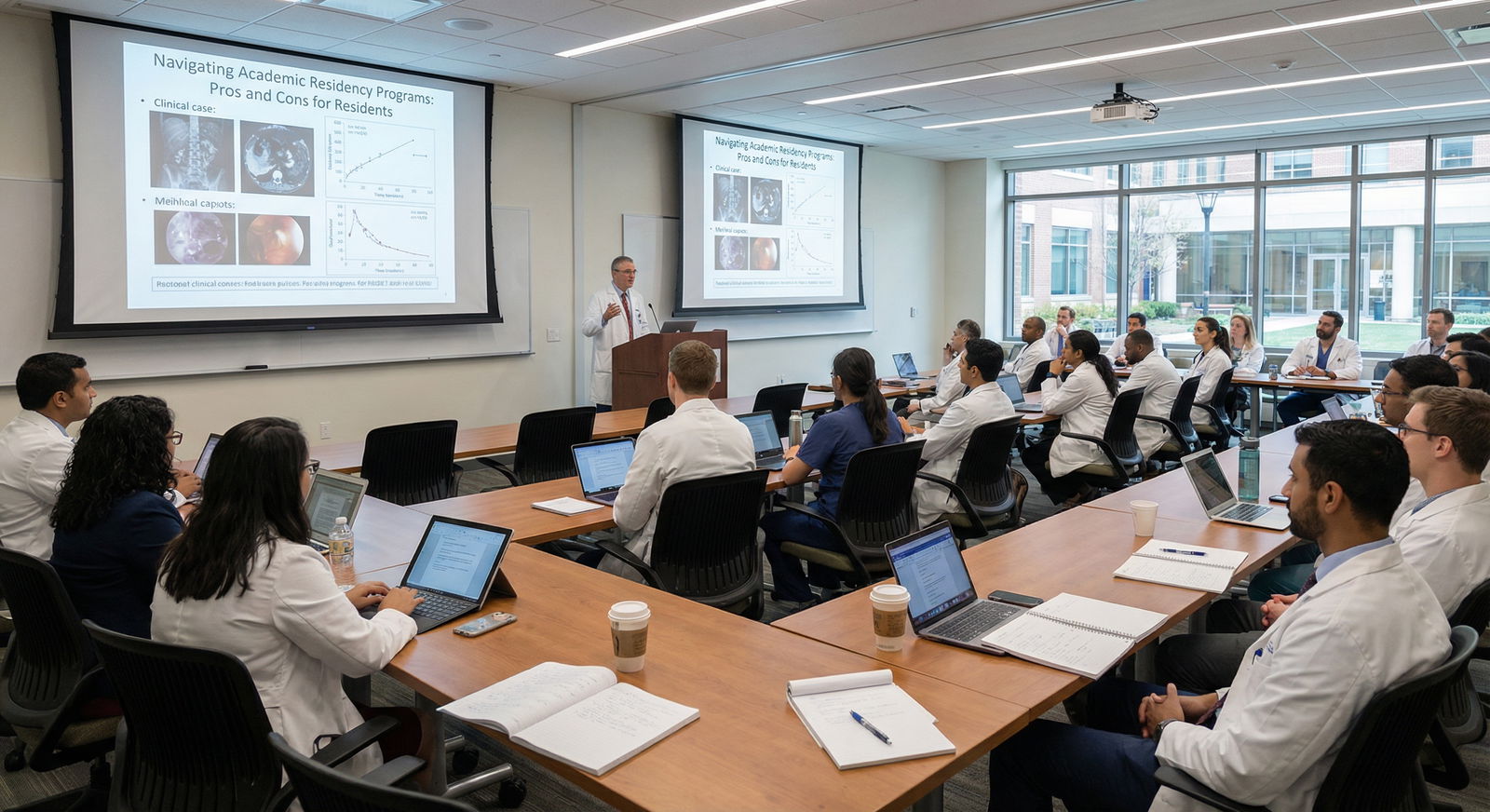
Establish a repeatable memorandum of understanding template for shared clinical training sites. Do not reinvent the wheel for every new clinic affiliation. Draft a master agreement that outlines liability, supervision requirements, and data-sharing protocols. Streamline the legal review process so you can onboard new community sites in weeks, not months.
Overcome institutional resistance by demonstrating immediate mutual return on investment for local healthcare delivery systems. Local clinics are often understaffed and overwhelmed. Show them that hosting your residents provides immediate clinical coverage, reduces their provider burnout, and creates a direct recruitment pipeline for future attending physicians. Frame the partnership as a workforce solution, not just an educational obligation.
Fix 4: Managing Stakeholder Anxiety and Retaining Faculty Talent
Your senior faculty are panicking. They believe their careers are over because they are no longer running basic science labs or managing highly specialized academic consult services. Address this change fatigue head-on. Ignoring the anxiety will result in a mass exodus of your most experienced educators.

Host transparent communication loops and town hall problem-solving sessions. Do not use these meetings to deliver corporate talking points. Use them to air grievances and solve operational bottlenecks in real time. When a faculty member points out that the new community workflow is broken, fix it in front of them.
Provide targeted faculty development workshops focused on community engagement and population health management. Teach your traditional academics how to design community-based participatory research. Show them how to translate their analytical skills into program evaluation for local public health initiatives.
Deploy a retention toolkit that offers bridge funding and protected time for educators adapting to the new clinical model. Give them a two-year financial runway to transition their portfolios. Protect their time while they learn to navigate community partnerships. If you demand immediate productivity in a completely new paradigm without a safety net, you will lose your best people.
Fix 5: Re-Engineering Budget and Grant Acquisition Strategies
The federal grant well is largely dry for this new operational model. You cannot fund a community health transformation using traditional National Institutes of Health mechanisms. You must shift your fundraising and grant-seeking efforts toward local philanthropic foundations, corporate sponsors, and state health department grants.
Build a lean, agile financial tracking system tailored to value-based care initiatives and community benefit requirements. Academic budgets are notoriously bloated with redundant administrative overhead. Strip those layers away. Track every dollar spent on community interventions and map it directly to patient outcomes.
Execute a step-by-step budget reallocation plan.
- Identify redundant overhead. Cut legacy academic administrative roles that no longer serve the new mission.
- Protect resident education. Ring-fence the core graduate medical education budget to ensure clinical training remains uncompromised.
- Fund community infrastructure. Redirect the saved overhead into community health worker salaries, mobile clinic operations, and SDOH intervention funds.
Key Takeaways
- Swap out traditional academic metrics for regional health impact and patient access indicators immediately. Legacy promotion rubrics will destroy your community-focused faculty.
- Restructure curricula around prevalent local disease burdens and social determinants of health frameworks rather than rare subspecialty cases. Teach the pathology your community actually suffers from.
- Build active partnerships with local health departments and FQHCs to secure stable, community-centric clinical training sites. Frame these affiliations as workforce solutions to ensure mutual buy-in.
Adapting to a community leadership model is not a simple rebranding exercise. It requires a fundamental dismantling of academic privilege and a relentless focus on operational delivery. Execute these fixes decisively. Your community is waiting.