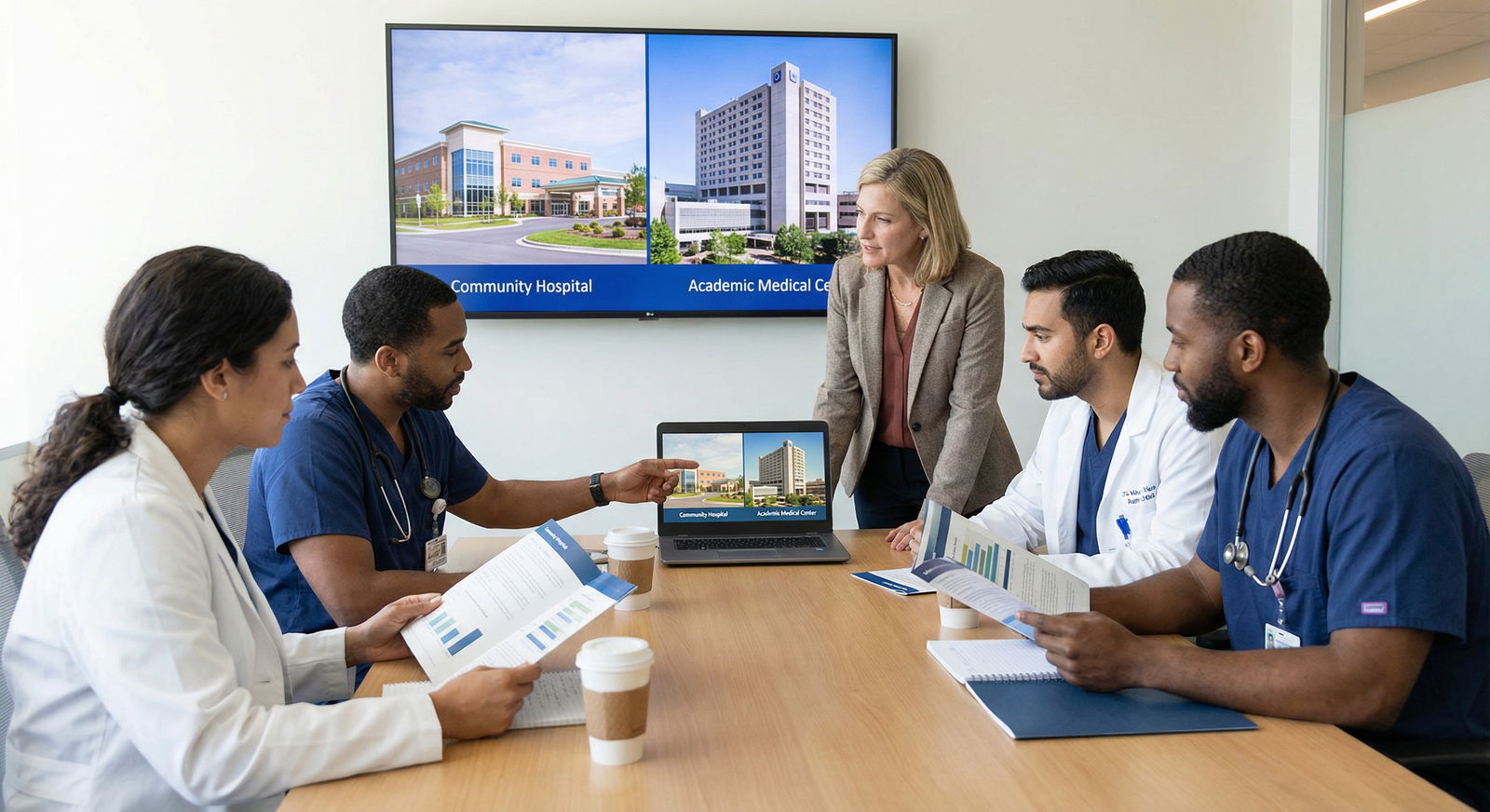
In the constantly evolving landscape of Medical Education and residency training, one of the earliest and most consequential decisions you’ll face is whether to train in a community residency program or an academic residency program. This choice shapes not only your day-to-day experience during residency, but also your long-term Career Development, practice style, and opportunities in Community Health or Academic Medicine.
Both types of Residency Programs can provide excellent training and lead to fulfilling careers. The key is understanding how they differ, where they overlap, and which environment best aligns with your goals, learning style, and lifestyle preferences.
This guide provides a detailed, side-by-side comparison to help you make a well-informed decision for the residency match and application process.
Understanding Community and Academic Residency Programs
Before comparing features, it’s important to clearly define what we mean by community and academic programs. In reality, there is a spectrum, and many programs have elements of both.
What Are Community Residency Programs?
Community residency programs are typically based in community hospitals or regional medical centers whose primary mission is to provide direct clinical care to the local population. Training is grounded in real-world clinical practice:
- Heavy emphasis on clinical volume and efficiency
- Strong focus on primary care, continuity, and Community Health
- Often serve underserved or safety-net populations
- Less emphasis on research and formal Academic Medicine, although some opportunities may exist
In these settings, residents often work closely with a smaller group of attendings, develop long-term relationships with patients, and gain confidence managing a wide range of common conditions with a practical, resource-conscious approach.
What Are Academic Residency Programs?
Academic residency programs are anchored in university-affiliated medical centers or large teaching hospitals. Their mission usually integrates:
- Clinical care
- Research / innovation
- Medical Education and teaching
Defining features often include:
- Strong emphasis on evidence-based practice and subspecialty care
- Robust opportunities for research, quality improvement, and scholarly activity
- Access to cutting-edge diagnostics, therapies, and clinical trials
- Frequent interaction with medical students, fellows, and multidisciplinary teams
These programs are often ideal for residents considering careers in Academic Medicine, subspecialty fellowship training, or physician-scientist pathways.
Key Differences Between Community and Academic Programs
While both types of Residency Programs aim to produce competent, independent physicians, they differ in focus, culture, and opportunities. Understanding these differences can clarify which environment might suit you best.
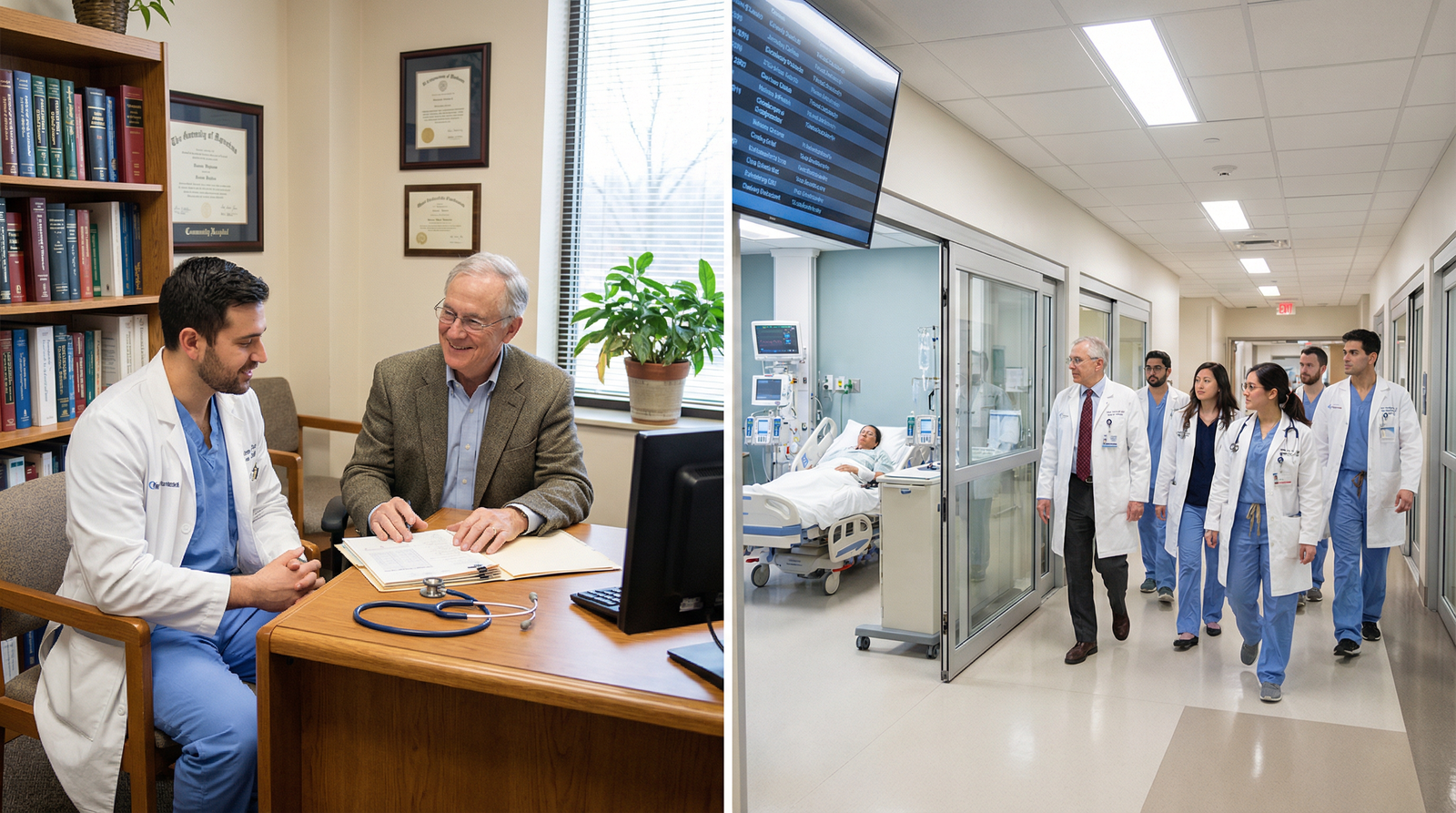
1. Focus, Curriculum, and Educational Structure
Community Programs: Practical, Service-Oriented Training
Community programs generally prioritize practical clinical skills and direct patient care:
Curriculum emphasis
- Primary care and continuity clinics
- Management of common chronic conditions (e.g., diabetes, hypertension, COPD)
- Preventive care, screenings, vaccination programs, and health maintenance
- Community Health initiatives (mobile clinics, local public health partnerships)
Teaching style
- Learning is often apprenticeship-based: “see one, do one, teach one”
- Frequent one-on-one supervision with attendings during clinics and rounds
- Didactics may be less frequent but more targeted and clinically focused
Clinical autonomy
- You may gain independent decision-making responsibility earlier
- Emphasis on managing patients with limited resources, coordinating outpatient care, and navigating real-world system constraints
Residents who thrive in community programs often enjoy hands-on learning, direct application of knowledge in clinical encounters, and a strong sense of ownership over their patients.
Academic Programs: Broad, Research-Rich, and Subspecialty-Oriented
Academic programs weave together clinical care, teaching, and scholarship:
Curriculum emphasis
- Comprehensive exposure to subspecialties and complex pathology
- Regular didactic conferences, grand rounds, journal clubs, and board review sessions
- Training in research methods, evidence appraisal, and quality improvement
- Opportunities to participate in multi-center trials and cutting-edge therapies
Educational structure
- More formal, structured schedules with protected educational time
- Systematic inclusion of simulation labs, OSCE-style assessments, and standardized curricula
- Integration of interdisciplinary conferences (tumor boards, morbidity & mortality conferences, etc.)
Scholarly focus
- Strong encouragement—or requirement—for posters, presentations, and publications
- Support for research mentors, statisticians, and institutional resources for scholarly work
Academic programs may be especially attractive if you envision a career involving fellowship training, research, or long-term roles in Academic Medicine such as clinician-educator or physician-scientist.
2. Patient Population and Clinical Exposure
Community Programs: Representative “Everyday Medicine”
In community settings, the patient population often mirrors the local community’s demographics and needs:
Clinical exposure
- High volume of bread-and-butter conditions: common acute illnesses, chronic disease management, and preventive care
- Wide socioeconomic range, often including uninsured or underinsured patients
- Significant exposure to social determinants of health and resource limitations
Community Health perspective
- Strong involvement with outpatient continuity clinics
- Opportunities to participate in local health fairs, school-based screenings, and community outreach
- Insight into how family, environment, and access to care shape health outcomes
Community training tends to prepare residents exceptionally well for independent practice in primary care, hospital medicine, or smaller group practices, especially in rural or underserved areas.
Academic Programs: Complex, Referred, and Subspecialized Cases
Academic medical centers are often regional or national referral hubs:
Clinical exposure
- High density of complex, rare, or advanced disease presentations
- Frequent consultations and co-management with specialized teams (e.g., transplant, oncology, advanced cardiology)
- Access to novel therapies and clinical trials
Diversity and complexity
- More frequent exposure to advanced imaging, interventional procedures, and innovative treatments
- Patients may have multi-organ involvement, requiring nuanced multidisciplinary management
Academic environments are ideal if you want repeated exposure to complex cases, are considering subspecialty training, or are drawn to the intersection of clinical care and advanced technologies.
3. Mentorship, Teaching Environment, and Culture
Community Programs: Close-Knit, Informal Mentorship
Community programs usually have smaller resident cohorts and fewer layers of hierarchy:
Mentorship style
- More informal, relationship-based mentoring with attendings you see frequently
- Easier access to faculty for personal and professional advice
- Often a strong “family” feel within the residency
Learning environment
- Less emphasis on strict hierarchical structures
- Attendings may model practice patterns more similar to community physicians you might become
- Residents may have more direct contact with hospital leadership and administration
This environment can be especially supportive if you value tight-knit teams, individualized attention, and mentorship focused on practical career planning in community practice.
Academic Programs: Structured Mentorship and Multi-Layered Teams
Academic programs typically feature more structured mentoring and larger faculty pools:
Mentorship opportunities
- Formal mentor-mentee assignments based on interests (e.g., research, subspecialty, teaching)
- Access to leaders in Academic Medicine, department chairs, and fellowship program directors
- Greater diversity of mentors, including clinician-educators, researchers, and administrators
Team structure
- Larger teams including attendings, fellows, senior and junior residents, and students
- More formal teaching rounds, case presentations, and bedside teaching
- Frequent opportunities to teach medical students, enhancing your own learning and academic portfolio
If you are excited by the idea of being immersed in a teaching hospital culture, regularly participating in academic conferences, and building a CV geared toward academia or fellowship, an academic program may be a strong fit.
4. Workload, Schedule, and Work–Life Balance
Community Programs: Often More Predictable and Lifestyle-Friendly
Many community programs intentionally design schedules with work–life balance in mind:
Typical characteristics
- More predictable schedules, especially in outpatient-heavy specialties
- Generally fewer overnight calls at some sites, though this varies widely
- Potentially lower research and conference burdens, freeing time for personal life
Lifestyle advantages
- Programs located in smaller cities or suburban areas often come with lower cost of living
- Commutes may be shorter; housing can be more affordable
- May be attractive for residents with families or strong non-clinical commitments
That said, clinical workload can still be intense—particularly in smaller hospitals where residents cover multiple services—but the non-clinical demands (research, academic events) may be less.
Academic Programs: Higher Intensity and Additional Academic Demands
Academic programs can be more time-intensive due to the dual expectations of clinical and scholarly productivity:
Workload
- High patient acuity and complexity can translate into challenging shifts
- Additional responsibilities for teaching students and sometimes junior residents
- Expectation to attend or present at conferences, journal clubs, and research meetings
Academic obligations
- Protected research time may be built in, but work often spills beyond standard hours
- Preparing abstracts, posters, and manuscripts adds to your overall time commitment
While these demands can be substantial, some residents find the environment incredibly energizing and intellectually stimulating, especially if they aim for careers in Academic Medicine or subspecialty practice.
5. Career Outcomes, Networking, and Long-Term Development
Community Programs: Pathways to Clinical Practice and Community Leadership
Graduates of community programs frequently pursue:
- Primary care and outpatient practice
- Hospitalist roles in community or regional hospitals
- Work in Community Health centers, FQHCs, or rural health systems
- Leadership opportunities in local hospitals, quality improvement, or regional health organizations
Networking tends to be local or regional:
- Strong connections within a hospital system or local medical community
- Opportunities to become a known and trusted clinician within a specific geographic area
- Potentially easier transition into local jobs, often with existing relationships from residency
If your goal is to become a highly capable, community-oriented clinician with a stable practice and deep local ties, a community program can be excellent preparation.
Academic Programs: On-Ramps to Fellowship and Academic Medicine
Graduates of academic programs often pursue:
- Subspecialty fellowships (e.g., cardiology, GI, hematology/oncology, critical care)
- Positions as clinician-educators or physician-scientists
- Roles in Academic Medicine leadership, research, or curriculum design
Networking advantages include:
- Access to nationally recognized faculty and fellowship directors
- Opportunities to present at national conferences and build a recognizable academic profile
- Exposure to multi-institutional collaborations and professional societies
If your Career Development goals include fellowship training, research, or a university-based career, the infrastructure and visibility provided by academic programs can be a significant asset.
6. Advantages and Disadvantages: Honest Trade-Offs
No program type is inherently “better.” The choice depends on fit. Below is a more nuanced view of potential pros and cons of each.
Community Programs
Potential Advantages
- Intensive focus on direct patient care and practical clinical skills
- Often closer mentorship and a supportive, family-like culture
- May offer better work–life balance and lower cost of living
- Strong preparation for community-based practice, including outpatient and hospitalist roles
- Rich exposure to Community Health and real-world system navigation
Potential Disadvantages
- Fewer structured research and high-level scholarly opportunities
- Less frequent exposure to very rare or highly complex cases
- Fewer in-house subspecialties at some sites; more need to transfer complex patients
- If you later decide to pursue competitive fellowships, you may need to be proactive about building your research and academic profile
Academic Programs
Potential Advantages
- Robust opportunities for research, QI projects, and publications
- Extensive access to subspecialists, advanced therapies, and complex patient cases
- Strong support for fellowship applications and Academic Medicine careers
- Rich teaching opportunities, from medical student education to interprofessional conferences
- Often higher institutional visibility and broader networking reach
Potential Disadvantages
- Higher overall workload and additional academic pressures
- More hierarchical environment, which some may find rigid or stressful
- Work–life balance can be more challenging, especially during intensive rotations
- Early years may emphasize service and complex inpatient care, sometimes at the expense of continuity outpatient exposure
How to Decide: Matching Program Type to Your Goals
When preparing for the residency match, start by reflecting on:
1. Your Long-Term Career Vision
Ask yourself:
- Do I see myself in a community clinic, hospitalist role, or rural practice?
- Am I drawn to fellowship and a subspecialty?
- Do I want to be involved in research, curriculum design, or education on a regular basis?
- How important is Community Health and outreach in my future career?
Aligning your anticipated career path with the distinctive strengths of community vs. academic programs can prevent frustration later.
2. Your Learning Style and Personality
Consider:
- Do I prefer structured didactics and a rich academic environment, or more hands-on, apprenticeship-style learning?
- Do I thrive in large, bustling teams or in smaller, close-knit groups?
- How comfortable am I with ambiguity, autonomy, and managing patients with fewer resources?
Being honest about your learning style can help you choose an environment where you’ll grow fastest and feel most supported.
3. Lifestyle, Geography, and Personal Factors
Practical considerations matter:
- Are you open to relocating to a major academic center, often in urban areas?
- Do you prefer a smaller city or town, perhaps closer to family or with lower living costs?
- How important is schedule predictability and time for non-medical commitments?
Include your personal life and support system in your decision-making; residency is demanding regardless of setting.
4. Evaluating Specific Programs (Not Just Labels)
Crucially, remember that labels can be misleading. Some “community” programs have strong academic components; some “academic” programs prioritize clinical volume and hands-on experience.
When researching and interviewing:
- Ask about board pass rates, fellowships obtained by graduates, and career outcomes
- Explore research and QI support: Is there protected time? Access to mentors?
- Evaluate call schedules, clinics, and rotation structure
- Speak with current residents: Does the culture fit your values and learning style?
Treat every program as unique, even if it falls broadly under “community” or “academic.”

FAQ: Common Questions About Community vs. Academic Residency Programs
Q1: Are community and academic residency programs equally reputable for the Match and beyond?
Yes. Both community and academic programs can be highly reputable and fully accredited. Program quality depends on factors such as faculty engagement, case volume, educational culture, and graduate outcomes—not just whether the program is labeled “community” or “academic.” Program-specific metrics (board pass rates, fellowship matches, alumni careers) are more informative than the category alone.
Q2: Can I get a competitive fellowship if I train in a community program?
Yes, but it may require extra intentionality. Many residents from community programs successfully match into competitive fellowships. To maximize your chances:
- Seek out research or QI projects early in residency
- Identify academic or subspecialty mentors (sometimes at an affiliated academic center)
- Present at regional or national conferences
- Excel clinically and obtain strong letters of recommendation
Fellowship directors recognize that strong candidates can come from any type of program.
Q3: Can I transition from community practice to Academic Medicine, or vice versa, after residency?
Transitions are absolutely possible:
- From community to academic: You can move into Academic Medicine by cultivating a teaching role (precepting students, joining faculty at a medical school affiliate), participating in research or QI, and building an academic CV over time.
- From academic to community: Many graduates of academic programs choose community practice afterward. Your broad clinical training and subspecialty exposure can be valuable in community settings.
Your post-residency activities, interests, and networking often matter more than your initial program type.
Q4: How should I evaluate programs during interviews and virtual visits?
During interviews, ask targeted questions such as:
- “What types of career paths do your graduates pursue?”
- “What is the balance of inpatient vs outpatient training?”
- “How are residents supported in research or scholarly activity?”
- “Can you describe the resident culture and how wellness is supported?”
- “How are mentors assigned, and what does mentorship typically look like here?”
Also, pay attention to resident body language and candor. Informal conversations with current residents are often the best window into day-to-day reality.
Q5: What’s the best way to explore both settings before applying?
During medical school, try to:
- Schedule electives or sub-internships at both community and academic hospitals
- Participate in away rotations if feasible, targeting program types you’re curious about
- Volunteer or work in community clinics or university hospitals to experience their cultures
- Talk to residents and recent graduates from both settings about their paths and reflections
These experiences can clarify your preferences and help you write more authentic, targeted personal statements and rank lists.
Choosing between community and academic residency programs is ultimately about aligning environment with goals. By understanding the differences in training focus, patient populations, mentorship, workload, and career pathways, you can approach the residency match with clarity and confidence—and shape a Medical Education experience that positions you for the career you envision.