
This article is for educational purposes only. It is not financial advice, not legal advice, and not tax advice. Figures vary by individual circumstances, so consult a qualified professional before acting.
Opening Scenario: The City Program vs the Rural Program Decision
Let me break this down with a scenario I see every cycle. A DO applicant, strong clinical grades, COMLEX Level 2 in the high 500s, two family medicine audition rotations completed, sits down to finalize a rank list. Two ACGME programs remain in contention.
Program A is an urban academic center in a major metropolitan area. University-affiliated. Research-heavy. The website mentions "diversity" three times. Current resident roster shows 24 MDs and 3 DOs.
Program B is a rural community-based program two hours from the nearest city. Unopposed. Full-spectrum family medicine with obstetrics. The resident roster shows 12 DOs and 8 MDs. The program director is a DO who trained at an osteopathic program before the single accreditation transition.
Both programs claim to be DO-friendly. The applicant applies to both, receives one interview, and matches at the rural program.
This is not coincidence. Let me break down why this pattern repeats and what it means for how you should build your application list.
The central question is not simply urban versus rural. The real question is which environment gives you, a specific DO applicant with specific credentials and specific career goals, the best statistical and strategic odds. Geography is a proxy. The actual drivers are program mission, workforce pressure, screening thresholds, and how badly that program needs someone like you.
How ACGME Program Type Shapes DO Applicant Odds
Let me break this down specifically. The ACGME categorizes programs by sponsoring institution type and setting, but applicants treat "urban" and "rural" as shorthand for competitive and noncompetitive. That framing is wrong, and it costs people interviews.
Urban academic ACGME programs typically sit in academic medical centers with medical school affiliations, research infrastructure, fellowship pipelines, and subspecialty-heavy rotations. These programs receive enormous applicant volumes, often 1,500 to 3,000 applications for 10 to 15 positions in specialties like internal medicine or emergency medicine. Their screening filters tend to favor USMLE scores, research productivity, and letters from known academic faculty. DO applicants get filtered out early unless they have exceptional metrics, dual-degree credentials, or established connections through auditions or faculty networking.
Urban community ACGME programs are different animals. These programs operate in city-adjacent hospitals but function more like community hospitals than academic centers. They may have less research pressure, smaller applicant pools, and a pragmatic focus on producing clinically competent graduates rather than academic researchers. Some are genuinely DO-friendly and have mixed rosters. Others talk about diversity while quietly ranking MD applicants first. You have to look at the roster, not the website.
Rural community ACGME programs operate in settings with significant workforce shortages. These programs are not necessarily less rigorous. Some rural family medicine programs deliver more procedural training and broader scope than their urban counterparts. What they do have is lower applicant volume, smaller applicant pools, and a pressing institutional need to fill positions with physicians who will stay. Rural programs screen for commitment and mission fit, not just board scores. A DO applicant with rural roots, primary care intent, and a willingness to work full-spectrum has real advantages here.
Rural track and distributed programs deserve separate mention. These are programs where residents rotate across multiple sites, often with explicit rural or underserved population focus. The ACGME has supported rural track designations to address physician maldistribution. These programs are often the most DO-inclusive environments in the country, because their mission aligns with osteopathic medicine's historical emphasis on primary care and rural service.
The screening behavior differences matter more than geography itself. A program with a rural mission and a workforce shortage will look at your application and ask, "Will this person come here and serve this population?" An urban academic program will look at your application and ask, "Does this person meet our research and academic profile?" The questions are different. The odds follow the questions.
Where DO Applicants Usually Have Better Odds: The Data-Driven Pattern
Let me state this directly. For the majority of DO applicants, rural and rural-track ACGME programs offer better odds than urban academic programs. This is not a soft opinion. The pattern shows up consistently in match data, program director surveys, and applicant-level outcomes I have tracked across multiple cycles.
The reasons are structural. Rural programs receive fewer applications. National residency match data consistently shows that family medicine programs in rural settings receive significantly fewer applications per position than urban academic family medicine programs. Lower applicant volume means your application actually gets read. It does not disappear into a 2,000-application pile where a screen filter discards anything below a USMLE Step 1 threshold before a human sees it.
Workforce shortages create institutional pressure to fill positions. Rural hospitals depend on their residency programs to supply future physicians. A rural program that does not fill faces real consequences, lost GME funding, disrupted continuity clinics, damaged institutional reputation. Program directors in these settings are motivated to evaluate applicants holistically rather than relying on narrow metrics that would shrink their viable applicant pool.
Urban academic centers face the opposite pressure. They receive so many applications that they can afford aggressive screening and still fill their classes with MD applicants from top-tier schools. When a program director tells a DO audience that their program "values osteopathic applicants," that statement may be sincere at the individual level, but the institutional screening filters tell a different story. If the program's last five classes contain two DOs out of sixty residents, the filter is working regardless of what the website says.
Urban community programs fall in the middle. Some are excellent for DO applicants. Programs with osteopathic recognition, DO faculty members, or historical DO-heavy rosters often provide genuine consideration. Others use the community label while maintaining academic-style screening. You must verify the actual roster composition, not the marketing language.
The strongest odds I see consistently are in rural primary care programs where the applicant signals commitment. A DO applicant with COMLEX Level 2 scores in the mid-500s, a family medicine audition at a rural site, and a personal statement that articulates rural practice intent will often receive interview invitations from rural programs that would never respond to the same application sent to an urban academic center.
This does not mean rural programs are easy. It means they are accessible. The distinction matters. A rural program will still reject applicants who cannot demonstrate clinical competence, professionalism, or mission fit. But they will evaluate you on those dimensions rather than discarding your application based on degree type alone.
The Real Filters: What Program Directors Screen for Beyond Geography
Let me break down what actually happens when your application hits a program director's desk. Geography influences the odds, but the specific filters determine whether you survive screening.

Board scores. COMLEX remains the standard for DO applicants, but many ACGME programs now expect or prefer USMLE. The programs that screen purely on USMLE Step 1 or Step 2 CK will filter out DO applicants who only took COMLEX. Programs that accept COMLEX equivalencies are more accessible. You need to know which programs require USMLE before you apply, not after you receive a rejection.
Clerkship grades and clinical performance. Honors grades in core clerkships, particularly in the specialty you are applying for, carry weight. Sub-Internship performance matters more. A strong audition rotation can compensate for average board scores. A weak audition rotation can sink an otherwise strong application. I have seen applicants with COMLEX scores in the mid-400s receive interviews at community programs because their audition performance was exceptional. I have also seen applicants with 600+ scores rejected because their audition rotation generated a mediocre letter.
Letters of recommendation. A letter from a faculty member at the program where you auditioned carries more weight than a generic letter from a home institution. A letter from a DO who trained at or currently works at the target program can open doors that metrics alone cannot. Letters matter most when they come from people the program director knows and trusts.
Geographic ties. Rural programs screen for this aggressively. If you have no connection to the region, no rural background, and no stated intent to practice in a similar setting, the program may pass regardless of your credentials. Conversely, an applicant with a spouse who grew up in the area or who completed a rural health track in medical school has a significant advantage.
Mission fit. This is the factor applicants most often overlook. Programs have missions. Rural programs exist to address workforce shortages. Urban community programs may emphasize serving underserved urban populations. Academic programs emphasize scholarship and academic medicine careers. Your personal statement, experiences, and interview responses must align with the program's stated mission or the program will choose someone whose application does.
Specialty-specific competitiveness. The filters behave differently by specialty. Family medicine and psychiatry programs tend to evaluate DO applicants more holistically. Dermatology, plastic surgery, and orthopedic surgery programs tend to apply metric-heavy screening across the board. The same applicant may be competitive at a rural family medicine program and uncompetitive at an urban dermatology program. The specialty determines the filter thresholds as much as the setting does.
Some urban programs remain accessible to DO applicants. Urban community programs with DO faculty, osteopathic recognition, or historical DO inclusion will evaluate your application fairly. The key is identifying which urban programs actually do this versus which ones claim to while operating MD-dominant filters. The roster tells you. The website does not.
Specialty Matters More Than Many Applicants Realize
Let me break this down by specialty because the urban-versus-rural odds conversation changes dramatically depending on what you are applying into.

Family medicine is where rural programs offer the clearest advantage for DO applicants. Rural family medicine programs have the highest DO inclusion rates in the country. The specialty aligns with osteopathic medicine's primary care tradition. The programs need physicians who will stay. If you are applying family medicine and you ignore rural programs, you are leaving your best odds on the table.
Internal medicine is more complex. Urban academic IM programs remain highly competitive and often MD-dominant. Urban community IM programs vary, some are DO-friendly, some are not. Rural IM programs exist but are less common than rural family medicine programs. The odds improve in community settings, but you need to verify roster composition carefully.
Pediatrics follows a similar pattern to IM but with slightly better DO inclusion in academic settings, because pediatrics as a specialty has historically been more open to DO applicants. Still, rural and community programs tend to offer better odds than urban academic centers.
Psychiatry has become more competitive nationally, which has tightened odds across all settings. Rural and community psychiatry programs remain more accessible than urban academic programs, but the gap has narrowed. Applicants who previously could rely on psychiatry as a "backup specialty" now face real competition.
Anesthesiology and emergency medicine present different dynamics. Both specialties experienced significant competitiveness shifts over the past five years. Rural and community programs in these specialties may offer better odds, but the applicant pool has grown more crowded. Program-specific research matters more than general setting assumptions.
The pattern holds across specialties with one caveat. Rural programs offer better odds when the specialty aligns with rural workforce needs. Primary care specialties benefit most. Subspecialty-oriented specialties benefit less because rural programs in those fields are rare or nonexistent.
How to Build a Smart List: Choosing Urban, Rural, and Hybrid Targets
Let me give you a practical framework. Application list construction determines your match outcome more than any single credential. A well-built list compensates for average metrics. A poorly built list wastes strong credentials.
Start with your specialty choice and your actual competitiveness. Be honest. Your COMLEX scores, clerkship grades, research output, and audition performance define your baseline. Programs do not care what you could have achieved. They care what you did achieve.
Classify every program on your list as reach, target, or safety based on the most recent matched resident credentials, not the program's minimum requirements. Minimums are not means. A program that lists a COMLEX minimum of 500 may match applicants averaging 580. You need the average, not the floor.
Prioritize programs with genuine DO-friendly signals. Osteopathic recognition matters. DO faculty presence matters. Historical DO roster composition matters. Explicit mission statements that mention osteopathic medicine or primary care workforce development matter. Programs that demonstrate inclusion through behavior, not language.
Audit resident rosters on program websites. If the roster shows no DOs in the past three classes, the program is not DO-friendly regardless of what anyone tells you. If the roster shows consistent DO representation, apply with confidence.
Balance urban prestige with rural opportunity. Most DO applicants should include more rural and community programs than urban academic programs on their lists. The odds favor this distribution. If you insist on applying primarily to urban academic programs because of prestige preferences, you are choosing lower odds. That is a legitimate choice, but you should make it knowingly.
Action Steps: How DO Applicants Can Maximize Odds in Both Settings
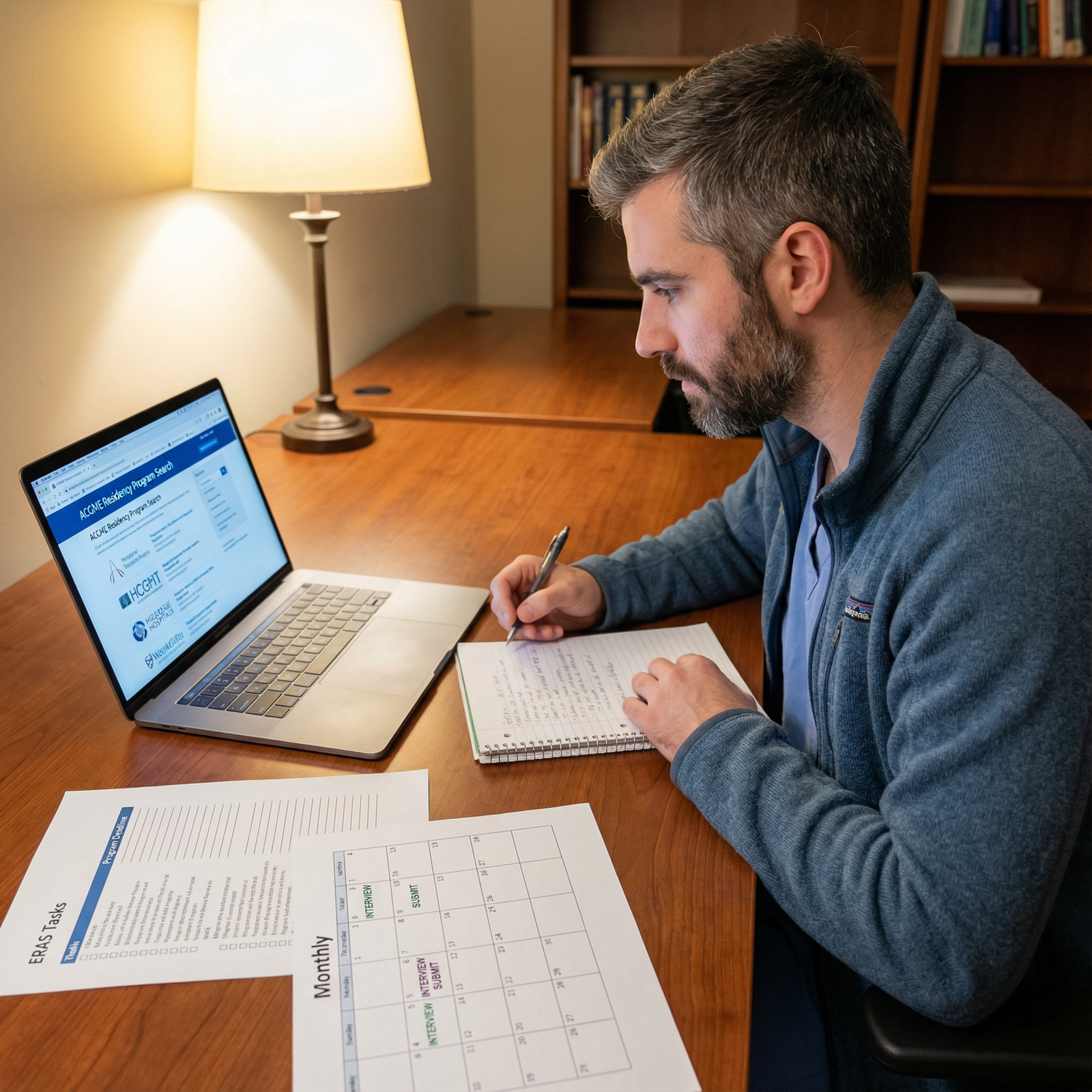
Research programs early. Start before July. Program websites change, rosters update, and faculty move. The information you gather six months before applying matters more than anything you find the week before submitting.
Use auditions strategically. Audition rotations are your highest-leverage tool. Choose auditions at programs where your credentials fit and where you can demonstrate clinical competence in person. A strong audition at a rural program can generate a interview invitation that metrics alone would not. A weak audition closes doors permanently.
Tailor personal statements. Generic personal statements get skimmed and forgotten. Specific personal statements that reference program mission, patient population, and geographic fit get read and remembered. Rural programs want to hear why rural. Urban community programs want to hear why underserved populations. Academic programs want to hear why scholarship. Match your statement to the program.
Signal geographic and mission alignment wherever relevant. If you have rural background, state it. If you have underserved population experience, describe it. If you intend to practice in the region, say so. Programs invest in residents who will stay. Your stated intent influences their ranking decisions.
The practical takeaway: rural and community ACGME programs typically offer DO applicants better statistical odds than urban academic programs. The best choice, however, is not simply the program with the best odds. The best choice is the program where your credentials, your story, and your career goals align with what that program needs. Find that alignment, and your odds take care of themselves.