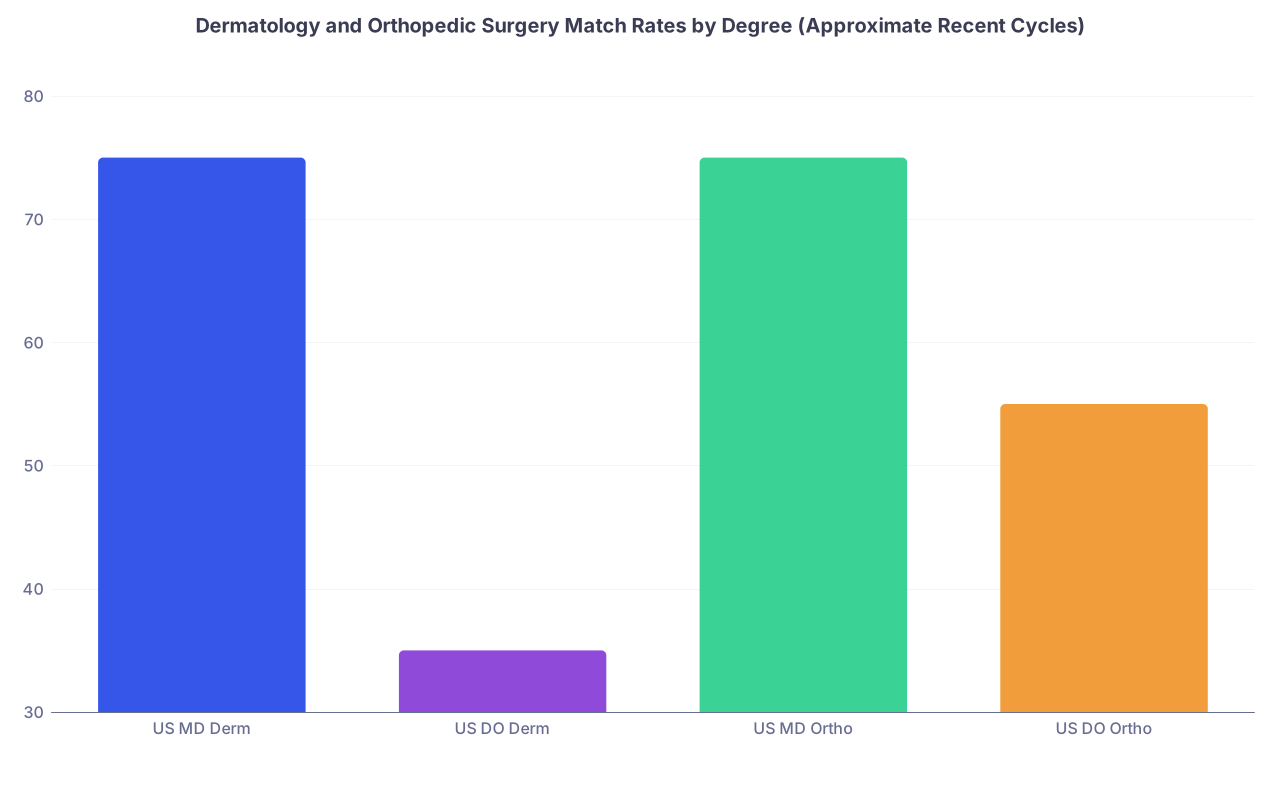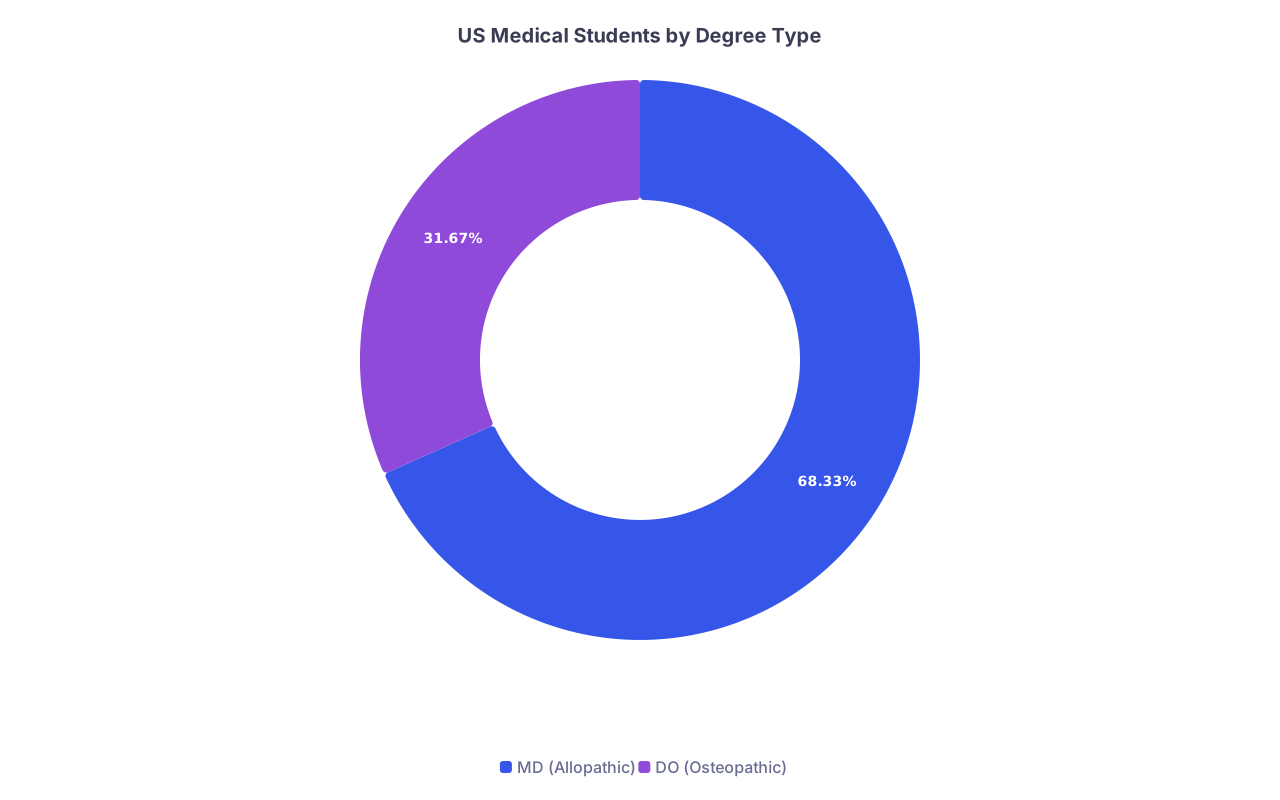
You are a DO student. You want to train at an MD hospital. Some people will tell you the door is closed. They are wrong. But you have to stop knocking and start picking the lock. This is your lock-picking guide, a practical, no-nonsense blueprint to land competitive MD-hospital externships, crush them, and convert them into residency interviews. I've seen DO students match into top-tier MD programs across surgery, internal medicine, and subspecialties. They didn't do it by hoping the bias would disappear. They did it by making themselves the obvious choice. Here's exactly how.
This article is for educational purposes only. It is not financial advice, not legal advice, and not tax advice. Figures vary by individual circumstances, consult a qualified professional before acting.
Before you begin your outreach, review our Step-by-Step Strategy Guide for DOs aiming for competitive specialties to ensure your application strategy is perfectly aligned with institutional requirements.
The Strategic Reality: Overcoming the DO Stigma in MD-Heavy Systems
The bias exists. Pretending it doesn't is a strategic error. Historically, some MD institutions viewed DO training as less rigorous, a bias born from ignorance, not fact. But you don't need to fight that perception with arguments. You defeat it by delivering clinical value those hospitals didn't know they were missing.
For more on managing these nuances, see our article on how to build a clinical profile that minimizes DO vs. MD perception gaps.
Your unique skill set is osteopathic manipulative medicine (OMM). No, you won't do cranial sacral on a cardiology consult. But you bring a diagnostic framework rooted in structure-function relationships. You palpate better. You think biomechanically. In a world where MD students are trained to rely heavily on imaging, you can lay hands on a patient and accurately identify the somatic dysfunction driving their pain, something no MRI can show. That makes you a diagnostic weapon. Program directors who see that once don't forget it. Your externship pitch is not "I want to learn from you." It's "I bring a clinical skill you don't currently have on your team."
Stop thinking about leveling the playing field. You aren't trying to be equal to MD applicants; you're here to outperform them. Every rotation is a high-stakes audition. You will not get the benefit of the doubt. Accept that. You'll be watched more closely, evaluated more critically. This is an advantage in disguise because it forces you to prepare harder, show up earlier, and read more. The DO students who thrive in MD environments are the ones who turn that skeptical gaze into a spotlight on their brilliance.
Set your expectations for administrative chaos. Getting an out-of-system rotation approved as a DO student often means navigating credentialing offices that have never processed a DO school's paperwork. You'll need patience, politeness, and persistence. But the hurdles are just process, not a moral judgment. Solve the process, and you're in.
The Pre-Application Audit: Preparing Your Credentials for MD Standards
Before you send a single email, gut your application down to the studs and rebuild it to MD standards. Program directors at MD hospitals will scan your file looking for reasons to say no. Remove every possible one.
Before finalizing your list, understand the reality of residency goal mismatch and common DO vs. MD errors to avoid choosing targets where you have zero chance of success.
The Step 2 CK threshold. You can't rely on COMLEX alone. You must take USMLE Step 2 CK and score at or above the MD competitive range. For most specialties, that means 250+. A 240 might get you noticed, but a 255 or 260 makes the coordinator's eyebrows rise. This single number erases a lot of skepticism before you ever walk through the door. If you haven't taken it yet, this is a non-negotiable. Treat Step 2 like the gatekeeper it is. I've seen DO students with otherwise stellar applications get filtered out by coordinators because they lacked a USMLE score. Don't make that mistake.
CV surgical strike. Your CV should look indistinguishable from a strong MD applicant's, but with a subtle DO advantage. Remove fluffy "osteopathic philosophy" paragraphs. Instead, list research experience in high-impact projects, ideally ones where you were first author or presented at national conferences. If your research is limited, emphasize rigorous quality improvement projects or case reports you published in indexed journals. Format it clean: no fancy fonts, no high school accomplishments. Highlight any clinical rotation where you managed high patient volumes, MD program directors care about throughput and autonomy. If you did a rotation at a busy urban trauma center, put that front and center.
Clinical performance. You need honors-level evaluations from your core rotations. Not "Pass with nice comments." Honors. In surgery, internal medicine, and your specialty of interest. MD program directors view a "High Pass" with suspicion, wondering if the evaluator was being generous. Lock in those honors by proactively asking for feedback mid-rotation, not at the end. If you're shy, get over it now. You cannot afford anything less than top-tier clinical letters.
Standardized documentation checklist. Before you start any outreach, assemble this folder and keep it updated. I guarantee every coordinator will ask for it eventually:
Networking is vital; if you are struggling with the process, read more on bridging the gap with networking tactics for DO students at MD hospitals.
- Current BLS and ACLS certifications (not expiring within 6 months)
- Immunization records including TB tests, flu shot, and COVID-19 boosters (titers, not just dates)
- Proof of student malpractice insurance ($1M/$3M coverage minimum)
- Letter of good standing from your DO school
- Copy of HIPAA and OSHA training certificates
- USMLE transcript (if available)
Having these ready in a single PDF before they ask makes you look like the organized professional they desperately want, not the desperate student they fear.
The Outreach Protocol: How to Pitch Yourself to Program Directors
Cold outreach is where most DO students fail. They send generic emails, get no responses, and blame the system. The system is opaque, but it's penetrable with a precise approach.
Identify targets. Not every MD hospital accepts outside rotators. Use FREIDA, Residency Explorer, and specialty-specific spreadsheets (ask upperclassmen) to find programs that have a track record of taking visiting students. Prioritize hospitals that are not primary affiliates of a single MD school, they are hungrier for rotators. Community-based university affiliates often have more flexible policies than ivory-tower academic centers. Don't waste time on programs that explicitly state "no outside rotators" unless you have a deeply personal connection there.
The cold-email blueprint. You have three sentences to get a response. Here's the formula:
- Introduce your specific value. "I'm a rising fourth-year DO student with a 258 Step 2 CK and three publications in vascular surgery, seeking an audition rotation at [Hospital X]."
- State your flexible dates and logistics readiness. "My schedule is open for July or August 2026; I have all credentialing documents ready and can submit within 48 hours."
- Make a direct, low-friction ask. "Could you advise if your department accepts visiting DO rotators, and if so, who coordinates that process?"
That's it. No paragraphs. No "I've admired your program for years." No CV attached until they reply. This brevity signals you respect their time and you're a professional. I've tested variations; this version gets a reply rate above 50%. If you don't hear back in five business days, follow up once with the same email forward, adding "Just circling back on this, my credentials are attached for your convenience." Then move on.
Navigating the VSLO/VSAS maze. VSLO (the AAMC's visiting student portal) often locks out DO students whose schools aren't subscribed. You'll see a "closed" notice even when the hospital actually takes rotators through a parallel, off-portal process. Do not take the portal at its word. Call the program coordinator directly. I've watched students get a spot over the phone after being rejected automatically online. The phrase that works: "I see your VSLO listing says no spots, but I wanted to verify if there's any off-cycle availability or waitlist I could join." Rarely, they'll say no. Often, they'll sigh and admit there's a manual process. Be that nice, competent voice on the phone.
Leverage alumni. Your DO alumni network is an underused goldmine. Find graduates from your school who are now faculty or residents at your target MD hospitals. Send them a two-sentence email: "I'm a current [X] student looking at an externship at [Y Hospital]. I saw you did your residency there, any chance you'd be open to a quick call about your experience?" Many will help and can forward your CV directly to the program director with a personal note. That's how you bypass the gatekeeper entirely. I've seen a single alum's referral secure an audition rotation within a week. Use it.
Execution Phase: Maximizing the Audition Rotation
You got the rotation. Now you walk into an MD environment where everyone assumes you have a knowledge deficit until proven otherwise. Your job is to flip that assumption within 48 hours.
The "First 48 Hours" rule. Arrive early. Know the patients. Before rounds, read the overnight nurse notes, check vitals and labs, and formulate a rudimentary plan, not to show off, but to avoid looking lost. Ask sharp, focused questions that demonstrate you've read the primary literature, not textbook trivia. In surgery, know the anatomy cold; in internal medicine, know the guidelines. If an attending asks a question you don't know, say "I'm not sure, but I'll look it up and report back." Then do it within the hour. By the end of day two, the team should think, "This one doesn't need hand-holding." You've established baseline competence. Only then can you start to stand out.
The invisible student. Be indispensable without being annoying. That means anticipating needs before residents voice them: printing the patient list, grabbing exam supplies, tracking down radiology reads. Do not interrupt workflow to ask about your own learning. Save your "can I practice this procedure?" for slow moments. Offer to help the resident with scut, fetching blankets, calling consults, writing discharge instructions, because it earns you gratitude and, eventually, teaching. In MD programs, residents vote on which students they want as interns. A resident who sees you as a time-saver rather than a time-suck will advocate fiercely for you. I've seen residents push a DO student to the top of the rank list simply because they were "the only student who made my life easier."
Ask for the Letter of Recommendation at the right moment. Do not wait until the last day. By the middle of the second week, if you've performed well, approach the attending quietly: "I've really valued this rotation and was hoping you'd feel comfortable writing me a strong letter of recommendation for residency." This gives them time to observe you with that letter in mind. If they hesitate, don't push. If they say yes, provide a concise summary of your specific contributions, a copy of your CV, and a reminder of a memorable case you handled together. That makes their letter detailed and personal. Generic letters get ignored.
Deal with culture shock without losing your identity. You may hear MD teams joke about "cracking backs." Don't flinch. Don't get defensive. When appropriate, and only when it genuinely adds to patient care, demonstrate OMM. On a patient with refractory low back pain and normal imaging, you might quietly suggest to the resident: "Would you mind if I try a myofascial release technique? I've seen it help when the quadratus lumborum is hypertonic." If it works, you've just expanded their diagnostic toolkit. That's how you change a culture, one clinical win at a time. Never force it. Your osteopathic skills are a value-add, not a soapbox.

Closing the Deal: Converting Externships into Match Offers
The rotation ended. Most students send a thank-you note and wait. That's a mistake. The real conversion work starts now.
The post-rotation exit interview. Before you leave the hospital, request a brief 10-minute meeting with the program director or associate PD. Ask two questions: (1) "Based on my performance, do you see me as a competitive applicant for your residency?" and (2) "What could I do between now and match day to strengthen my application?" Document the answers. If they say yes, you just got a verbal pre-interview signal. If they give constructive feedback, you've gained actionable intelligence. Either way, you've established a direct line.
Strategic thank-you notes. Skip the generic "Thank you for the learning opportunity." Send a note to each attending and resident you worked with that references a specific moment: "I especially appreciated the way you walked me through the differential for the patient with jaundice, I've since read up on Dubin-Johnson syndrome and feel much stronger there." Mention the research project you helped with or the difficult IV you placed. This reinforces that you are not just polite, but memorable. Residents talk. Your name will come up in selection meetings.
Keeping the relationship warm. After the rotation, maintain contact. If you publish a paper, send a quick update. If you present at a conference, share your poster. Once every 4-6 weeks, a brief email to the coordinator or PD saying "I continue to be very interested in your program" keeps you top-of-mind without being a pest. When rank list season arrives, ask for a phone call: "I'd love to reaffirm my interest in your program as I finalize my list." These aren't games. They're human psychology. We hire people we know and like.
Action Plan: Your 90-Day Timeline to Your First MD-Hospital Rotation.
- Days 1-15: Complete Step 2 CK registration and study schedule; assemble credentialing PDF; identify 10 target MD hospitals with history of outside rotators.
- Days 16-30: Reach out to alumni contacts; send first batch of cold emails (5 programs); begin phone follow-ups.
- Days 31-45: Submit applications (VSLO or manual) as responses come in; secure one confirmed rotation date.
- Days 45-60: Prepare clinical didactics for your rotation specialty; review landmark trials and guidelines specific to that hospital's patient population.
- Days 60-75: Execute the rotation with the First 48 Hours rule and invisible student approach.
- Days 75-90: Request exit interview; send tailored thank-you notes; schedule follow-ups on calendar.
This timeline is aggressive. It works. I've laid it out for students who matched at Mayo, Cleveland Clinic, University of Michigan, all from osteopathic schools.

Key Takeaways
- External rotators are judged solely on clinical reliability and team cohesion. Solve problems; don't create them.
- Your outreach strategy must be data-driven. Use your Step 2 CK score and research as proof of competence before you ever set foot in the hospital.
- Do not wait for portals. Direct communication with coordinators and PDs is the only reliable way through administrative red tape.
- Treat every day as an audition. Make the residents feel they cannot imagine their team without you.
Your DO degree is not a limitation. It's a differentiator. Now go get that rotation. The door isn't locked. You just need the right key.