
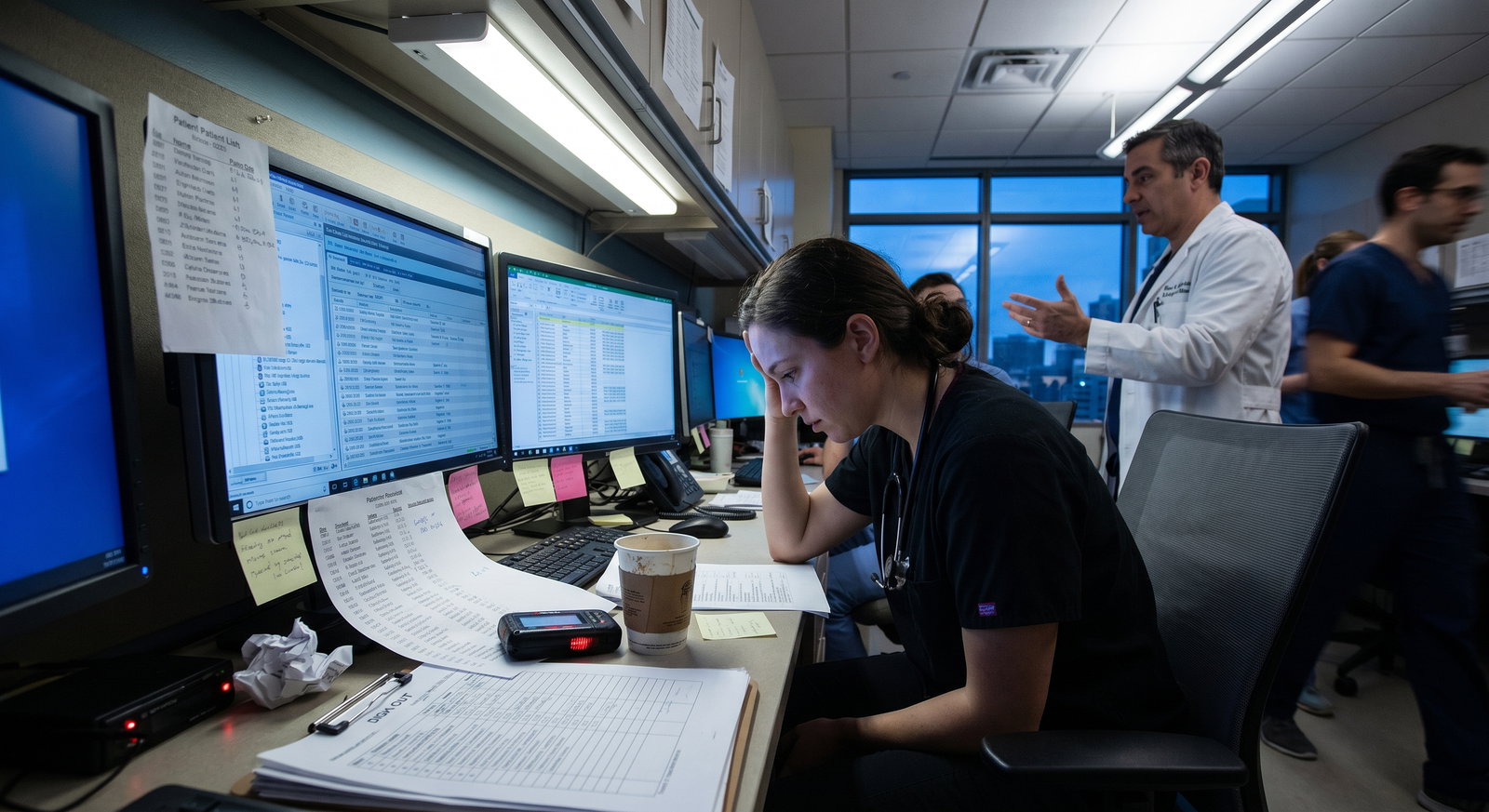
You sign out. You exhale. You tell yourself you're basically done. Then somebody says, “Can you just follow up that potassium?” or “Just make sure the CT gets read,” and somehow that one tiny loose end turns into three pages, two clarifications, a nurse asking for new orders, radiology not calling back, and you standing at a workstation at 1:40 a.m. wondering how your life became this.
I've seen this happen over and over. Honestly, it's one of the dumbest recurring traps of intern year because the original task often sounds harmless. Quick. Contained. It isn't. Not when the sign-out is vague, the patient is complicated, the note is incomplete, or the task depends on three other human beings who are also drowning.
And here's the part that really gets in interns' heads: when a post-sign-out task starts to swell, it doesn't just feel inconvenient. It feels like a moral test. Like if you can't tie up every loose end perfectly, maybe you're already behind. Maybe everyone else can handle this better. Maybe you're the weak link. That's the intern brain talking, and it's brutal.
You're not failing because a “quick follow-up” became a mess. You're encountering a system problem that lands on tired people at the worst possible hour.
This article isn't about becoming some frictionless super-intern who never gets stuck. That's fantasy. This is about preventing small tasks from becoming chaos, and about knowing what to do when the chaos has already started.
The Problem: Why a ‘Quick’ Post-Sign-Out Task Can Turn Into a Full-Night Spiral
The classic setup is almost always the same. You're told something like, “Just check the repeat hemoglobin and see if it drops,” or “Follow up the MRI and let neuro know if it's positive.” Sounds simple. Except nobody tells you what counts as a meaningful drop, whether neuro is already aware, what to do if the scan is delayed, or whether this actually changes management overnight.
That's where the spiral starts.
Unclear instructions are the first landmine. Missing information is the second. Multiple handoffs make it worse, because by the time the task gets to you, the original context is gone. Then come the paging delays. You page radiology. No answer. You page the primary team contact. Wrong number. The nurse wants to know the plan. You don't have one yet. Now you're not just “following up.” You're building the plan from scratch in the dark.
And because you're an intern, there's usually a nasty emotional layer underneath it. You don't want to be the person who missed the one bad lab, the one subtle deterioration, the one scan that actually mattered. So every loose end feels dangerous. Every delay feels like you're gambling with the patient's safety and your reputation at the same time.
That reaction is normal. Miserable, but normal.
The fix isn't perfection. It's structure. If you can recognize why these tasks blow up, you can stop treating every post-sign-out item like a personal referendum on whether you belong in residency.
Why Post-Sign-Out Tasks Blow Up: The Hidden Failure Points
Post-sign-out tasks explode for boring reasons. Predictable reasons. The problem is that they feel dramatic in the moment, so people miss the mechanics.
The first hidden failure point is vague ownership. If nobody is clear on who owns the task, everybody assumes somebody else is handling a crucial part. That's how a “follow up sodium” task turns into nobody noticing the level came back at 119 for an hour.
Second: incomplete sign-out language. “Check CBC” is not a handoff. It's a trap. Better sign-out sounds like this: “Recheck CBC at 10 p.m.; if Hgb drops below 7, consent already in chart, call blood bank and page senior.” That's useful. That's safe. Anything less forces the night person to reverse-engineer the daytime team's thinking.
Third: no contingency plan. A task without an “if-then” attached to it is how your night gets hijacked. If the CT isn't done, then what? If the family refuses, then what? If the patient loses access, then what? You need the branch points.
Fourth: dependency. A lot of these tasks rely on someone else answering a page, approving an order, transporting a patient, drawing a lab, or reading a study. Once your task depends on another team's responsiveness, the timeline is no longer yours. That's when interns start hovering, repeatedly refreshing, and mentally melting down.
And after sign-out, urgency gets distorted. Badly. When you're tired and covering a big list, everything feels equally critical. It's not. A critical potassium of 6.8 is not in the same category as a routine non-urgent callback from a consultant. But fatigue flattens priorities. Fear does too.
Interns also fall into the worst trap: trying to personally remember and monitor every moving part. That's not diligence. That's a setup for missed details.
Use this simple framework:
- Do now: unstable patient, critical lab, active symptom change, time-sensitive medication, anything that changes overnight management.
- Clarify/delegate: vague task, missing context, dependent on another service, unclear deadline, uncertain ownership.
- Can wait until morning: routine documentation, non-urgent callback, FYI results that don't change overnight care, cleanup work with no immediate safety consequence.
If you can't tell which bucket it's in, that's your signal to escalate early. Not later. Early.
How to Triage Without Panicking: A Night-Shift Decision Checklist
When a post-sign-out task lands and your stomach drops, don't start with motion. Start with triage. Motion without triage is how you waste 45 minutes on the wrong thing while the actually important problem waits.
Here's the checklist I wish every intern used:
Is the patient unstable right now?
Vitals changing? New oxygen need? Altered mental status? Bleeding? Chest pain? If yes, stop calling this a “follow-up task.” It's now an active clinical issue.Is the task time-sensitive?
Does something bad happen if this waits until morning? A critical lab, anticoagulation issue, insulin problem, antibiotics, transfusion threshold, seizure medication, active pain crisis. Those matter tonight.Do I have enough information to act safely?
If not, don't bluff. Check the chart, read the last note, review the sign-out, call the nurse, clarify with your senior.Does this depend on another person?
If yes, expect delay and plan for it. Page once clearly. State what you need and why. Set a reminder to recheck rather than letting the task live as free-floating panic in your head.What is the safest next step right now?
Not the perfect step. The safest next step.
That gives you three categories:
Must do now
- Unstable patient
- Critical test result
- Time-sensitive medication/order
- New symptom or deterioration
- Anything that clearly changes management overnight
Can delegate or clarify
- Task with vague instructions
- Task owned by another service but dumped onto you informally
- Task requiring approval or specialty input
- Task where the contingency plan is missing
Can document and hand off
- Non-urgent result review
- Routine paperwork
- Nonessential callback
- Follow-up items that don't affect overnight safety
And when you need help, don't ramble. Rambling is what anxious people do when they secretly hope if they explain enough, no one will think they missed something. Keep it tight:
- “I'm covering Bed 12. Repeat hemoglobin dropped from 8.1 to 6.9. Vitals are stable, no obvious bleeding, consent is in chart. Do you want me to start transfusion now?”
- “This CT follow-up was signed out, but there's no plan documented if it's positive. The patient is stable. Can you clarify whether this needs overnight action?”
- “I've paged radiology twice for a read on a scan tied to possible operative planning. No response yet. What's our escalation path?”
That's not dramatic. That's competent.
And when your brain starts spiraling, use a script. Literally say it to yourself if you have to:
What is the safest next step right now?
Not “How do I finish everything?”
Not “What if this becomes a disaster?”
Just the next safe step.
Systems That Save Your Night: Notes, Templates, and Escalation Habits
The interns who seem calm at night usually are not calmer people. Irritatingly, they just use better systems.
You need a single reliable place to track follow-ups. One place. Not half on a sign-out sheet, half in your memory, half on a sticky note that gets soaked by coffee. That's how things disappear. Whether it's your folded patient list, a task column in the EMR, or a notebook page you use every shift, pick one system and be boringly consistent.
A good task entry should answer four questions:
- What is the task?
- Who owns it?
- When does it need to happen?
- What happens if it doesn't get done or if the result is abnormal?
So instead of writing:
“f/u CT”
Write:
“10 p.m. f/u CT A/P for SBO concern — I own result check — page senior if free air, worsening obstruction, or if scan delayed past midnight and patient worsens.”
That's a real task. It has shape.
A decent sign-out template should include:
- active problems
- overnight watch items
- pending tests
- contingency plans
- consultant involvement
- code status, if relevant to overnight decisions
And yes, checklists help. People love to act like checklists are for people who can't think. That's nonsense. Checklists are for tired humans in high-risk systems. Which is exactly what residency nights are.
A simple mini-checklist for every follow-up task:
- result pending?
- urgency labeled?
- owner labeled?
- escalation trigger labeled?
- documented anywhere visible?
If the answer is no to two or more of those, the task is underbuilt and likely to blow up.
Now the escalation piece. This matters.
Calling your senior early is not weakness. Silently absorbing unsafe ambiguity is weakness. If a sign-out task is unclear, branching, dependent, or clinically evolving, loop in backup before it becomes an ugly story at 3 a.m. Seniors would much rather get a clean question at 10:15 than a panicked confession at 1:50.
Good escalation sounds like:
- “I want to clarify the overnight threshold for action.”
- “This task depends on consultant response and I don't want to sit on it if the patient changes.”
- “The sign-out didn't include a contingency, and I want to make sure we're aligned.”
That's professional. That's not bothering people. Anyone who acts annoyed by that is forgetting what intern year feels like.
And the emotional payoff is real. Systems don't just improve safety. They cut down the awful feeling that everything is leaking out of your hands at once. That feeling is what wrecks your focus. Once your brain believes nothing is being tracked, every page feels like proof you're drowning.
You're not going to out-grit that feeling. You need process.
What to Do If the Night Is Already Blowing Up
Sometimes the night is already cooked. Three pages are pending, two results are back, a nurse is waiting for an answer, and you have that cold internal sensation that you've lost the thread. This is the moment when anxious interns start moving faster and thinking worse. Don't do that.
Reset.
First, stop for sixty seconds. Really. Look at the list. Name every open issue. If it's not written down, it doesn't exist in a manageable form.
Then sort it:
- one truly urgent issue
- things waiting on someone else
- things that can wait
Pick the single highest-risk patient problem first. Not the loudest problem. The highest-risk one. Those are often different. The person with soft pressures and rising oxygen need matters more than the consultant callback that's making you feel guilty.
Next, get help early. “I'm getting behind and I need help prioritizing” is a strong sentence, not a weak one. The weak move is pretending you're fine while missing key turns.
Then document what happened. Briefly. Clearly. If the task changed because the patient changed, say that. If there was delay because you were awaiting callback or study completion, say that. Clean documentation protects the patient and helps the next team understand the sequence.
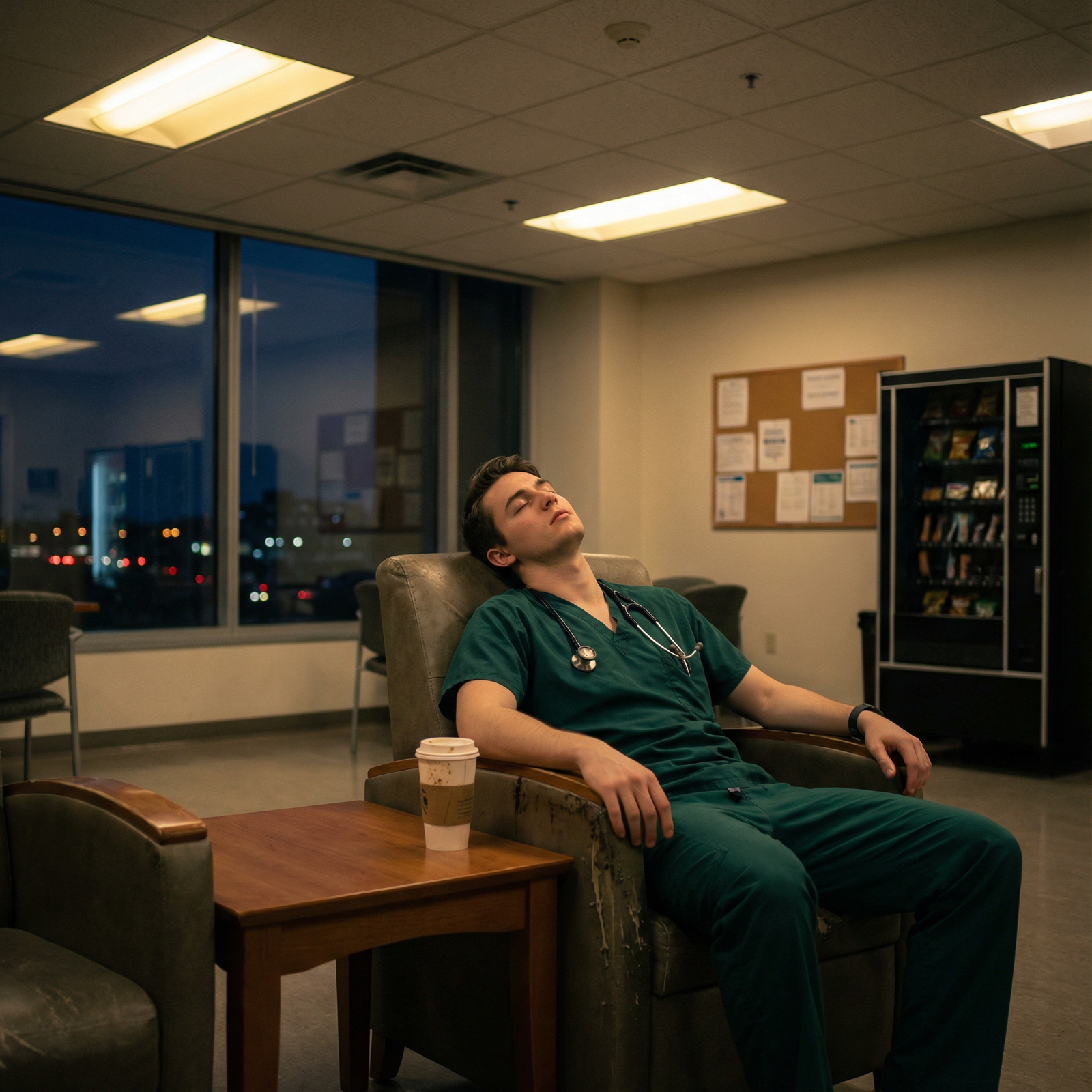
And after the shift, don't go home and sentence yourself for life over one ugly night. Interns are way too good at turning a difficult shift into a character indictment. “Maybe I'm not cut out for this.” That's not insight. That's sleep deprivation with a medical license.
One bad night doesn't mean you're unsafe. It means the system exposed a weak point:
- the sign-out was poor
- the contingency wasn't clear
- the task tracker was bad
- escalation happened too late
- too much lived in your head
Good. Now you know where to fix it.
Debrief the next day if you can. Ask, “What made that task spiral?” Then change one thing before your next shift. One better sign-out phrase. One clearer task list. One earlier escalation. That's how nights get less terrifying.
The Bottom Line: You Do Not Need to Carry Every Post-Sign-Out Task Alone
Post-sign-out tasks don't ruin your night because you're weak or slow. They ruin your night because vague, untracked, emotionally loaded work is dangerous after hours. That's the truth.
So don't answer chaos with more panic. Answer it with a system:
- triage the task
- clarify what's vague
- escalate early
- document what matters
- stop trying to personally hold every detail in your brain
That's the move. Every time.
And if tonight gets messy? Fine. Learn from the mess. Shame is useless. Process is useful.
On your very next shift, pick one improvement and actually use it. A checklist. A better sign-out phrase. A more explicit contingency plan. One change is enough to start. That's how you stop one “quick follow-up” from eating your whole night.