
You wanted derm since M1. You built the entire identity around it. Research year, case reports, AAD posters, the expensive dermatopathology elective. Then Step 2 hits.
Let me break this down specifically: Dermatology remains one of the most statistically unforgiving matches in the entire National Resident Matching Program (NRMP). This is not about intelligence. It is about filtration math.
In the 2024 NRMP data, the mean Step 2 CK for matched MD seniors into dermatology was 260. More importantly, the 25th percentile was 253. If your score starts with a 24x, you are not in the danger zone. You are below the filter. Program directors are not reading your personal statement. An algorithm is deleting you before a human ever sees your name.
For a deeper dive into adjusting your expectations when scores fall short, consult When Your Step Scores Don't Match Your Dream Specialty: Adjustment Plan.
That is the mathematical reality. And the faster you accept it, the faster you salvage your career.
This article is for educational purposes only. It is not financial advice, not legal advice, and not tax advice. Figures vary by individual circumstances, so consult a qualified professional before acting.
The Dermatologic Dream vs. Mathematical Reality: Assessing Your Step 2 Score
The derm application game has changed since Step 1 went pass/fail. Step 2 CK is now the single hard number. Every program uses it.
Here is the threshold breakdown I give my own advisees:
260+: You clear the filter. You will get interviews if the rest of your application is coherent. Apply derm, but still carry a smart backup.
250-259: The gray zone. You are viable, but you are not safe. You are competing against 200 applicants with identical scores, 15 publications, and home program connections. If you are in this range without a home derm program or a heavyweight letter from a chair, your match probability drops below 50%. You need a parallel plan active from day one of ERAS.
Below 250: The cutoff for tactical pivot. I have seen students with a 248 and 30 publications fail to match derm. I have also seen a 245 match because their PhD mentor called a friend. Unless you have that phone call, do not apply derm as your primary. You are burning $5,000 and an entire year of leverage.
Recognizing the sunk cost fallacy early is the hardest part. That research year? Those derm letters? They feel like wasted capital if you walk away. They are not. They are evidence of work ethic and scientific rigor. The fallacy is believing you must continue because you already invested. Detach your self-worth from a three-digit number. That score does not measure your suturing, your empathy, your clinical reasoning. It measures one test on one day. Program directors know that, but they still have 600 applications for 4 spots.
Evaluating your options carefully is crucial; review Plan B After a Borderline Step 2 Score: Adjusting Your Residency Strategy before submitting your final rank list.
You need to mourn the dream for exactly one day. Then move.
The Outpatient Ecosystem: Defining What 'Sustainable' Actually Means
Everyone says "lifestyle specialty." Most medical students define that as "derm hours." That definition is lazy and inaccurate.
Sustainable outpatient practice is not just about total hours. Let me define the four variables that actually predict burnout by year 7 of practice:
- Hourly Burden vs. Total Hours. 50 hours in clinic from 8-5 with a lunch break is survivable. 50 hours that includes 7pm charting, weekend inbox, and prior auths is not.
- Documentation Friction. How much of your day is fighting the EHR vs. seeing patients? Derm notes are short. So are psych and PM&R notes. Neurology notes are longer. This matters.
- On-Call Frequency and Severity. A specialty with 1:6 home call where you never come in is fundamentally different from 1:4 in-house stroke call.
- Control Over Schedule. Can you build a 4-day work week? Can you do 80% clinical and 20% admin? Employee models vs. private practice models live here.
This is where the outpatient ecosystem reveals its truth. Fields like dermatology are sustainable because you control acuity, location, and schedule. But you are not limited to derm for that control.
Look at that matrix. Preventive Medicine has essentially zero call. Psychiatry call is often home phone coverage that rarely requires you to come in. PM&R inpatient rotations exist in residency, but outpatient PM&R practice mirrors derm: procedural blocks, MSK patients, 30-minute slots, no emergent pages at 2am.
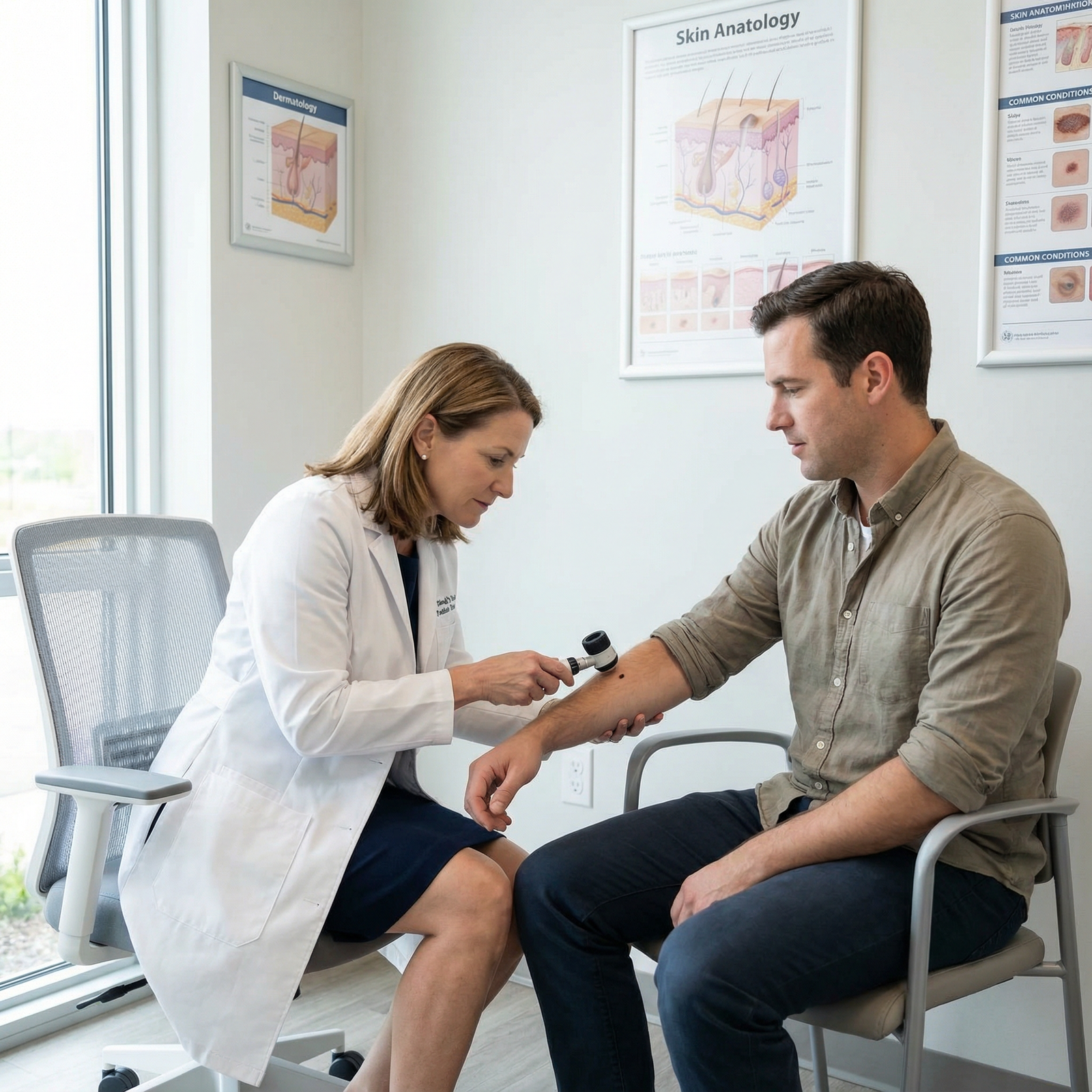
And this answers the core loss you feel leaving derm. You liked the procedural element. The visual diagnosis. The instant fix of a biopsy or cryotherapy. You can still have that.
The Pivot Playbook: Re-tooling Your ERAS Application Without Delay
Executing a rapid pivot requires aggressive strategic surgery on your existing ERAS application components within a tight 72-hour window. You cannot submit a dermatology personal statement to a psychiatry program. They will trash it instantly.
I have walked students through this in real time. Here is the exact sequence:
Hour 0-24: Specialty Selection. Do not apply to 4 different backups. Pick ONE. One sustainable outpatient field and commit. If you spray FM, IM, Psych, PM&R, your letters and narrative look scattered. Programs smell desperation.
Hour 24-72: Rewrite The Personal Statement. This is not editing. This is a full rewrite.
Bad framing: "While I initially loved dermatology, I realized my score was low so I am now interested in PM&R."
That is a death sentence. Never mention scores, competitiveness, or backup status.
Good framing: "My early exposure to dermatology taught me to love functional restoration, visual procedural precision, and longitudinal outpatient relationships. In the rehabilitation of a patient with central post-stroke spasticity, I found that same precise, procedure-driven improvement in function that first drew me to procedural skin disease, but with the added dimension of whole-person recovery."
See the bridge? You are not running FROM derm. You are running TOWARD functional recovery, toward neurobehavioral continuity, toward systems-level prevention. Use your derm research as evidence of attention to detail, not as a misaligned passion.
Securing new, high-impact letters of recommendation when you have virtually zero time to build new faculty relationships.
You have 2 weeks before ERAS is due. You do not have time for a full Sub-I.
What you do: Identify one attending in your new target specialty who knows you, even peripherally. A neurology attending from M3. A psychiatry consult attending. Email them tonight. Subject: "Urgent mentorship request - specialty pivot and LOR."
Body: Be honest. "My Step 2 score makes derm unviable. After reflection and a recent elective experience, I am fully pivoting to [Specialty]. I admired your approach to [specific patient]. Could you meet for 20 minutes tomorrow to discuss if you would feel comfortable writing a strong letter based on my M3 performance and our discussion?"
Most faculty will say yes. They have seen this. Offer to write a first draft bullet list of your strengths to make it easy. One strong letter from the new specialty plus one excellent derm letter that praises work ethic is better than three derm letters for a psych application.
Hidden Gems: High-Satisfaction Outpatient Specialties with Minimal Match Friction
This is where you need to listen. Some of the happiest physicians I know did exactly what you are doing.
Physical Medicine and Rehabilitation (PM&R): The Closest Analog to Procedural Derm.
PM&R is musculoskeletal mechanics, sports medicine, pain. Your clinic day: ultrasound-guided injections, spasticity botox, EMG/NCS, prosthetic prescription. It is visual. It is procedural. Patients say "you fixed my shoulder." That dopamine hit is identical to derm. Average matched Step 2 for PM&R in 2024 was ~242. Your score that fails derm is competitive here. Lifestyle is pure outpatient once residency ends. No rounding.
Neurology (Outpatient/Headache/Cognitive) and Psychiatry: Cognitive, Autonomy, Demand.
Students dismiss these because they think "heavy inpatient." Wrong in practice. Outpatient neurology subspecialties like headache medicine, movement, or neuromuscular are 100% clinic. Botox for chronic migraine. EMG again. Lumbar punctures. 45 hour weeks. Massive need everywhere.
Psychiatry is the most underrated lifestyle field in medicine right now. True autonomy. You can build a cash-pay, 30-hour-a-week, telehealth practice if you want. No labs. No disrobing. Notes that actually reflect your thinking. Average matched Step 2 around 245-248. Community demand is absurd. You will never look for a job. Jobs will look for you.
Occupational and Preventive Medicine: The Ultimate Zero-Call Pathway.
If you truly want derm-level hours without derm-level competition, look here. Preventive medicine is 2 years of residency after an intern year. Often combined with public health degrees paid for by the program. Work settings: corporate wellness, public health departments, pharma, academic. No call. No weekends. Federal jobs with pension. It values mature judgment over board scores. Programs love applicants who had a prior career interest and can articulate systems thinking. Your derm research? Frame it as prevention of skin cancer at a population level.
Executing the Transition and Maintaining Clinical Momentum
The psychological impact is real. I have sat with a fourth-year student sobbing in a call room in September because she got a 244 and felt her entire medical school identity collapsed. Normal. Grieve, but do not stall.
Leverage your fourth-year electives strategically. Drop that second away derm rotation that will not help you. Replace it immediately with an advanced rotation in your new field. Two weeks in PM&R sports clinic gives you language, mentors, and maybe a case report you can submit before ERAS is locked. Programs want to see commitment in your fourth year schedule, not just words.
And prepare for SOAP with cold precision if the pivot occurs mid-cycle. This means having a separate, fully polished personal statement for your backup already uploaded as an alternate in ERAS. Have LORs assigned correctly to each specialty. If you match your pivot specialty in the main match, great. If you do not because you pivoted too late, you will SOAP with a coherent application, not a frantic last-minute derm failure application.
Let me be blunt: the students who match after a derm pivot are not the ones with the highest scores. They are the ones who move fast, kill their ego, and execute.
Your Step 2 score did not tell you that you are not good enough to be a doctor. It told you that one specific door closed. The outpatient ecosystem is vast. There are multiple doors where you will have a better life, more autonomy, and less friction than many dermatologists I know.
Pivot now. Pivot completely. Submit on time.