Why Work–Life Balance Matters So Much for Non‑US Citizen IMGs in Radiology
For a non‑US citizen IMG, diagnostic radiology is often viewed as a classic “lifestyle residency” with relatively predictable hours, limited overnight call compared with many other specialties, and good long‑term flexibility. But the reality is more nuanced—especially when you add immigration constraints, visa‑related stress, and the pressure to excel as a foreign national medical graduate in a competitive specialty.
You are not just choosing a specialty; you are choosing a lifestyle in a foreign health system, under a visa you must protect, while trying to build a career that justifies the sacrifices you and your family are making. Understanding residency work‑life balance, duty hours, and realistic expectations in diagnostic radiology is essential to making an informed decision.
This article focuses specifically on the work–life balance assessment for a non‑US citizen IMG aiming for diagnostic radiology residency in the United States. You will find:
- What daily life and duty hours in radiology actually look like
- How lifestyle differs by training level (R1–R4), program type, and subspecialty
- Unique challenges and opportunities for IMGs on visas
- Concrete strategies to protect your well‑being during training
- How to evaluate programs for lifestyle before you rank them in the diagnostic radiology match
Understanding Diagnostic Radiology as a “Lifestyle Residency”
Diagnostic radiology has long been considered one of the MOST_LIFESTYLE_FRIENDLY_SPECIALTIES. But “good lifestyle” means different things to different people, and it can be misleading if you only look at reputation.
Core Features That Support Work–Life Balance
Predictable daytime schedule (mostly)
- Standard radiology residency weekday: roughly 7–8 AM to 5–6 PM.
- Compared with surgery, OB/GYN, or inpatient internal medicine, nights and weekends are significantly less frequent.
- Most duty hours are spent in a controlled environment (reading room, PACS workstation), not running between wards.
Limited physical exhaustion
- Radiology is cognitively intense but not physically demanding.
- No rounding all day, no operating, less physical strain, which often translates to more sustainable long‑term work.
Fewer emergencies and codes
- You respond to urgent imaging and may go to IR or CT scanners, but you are not the primary code team.
- Night call is busy but usually more predictable than ER or ICU work.
Huge potential for long‑term flexibility
After residency and fellowship, radiology allows many lifestyle configurations:- Academic vs private practice
- On‑site vs hybrid teleradiology
- Full‑time vs part‑time
- Day shift only groups vs practices that share nights with teleradiology companies
For a non‑US citizen IMG thinking long term, this flexibility is powerful—it can help you adjust work intensity during phases like fellowship transitions, permanent residency application, or family changes.
Realistic Downsides to Anticipate
Even though radiology is relatively lifestyle‑friendly, several factors can threaten work–life balance:
- High cognitive and emotional load: Constant decision‑making and fear of missing critical findings.
- Screen time fatigue: 8–10 hours a day at a workstation can be mentally draining.
- Performance pressure as an IMG: Many foreign national medical graduates feel they must constantly “overperform” to match and later secure jobs or visas.
- Night float and weekend call: Less frequent than in some specialties, but still disruptive during certain rotations.
As a non‑US citizen IMG, your experience will be affected not only by the specialty itself, but also by the visa, financial, and cultural layers that US graduates may not carry.
Day‑to‑Day Life and Duty Hours in Radiology Residency
Understanding typical duty hours and daily structure is crucial for assessing residency work life balance. While schedules differ by program, there are recognizable patterns.
Typical Weekday in Diagnostic Radiology Residency
R1 (PGY‑2) after internship:
- 7:00–7:30 AM: Arrive, check schedule, set up PACS, review overnight cases if assigned.
- 7:30–8:00 AM: Morning conference (lectures, case conferences, physics, journal club).
- 8:00–12:00 PM: Read studies under supervision (e.g., chest, abdomen, neuro, emergency).
- 12:00–1:00 PM: Noon conference (often mandatory); lunch during or after.
- 1:00–5:00/5:30 PM: Continue reading studies, sometimes procedures (e.g., fluoroscopy, minor interventions).
- After 5 PM: Sign‑out; the on‑call resident or night float team takes over.
This schedule aligns with lifestyle residency expectations: intense but contained. Most residents are home for dinner on non‑call days.
R2–R4 (PGY‑3–5):
- More subspecialty rotations (e.g., neuro, MSK, breast, body, pediatrics, cardiac).
- More autonomy, faster reading pace, and sometimes teaching responsibilities.
- Conferences remain, but you may occasionally miss them due to case volume.
ACGME Duty Hours and How They Play Out
ACGME duty hours (which apply to all accredited residencies):
- Maximum 80 hours/week, averaged over 4 weeks.
- One day off in 7, on average, free of clinical duties.
- No more than 24 consecutive hours of in‑house duty (plus 4 hours for transitions).
- Adequate time for rest between shifts (target 10 hours).
In diagnostic radiology, in practice:
- Most residents are well below 80 hours/week; many are closer to 50–60 hours during busy rotations and 45–50 on lighter rotations.
- 24‑hour in‑house calls are less common now, replaced by night float systems.
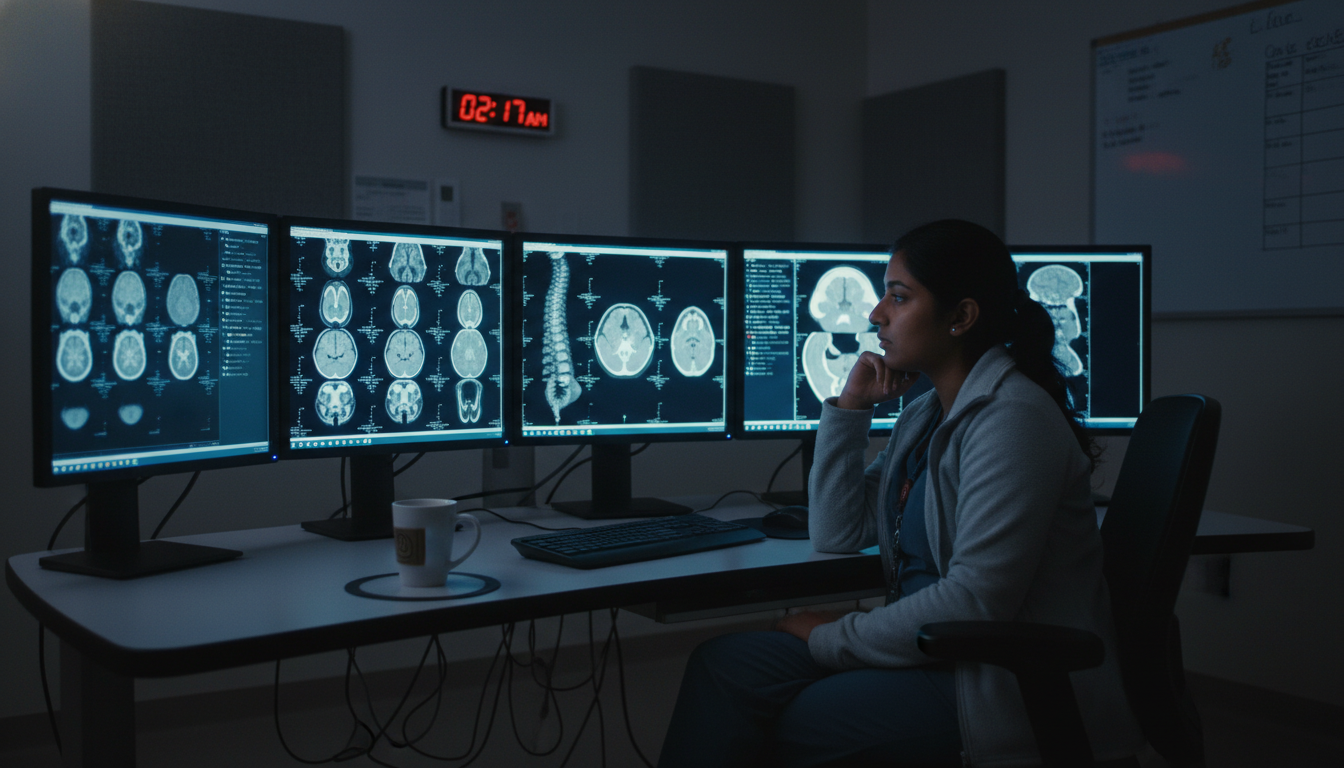
Night Float, Weekend Call, and Work–Life Balance
Most radiology programs use one of the following systems:
Night Float Blocks
- You work nights for 1–2 weeks at a time, then return to days.
- Typical schedule: 5 PM–7 AM, with some variation.
- Days off during night float; usually 1–2 days free per week.
- Disruptive to circadian rhythm but contained within specific blocks.
Shorter Evening Shifts (Late‑Stay)
- Residents stay later (e.g., 1–9 PM or 2–10 PM) to cover evening imaging.
- Often rotate among residents, so frequency is limited.
Weekend Day Shifts
- You cover ED, inpatient, and sometimes limited outpatient studies.
- Typically 1–2 weekend shifts per month depending on program size.
From a work‑life balance standpoint, radiology compares favorably. You do have nights and weekends, but they’re limited by design. Still, during a night float month, your social life and family time will be significantly impacted, especially if you are adjusting to a new culture and time zone.
Unique Work–Life Balance Considerations for Non‑US Citizen IMGs
As a non‑US citizen IMG, your experience of “lifestyle” in radiology will be shaped by factors beyond duty hours and call schedules. Immigration, financial constraints, cultural adaptation, and family separation can all intensify stress, even in a lifestyle‑friendly specialty.
Visa Status and Its Impact on Lifestyle
Most non‑US citizen IMGs enter residency on J‑1 or H‑1B visas.
J‑1 Visa (Most Common)
Advantages:
- Widely accepted by academic radiology programs.
- Process supported by ECFMG; many institutions are very familiar with it.
Lifestyle‑Relevant Challenges:
- Two‑year home‑country requirement after training unless you secure a waiver.
- Pressure to build a CV strong enough to be competitive for waiver jobs (often in underserved or rural areas), which might not be your ideal lifestyle location.
- Anxiety about long‑term planning: family, kids’ schooling, spouse’s career.
H‑1B Visa
Advantages:
- Often viewed as more favorable for long‑term US career.
- Can more directly transition to permanent residency via employer sponsorship.
Lifestyle‑Relevant Challenges:
- Fewer radiology programs sponsor H‑1B due to cost and complexity.
- Interview and match options may be more limited, increasing pressure to accept any offer even if schedule or culture are not ideal.
In both cases, visa uncertainty can erode work–life balance by:
- Making you feel you cannot afford “average” performance; you must be “ideal.”
- Discouraging time off for fear of appearing less dedicated.
- Adding emotional load when planning relationships, marriage, children, or supporting family abroad.
Cultural Adaptation and Psychological Load
As a foreign national medical graduate, you are adapting simultaneously to:
- A different healthcare system and medico‑legal environment
- New communication norms with attendings, technologists, nurses, and referring physicians
- Subtle but powerful cultural differences in feedback, hierarchy, humor, and conflict resolution
This adaptation often leads to:
- Over‑preparation for work (reading extra hours at home, reviewing cases repeatedly)
- Hesitation to ask questions or set boundaries, for fear of confirming stereotypes about IMGs
- Social isolation, especially if your support network is mostly in your home country
Even in a lifestyle residency like radiology, these invisible pressures can make a 50‑hour week feel like 80.
Financial Stressors for IMGs
Resident salaries are similar for all residents, but non‑US citizens IMGs may:
- Arrive with debt from USMLE exams, observerships, and travel
- Support family members back home
- Pay higher tuition for prior degrees or US clinical experiences
- Face limitations in obtaining certain loans or credit products early on
This can mean:
- Less ability to live in walking distance to the hospital (more commute time).
- Pressure to moonlight as soon as allowed, which can erode the lifestyle advantage of radiology.
- Delayed ability to start a family or bring dependents to the US.
How Radiology Lifestyle Evolves: Residency → Fellowship → Attending
Work–life balance in diagnostic radiology is not static. It changes with each phase of training and career.
During Residency
Lifestyle Pros:
- Well‑structured schedules, with educational conferences built into the day.
- Most nights and weekends are scheduled in advance.
- Predominantly indoor, predictable environment regardless of weather or hospital census.
Lifestyle Cons Specific to IMGs:
- Need to prove competence in a new environment.
- Less margin for error (real or perceived) because of visa dependence and IMGs’ sensitivity to performance evaluations.
- Extra time spent on certification, licensing, and exam preparation (e.g., USMLE Step 3, ABR exams).
During Fellowship
Many radiology residents pursue fellowship (e.g., neuroradiology, MSK, IR, body imaging, breast, pediatrics). Work–life balance varies:
- More focused, subspecialty‑intense schedule (often still manageable hours).
- In some fellowships (e.g., body, MSK, neuro), lifestyle can be excellent—daytime work, limited call.
- In others (notably interventional radiology), call and procedural demand may resemble a more acute‑care specialty.
For non‑US citizen IMGs:
- Fellowship may be your “bridge” visa period while you secure employment and long‑term plans.
- Pressure to impress: many fellows aim to convert fellowship into an attending job in the same system or network.
- Need to balance ABR/CAQ exam preparation with job searching and visa planning.
As an Attending Radiologist
Long‑term, diagnostic radiology is one of the most customizable specialties for lifestyle:
Academic Radiology
- Often consistent daytime hours, with some evening or weekend call.
- Protected academic time may reduce clinical load somewhat.
- Good environment if you enjoy teaching and research (beneficial for O‑1 or EB‑1 immigration strategies).
Private Practice
- Potentially higher compensation; lifestyle can range from intense to moderate.
- Some groups expect peak productivity (high RVU targets), which can extend your reading day.
- Others emphasize lifestyle—shorter days, 4‑day workweeks, or shared teleradiology call.
Teleradiology
- Rising option, often with flexible hours and home‑based work.
- Can support geographical choice (living where your family is happiest).
- You may work evenings or nights to cover other time zones.
For non‑US citizen IMGs, reaching this flexible phase may be delayed by:
- Need to meet J‑1 waiver obligations (3 years in underserved areas).
- Waiting for green card processing, which can impact job mobility.
However, once you reach attending status with stable immigration, diagnostic radiology generally delivers on its reputation as a lifestyle‑friendly specialty.

Practical Strategies to Protect Work–Life Balance as a Non‑US Citizen IMG
Work–life balance in diagnostic radiology is not automatic, even if the specialty is favorable. You need deliberate strategies, especially as an IMG under visa pressure.
1. Be Strategic When Choosing Programs
During applications and interviews, assess not just prestige but culture and support.
Ask current residents (especially IMGs):
- “How strictly are duty hours monitored and respected?”
- “How many call shifts and night float weeks do you have per year?”
- “Are there differences in expectations or opportunities for IMGs vs US graduates?”
- “Does the program support visa sponsorship for fellowship and beyond?”
Look for:
- Programs with transparent schedules: posted rotations, clear call structure.
- A track record of supporting foreign national medical graduates (J‑1/H‑1B friendly).
- Multiple IMGs who appear confident, engaged, and not burned out.
2. Set Boundaries Early and Communicate Professionally
As an IMG, you may feel hesitant to say no or to leave on time, but protecting your boundaries is key.
- Learn your program’s policy on staying late. Some attendings might read out remaining cases; others expect residents to stay until work is done.
- Politely clarify expectations:
“To make sure I’m aligned with your expectations: on this rotation, is it standard for residents to stay until all cases are read, or is there a usual sign‑out time?” - If you consistently stay very late, speak with your program director or chief resident. Chronic overtime can be a sign of systemic issues, not personal failure.
3. Optimize Your Workday for Efficiency
Better efficiency means less catch‑up at home and fewer “ghost hours.”
- Develop structured search patterns for each modality and body part to reduce rereads.
- Use checklists for common critical findings (PE, stroke, appendicitis, SBO, etc.).
- Pre‑read cases before attendings sit with you; note specific questions to focus teaching and speed sign‑off.
- Learn keyboard shortcuts and PACS tools early to reduce wasted motion.
The more efficient you are, the more your residency feels like a true lifestyle residency with time left over for rest and personal life.
4. Protect Mental Health Proactively
Being far from home, under visa stress, and adapting to a new system makes IMGs uniquely vulnerable to burnout and isolation.
Practical steps:
- Leverage institutional counseling services early—not only in crisis. Many US institutions offer free, confidential mental health services to residents.
- Maintain regular calls or video chats with family, but also develop at least one local support network (friends, co‑residents, religious or cultural community groups).
- Normalize seeking help: burnout in radiology is real, even if hours are “better” than in other specialties.
5. Plan Your Visa and Career Path Early
Immigration stress can overshadow the lifestyle benefits of radiology if you leave it to the last minute.
During residency:
- Understand your J‑1 or H‑1B implications from the start.
- Attend institutional sessions on visas, contracts, and immigration.
- Consider whether academic vs private practice aligns better with your immigration goals.
During fellowship:
- Start job search early (12–18 months before end of fellowship).
- Prioritize employers experienced with J‑1 waivers or H‑1B/green card sponsorship.
- Consider geographical areas with shorter waiver waitlists and better lifestyle potential.
A clear long‑term plan reduces background anxiety, making it easier to enjoy your relatively favorable residency work hours.
6. Use Time Off Intentionally
Radiology residents often get 3–4 weeks of vacation per year, plus conference leave in some programs.
- Use at least some vacation to visit home country or see family, if financially feasible. Emotional reconnection is powerful.
- Alternatively, dedicate part of your vacation to pure rest rather than always traveling intensively. Jet lag plus packed sightseeing can leave you more tired when you return.
- Don’t hoard vacation days until the end in hopes of “saving” them; spreading them through the year helps with burnout prevention.
FAQs: Work–Life Balance for Non‑US Citizen IMGs in Diagnostic Radiology
1. Is diagnostic radiology really a good “lifestyle residency” for a non‑US citizen IMG?
Yes, compared with many other specialties, diagnostic radiology offers:
- More predictable daytime hours
- Less frequent night and weekend duty
- Lower physical strain and a controlled work environment
For a non‑US citizen IMG, this structure can be especially beneficial while you navigate immigration, exams, and cultural adaptation. However, visa‑related pressure, long‑term uncertainty, and performance expectations can still make residency feel intense. The specialty provides the framework for good work–life balance, but you must actively protect it.
2. How many hours per week do radiology residents usually work?
It varies by program and rotation, but most diagnostic radiology residents work:
- Around 45–60 hours per week, often on the lower end for outpatient‑heavy or elective rotations and higher during night float or ED rotations.
- Duty hours rarely approach the ACGME maximum of 80 hours/week.
However, some residents—especially IMGs—add extra hours at home for studying or case review, which functionally extends their workday. Efficient study strategies and realistic expectations are important to avoid burnout.
3. Does being on a visa (J‑1 or H‑1B) significantly worsen work–life balance?
The visa itself does not change your official duty hours or call schedule, but it often intensifies psychological and practical stress, which indirectly impacts your experience of balance. You may feel:
- Less comfortable taking time off or setting boundaries
- More pressure to stand out and secure strong letters for future jobs or waivers
- Anxiety about long‑term planning (where you will live, whether you can stay in the US)
Addressing immigration planning early, choosing visa‑friendly programs, and seeking mentorship from senior IMGs who navigated the same path can greatly soften this impact.
4. After training, can I have a truly flexible lifestyle as an attending radiologist in the US?
Yes. One of the strongest long‑term advantages of diagnostic radiology is its high flexibility:
- You can choose academic or private practice, part‑time or full‑time, in‑person or remote teleradiology.
- Some groups offer 4‑day workweeks, “no‑call” positions (with trade‑offs in compensation), or mainly daytime schedules.
- Teleradiology allows you to live in one location while reading for hospitals in another time zone.
As a non‑US citizen IMG, you may initially need to select jobs that align with visa requirements (e.g., J‑1 waiver positions). But once you achieve stable immigration status, radiology is among the best specialties for building a lifestyle tailored to your personal and family priorities.
For a non‑US citizen IMG, diagnostic radiology offers one of the best combinations of intellectual challenge, competitive compensation, and realistic work–life balance. By understanding the true nature of duty hours, the impact of visas, and the variability across residencies and careers, you can make informed choices that protect not just your professional goals, but also your health, relationships, and long‑term happiness.