
Last week I talked to a fourth-year who whispered, “I feel like medicine is built for extroverts and I’m already tired just from clerkships.” She’d just finished a month of surgery where she literally hid in the stairwell between cases to avoid more small talk. She loves patients, hates chaos, and is terrified she’s about to accidentally choose a specialty that will emotionally steamroll her for the next 30 years.
If that sounds uncomfortably familiar, you’re not being dramatic. You’re reading the room correctly: some specialties will chew up a sensitive, introverted person and spit them out. Others? They can actually fit you pretty well—if you’re honest about what drains you and what quietly refuels you.
Let’s walk through this like someone who actually worries at 3 a.m. about sign-out conversations and waiting room noise levels. Because…same.
First, What Actually Drains You? (Not Just “Talking to People”)
People keep telling you, “You can’t be introverted and be a doctor, you have to talk to patients all day.” That’s…lazy thinking.
You’re not afraid of people. You’re afraid of being constantly “on” with no off-ramp.
Common introvert drains in medicine:
- Back-to-back interactions with no buffer
- Chaotic environments (ED, trauma bay, OR with 18 people talking at once)
- Forced small talk with staff or colleagues all day
- Needy or boundary-violating patients who want to “chat” for 40 minutes
- Feeling watched and judged constantly (rounds, presentations, pimping)
Common things that don’t drain a lot of introverts:
- Deep 1:1 conversations with patients
- Quiet, focused work (reading, reviewing results, writing notes)
- Predictable routines and schedules
- Working in smaller teams instead of huge rotating mobs
So when we talk “lifestyle-friendly” specialties for introverts, I’m not just talking about vacation days. I’m talking about how emotionally survivable the day-to-day human interaction pattern is.
Big Picture: Which Specialties Tend to Be Introvert-Friendly?
Let me be blunt. If you’re deeply introverted, anxious, and already fried by high-stimulation environments, there are some specialties where you’re just playing life on hard mode every day: EM, trauma surgery, OB nights, some inpatient-heavy fields.
There are others where you actually have more control over:
- how many people you see
- how long you see them
- how fast everything moves
- how often you’re in loud, unpredictable chaos
Here’s a quick comparison snapshot so your brain has something concrete to hold onto:
| Specialty | Noise/Chaos | Social Intensity | Schedule Predictability | Commonly Outpatient-Based |
|---|---|---|---|---|
| Dermatology | Low | Moderate | High | Yes |
| Pathology | Very Low | Low | High | N/A (lab-based) |
| Radiology | Low | Low–Moderate | High | Hospital/Imaging Center |
| Ophthalmology | Low | Moderate | High | Yes |
| PM&R | Low–Medium | Moderate | Medium–High | Mixed |
No specialty is a magic cure for burnout, but some give introverts actual breathing room. Let’s go through them like a nervous person planning an escape route.
Dermatology: Maximum Control, Minimum Chaos
Derm is the one everyone jokes about: great hours, high pay, cushy lifestyle. That’s oversimplified, but from an introvert-drain perspective, it does check a lot of boxes.
What it feels like day to day (in attending life, not residency):
You’re mostly in clinic. Rooms are quiet. Staff is usually a small, stable team. Patients are scheduled in discrete chunks. Emergencies are rare. No codes. No somewhere-someone-is-dying-every-minute background panic.
The social piece? You talk to patients all day, yes. But:
- Visits are brief and very structured
- Conversations are often concrete: “What is this? What do we do?”
- Limited life-or-death conversations
- Very little chronic emotional trauma compared to, say, oncology or psych
A lot of introverts like derm because they can mentally compartmentalize. The emotional load per patient is often lighter.
Catches (because of course there are):
- Residency can be busier and more emotionally taxing than what you see later in practice. Don’t romanticize it.
- Highly competitive, which means years of hustling, research, networking…all the stuff that already stresses you out.
- There’s still social energy — staff, colleagues, patients — but it’s predictable and not in a chaotic environment.
If you’re an introvert who can tolerate short bursts of structured interaction and likes visual problem-solving, derm is genuinely one of the least emotionally draining clinical specialties.
Pathology: Minimal Direct Patient Contact, Maximum Quiet
If your internal reaction to inpatient medicine was “I like the brain work, but can everyone just go away,” pathology is usually the first specialty I bring up.
Day-to-day as a path resident/attending:
- You’re in the lab, not on the wards.
- You interact with colleagues, techs, surgeons for intra-op consults/frozen sections—but not 20 patients in a row.
- A lot of the work is independent: reviewing slides, dictating reports, correlating clinical data.
- The environment is quieter, slower, more controlled.
For many introverts, the biggest relief is: no direct patient encounters. Which means:
- No constant emotional caretaking
- No walking into a room already anxious about how “on” you have to be
- No nonstop family discussions about prognosis
Does that mean no stress? Not even close. The stress is cognitive and responsibility-heavy: your diagnosis drives treatment. But it’s not the social, emotional, people-pleasing kind that drains a lot of us.
Huge caveat: if you go into path only because you’re scared of patients, and you actually hate microscope work, pattern recognition, or sitting for long stretches? You’ll be miserable in a different way.
But if you’re the type who liked histology, puzzles, and quiet spaces, and the thought of a day with zero patient-facing small talk gives you an almost physical sense of relief, it’s absolutely worth shadowing seriously.
Radiology: Quiet, Controlled, But Not Completely People-Free
Radiology is kind of the halfway point between path and standard clinical specialties.
Typical day:
- Dark room, screens, reading studies. Relatively quiet.
- Most communication is with other physicians, techs, and the occasional patient for certain procedures.
- You can often structure your own reading flow. Some control over pace (depending on setting).
- Emotionally, you’re involved in serious cases, but you’re interpreting, not breaking the news at the bedside.
For introverts, the upside is obvious: less constant face-to-face interaction, less performance anxiety. A lot of your “work” is internal — noticing patterns, generating differentials, being thorough.
But there are drains people don’t always admit:
- High cognitive load non-stop; the list never really ends.
- Call can be brutal in some programs and jobs — middle-of-the-night stat reads, high stakes, no warmup.
- You’re still part of a social ecosystem: surgeons pushing for fast reads, ED calling with “can you look at this right now,” etc.
Still, if you liked the intellectual side of medicine but felt fried by always being physically in front of people, radiology can feel like taking a weighted blanket off your nervous system.
Ophthalmology: Technical, Precise, And Usually Chill
Ophtho is sneaky. People don’t talk about it as much when they say “lifestyle specialty,” but for a lot of introverts, it’s a really solid fit.
Reality check on the environment:
- Mostly outpatient clinic-based once you’re an attending.
- Visits are quite structured. You’re focused on vision, eye health, specific symptoms.
- The exam is technical and visual, which can actually give you a natural “script” with patients.
- OR days are usually elective, controlled, and scheduled. Not trauma bay chaos.
You still talk to patients all day, but you’re not living in high-drama existential crisis conversations most days. Many encounters are more about function and quality of life, which is still meaningful but not constantly grief-soaked.
For introverts with a technical bent who like procedures but hate the circus of big surgery services, ophtho can feel surprisingly emotionally manageable.
PM&R (Physiatry): Team-Based But Often Gentle On The Nervous System
If you like the idea of helping people function better but hate the thought of being in a screaming emergency department forever, PM&R is worth serious thought.
What it often looks like:
- Mix of inpatient rehab units and outpatient clinics.
- You work with patients over time, often with neurologic or musculoskeletal issues.
- Team-based care (PT, OT, speech, nursing), but usually in calmer, more controlled settings than acute care floors.
- Conversations are often goal-oriented: mobility, pain, independence.
This is more social than path or rads, no question. You are definitely talking to people. Like…a lot. But it’s slower-paced, relationship-based communication, not rapid-fire 15-minute visits with six complaints, crying, and “my ride is leaving.”
If your introversion is more about chaos and overstimulation than about connection itself, PM&R can be quietly satisfying.
The “Lifestyle” Trap: Why You’re Still Anxious Even When A Specialty Looks Good On Paper
Here’s the part no one says out loud: you can pick the “most lifestyle friendly” field and still destroy yourself if you ignore how you use energy.
Common traps I’ve seen:
- Introvert goes into a lifestyle specialty but joins an ultra-busy group that double-books everyone. They’re still seeing 30–40 patients a day and feel like a vending machine.
- People-pleaser picks outpatient field but can’t set boundaries, ends up spending 30 minutes with every anxious patient, staying 2 hours late every day finishing notes.
- Anxious student chooses path/rads to avoid patient contact, then feels isolated and miserable because they actually liked patient interactions — just not the chaos of inpatient wards.
The real question isn’t “Which specialty is safe?” It’s “In what environment, pace, and type of interaction do I actually function like a real person and not a glitching robot?”
That’s what you have to test now, before you lock yourself into a residency that feels like wearing someone else’s shoes for four years.
Use Rotations As Experiments, Not A Performance
You’re probably telling yourself, “I have to impress everyone on every rotation in case I might apply here,” which is exactly how you end up ignoring all your internal warning signs.
On each rotation, quietly track:
- End of day: am I wired, drained, or steady?
- What exactly made me tired — patients, staff drama, volume, noise, complexity?
- Could I see myself doing this pace + type of interaction for 20 years, or does that thought make my chest tight?
Don’t just ask “Did I like it?” Ask:
- How did my body feel by Thursday afternoon?
- Did I need to hide in the bathroom to reset multiple times a day?
- Did I dread going back after a single day off?
This sounds dramatic, but those are real data points. Your nervous system is giving you feedback you can’t get from program websites.
Hard Truth: No Specialty Completely Protects You From Burnout
I wish I could tell you, “Go into derm/path/rads/ophtho and you’ll never be emotionally drained again.” That’s not real.
- Derm: volume pressure, demanding cosmetic patients, business headaches
- Path: isolation, pressure of high-stakes diagnoses, feeling undervalued
- Rads: relentless worklists, call, turf wars with other specialties
- Ophtho: clinic volume, business, perfectionism with surgery outcomes
- PM&R: administrative battles, system problems, emotional burden of long-term disability care
But you are not obligated to choose a specialty that starts you off at a deficit because the day-to-day environment is fundamentally hostile to your wiring.
You’re allowed to say: “I want a quieter, more controlled, lower-chaos practice where I can still be a good doctor without destroying my nervous system.” That’s not weakness. That’s strategy.
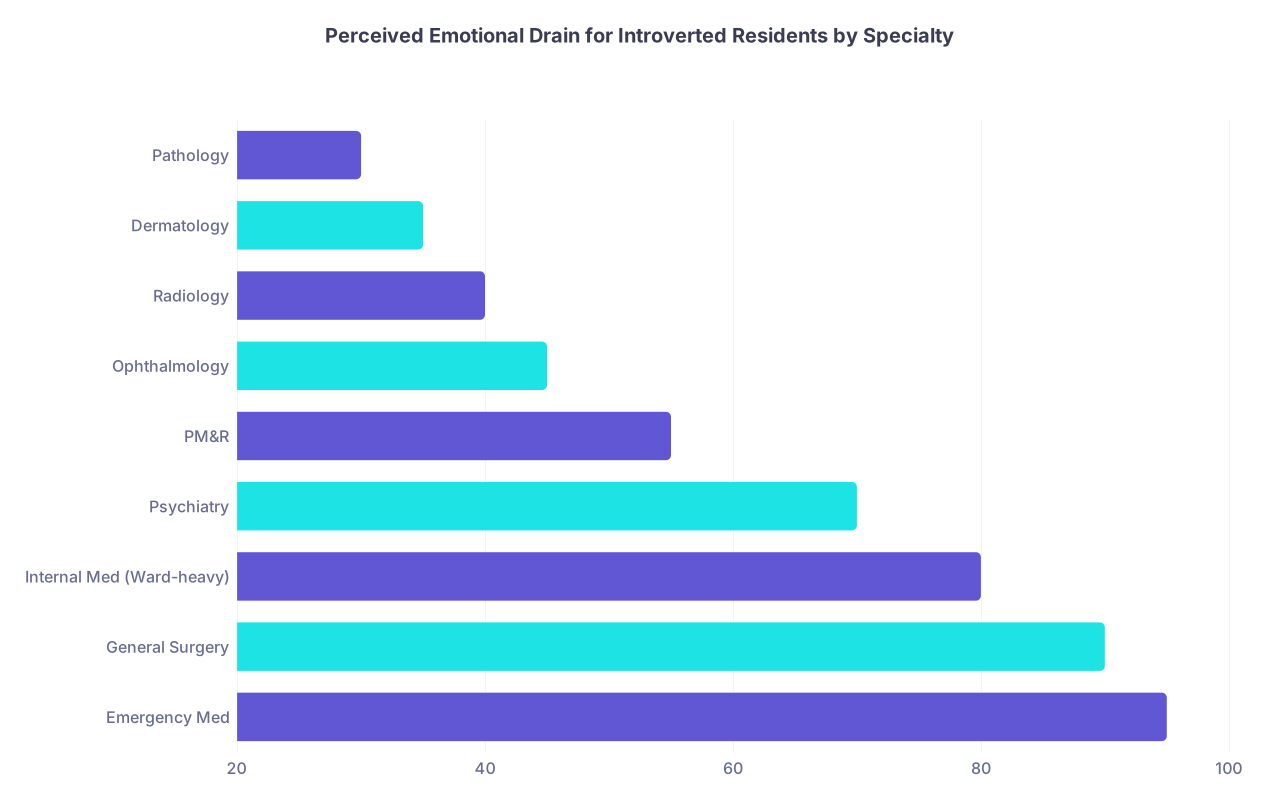
A Visual: Which Specialties Tend To Feel More Draining To Introverts?
Very rough, very unfair, but often emotionally accurate for a lot of introverts:
| Category | Value |
|---|---|
| Emergency Med | 95 |
| General Surgery | 90 |
| Internal Med (Ward-heavy) | 80 |
| Psychiatry | 70 |
| PM&R | 55 |
| Ophthalmology | 45 |
| Radiology | 40 |
| Dermatology | 35 |
| Pathology | 30 |
Is this scientific? No. But it matches what a lot of quiet, sensitive residents tell me after a few years in the trenches.
Okay, So What Do You Do Right Now?
One concrete way to calm your brain a bit: treat this like a decision tree, not an existential identity crisis.

| Step | Description |
|---|---|
| Step 1 | Hate constant face to face? |
| Step 2 | Prefer no patient contact |
| Step 3 | Okay with clinic |
| Step 4 | Pathology or Radiology |
| Step 5 | Prefer technical procedures |
| Step 6 | Ophthalmology or some Derm |
| Step 7 | PM&R or Derm |
Is it oversimplified? Absolutely. But even rough sorting like this helps reduce the “every option is equally terrifying” feeling.
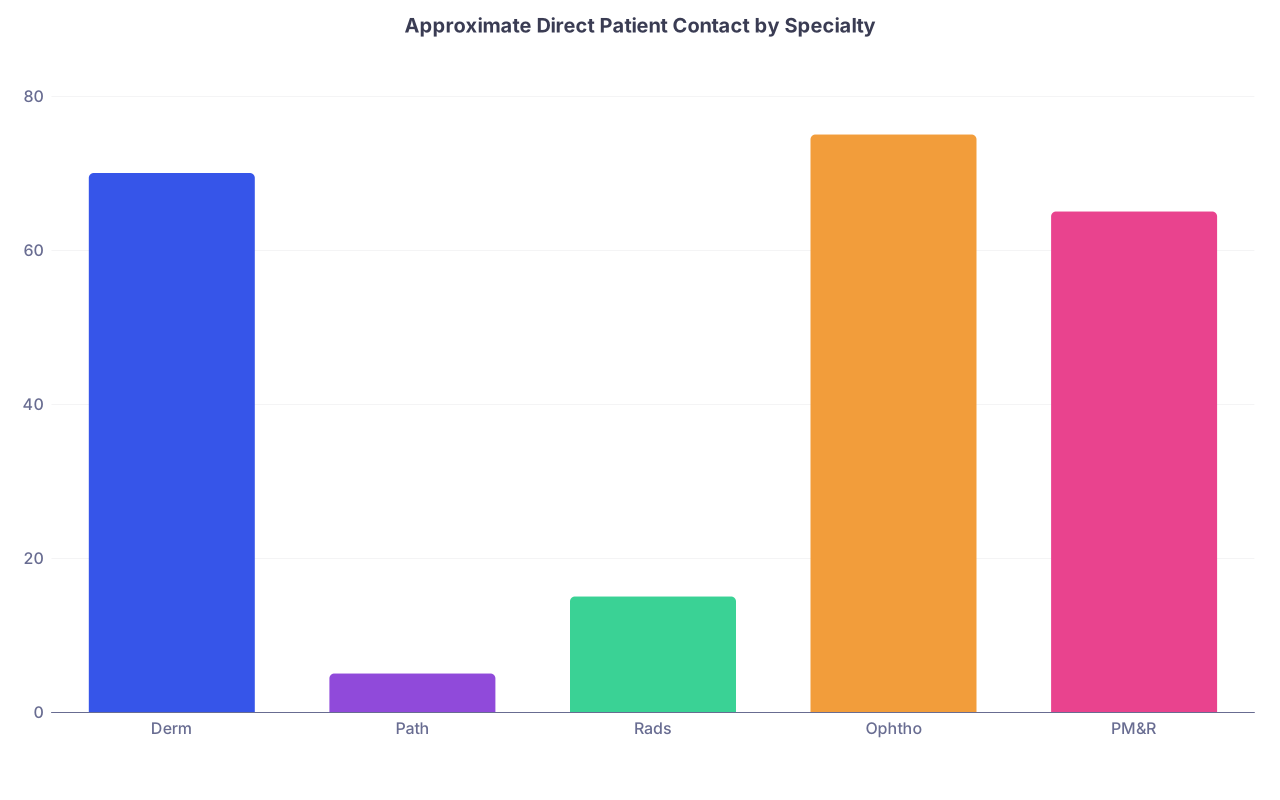
And if you need numbers because your anxious brain likes data:
| Category | Value |
|---|---|
| Derm | 70 |
| Path | 5 |
| Rads | 15 |
| Ophtho | 75 |
| PM&R | 65 |
(Values are just rough “percent of time with patients” vibes, not evidence-based metrics — just to anchor your intuition.)
FAQ – The Stuff You’re Probably Still Spiraling About
1. Can I survive in a “non-lifestyle” specialty as an introvert if I really love it?
You can. I’ve seen introverted surgeons, EM docs, OBs. They exist. But they tend to have either:
- very strong boundaries and support systems, or
- a slightly thicker skin and higher stimulation tolerance than what you’re describing if you’re already fried by clerkships.
If your body is already screaming “no” in high-intensity settings as a student, don’t assume that magically disappears as an attending. Training makes you tougher; it doesn’t rewrite your nervous system.
2. Am I weak or “not cut out for medicine” because I’m worried about being emotionally drained?
No. You’re actually paying attention earlier than most. Plenty of residents in PGY-3 wish they’d been as honest as you’re being right now. Medicine loves to glorify self-sacrifice, but guess who doesn’t benefit when you’re burnt out and numb? Your patients.
You’re trying to build a life you can sustain. That’s not weakness. That’s the bare minimum level of self-respect.
3. What if I like patients but hate the chaos — where do I fit?
You’re probably squarely in the outpatient-leaning world: derm, ophtho, PM&R, some outpatient internal medicine, allergy/immunology, rheumatology, maybe even certain outpatient psych setups. Your sweet spot is likely: scheduled visits, calmer environment, fewer middle-of-the-night disasters.
Pay attention on rotations: do you feel better in clinic than on the wards? That’s a real clue.
4. Will choosing something like path or rads make me “less of a real doctor”?
People will absolutely make comments like that. I’ve heard: “Oh, you don’t like patients?” or “So you’re just hiding in the basement?” Ignore them. They’ll still page rads in a panic at 3 a.m. begging for a read. Surgeons will still anxiously await path reports before committing to major operations.
If you’re practicing competently, carrying responsibility, and contributing to patient care, you’re a real doctor. The rest is ego and insecurity from other people.
5. What’s one thing I can do THIS WEEK to get clarity?
Right now: pick one of the specialties that sounded even remotely safe — derm, path, rads, ophtho, PM&R. Email one faculty member or resident in that field at your school and ask to shadow for half a day.
Not a whole block. Not a month. Just a morning or afternoon.
Then when you’re there, pay attention to how your nervous system feels, not what you think you’re “supposed” to like. Do you feel yourself exhale? Or do you feel trapped and bored? That raw reaction is more honest than any pros/cons list.
Here’s your next step: open your calendar and block off one half-day in the next two weeks as “shadow [specialty you’re most curious about].” Then send one email to make it real. You don’t have to figure out your whole life today — you just have to run the next small experiment that makes Future You a little less exhausted.