
Why Letters of Recommendation Matter So Much for Caribbean IMGs in Pediatrics
For Caribbean IMGs targeting a pediatrics residency in the United States, letters of recommendation (LORs) can significantly influence how program directors view your application. Your LORs are not just a formality; they are a critical credibility bridge between “Caribbean medical school residency applicant” and “trusted future pediatric resident.”
Because Caribbean graduates often face extra scrutiny around clinical preparation and comparability to U.S. grads, strong letters can:
- Confirm you are clinically ready for a U.S. pediatrics residency
- Validate your interpersonal skills and professionalism in a pediatric setting
- Provide context for your educational path (e.g., SGU, AUC, Ross, Saba)
- Differentiate you in a competitive peds match, especially if your scores or grades are average
For many programs, especially community and mid-tier academic pediatrics programs, letters are among the most heavily weighted parts of the ERAS application. A strong SGU residency match or other Caribbean medical school residency success story almost always includes excellent, targeted letters of recommendation.
In pediatrics, personality and fit matter greatly. Program directors want residents who are:
- Compassionate and patient with children and families
- Team-oriented and reliable
- Culturally sensitive and excellent communicators
Your letters should make those qualities obvious and believable.
Understanding What Makes a Strong Pediatrics LOR
Before thinking about who to ask for letters, you need a clear picture of what a strong pediatrics residency letter actually looks like.
Core Components of a High-Impact Pediatrics LOR
A strong LOR for pediatrics residency should ideally:
Be written by someone who knows you well clinically
- Has directly supervised you in patient care
- Can comment on your day-to-day behavior, not just your CV
Be specialty-specific when possible
- Directly speak to your readiness for pediatrics residency
- Use pediatric examples (well-child visits, acute care, NICU, developmental assessments, family counseling)
Contain specific, behavior-based examples
Look for language like:- “She independently gathered a thorough history from an anxious parent, reassured them, and communicated a clear plan I fully endorsed.”
- “He recognized early signs of respiratory distress in a 2-year-old and promptly alerted the team.”
Include comparative statements
Program directors pay attention to phrases like:- “Among the top 10% of students I’ve worked with in the past five years”
- “Comparable to our strongest U.S. medical students”
- “Stronger clinically than many incoming pediatric interns”
Discuss professionalism and teamwork
For pediatrics, comments about communication, empathy, cultural sensitivity, and collaboration carry a lot of weight.Address any perceived Caribbean IMG concerns gently (if appropriate)
Without overemphasizing it, a recommender can validate you as fully prepared for U.S. training:- “Despite training at an international medical school, her fund of knowledge and clinical reasoning are absolutely on par with, if not superior to, our U.S. graduates.”
Red Flags or Weaknesses in Letters
You should work to avoid letters that:
- Are generic or templated: short, vague, and interchangeable
- Only restate your CV without new insights
- Use lukewarm language (“adequate,” “satisfactory,” “met expectations”)
- Come from someone who barely worked with you
- Are not tailored to pediatrics when you are clearly applying in peds
These are not harmful in the sense of being overtly negative, but they are missed opportunities—which is dangerous in a competitive peds match environment for Caribbean IMGs.

Who to Ask for Letters: Strategy for a Caribbean IMG in Pediatrics
Knowing how to get strong LOR starts with being very strategic about who to ask for letters and how to build those relationships well in advance.
Ideal Letter Writers for Pediatrics Residency
Aim for 3–4 letters total (check each program’s specific requirements). A typical strong mix for a Caribbean IMG going into pediatrics might include:
Pediatrics Sub-Internship / Acting Internship Attending (U.S.-based)
- Your highest-yield letter if you performed well
- Shows your performance at a near-resident level
- Programs trust U.S. clinical faculty evaluations highly
Core Pediatrics Clerkship Attending (preferably at a U.S. hospital)
- Confirms consistent performance in pediatrics
- Should highlight clinical reasoning, rapport with children and parents, and teamwork
Chair or Program Director Letter in Pediatrics (if available)
- Often needed or strongly preferred by some programs
- Can be based on a summary of evaluations plus a brief interview
- Especially powerful if from a U.S. academic pediatrics department
Additional Clinical Letter (Peds or another relevant specialty)
- Could be from NICU, PICU, family medicine with a strong peds component, or pediatric emergency
- If outside pediatrics, the letter should still clearly support your fit for peds
How Many Letters Should Be Pediatrics-Specific?
For a pediatrics residency, especially coming from a Caribbean medical school, aim for:
- At least two letters in pediatrics
- Ideally three letters in pediatrics if possible
- One letter can be from another specialty if it adds unique value (e.g., strong ICU performance, longitudinal continuity clinic, or outstanding professionalism)
What About Letters from Caribbean School Faculty?
Letters from core faculty at your Caribbean medical school are not inherently weak, but program directors often place more weight on U.S. clinical letters. Use Caribbean school letters when:
- The faculty member knows you exceptionally well
- They can speak to your academic resilience, leadership, or unique growth story
- You don’t have enough strong U.S. peds letters to reach 3–4 total
If your Caribbean school has an affiliation with U.S. hospitals (e.g., SGU, AUC, Ross), prioritize letters from U.S.-based attendings when you can, while still including one powerful “institutional” letter (e.g., from a dean, department chair, or clinical advisor) that provides big-picture context.
Should You Ask a Famous Name or Someone Who Knows You Well?
A fundamental rule of residency letters of recommendation: a strong letter from someone who knows you well is always better than a lukewarm letter from a “big name” who doesn’t.
- If the “big name” has barely worked with you, they’re likely to write a generic letter.
- A mid-level faculty member who supervised you closely in a busy pediatric ward can write a much richer, more convincing letter.
Ideally, you want both: a respected attending and someone who knows you well. But if you must choose, always prioritize the depth of relationship.
How to Earn Strong Pediatrics Letters as a Caribbean IMG
You don’t “request” a strong letter; you earn it over weeks of clinical work. This is especially true when you’re trying to overcome bias about Caribbean medical school residency applicants.
During Your Pediatrics Rotations: Concrete Behaviors That Lead to Great Letters
On pediatrics rotations, focus on:
Consistent, visible work ethic
- Arrive early, prepared, and read about your patients daily
- Offer to help with tasks: notes, calls to consultants, family updates (within your scope)
Owning your patients
- Know all relevant details: labs, imaging, overnight events, family concerns
- Anticipate what your attending will ask on rounds
Strong communication with children and parents
- Learn age-appropriate ways to communicate
- Practice explaining diagnoses, medications, and follow-up plans in simple language
- Show cultural sensitivity, especially with diverse U.S. families
Eagerness to learn and accept feedback
- Ask thoughtful, specific questions (not just “What should I read?” but “Could you walk me through how you’re distinguishing viral vs bacterial pneumonia in this case?”)
- When given constructive criticism, apply it immediately and visibly
Reliability and professionalism
- Return pages quickly
- Follow through on tasks without needing reminders
- Maintain appropriate boundaries and confidentiality
These behaviors often translate directly into comments like “reliable,” “mature,” “already functioning at the intern level”—phrases that are gold for your pediatrics LOR.
When and How to Ask: Timing Strategy
Timing matters. Ask for letters when:
- You are near the end of the rotation, and your performance is fresh in the attending’s mind
- You have clearly demonstrated growth and consistent excellence
- Your attending has seen you in multiple clinical situations (rounds, notes, family meetings, etc.)
Phrase your request directly but respectfully, for example:
“Dr. Smith, I’ve really appreciated working with you on this pediatrics rotation, and I’m planning to apply to pediatrics residency this fall. Would you feel comfortable writing a strong letter of recommendation on my behalf?”
That wording gives the attending an “out” if they don’t feel they can write a strong letter, which protects you from weak LORs.
What to Provide to Your Letter Writer
To make it easy for them to write a detailed, persuasive letter:
- Updated CV
- Personal statement draft (even if not final)
- ERAS photo (optional, but can help them remember you)
- List of programs or general types of programs you’re targeting
- Bullet points of key cases or experiences you shared with them (e.g., “Helped manage the 4-year-old with new-onset Type 1 DM / led family teaching on insulin use”)
- Clear deadline with a reminder a week before
This is not “writing your own letter”—it is giving your writer context and jogging their memory so they can write something richer and more customized.
Logistics: ERAS, Waiving Rights, and Using LORs Strategically
Understanding the logistics helps you avoid technical mistakes that can dilute the impact of even the best letters.
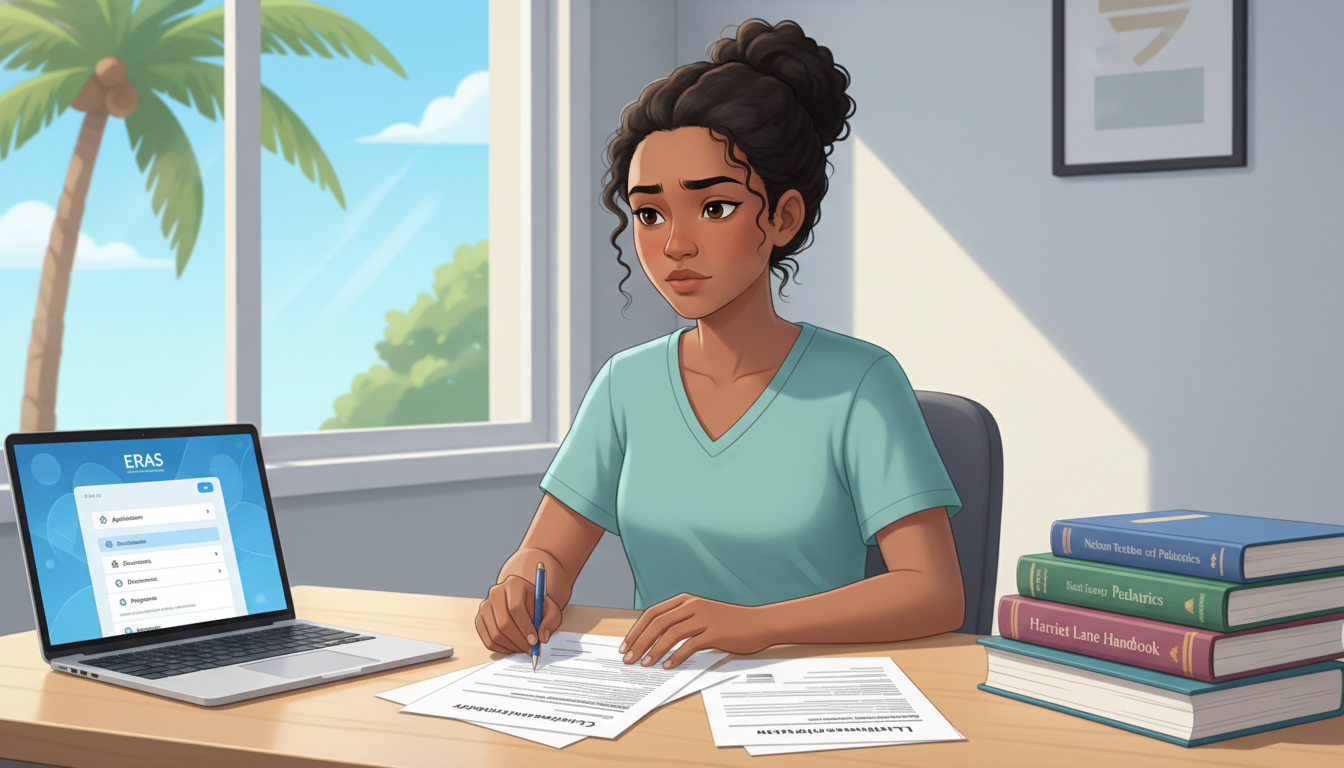
ERAS and the LOR Portal
Key points for the ERAS process:
- You create a unique LOR request form for each recommender in ERAS.
- That form includes an AAMC ID and an upload link your writer or their assistant will use.
- You can assign up to four letters per program, but you may have more total letters in your ERAS account.
You can customize letter combinations per program, which is extremely valuable:
- Academic pediatrics programs: emphasize strong academic peds letters and any research or subspecialty peds letters.
- Community programs: emphasize letters highlighting work ethic, reliability, and patient care.
Should You Waive Your Right to See the Letter?
Yes. In almost all circumstances, you should waive your right to see your letters.
- Program directors expect LORs to be confidential.
- Non-waived letters may be seen as less candid.
To protect yourself:
- Only ask for letters from attendings who have given you positive feedback.
- Specifically ask if they can write a “strong letter of recommendation.”
- If they hesitate, thank them and consider asking someone else.
How Many Letters Do You Actually Need?
Aim for:
- 3–4 total letters
- Across your application, something like:
- 2–3 pediatrics letters (minimum 2)
- 1 additional clinical letter (peds, family medicine with strong peds exposure, or internal medicine if it highlights relevant skills)
If you have more than 4 strong letters, you can rotate which letters you assign to each program based on fit.
Special Considerations for Caribbean IMGs (Including SGU and Similar Schools)
For Caribbean IMGs, your letters should help answer the unspoken questions some program directors may have:
- Are you as clinically prepared as U.S. graduates?
- Did your Caribbean school provide adequate hands-on experience?
- Are you adaptable to U.S. hospital systems and EMR?
Ask your U.S. attendings to be as explicit as they are comfortable being, for example:
- “Her clinical skills are entirely on par with our U.S. medical students, and she would be an asset to any U.S. pediatrics residency program.”
- “I have supervised numerous SGU residency match applicants and other Caribbean IMG students; this student is among the strongest I’ve seen.”
Letters like that can dramatically shift how your Caribbean medical school residency background is perceived.
Common Pitfalls and How to Avoid Them
Pitfall 1: Waiting Too Long to Ask
If you wait months after the rotation ends:
- Attendings may not remember you well.
- Letters tend to become generic and short.
Solution: Ask near the end of the rotation and send a polite reminder 1–2 weeks before the deadline.
Pitfall 2: Not Clarifying Your Specialty
Some students never explicitly say they’re applying in pediatrics, leading to vague letters that could apply to any specialty.
Solution: When you ask, say clearly:
“I’m applying to pediatrics residency, and I’d be honored if you could write a strong letter specifically supporting my application to pediatrics.”
Pitfall 3: Over-Reliance on Non-U.S. Letters
Having all or most letters from non-U.S. settings can be a disadvantage.
Solution: Prioritize U.S.-based attendings during your clinical rotations. For many Caribbean students (especially SGU, Ross, AUC), this means being very intentional during your U.S. core and elective rotations about:
- Identifying potential writers early
- Demonstrating consistent excellence
- Asking clearly for letters before you leave the site
Pitfall 4: Letters Not Matching Your Application Narrative
If your personal statement emphasizes your passion for general outpatient pediatrics, but your letters only talk about ICU-level critical care with no mention of families or children’s developmental needs, your story feels disjointed.
Solution: Brief your letter writers on your interests and goals. For example:
- “I’m particularly drawn to outpatient general pediatrics in underserved communities.”
- “I’m very interested in pediatric hospital medicine.”
This can subtly shape the way they frame your strengths.
Pitfall 5: Ignoring Red Flags
If an attending seems frustrated with your performance or gives lukewarm mid-rotation feedback, they are not the person to ask for a letter.
Solution: Proactively seek feedback during rotations. If it’s not clearly positive, work to improve. If improving isn’t enough to build a strong relationship, target other attendings who have seen you at your best.
FAQs: Letters of Recommendation for Caribbean IMGs Applying to Pediatrics
1. How many pediatrics-specific letters of recommendation do I really need?
Aim for at least two pediatrics-specific LORs, and three if possible. As a Caribbean IMG, your goal is to make it undeniable that you are committed to and capable of pediatrics. At least one should come from a senior peds attending during a U.S. rotation (ideally a sub-internship/AI or an intensive peds elective).
2. Is it okay to have a letter from my Caribbean medical school faculty instead of a U.S. attending?
Yes, but use them strategically. A strong letter from a Caribbean faculty who knows you well can be very helpful, especially if they:
- Describe your growth over years
- Highlight leadership, resilience, or advocacy
- Provide institutional context about your performance compared to peers
However, do not rely solely on Caribbean-based letters. Programs strongly prefer to see U.S.-based evaluations, especially for a pediatrics residency. Combine one excellent Caribbean faculty letter with 2–3 strong U.S. clinical letters.
3. For a peds match, can one of my letters be from a non-pediatrics specialty?
Yes. A letter from another specialty (family medicine, internal medicine, pediatric emergency, NICU, or PICU) is acceptable if it strongly supports your clinical ability and professionalism, and ideally ties your strengths back to pediatrics. But the majority of your letters (2–3) should still be pediatrics-focused for a successful pediatrics residency application.
4. How early should I start planning for residency letters of recommendation as a Caribbean IMG?
Begin planning in your third-year core rotations, and be proactive during your first pediatrics exposure. Specifically:
- Identify potential letter writers early in each rotation.
- Consistently perform at your best, especially on pediatric services.
- Ask for letters near the end of rotations where you’ve done well.
By the time ERAS opens, you should ideally already have 2–3 letters uploaded (or promised), with a final one from a late sub-internship or away rotation if applicable.
By understanding how to get strong LOR, knowing who to ask for letters, and deliberately showcasing your strengths in pediatrics settings, you can transform potential skepticism about your Caribbean medical school background into confidence in your readiness. Thoughtful, well-strategized letters of recommendation are one of the most powerful tools you have as a Caribbean IMG aiming for a successful peds match.