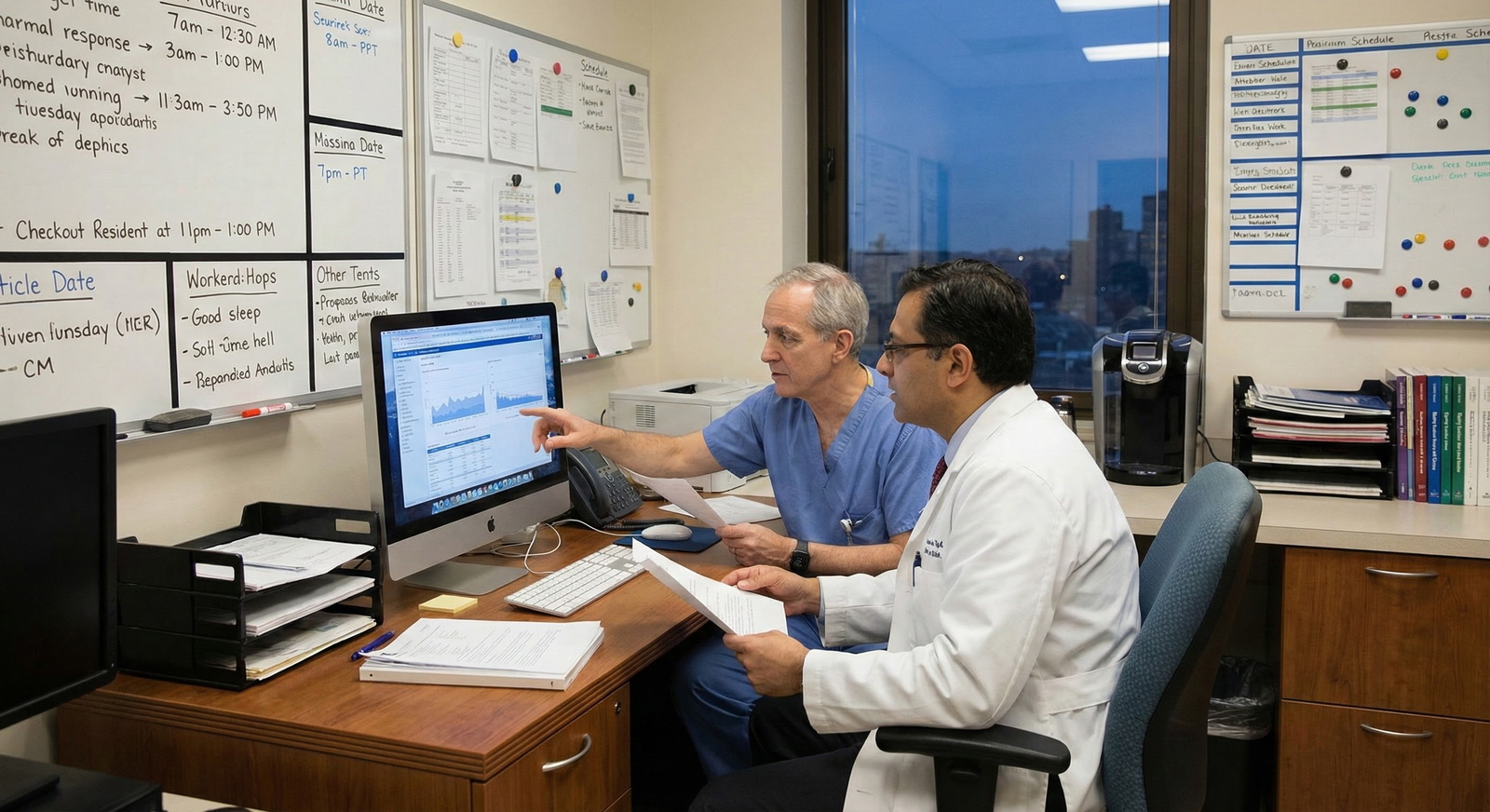
Understanding Letters of Recommendation for EM-IM Combined Residency
Letters of recommendation (LORs) are one of the most influential parts of your Emergency Medicine–Internal Medicine (EM IM combined) residency application. For programs trying to decide who can thrive in a dual-training environment, a letter is often more informative than a test score or transcript.
In EM-IM combined programs, selection committees are not just asking, “Can this applicant handle a busy emergency department?” or “Can they manage complex inpatient medicine cases?” They’re asking, “Can they do both, over five years, and remain engaged, resilient, and collegial?” Strong residency letters of recommendation are the best way to answer that question.
This guide will cover:
- What EM-IM programs look for in LORs
- How many letters you need and from whom
- How to get strong LORs (step-by-step)
- How to support your letter writers and avoid common pitfalls
- Special situations (IMGs, DOs, career changers, late interest in EM-IM)
Throughout, we’ll incorporate key questions: who to ask for letters, how to get strong LOR, and how to tailor your strategy specifically for emergency medicine internal medicine combined programs.
What EM-IM Programs Look for in Letters of Recommendation
Why LORs Matter So Much for EM-IM
EM-IM residency training is longer and broader than categorical EM or IM alone. Programs need evidence that you:
- Perform well in high-acuity, fast-paced environments (EM)
- Think deeply, systematically, and longitudinally about complex patients (IM)
- Have the resilience and professionalism to handle a rigorous 5-year pathway
- Are motivated by, and committed to, dual training rather than using EM-IM as a backup
Letters of recommendation give programs:
- Behavioral evidence of how you work on real teams
- Narrative depth about your growth, attitude, and clinical reasoning
- Specialty-specific insight into how you’ve handled EM and IM training environments
Key Attributes EM-IM Programs Want to See
Program directors often scan letters looking for specific themes. Ideal EM-IM letters demonstrate:
Clinical competence in both acute and complex care
- EM side: rapid assessment, prioritization, comfort with uncertainty, procedural skills, calm under pressure
- IM side: thoroughness, diagnostic reasoning, longitudinal thinking, attention to detail, safe disposition planning
Adaptability and learning capacity
- Willingness to seek feedback and actually change behaviors
- Evidence of growth over a rotation (e.g., “By the end of the month…” type comments)
Professionalism and reliability
- Shows up on time, follows through, owns mistakes
- Respects nursing, techs, consultants, and all team members
Teamwork and communication
- Effective with patients and families, even in stressful situations
- Works well with seniors, co-residents, and interprofessional staff
Motivation and fit for EM-IM combined training
- Interest in a career blending acute and longitudinal care
- Curiosity about complex, multi-system disease and transitions of care
- Ability to thrive despite high workload and emotional strain
A strong EM-IM LOR doesn’t need to say “EM-IM” in every paragraph, but it should convey that you would excel in environments characteristic of both emergency medicine and internal medicine.
How Many Letters You Need and Who to Ask
Basic Numbers and Types of Letters
Most EM-IM programs participate in ERAS and list specific requirements, but a typical pattern is:
- 3–4 total letters of recommendation
- At least 1 from EM (often an SLOE—Standardized Letter of Evaluation)
- At least 1 from IM
- 1 additional letter from EM, IM, or another relevant discipline depending on the program’s preferences
Always check each program’s website for exact LOR requirements and preferences.
Who to Ask for Letters: Priority Order
When considering who to ask for letters, think quality and specificity over titles or fame. In EM-IM combined applications, the ideal mix often includes:
Emergency Medicine Faculty (ideally with SLOE experience)
- Who: Clerkship directors, core faculty, or EM-IM faculty who supervised you directly during your EM rotation(s)
- Why: They speak to your ability in the ED setting, which is central to EM-IM
Internal Medicine Faculty
- Who: Ward attendings, chief residents (sometimes co-written with attendings), subspecialty IM attendings who actually observed your work
- Why: They demonstrate your performance in the inpatient environment and sustained, detail-oriented patient care
Combined EM-IM Faculty (if available)
- Who: Any EM-IM trained attending or program leadership who has worked with you clinically or closely in a meaningful role
- Why: They can directly comment on your fit for dual training and your understanding of the combined pathway
Other clinical or academic mentors
- Who: ICU, cardiology, hospitalist, or urgent care attendings; important research mentors; longitudinal advisors who know you well
- Why: Useful as a supplemental letter, especially if they can tie your strengths to EM-IM-relevant skills
Prioritizing Strength Over Prestige
A common mistake is choosing someone famous over someone who knows you well. For EM-IM:
- A core EM faculty member or clerkship director who supervised you for an entire month and can describe concrete behaviors is much stronger than a department chair who met you twice.
- A ward IM attending who saw your reasoning, follow-up, and patient ownership for four weeks is better than a research PI who only knows your lab skills, unless that PI can also speak robustly to your clinical capabilities.
Ask yourself: Who can tell a compelling story of me as a future EM-IM resident?
If the answer is vague or lukewarm, they may not be the right choice.
How to Get Strong LORs: Step-by-Step Strategy
Step 1: Prepare Before Your EM and IM Rotations
If you know you’re applying to Emergency Medicine-Internal Medicine combined programs, treat your EM and core IM rotations as auditions—not just for grades, but for letters.
Before the rotation:
Clarify your goal
- “I plan to apply to EM-IM combined programs. What skills should I focus on during this rotation to be the strongest candidate possible?”
Update your CV and personal statement draft
- Even an early draft helps mentors understand your trajectory and EM-IM interest.
Research EM-IM
- Know the basic structure of EM-IM training and typical career paths so you can speak about your interest intelligently.
Step 2: Excel Clinically in Ways That Translate to EM-IM
On both EM and IM rotations:
Own your patients
- In IM: Know every medication, lab, imaging, consultant recommendation, and constantly anticipate next steps.
- In EM: Take responsibility for initial assessment, work-up, and disposition; follow up on results instead of waiting to be told.
Demonstrate range
- EM: See both high-acuity and lower-acuity cases; show you can handle volume plus complexity.
- IM: Seek out complex chronic disease patients, ICU step-downs, and challenging diagnostic puzzles.
Communicate like a future resident
- Clear, structured presentations
- Respectful, efficient updates to nurses and consultants
- Honest self-awareness when you don’t know something
Ask for feedback regularly
- Mid-rotation: “What can I work on to be functioning at the level of a strong EM-IM intern by the end of this month?”
- Implement changes and let your attending see the improvement.
Almost every program director values trajectory—seeing you respond to feedback and grow is one of the clearest signals that you’ll thrive in a demanding combined program.
Step 3: Time the Ask Strategically
The best time to ask for a letter is:
- Near the end of a rotation, once the attending has had significant exposure to your work
- Or shortly thereafter (within a few weeks), while your performance is still fresh in their mind
When you ask, do it in person if you can, or via a professional email if not.
How to ask:
Use the “strong letter” language directly. For example:
“Dr. Smith, I’ve really valued working with you this month. I’m applying to Emergency Medicine–Internal Medicine combined residency programs, and I’m hoping to obtain a strong letter of recommendation for EM-IM. Based on what you’ve seen of my work, do you feel you could write a strong, positive letter on my behalf?”
This gives them a graceful exit if they cannot. If they hesitate or seem lukewarm, thank them and ask someone else. A mediocre letter can hurt.
Step 4: Provide a Helpful “Letter Packet”
Once they agree, make it easy for them to write you a detailed, EM-IM-specific letter.
Send a concise email with:
- Updated CV
- Personal statement draft (or at least a one-page summary of why EM-IM)
- Transcript and USMLE/COMLEX scores (optional, but helpful context)
- ERAS letter request form or link
- A 1-page “highlights sheet” including:
- Your name, photo (optional), and contact info
- A bulleted list of specific cases or behaviors you’d be proud to have mentioned:
- “Resuscitated septic shock patient in ED; took lead on initial stabilization and coordinated with ICU team.”
- “On IM wards, managed a patient with decompensated cirrhosis and worked on discharge planning and follow-up coordination.”
- Your short- and long-term career interests (e.g., EM-IM with interest in critical care, administration, academic medicine, rural practice, etc.)
This is not “writing your own letter”—you’re simply reminding them of concrete episodes from your rotation that illustrate your strengths.
Step 5: Gently Track and Follow Up
Faculty are busy and may need reminders—even those who are enthusiastic about you.
Practical follow-up timeline:
1–2 weeks after your initial request:
- Brief, polite email: “Just checking in to see if you need any additional information from me for the letter. I appreciate your support.”
2–3 weeks before ERAS submission if still pending:
- “I’m finalizing my ERAS application on [date]. If possible, I’d be grateful if the letter were uploaded by then. Please let me know if there’s anything I can provide to help.”
Be consistently respectful; the goal is to nudge, not pressure. If someone repeatedly fails to upload the letter close to your deadlines, be prepared to pivot to an alternate writer.

Tailoring Your LOR Strategy Specifically for EM-IM Combined Programs
Balancing EM and IM Letters
A strong EM-IM application usually has balanced evidence from both specialties:
- At least one EM SLOE or strong EM letter
- Shows that you can function in a busy ED, handle acute decision-making, communicate under pressure
- At least one IM letter
- Demonstrates depth of reasoning, ownership of complex inpatients, understanding of longitudinal care
Ideal scenario for 3–4 letters:
- EM SLOE from a core EM rotation
- IM ward attending letter from a busy inpatient service
- Additional letter from EM, IM, or EM-IM faculty who knows you well
- Optional: A research or ICU/hospitalist letter that connects your work to EM-IM themes (if allowed)
When possible, ask at least one letter writer to explicitly address your fit for EM-IM, not just EM or IM separately.
How to Communicate Your Combined Interest to Letter Writers
Faculty may be very familiar with categorical EM or IM, but less experienced with EM-IM combined training. Help them help you.
When you meet to discuss your letter:
Explain your motivation for EM-IM in 1–2 minutes:
- “I’m drawn to both the acute resuscitation and diagnostic challenges of EM and the longitudinal, complex disease management in IM. I see EM-IM as the best way to bridge those interests, especially for careers involving critical care, complex care transitions, or academic work across the ED and inpatient medicine.”
Give 2–3 specific career directions you’re considering:
- ED–ICU hybrid role, hospital administration with ED focus, complex chronic disease transitions, executive leadership, academic research on systems of care, etc.
Ask explicitly:
- “If you feel comfortable, I’d be grateful if you could comment on my potential fit for EM-IM combined training and my ability to manage both acute ED care and complex inpatient medicine.”
This steers the writer toward discussing attributes that EM-IM program directors care about without scripting their letter.
What Strong EM-IM Letters Actually Look Like
Strong letters often share these features:
Specific anecdotes:
- “On our busiest ED shift, she took on multiple complex patients simultaneously, including a STEMI and a septic shock case, and remained calm and organized.”
- “On the internal medicine service, he consistently took ownership of his patients’ dispositions, making sure that discharge plans were practical and clearly communicated.”
Comparative language:
- “Among the students I have supervised over the past 5 years, she ranks in the top 10% in terms of clinical acumen and professionalism.”
Direct assessment of EM-IM potential:
- “I have no doubt that he will excel in a demanding EM-IM combined program and ultimately become a leader at the interface between emergency and inpatient care.”
Encourage your writers to give concrete, comparative, and forward-looking descriptions. You can signal this preference by how you talk about your goals and experiences.
Common Pitfalls and Special Situations
Pitfalls to Avoid
Letters from people who barely know you
- Recognizable names don’t help if the content is vague: “hardworking, pleasant, team player,” with no details.
Too many non-clinical letters
- A research mentor or non-clinical supervisor is fine as a supplemental letter, but EM-IM programs primarily want to see clinical performance in EM and IM.
Red-flag language
- Phrases like “with supervision, they can…” or “while sometimes disorganized…” can significantly hurt your application.
- This is why asking “can you write a strong, positive letter?” is crucial—if they cannot, you want them to say no.
Mismatched letters and personal statement
- If your personal statement strongly emphasizes long-term primary care goals but your letters highlight only high-acuity ED interests, your application may feel incoherent. Make sure your materials tell a unified story.
Late requests
- Asking 1–2 weeks before ERAS deadlines is risky. Aim to secure commitments at least 4–8 weeks before you submit.
Special Situation: IMGs and DOs
For international medical graduates (IMGs) and DO students, LOR strategy is even more important:
- Secure U.S.-based, recent clinical letters whenever possible, especially from EM and IM rotations.
- For IMGs who struggle to get an EM SLOE, prioritize:
- Strong IM letters from inpatient rotations in the U.S.
- Letters from ICU or hospitalist services that highlight acute care work, team communication, and adaptability.
- DO applicants should:
- Include at least one letter from an MD or DO EM faculty member from an ACGME-accredited program, if possible.
- Make sure all letters reflect familiarity with ACGME-style competencies and U.S. residency expectations.
Special Situation: Late Interest in EM-IM
If you realized your interest in EM-IM late (e.g., after doing fewer EM rotations):
- Leverage strong IM letters that show acute care capabilities and adaptability.
- Add at least one EM rotation as early as possible and obtain an EM letter from that rotation.
- Ask a trusted mentor to address your late but authentic shift in interest in their letter:
- “Although she initially focused on internal medicine, her performance on EM rotations has clearly demonstrated that she is well-suited for EM-IM combined training.”
Admissions committees can accept late realizations if your narrative is coherent and your letters support your fit for dual training.
Special Situation: Career Changers or Gaps
If you have a gap in training or are changing fields (e.g., prior attending, other specialty training):
- Obtain at least one recent, strong clinical letter from your current role (e.g., hospitalist, urgent care, ED moonlighting).
- Ask letter writers to:
- Address your maturity, professionalism, and clinical competence in current practice.
- Explain the positive reasons for your transition to EM-IM.
These letters can reassure programs that you are ready to re-enter rigorous residency training and thrive.
Frequently Asked Questions About EM-IM Letters of Recommendation
1. How many EM vs IM letters should I have for EM-IM combined programs?
Most applicants should aim for:
- At least one EM letter (preferably a SLOE)
- At least one IM letter from inpatient wards
- A third or fourth letter from EM, IM, or EM-IM faculty who know you well
Exact requirements vary by program, so always review each program’s website. The goal is a balanced picture of your performance in both acute and longitudinal care settings.
2. What if my school doesn’t have EM-IM faculty? Will that hurt my letters?
Not necessarily. Programs understand that not all schools have EM-IM-trained attendings. Instead:
- Focus on high-quality EM and IM letters from core faculty who know you well.
- In your personal statement and interviews, articulate a clear, thoughtful rationale for EM-IM combined training.
- If you rotate at a site with EM-IM faculty, consider asking one of them for a letter, but it’s not mandatory.
3. Can I reuse the same letters for both EM-IM and categorical EM or IM applications?
Yes—with caveats:
- ERAS allows you to assign different letters to different programs.
- Many letters can appropriately serve for EM-IM and categorical EM or IM, especially if they emphasize clinical performance.
- However, if you’re applying broadly to both EM-IM and categorical EM or IM, try to:
- Have at least one letter that clearly references your interest in EM-IM combined training.
- Use other letters that are more “generic EM” or “generic IM,” suitable for categorical programs as well.
Make sure your overall application (statements, letters, experiences) still tells a coherent story.
4. How late is too late to ask for a letter of recommendation?
Ideally, you secure commitments 4–8 weeks before you plan to submit ERAS. Asking closer than 3 weeks to your deadline raises the risk of:
- Rushed, less detailed letters
- Letters not being uploaded on time
If you must ask late (e.g., away rotation ending in September), inform the writer of your timeline clearly and be especially organized with your supporting materials.
Thoughtful planning around your letters of recommendation—choosing the right writers, performing well on key rotations, and clearly communicating your EM-IM goals—can significantly strengthen your application. In a field that values versatility, resilience, and depth, strong LORs are one of the best ways to show EM-IM combined programs that you’re ready for the challenge.