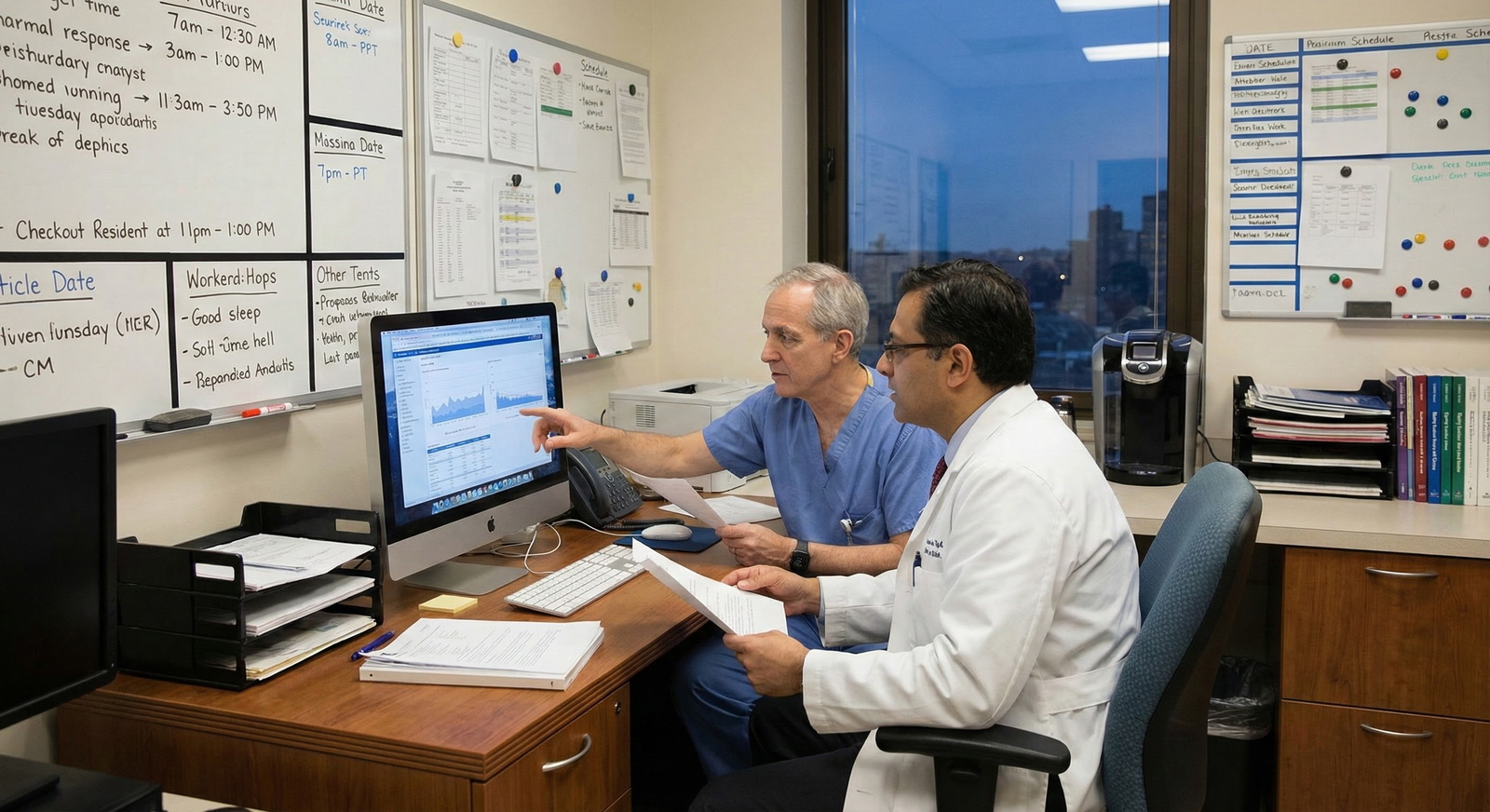
Understanding the Role of Letters of Recommendation for IMGs in Clinical Informatics
Letters of recommendation (LORs) can make or break an international medical graduate’s application to a clinical informatics fellowship or health IT–oriented residency track. For IMGs, LORs often carry even more weight because they help program directors interpret unfamiliar schools, grading systems, and training environments. Strong letters provide context, validate your abilities in the U.S. clinical and informatics environment, and differentiate you from other qualified applicants.
This IMG residency guide focuses specifically on letters of recommendation for those targeting clinical informatics fellowship, informatics-focused internal medicine or pediatrics residencies, or combined clinical and health IT training pathways. While some principles apply to all specialties, there are unique nuances in clinical informatics that you should leverage.
In this article, you’ll learn:
- What makes a strong LOR for clinical informatics
- Who to ask for letters (and who not to)
- How to get strong LORs as an international medical graduate
- Exactly how to approach letter writers, including email templates
- How to highlight informatics-related skills and projects within your letters
- Common pitfalls IMGs face and how to avoid them
Throughout, we will focus on practical, actionable steps you can take in the next few weeks—not vague “be a strong applicant” advice.
What Makes a Strong Letter for Clinical Informatics as an IMG
Before thinking about who to ask for letters or how to get strong LOR, you need to understand what “strong” actually means from the perspective of clinical informatics fellowship directors and informatics-heavy residency programs.
1. Specific, Behavioral Descriptions of Your Work
Vague praise (“hard-working, pleasant to work with”) does little to differentiate you. Decision makers want concrete examples:
- “Dr. Khan independently analyzed EHR data for 1,200 patients to identify patterns in lab ordering and created a report that we presented to the quality improvement committee.”
- “She led a small team of students to map a medication reconciliation workflow, then collaborated with IT analysts to update EHR order sets.”
Strong letters describe what you did, how you did it, and the impact you had.
2. Clear Evidence of Informatics and Health IT Potential
For clinical informatics, letters must go beyond “good clinician” to show you:
- Think systematically about clinical workflows
- Are comfortable with data and technology
- Collaborate effectively with IT, nursing, and administrative staff
- Understand how digital tools affect patient safety and quality
Examples letter writers might include:
- EHR optimization or documentation improvement work
- Participation in clinical decision support (CDS) design or review
- Dashboard or data registry projects
- Involvement in telemedicine workflows
- Contributions to quality improvement using data analytics
3. Comparison With Peers and Strength of Endorsement
Strong letters often use comparative statements and unambiguous support:
- “Among the 50 residents I’ve supervised in the last decade, Dr. ___ ranks in the top 5 in terms of analytic ability and initiative.”
- “I recommend her without hesitation and believe she will excel in a clinical informatics fellowship.”
Program leadership reads between the lines. “I am pleased to recommend” without any strong comparative language can sound lukewarm.
4. U.S. Clinical Context for IMGs
As an international medical graduate, your LORs should help bridge the gap between your prior training and U.S. expectations. Strong letters for IMGs:
- Explain the context: how your responsibilities compare to U.S. medical students, residents, or fellows
- Validate your clinical acumen within a U.S. healthcare system, if possible
- Confirm your communication skills, professionalism, and ability to work in diverse teams
- Highlight how you adapted to U.S. norms: EHR use, interdisciplinary rounds, patient-centered communication
Letters that explicitly comment on your transition to U.S. settings are particularly valuable for IMGs.

Who to Ask for Letters for Clinical Informatics (and Who Not To)
Choosing who to ask for letters is as important as what the letters say. As an IMG aiming at clinical informatics, your letter strategy should deliberately blend clinical credibility with informatics relevance.
Priority 1: Supervisors in U.S. Clinical or Research Settings
For most IMGs, the most impactful letters come from:
- U.S.-based attending physicians who directly supervised you in:
- Clinical rotations (inpatient, outpatient, subspecialty)
- Observerships with well-defined responsibilities
- Transitional year, prelim, or categorical residency positions
- U.S.-based academic mentors in:
- Clinical research using EHR data
- Quality improvement projects
- Health IT or digital health initiatives
These writers can:
- Speak to your performance in the U.S. system
- Comment on communication, teamwork, and professionalism
- Reassure programs you can function effectively in their environment
Priority 2: Clinical Informatics and Health IT Mentors
If you are specifically targeting a clinical informatics fellowship or informatics-track residency, at least one letter should be explicitly informatics-focused, ideally from:
- A board-certified Clinical Informatics physician
- A CMIO/Associate CMIO or medical director of health informatics
- A physician heavily involved in EHR optimization, CDS, or data analytics
- A PI (principal investigator) of an informatics, AI, or digital health project
These letters should emphasize:
- Your ability to think like an informatician
- Comfort with data, analytics, or IT systems
- Contributions to informatics projects, even if small
- Curiosity about workflow, safety, and system design
Priority 3: Home Country Supervisors (Used Strategically)
Letters from your home country can still be helpful, especially when:
- You lack extensive U.S. clinical experience
- You completed significant informatics or QI work abroad
- The writer holds a recognizable academic or leadership title (e.g., department chair, medical director, head of IT)
However, for fellowship and residency programs in the U.S., home-country letters are usually seen as supplementary, not primary. Aim for:
- At most 1–2 letters from abroad, unless instructed otherwise
- Clear explanation of the context: your responsibilities, patient volume, and what systems you worked with
Who NOT to Ask (Or Use With Caution)
To get strong letters of recommendation, avoid or limit:
- Non-physician letters (unless the program explicitly welcomes them)
- Rare exceptions: a PhD informatician or data scientist you worked with closely, if accompanied by robust physician letters
- Very short-term observers (someone who worked with you for only a few days)
- Family members or close personal contacts, even if they are physicians
- Well-known people who don’t know you well
- A generic letter from a “famous name” is less valuable than a detailed letter from a knowledgeable supervisor
If you must include a non-physician or non-U.S. letter, make sure your other LORs firmly cover U.S. clinical performance and professionalism.
How to Get Strong LORs as an IMG in Clinical Informatics
Knowing how to get strong LOR is essential—especially for IMGs who might worry that geographic distance, visa status, or immigration timelines put them at a disadvantage. Below is a step-by-step approach you can use.
Step 1: Plan Early and Strategically
Start planning your LOR strategy at least 4–6 months before application deadlines:
- List all potential letter writers (clinical, research, informatics).
- Note:
- Where you worked with them
- Duration and intensity of contact
- Any standout projects or feedback they gave you
- Map your letters to your goals:
- At least 1–2 strong U.S. clinical performance letters
- At least 1 explicitly clinical informatics / health IT letter
- Possibly 1 home country letter supporting long-term performance
For those transitioning from clinical practice abroad or from a general internal medicine residency into informatics: this planning often requires intentionally seeking informatics exposure and mentors now, not hoping it appears later.
Step 2: Build Meaningful, Documented Contributions
You need substance for your writers to describe. Consider:
- Volunteering for data-related or informatics tasks:
- Participate in EHR implementation or training initiatives
- Join committees on quality improvement, patient safety, or documentation
- Assist in gathering or analyzing EHR-based data for departmental projects
- Initiating small but tangible projects:
- Build a simple dashboard (with supervision) for tracking a process (e.g., vaccination rates)
- Map a clinical workflow and suggest potential EHR changes
- Conduct a small audit of alert fatigue or order set use
Even short projects (6–8 weeks) can provide rich material for a strong LOR if they are well-defined and you take ownership.
Step 3: Communicate Your Goals Clearly
Letter writers will usually try to help you—but only if they understand your path.
When you first approach a potential recommender, explain:
- That you are an international medical graduate targeting:
- Clinical informatics fellowship, or
- An informatics-focused residency/health IT training path
- Why this field fits your skills and interests
- What you hope their letter will highlight (e.g., informatics aptitude, data skills, leadership, teaching)
Clarity helps them tailor the letter to your goals instead of writing a generic residency reference.
Step 4: Ask Directly for a “Strong, Supportive Letter”
When you decide to ask someone, phrase it clearly and respectfully:
“Would you feel comfortable writing a strong, supportive letter of recommendation for my application to clinical informatics fellowship programs?”
This wording matters. It:
- Gives them an easy way to decline if they can’t be enthusiastic
- Signals that you care about letter quality, not just quantity
If someone hesitates, seems noncommittal, or says they are “very busy,” it may be better to ask someone else rather than push for a weak letter.
Step 5: Provide a Helpful Letter Writer Packet
To set your writers up for success, send a concise package, typically including:
- Your CV (emphasizing clinical, research, and IT-related experiences)
- A draft personal statement (even if not final)
- A brief summary of:
- How and when you worked together
- Key cases, projects, or responsibilities you had with them
- Specific strengths you hope they might comment on
- A bullet list of clinical informatics–relevant skills:
- EHR familiarity (Epic, Cerner, etc.)
- Experience with SQL, R, Python, data analysis (if any)
- Quality improvement methodologies (PDSA, Lean, Six Sigma)
- Work with CDS, dashboards, registries, or telehealth platforms
This doesn’t mean you are writing the letter for them—it just ensures they recall your work accurately and can speak to your informatics potential.
Step 6: Give Plenty of Time and Gentle Reminders
You are asking busy clinicians and faculty for a favor. Good practices:
- Ask at least 4–6 weeks before the deadline
- Clearly state:
- The deadline
- How the letter will be submitted (ERAS, email, institutional portal)
- Send a polite reminder 10–14 days before the deadline if needed
- Confirm receipt with programs if the system allows
Professional, organized behavior at this stage reinforces the positive impression you want your letter to make.

What Should Your Clinical Informatics Letters Actually Say?
You cannot control every word of your letters, but you can strongly influence what your letter writers know about you and how they frame your experiences. For an IMG residency guide focused on clinical informatics, this is where many applicants either shine or miss the opportunity.
Below are key domains your letters should ideally cover, with examples.
1. Clinical Competence and Judgment
Programs want reassurance that you are, first and foremost, a capable clinician:
- Diagnostic reasoning:
- “Dr. ___ consistently demonstrated thoughtful clinical reasoning, often integrating prior data, imaging, and lab trends rather than relying on single-point lab values.”
- Patient-centered care:
- “He communicates complex information clearly to patients and families, and readily incorporates their values into care decisions.”
For IMGs, it helps when letters explicitly state that your performance is comparable to or better than U.S.-trained peers.
2. Informatics Mindset and Systems Thinking
Your letters should describe how your thinking aligns with informatics principles:
- “She frequently asked insightful questions about our EHR workflows and how specific order sets were designed.”
- “He identified a recurring documentation issue leading to delayed antibiotic administration and proposed system-level changes rather than blaming individual clinicians.”
- “During rounds, Dr. ___ pulled trend data from the EHR to support her clinical decisions, showing comfort with digital tools.”
3. Data and Technology Skills
If you have any data, analytics, or programming experience, your writers should mention it concretely:
- “Dr. ___ independently learned basic SQL to pull de-identified data from our institution’s data warehouse, which he used to analyze patterns in readmissions.”
- “She used R to perform basic statistical analyses and created clear visualizations that our team used to guide quality improvement interventions.”
Even if your skills are basic, the willingness to engage with data is valuable.
4. Project Ownership and Follow-Through
Informatics and health IT projects often involve long timelines and complex stakeholders. Projects you’ve contributed to should be framed in terms of ownership and persistence:
- “He led a small team that mapped the current medication reconciliation process, gathered feedback from nurses and pharmacists, and presented a revised workflow to leadership.”
- “Despite several delays from the IT side, Dr. ___ continued to meet with stakeholders, incorporate feedback, and drive the project forward.”
5. Communication Across Disciplines
Clinical informaticians act as translators between clinicians, IT, administration, and sometimes vendors. Strong letters show evidence of this:
- “Dr. ___ was able to explain clinical nuances to our IT analysts in non-technical language while also accurately conveying technical EHR constraints back to the clinical team.”
- “She naturally builds trust with both bedside nurses and data scientists, making her an effective liaison for interdisciplinary projects.”
6. Professionalism, Adaptability, and Cultural Competence
For IMGs, adaptability and cultural competence are major assets:
- “As an international medical graduate, Dr. ___ adapted remarkably quickly to U.S. documentation norms, EHR workflows, and interprofessional dynamics.”
- “He is consistently respectful, receptive to feedback, and eager to understand the perspectives of colleagues from different backgrounds.”
Such statements reassure programs that you will integrate smoothly into their teams.
Practical Examples and Templates: Emails and Talking Points
To translate all this into action, here are concrete examples you can adapt.
Example Email Requesting a Letter
Subject: Request for Letter of Recommendation for Clinical Informatics Fellowship
Dear Dr. [Last Name],
I hope you are well. I am writing to ask if you would feel comfortable writing a strong, supportive letter of recommendation for my applications to Clinical Informatics fellowship programs this upcoming cycle.
I have greatly valued working with you on [rotation/project], especially [brief reminder of specific work or project]. Your guidance on [example] helped shape my interest in clinical informatics, particularly in how data and EHR design can improve patient care and safety.
As an international medical graduate aiming to build a career that combines internal medicine with health IT and data-driven quality improvement, I believe your perspective on my clinical performance and informatics-related work would be extremely meaningful to fellowship selection committees.
If you are able to support me, I would be happy to send my updated CV, a draft personal statement, and a brief summary of the projects we worked on together, along with all necessary submission details. The anticipated deadline for letters is [date].
Thank you very much for considering my request and for all of your mentorship.
Sincerely,
[Your Full Name], MD
[Your Current Position]
[Contact Information]
Talking Points When Meeting In Person
When meeting a potential letter writer:
- Briefly share:
- Your long-term goal (e.g., “I hope to become a clinical informatician focused on improving EHR usability and patient safety.”)
- Why you value their mentorship
- Ask:
- “Based on our work together, do you feel you could write a strong, supportive letter of recommendation for my clinical informatics applications?”
- Offer:
- CV, personal statement, project summaries
- Clarification on timelines and submission methods
Common Mistakes IMGs Make With LORs (and How to Avoid Them)
- Relying entirely on home-country letters
- Aim for at least 2 U.S.-based letters whenever possible.
- Choosing title over familiarity
- A detailed letter from a mid-level attending is better than a vague note from a famous chair who barely knows you.
- Not signaling informatics interest to writers
- Tell them clearly you’re applying to clinical informatics or health IT–focused programs so they can tailor their comments.
- Requesting letters too late
- Late or rushed letters may be shorter, less specific, or missing entirely by the deadline.
- Overly generic materials to writers
- Instead of just sending a CV, include targeted bullets about informatics and projects you want them to highlight.
- Neglecting follow-up
- Polite reminders and confirming submissions are part of professional responsibility, not bothering your mentors.
FAQs: Letters of Recommendation for IMGs in Clinical Informatics
1. How many letters of recommendation do I need for a clinical informatics fellowship?
Most clinical informatics fellowship programs require 3 letters, occasionally allowing a fourth. A strong combination for an IMG usually includes:
- 1–2 letters from U.S. clinical supervisors (attendings who know your patient care)
- 1 letter from a mentor actively involved in clinical informatics or health IT
- Optionally, 1 letter from your home country (if it adds unique, strong support)
Always check each program’s specific requirements via their website or ERAS listing.
2. Is it okay if one of my letters is not from a U.S. physician?
Yes, but it should be supplementary. A letter from your home country or from a non-U.S. setting can still be valuable, especially if it:
- Comes from someone who supervised you closely and knows your work deeply
- Describes substantive informatics, QI, or leadership roles
- Helps programs understand your long-term performance and growth
However, programs typically prefer at least two letters that comment on your performance in a U.S. or similar healthcare context.
3. What if I don’t have formal informatics experience yet?
You can still present yourself as a strong candidate:
- Highlight experiences that show systems thinking:
- QI projects, workflow redesign, audit and feedback initiatives
- Use any exposure to EHRs, telemedicine, or data registries
- Ask letter writers to emphasize:
- Your curiosity about systems and data
- How you engage with technology in patient care
- Your potential to grow into an informatics role
Meanwhile, seek small, focused health IT training or projects before applications—short online courses, QI/IT committees, or involvement in a data project can create enough material for a more informatics-focused letter.
4. Can I see or edit my letters before they are submitted?
In the U.S. system, you typically waive your right to see LORs (e.g., via ERAS). Waived letters are considered more credible because writers can be fully honest. Most programs expect you to waive access.
You should not ask to edit or write your own letters. However, you can and should provide:
- CV, personal statement, and project summaries
- Bullet points about experiences and skills you hope they’ll mention
- Reminders of specific cases, projects, or feedback they gave you
This approach keeps the letter authentic while helping them remember your work.
Letters of recommendation are one of the most powerful tools you have as an international medical graduate interested in clinical informatics. With early planning, strategic choice of writers, and clear communication, your LORs can convincingly demonstrate that you are not only a capable clinician, but also a future leader in health IT and data-driven care.