
Understanding the Role of Letters of Recommendation for IMGs in Pediatrics-Psychiatry
Letters of recommendation (LORs) are one of the most powerful components of your pediatrics-psychiatry (peds psych) or triple board residency application—especially if you are an international medical graduate (IMG). When program directors are deciding who to interview, they rely heavily on trusted voices who can speak to an applicant’s clinical skills, professionalism, communication, and potential to thrive in a demanding, hybrid specialty.
For IMGs, LORs often carry even more weight than for U.S. graduates because:
- They help bridge the gap between unfamiliar medical schools and residency selection committees.
- They provide context for your clinical abilities in the U.S. system, if you have U.S. clinical experience.
- They demonstrate that faculty in the U.S. are willing to vouch for you, which reassures programs about your readiness and reliability.
In pediatrics-psychiatry and triple board programs (pediatrics, general psychiatry, and child & adolescent psychiatry within one track), LORs are also a key way to show that you are not only a good trainee in one specialty, but that you understand and are committed to this integrated, longitudinal path.
This IMG residency guide will walk you through who to ask for letters, how to get strong LOR, how many and what type you should target, and how to tailor your letters to highlight your fit for pediatrics-psychiatry or triple board programs.
How Many Letters You Need and What Programs Expect
Different programs can have slightly different requirements, but most pediatrics, psychiatry, and triple board programs follow similar patterns.
Typical Requirements
- Total letters: 3–4 letters
- Source mix:
- At least 1 letter from pediatrics
- At least 1 letter from psychiatry
- 1–2 additional letters (can be pediatrics, psychiatry, internal medicine, family medicine, or other relevant specialties)
Triple board programs in particular often value:
- One letter strongly supporting your pediatric clinical skills
- One letter that highlights your psychiatric/behavioral health skills
- One letter emphasizing your developmental, behavioral, or child-focused perspective (which may still come from peds or psych, but focused on longitudinal or complex care)
Strategies for IMGs
As an international medical graduate, aim for:
- Minimum of 2 U.S.-based clinical LORs (U.S. or Canadian faculty ideally)
- 1–2 home-country letters if you lack U.S. exposure, especially if they are detailed and from senior clinicians
If you have to choose, U.S. letters—especially from core specialties and program leadership—will usually be stronger signals for residency programs in the United States.
Who to Ask for Letters: Building the Right Mix of Recommenders
Understanding who to ask for letters is as important as how your letter is written. Programs care less about big names and more about how well your letter writer knows you and your work.
Ideal Recommenders for Pediatrics-Psychiatry and Triple Board
Pediatrics Faculty (Core Rotation or Sub-I)
- Someone who has directly supervised your ward, clinic, or NICU/PICU work.
- Can comment on:
- Clinical reasoning
- Interaction with children and families
- Teamwork and communication
- Work ethic and reliability
Psychiatry Faculty (Adult or Child/Adolescent)
- Preferably someone involved in child and adolescent psychiatry, but general psychiatry is still valuable.
- Can describe:
- Your ability to assess mental status
- Empathy and rapport-building
- Comfort with emotionally complex cases
- Awareness of social determinants and family dynamics
Faculty with a Hybrid or Behavioral Focus
- Developmental-behavioral pediatrics, child neurology, adolescent medicine, or integrated behavioral health.
- Especially strong for triple board or peds psych residency applications because they show:
- Longitudinal thinking
- Systems-based practice
- Comfort navigating overlapping medical and psychiatric issues
Program Director or Clerkship Director
- A letter from a U.S. program director, associate program director, or clerkship director (peds or psych) sends a strong signal that:
- You perform at a resident level or close to it.
- You’re ready for the culture, expectations, and pace of U.S. training.
- Even if they did not directly supervise many of your patient encounters, they can:
- Summarize feedback from multiple attendings
- Compare you to other students or residents
- A letter from a U.S. program director, associate program director, or clerkship director (peds or psych) sends a strong signal that:
Home-Country Supervisors (If Limited U.S. Exposure)
- Ideally:
- Department chair or training director in pediatrics or psychiatry
- Long-term supervisor in a pediatric ward or mental health clinic
- Their letter should:
- Describe the medical system briefly
- Clearly explain your role (student vs intern vs resident equivalent)
- Highlight comparative performance (“top 5% of trainees in 10 years”)
- Ideally:
How to Get Strong Letters of Recommendation as an IMG
1. Be Strategic About Your Clinical Rotations
To build a strong LOR portfolio, you need to engineer opportunities for recommenders to observe you closely.
For IMGs, the best opportunities often come from:
- U.S. clinical electives (final year of medical school)
- U.S. observerships or externships
- Research with clinical exposure (e.g., outpatient clinics, multidisciplinary teams)
Try to secure:
- At least one substantial pediatric rotation (inpatient, outpatient, or subspecialty)
- At least one psychiatry or child psychiatry experience
- Experiences where you:
- Present patients regularly
- Write notes (if allowed)
- Attend teaching rounds
- Interact with multiple attendings
This ensures someone can comfortably write a strong, detailed letter rather than a generic endorsement.
2. Signal Your Interest in Pediatrics-Psychiatry Early
From the beginning of a rotation, communicate your interest clearly:
- “I’m interested in combined pediatrics-psychiatry or triple board training because I want to work with children who have complex medical and mental health needs.”
- Ask for opportunities:
- To see patients with behavioral or developmental concerns
- To join case conferences involving psychiatry or psychology
- To attend child psychiatry consults when available
Faculty are more likely to write a tailored, enthusiastic letter when they see that your work and your stated career goals are aligned.
3. Perform at a “Resident Mindset” Level
Faculty will feel confident writing strong letters if you:
- Show up early, stay engaged late when appropriate
- Take ownership of your patients:
- Know their labs, imaging, and social context
- Anticipate orders and follow up on consults
- Communicate clearly:
- Concise oral presentations
- Organized, problem-based thinking
- Thoughtful assessment and plan
For psychiatry and pediatrics-psychiatry specifically:
- Demonstrate empathic listening, patience, and a nonjudgmental stance.
- Handle distressed families or guardians with poise and compassion.
- Reflect on cases, including how medical and psychiatric factors interact.
Faculty notice these behaviors; they become the stories they include in your LOR.
4. Ask Directly for a Strong Letter
When you are ready to request an LOR, do not just say, “Can you write me a letter?” Instead, ask:
“Would you feel comfortable writing me a strong letter of recommendation in support of my applications to pediatrics-psychiatry and/or triple board programs?”
This wording is important:
- It gives the faculty member an honest exit if they cannot speak strongly on your behalf.
- If they hesitate or say something vague like “I can write you a letter,” but not “a strong letter,” consider choosing someone else.
5. Give Recommenders What They Need
Once they agree, make it easy and efficient for them to write a powerful letter. Provide:
- Updated CV
- Personal statement (or at least a detailed career goals summary)
- ERAS letter request form (with your AAMC ID)
- A brief bullet-point list of your interactions:
- Rotations and dates
- Specific patients or cases you remember
- Teaching sessions you participated in
- A short paragraph:
- Why you’re applying to pediatrics-psychiatry or triple board
- What you hope their letter will emphasize (e.g., “my work with anxious adolescents” or “my ability to connect with families despite language barriers”)
This is not “writing your own letter”—it is giving your faculty concrete reminders so they can accurately represent your strengths.
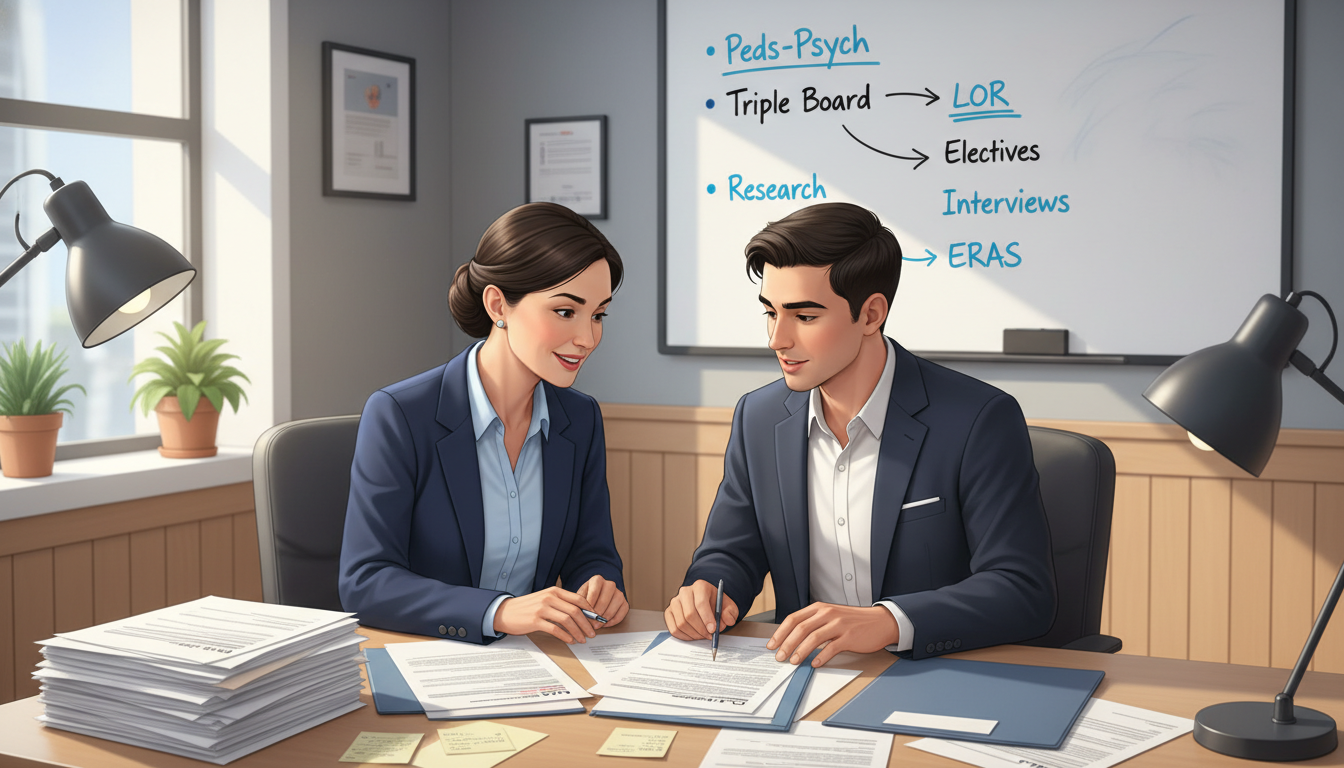
What Makes a Letter “Strong” for Pediatrics-Psychiatry?
A strong letter for a peds psych residency or triple board program must show that you are not only clinically competent, but also uniquely suited to care for children and families across both medical and psychiatric domains.
Key Elements of a High-Impact LOR
Specific, Behavioral Examples
- Not just “She is hardworking,” but:
- “She stayed late to coordinate care between neurology and child psychiatry for a teenager with new-onset seizures and severe anxiety.”
- In pediatrics-psychiatry:
- Stories that show you not only treat the disease, but understand the child in context—home, school, family, mental health, and medical illness.
- Not just “She is hardworking,” but:
Clear Comparison to Peers
- Programs want to know: how do you compare?
- Strong phrases:
- “Among the top 10% of students I have supervised in the last 10 years”
- “Stronger clinical reasoning and communication skills than many of my interns”
- These comparisons are especially useful for IMGs whose medical schools are less familiar to the committee.
Evidence of Fit for Hybrid Training
- For peds psych or triple board, letters should highlight:
- Flexibility and resilience
- Intellectual curiosity across disciplines
- Ability to handle ambiguity (e.g., patients who may have both medical and psychiatric drivers of symptoms)
- Longitudinal thinking and family-centered care
- For peds psych or triple board, letters should highlight:
Professionalism and Communication
- IMGs often have to adapt to new systems, languages, and cultures quickly.
- Strong letters will mention:
- Your ability to integrate into a new team
- Responsiveness to feedback
- Respectful, clear communication with staff, nurses, and patients
- Any mention of excellent English communication—oral and written—is particularly reassuring to programs.
Explicit Endorsement for Residency
- Watch for phrases like:
- “I give my highest recommendation”
- “I would be delighted to have them as a resident in our own program”
- “I strongly recommend them for a pediatrics-psychiatry or triple board position without reservation”
- This is the language of a truly strong LOR.
- Watch for phrases like:
Tailoring Letters for Pediatrics vs Psychiatry vs Triple Board
While most letters can be used for multiple program types, consider how each recommender might frame your skills:
Pediatrics-focused letter:
- Emphasize your ability to build rapport with children and families.
- Highlight your clinical reasoning in complex pediatric medical cases.
- Add examples of noticing psychiatric or psychosocial issues in the pediatric setting.
Psychiatry-focused letter:
- Emphasize your empathic, nonjudgmental approach.
- Describe your understanding of child development, trauma, or family systems.
- Show your comfort with emotionally intense conversations.
Triple board-focused commentary:
- Emphasize your integration: thinking both medically and psychiatrically.
- Provide an example of a patient where you considered both physical and mental health dimensions and coordinated care across services.
You do not need a “triple board” letter title, but the content should clearly support this integrated path.
Logistics, Timing, and Common IMG Pitfalls
When to Ask
- 4–6 weeks before you need the letter uploaded to ERAS.
- Ask near the end of the rotation when your performance is still fresh in your supervisor’s mind.
- For IMGs returning home after U.S. rotations, ask before you leave the site:
- Confirm email contacts.
- Confirm they are comfortable with the ERAS process.
- Politely agree on a timeline.
How Many Letters to Store
ERAS usually allows you to store more letters than you submit to any single program. Consider:
- Collecting 4–5 total LORs:
- 1–2 pediatrics-oriented
- 1–2 psychiatry-oriented
- 1 flexible “general clinical excellence” letter
- Then assign 3–4 letters per program, depending on its specific requirements.
Avoiding Common IMG Errors
Only Home-country Letters
- If possible, avoid having all letters from outside the U.S. or Canada.
- Even a single strong U.S. LOR signals that you’ve functioned in the U.S. system.
Generic or Short Letters
- Some faculty, especially busy or unfamiliar ones, may write very brief, non-specific letters.
- This can hurt your application.
- Choose writers who:
- Actually worked with you
- Seem enthusiastic about your potential
Late or Missing Letters
- Track your LOR status on ERAS.
- Send a polite reminder 2 weeks before your deadline if the letter is still pending.
- Have an alternate recommender in mind if a letter does not materialize.
Not Matching Letters to Programs
- For example, sending only internal medicine letters to a pediatrics-psychiatry program.
- Always ensure:
- At least one letter clearly speaks to your pediatrics potential.
- At least one letter clearly speaks to your psychiatry potential.
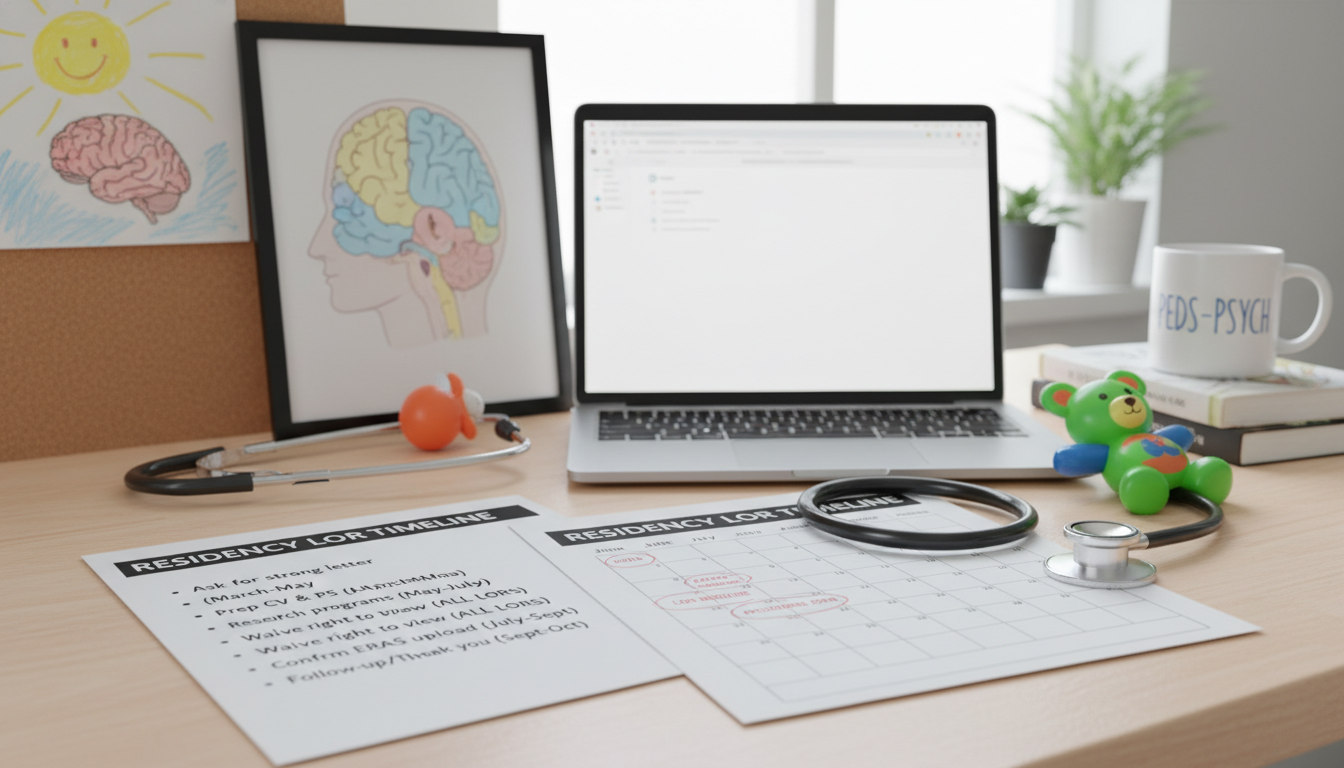
Sample Request Scripts and Practical Tips
Script for In-Person or Video Requests
“Dr. Smith, I’ve really appreciated the opportunity to work with you during this pediatric rotation. I’m planning to apply to pediatrics-psychiatry and triple board programs. Your perspective on my clinical skills and my work with children and families would be extremely valuable.
Would you feel comfortable writing me a strong letter of recommendation for residency? I can send you my CV and a brief summary of my goals in pediatrics-psychiatry to make it easier.”
Script for Email Follow-Up
Subject: Residency Letter of Recommendation Request (Peds-Psych / Triple Board)
Dear Dr. Smith,
Thank you again for the opportunity to rotate on the pediatric service with you from May 1–28. I learned a great deal from your teaching on chronic disease management and family-centered care.
As we discussed, I am applying this cycle to pediatrics-psychiatry and triple board residency programs. I would be honored if you would write a strong letter of recommendation on my behalf. I have attached my CV and a brief paragraph about my career goals, as well as some key cases we worked on together.
ERAS will send you a secure link to upload the letter. My AAMC ID is [xxxxxxx]. If possible, it would be ideal to have the letter uploaded by [date].
Thank you again for your support and mentorship.
Sincerely,
[Your Name], MD (IMG)
[Contact Information]
Tips on Following Up
- Wait 10–14 days after your initial request before following up.
- Keep follow-up messages short and respectful:
- “I just wanted to check in and see if you needed anything else from me.”
- “I greatly appreciate your support; the ERAS deadline is approaching on [date].”
- Once the letter is uploaded, send a thank-you note:
- It helps maintain the relationship.
- You may need their support again for visas, fellowships, or additional positions.
Final Thoughts: Turning Your IMG Background into an Asset
As an international medical graduate, you bring unique strengths to pediatrics-psychiatry and triple board programs:
- Multicultural perspectives
- Often multiple languages
- Experience with resource-limited settings
- Resilience and adaptability
Well-crafted, strategic residency letters of recommendation can transform those broad qualities into concrete, credible evidence of your readiness to care for complex pediatric and psychiatric populations in the U.S. system.
If you combine:
- Thoughtful choice of who to ask for letters
- Active effort to earn strong LOR during your rotations
- Clear communication about your goals in peds psych residency or triple board training
you will give program directors the confidence they need to interview—and rank—you highly.
Frequently Asked Questions (FAQ)
1. As an IMG, do I absolutely need U.S. letters of recommendation for pediatrics-psychiatry?
They are not always mandatory, but they are highly advantageous. For competitive or small programs like triple board, U.S. LORs show that you:
- Have functioned in the U.S. clinical environment
- Understand expectations for communication, documentation, and professionalism
- Can be compared to U.S. students and residents
If possible, secure at least one U.S. pediatrics and one U.S. psychiatry letter. If that’s not feasible, maximize the strength of your home-country letters by ensuring they are detailed, comparative, and clearly explain your role.
2. Which is more important: a famous professor’s letter or a detailed letter from someone less known?
For residency selection, especially in smaller, specialized tracks like pediatrics-psychiatry and triple board, content matters more than fame. A letter from a “big name” who barely knows you often reads generic and weak. A detailed letter from a faculty member who:
- Directly supervised you
- Provides specific clinical examples
- Clearly compares you favorably to peers
will almost always be more persuasive, even if they are not famous nationally.
3. Can the same letter be used for pediatrics, psychiatry, and triple board applications?
Yes, ERAS allows you to assign the same letter to multiple programs. However:
- At least one letter should clearly highlight your pediatrics strengths
- At least one should emphasize your psychiatry or behavioral health strengths
- When possible, guide your writers to mention your interest in combined training and your ability to integrate both perspectives
You can then choose the best combination of letters for each program type (pediatrics only, psychiatry only, or peds psych/triple board).
4. What if my recommender asks me to draft the letter myself?
This is common in some settings, especially outside the U.S. If this happens:
- Provide a draft of talking points, not a polished “final letter” in your own voice.
- Focus on:
- Factual descriptions of your work
- Key cases and strengths
- Your interest in pediatrics-psychiatry and integrated care
- Ask them to edit heavily so that the final letter reflects their genuine perspective and language.
If you are uncomfortable, you can say:
“I would be happy to send bullet points and a CV to help, but I prefer that the final letter be in your own words.”
By being intentional and proactive about your letters of recommendation, you can transform them from a source of anxiety into a major strength of your pediatrics-psychiatry or triple board application as an international medical graduate.