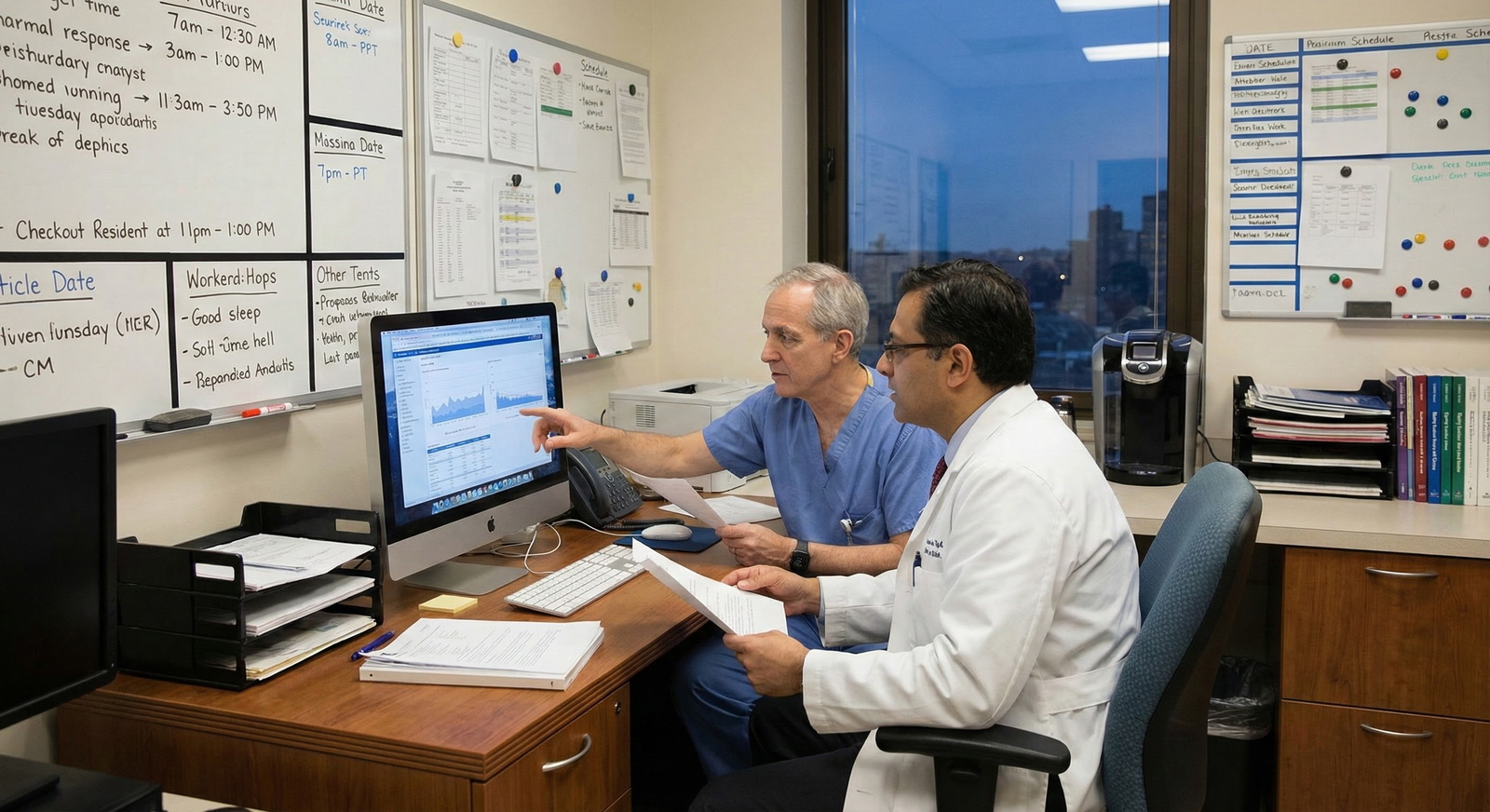
Understanding Letters of Recommendation for Clinical Informatics–Bound MD Graduates
Letters of recommendation are one of the most powerful—and misunderstood—parts of an MD graduate’s application for clinical informatics pathways. Whether you are applying for a traditional allopathic medical school match into a residency with strong informatics opportunities, a dedicated clinical informatics fellowship, or a hybrid path that includes health IT training, your letters can decisively shape how programs see you.
In clinical informatics, programs are trying to answer three big questions through your letters:
- Are you a solid clinician?
- Can you think in systems, data, and workflows—not just individual patient encounters?
- Are you someone they’d trust to influence technology that affects thousands of patients and clinicians?
Strong residency letters of recommendation need to address all three—directly or indirectly. This guide will walk you through how to get strong LORs, who to ask for letters, how to brief your writers, and how to make your overall narrative consistent and compelling for informatics-oriented training.
1. The Role of Letters of Recommendation in a Clinical Informatics–Oriented Application
Letters of recommendation serve different but complementary purposes depending on where you are on the training pathway.
For MD graduates applying to residency (allopathic medical school match)
As an MD graduate targeting an allopathic medical school match (i.e., ACGME-accredited residency programs), especially in fields that commonly lead into clinical informatics (e.g., Internal Medicine, Pediatrics, Emergency Medicine, Pathology, Anesthesiology, Family Medicine), letters are used to:
- Confirm you are safe, reliable, and competent in clinical care.
- Provide evidence of professionalism, teamwork, and communication skills.
- Highlight your early interest in informatics, data, or quality improvement.
- Distinguish you among many similarly qualified MD graduates.
Programs know that not every applicant will have a formal clinical informatics background, but they will be interested in any concrete signals that you think in a structured, systems-oriented way.
For MD graduates applying (or planning to apply) to a Clinical Informatics Fellowship
If you are approaching or already in residency and aiming for a clinical informatics fellowship, letters carry additional weight:
- They must show you are clinically strong—fellowships are not a workaround for shaky clinical skills.
- They should demonstrate experience or aptitude in health IT, EHR optimization, clinical decision support, data analytics, or digital health projects.
- They must attest to your professional maturity—you will influence workflows, policies, and often large-scale implementations.
The best fellowship letters explicitly bridge the gap: “This applicant is not just a capable clinician; they are already functioning like an early-career informatician.”
What Makes a Letter Especially Valuable for Informatics?
Across both residency and fellowship, LORs are particularly impactful when they:
- Integrate clinical and informatics strengths (e.g., “She managed her ICU patients well and then systematically analyzed our alert fatigue problems.”)
- Provide specific examples of:
- Quality improvement (QI) projects
- EHR or workflow optimization efforts
- Data-driven decision-making
- Collaboration with IT, data science, or operations teams
- Note traits that are central to informatics:
- Curiosity about systems
- Comfort with ambiguity and iterative improvement
- Ability to translate between clinicians and technical teams
- Long-term project follow-through
2. Who to Ask for Letters—and How to Build the Right Mix
Many MD graduates struggle with who to ask for letters when they have both clinical and informatics interests. The right strategy depends on where you are in your training and how “developed” your informatics profile is.
Core Principles for Choosing Letter Writers
Regardless of setting, aim for writers who:
Know you well and worked with you closely
- A mid-level attending who supervised you for 6 weeks often writes a better letter than a famous department chair who barely remembers your name.
Have directly observed your work
- Ideal: someone who saw you on the wards, clinic, or project team, not just in a lecture.
Can speak to both your clinical and systems-thinking skills
- Especially important if you want to be seen as a future clinical informatician rather than purely as a researcher or “tech person.”
Understand what clinical informatics is (or are willing to learn)
- They don’t need to be informaticians themselves, but baseline understanding helps them frame your strengths correctly.
For MD Graduates Applying to Residency (Pre-Fellowship Stage)
Your priority is still to match into a strong core clinical residency. Most programs will expect:
- 3 total letters (varies by specialty and program; some allow 4)
- At least 2 clinical letters from core specialties relevant to your target residency
- Optional:
- 1 letter from a research or informatics-related mentor
- 1 Department/Chair letter if your specialty expects it (e.g., Internal Medicine, Surgery)
Recommended Letter Mix for an Informatics-Inclined Applicant
Example for an MD graduate applying to Internal Medicine with a strong interest in informatics:
- Clinical IM Attending (ward or clinic)
- Confirms clinical competence, work ethic, and professionalism.
- Another Clinical Attending in IM or closely related field
- Reinforces clinical skills, teamwork, and growth potential.
- Informatics / QI / Data Project Mentor
- Showcases your systems thinking, EHR or health IT training experience, and ability to work on informatics projects.
If your school or specialty requires a Chair’s letter, that may be a summary letter constructed from component evaluations and possibly informed by your other writers.
For Residents or Early-Career MDs Applying to a Clinical Informatics Fellowship
Fellowships generally want:
- Letters from current or recent clinical supervisors
- At least one letter strongly focused on informatics, digital health, or health IT–related work
- Ideally, a letter from someone with formal informatics or leadership credentials (e.g., CMIO, clinical informatics faculty, QI/IT director)
Recommended Letter Mix for Fellowship Applicants
- Program Director or Core Clinical Supervisor
- Verifies you are a strong, safe, and reliable clinician.
- Informatics-Focused Mentor or CMIO
- Describes your substantial contributions to informatics/IT projects.
- Additional Clinical or Project Mentor
- Either reinforces clinical strengths or highlights cross-disciplinary collaboration, leadership, or data work.
If you lack a formal clinical informatics fellowship or title in your environment, the informatics mentor could be:
- QI project leader
- EHR optimization lead
- Population health analytics lead
- Digital health program director
The key is that they can clearly describe your role in health IT training or projects and how you think about systems.

3. How to Get Strong LORs: Strategy, Timing, and The Ask
Knowing how to get strong LOR is as important as knowing who to ask. Many MD graduates lose impact because they ask too late, too vaguely, or provide no guidance.
Timing: When to Ask
- For residency applications:
- Best: Near the end of your rotation when your performance is fresh.
- Absolute latest: 4–6 weeks before ERAS opens for submission (earlier is safer).
- For clinical informatics fellowship:
- Start informal conversations 6–9 months before applications.
- Firm requests: 3–4 months before the deadline.
If you finished rotations long ago (e.g., as a non-traditional MD graduate), re-establish contact with prior supervisors early, share updated CV and interests, and ask if they would still feel comfortable writing a strong letter.
How to Frame the Request
Ask explicitly for a strong letter of recommendation. For example:
“Dr. Smith, I really appreciated working with you on the inpatient service and on the EHR order set review. I’m applying to Internal Medicine residency with a long-term goal of pursuing clinical informatics. Would you feel comfortable writing me a strong letter of recommendation that highlights both my clinical work and my interest in systems and data?”
If they hesitate, seem uncertain, or say they are “too busy,” take that as a signal to ask someone else. A neutral or lukewarm letter can hurt you more than it helps.
What to Provide Your Letter Writers
Help your letter writers advocate for you effectively by giving them:
Updated CV
- Highlight clinical rotations, QI/informatics projects, research, teaching, and leadership.
Personal statement or draft
- Especially your version tailored to clinical informatics or your chosen specialty.
Brief “letter packet” or bullet summary including:
- Your target specialty and, if applicable, interest in clinical informatics fellowship.
- Your long-term goals (e.g., “I hope to become an internist and later a clinical informatics leader focused on EHR usability and decision support.”)
- Specific projects or moments they supervised you that you hope they’ll mention (e.g., your role in revising sepsis alerts, building a dashboard, or leading a workflow redesign).
- Talking points: 4–6 bullet points of strengths you hope they emphasize.
Deadline and submission instructions
- ERAS or fellowship system instructions.
- Final due date, plus a “soft deadline” 2–3 weeks earlier.
You are not writing the letter for them, but you are giving them the tools and memory prompts to write a detailed, personalized letter.
4. Content of a High-Impact Letter for an Informatics-Oriented MD Graduate
The strongest letters do not just say “hard-working and smart”; they tell stories and provide evidence.
Core Elements Every Letter Should Include
Relationship and context
- How long have they known you?
- In what capacity (clerkship, residency, project team, research, QI)?
- How many learners at your level have they supervised historically?
Comparative assessment
- Where do you stand relative to your peers? (Top 5%, upper third, “one of the strongest residents I’ve worked with in 10 years,” etc.)
Clinical competence
- Concrete examples: complex cases you handled, independent call responsibilities, procedural skills, communication with patients and families.
Professional attributes
- Reliability, initiative, teamwork, receptiveness to feedback, ethical standards.
Systems-thinking / Informatics Potential
- Your ability to see patterns beyond individual patients.
- Your use of data or EHR tools to improve care.
- Your engagement with health IT training or committees.
Specific examples
- A project, incident, or initiative that illustrates your informatics mindset and follow-through.
Clear endorsement
- A direct, positive statement: “I give Dr. X my highest recommendation for residency in Y, and I strongly believe they will excel in clinical informatics training.”
Informatics-Focused Content: What Programs Are Hoping to See
To align with future clinical informatics fellowship expectations, informatics-leaning letters might include:
- Your involvement in:
- EHR build or optimization
- Clinical decision support (e.g., sepsis alerts, order sets, reminders)
- Data dashboards or quality metrics
- Telehealth, mobile health, or digital triage tools
- Workflow analysis and redesign
- Evidence that you:
- Communicate effectively with both clinicians and IT analysts.
- Understand the practical constraints of clinical environments.
- Care about user experience, patient safety, and change management.
- Follow through on multi-month projects.
Example Phrases That Signal Strong Informatics Potential
Letter writers might use language like:
- “Dr. Lee quickly identified that our EHR-generated warfarin dosing recommendations did not match updated guidelines and methodically proposed changes through the informatics committee.”
- “He independently analyzed our readmission data using basic SQL queries, identified patterns in heart failure patients, and presented actionable recommendations.”
- “She naturally serves as a ‘translator’ between clinicians frustrated with the EHR and the IT team, helping frame issues as specific, solvable problems.”
- “His thinking is consistently at the system level—not just ‘What does this patient need?’ but ‘How can we prevent this problem for the next 100 patients?’”
These kinds of specifics help programs feel they are investing in someone with genuine health IT training potential.

5. Integrating Your Letters into a Cohesive Application Narrative
Your letters do not exist in isolation; they interact with your CV, personal statement, and experiences. For an MD graduate interested in informatics, cohesion matters.
Aligning with Your Personal Statement
If your personal statement emphasizes:
- A desire to work at the intersection of clinical care and technology
- An interest in optimizing EHR usability, data-driven decision making, or quality metrics
- Plans to pursue clinical informatics fellowship
Then your letters should ideally:
- Reference at least one informatics-related project or behavior.
- Support your claim that you think beyond single-patient encounters.
- Reinforce that you are clinically grounded, not tech-only.
Share your personal statement draft with your letter writers so they understand what story you are trying to tell. They may choose to echo or reinforce specific themes.
Avoiding Common Pitfalls
Letters that over-emphasize research but say little about clinical ability
- Programs may worry you’re not patient-care–focused.
- Make sure at least two letters come from pure clinical supervisors.
Letters that present you as “the IT person” who helps fix printers or log-in issues
- That’s not informatics; it’s basic tech support.
- Encourage writers to emphasize your role in workflow design, data use, and system improvement.
Letters that contradict each other
- One calling you meticulous and detail-oriented; another characterizing you as unfocused.
- Maintain consistent professionalism and communication everywhere to avoid this.
Generic, template-like letters
- “Hard-working, good team player” with no details.
- These usually result from not giving writers enough information or asking too late.
Special Considerations for International or Non-Traditional MD Graduates
If you are:
- An international medical graduate (IMG), or
- A non-traditional MD graduate with a career gap, industry experience, or prior training,
Your letters can help address concerns about:
- Adaptation to the U.S. clinical environment (for IMGs)
- Recency of clinical experience
- Transferable skills from prior roles (e.g., health IT industry, analytics, software development)
Aim for:
- At least one letter that speaks to recent U.S. or equivalent clinical performance, if possible.
- One that uses your non-traditional background to your advantage: e.g., “Her prior experience in a health IT company gives her an unusually sophisticated understanding of implementation challenges.”
6. Practical Steps and Action Plan
To translate all this into a concrete plan, here is a step-by-step approach you can follow.
Step 1: Map Your Target Programs and Pathway
- Decide your primary goal:
- Match into a residency with strong informatics exposure.
- Continue residency then pursue a clinical informatics fellowship.
- Identify:
- Which specialties best align with your interests (e.g., IM, EM, Pediatrics, Pathology).
- Programs with robust informatics infrastructure (CMIO presence, EHR committees, QI programs).
Step 2: List Potential Letter Writers
Create a table of potential writers:
- Clinical attendings (rotation, dates, strength of relationship)
- Program leadership (PD, APD)
- Informatics/QI/health IT mentors
- Research mentors (if heavily data/informatics-oriented)
Rank them by:
- How well they know you.
- Quality of your performance with them.
- Relevance to either clinical excellence or informatics potential.
Step 3: Approach and Confirm “Yes” for Strong Letters
- Schedule quick meetings or send professional emails.
- Clearly mention:
- Your goal (residency vs clinical informatics fellowship).
- Why you’re asking them specifically.
- That you’re seeking a strong letter of recommendation.
If someone expresses concern or hesitancy, appreciate their candor and choose someone else.
Step 4: Prepare Letter Packets
For each confirmed writer, prepare:
- CV (updated).
- Draft personal statement.
- Short paragraph about your long-term interest in clinical informatics.
- Bullet list of:
- Projects or patients you worked on with them.
- Traits you hope they highlight (e.g., systems thinking, data-use, patient-centeredness).
- Informatic-style behaviors they may have observed.
Step 5: Track and Follow Up (Professionally)
- Maintain a simple tracking sheet:
- Writer name
- Agreed date
- Official deadline
- System confirmation once uploaded
- Send a gentle reminder 2–3 weeks before the deadline if not yet submitted.
- Always be respectful of their time; avoid daily emails or pressure.
Step 6: Close the Loop
After submissions or match results:
- Thank your writers with a sincere email.
- Share your outcomes (where you matched or which fellowship you joined).
- These relationships often carry forward into your future informatics career.
FAQs: Letters of Recommendation for MD Graduates Interested in Clinical Informatics
1. How many informatics-focused letters do I need for residency?
For a typical MD graduate residency application, you usually need 3 letters. Having one letter with clear informatics or systems-thinking emphasis is often enough at the residency stage, as long as your other letters strongly support your clinical abilities. The priority is to show you are a capable future resident; the informatics angle is a major value-add, not a substitute for clinical strength.
2. Should I choose a famous informatics leader who barely knows me or a lesser-known attending who worked closely with me?
Almost always choose the attending who knows you well over the big name who doesn’t. A detailed, specific letter from a mid-level attending or informatics mentor will help you far more than a generic, name-brand letter full of vague praise. Committees can tell when a letter writer truly knows you.
3. How can I highlight informatics interests if my school or residency has limited health IT training?
You can still demonstrate informatics potential by:
- Leading or contributing to quality improvement projects that use data.
- Participating in EHR optimization efforts, even at the level of suggesting changes to order sets or documentation templates.
- Learning basic skills in SQL, R, Python, or data visualization and applying them to small projects.
- Joining institutional QI or IT-related committees if available.
Ask supervisors from these experiences to write letters that emphasize your systems perspective, data use, and problem-solving approach, even if the program is not formally labeled “clinical informatics.”
4. Can I reuse residency letters later for a clinical informatics fellowship application?
Technically, fellowship applications usually require new letters, addressed to the fellowship or submitted through its designated portal. However, strong themes and examples from residency letters can be echoed by the same writers in their fellowship letters. It is reasonable to go back to key mentors—program director, CMIO, informatics project lead—and ask them for updated letters that reflect your growth, continued informatics interests, and readiness for specialized training.
Thoughtfully chosen and carefully cultivated letters of recommendation can transform your application from “clinically fine with a tech hobby” into “future leader in clinical informatics.” Start early, communicate clearly, and help your letter writers tell the story of you as a clinician who understands—and is ready to improve—the systems that drive modern healthcare.