Understanding Letters of Recommendation for DO Applicants in Plastic Surgery
Applying to plastic surgery residency as a DO graduate requires a deliberate strategy, and nowhere is that more true than with letters of recommendation (LORs). In a hyper-competitive field—especially the integrated plastics match—your letters can validate your skills, counter unconscious bias against DO graduates, and distinguish you from applicants with similar metrics.
This guide focuses on letters of recommendation for a DO graduate in plastic surgery, with a practical, step-by-step approach: how many letters you need, who to ask, how to get strong LOR, and specific tactics to optimize your letters as a DO applicant navigating the osteopathic residency match or ACGME programs.
Why Letters Matter Even More for DO Applicants in Plastic Surgery
In integrated plastic surgery, nearly everyone has good scores, strong CVs, and research. Letters are one of the few parts of the application that:
- Are written by program insiders (PDs, faculty, national leaders)
- Offer a comparative assessment (“top 5%,” “best student in 10 years”)
- Convey trust and advocacy (“I will advocate for this applicant at any program”)
For DO graduates, LORs serve several additional critical functions:
Addressing DO-related bias (subtle but real)
Even as ACGME-accredited programs have unified, some programs are less familiar with DO training. Strong letters from well-known allopathic plastic surgeons or academic faculty can reassure committees that you can perform at the same level as MD peers.Bridging limited home program exposure
Many DO schools do not have home plastic surgery residencies. Your letters then become critical “proof” that academic and operative surgeons have evaluated you and found you residency-ready.Differentiating among high-achieving peers
In the integrated plastics match, many applicants have similar metrics. A detailed, enthusiastic letter with clear comparisons can push you over the line for interviews.Contextualizing your path
Letters can politely explain and contextualize your path as a DO—especially if you:- Did away rotations to gain plastics exposure
- Transitioned from another interest to plastic surgery
- Overcame academic or personal obstacles
If programs are asking themselves, “Can this DO graduate thrive here?” your letters should answer with an unequivocal “yes.”
How Many Letters You Need and What Types Matter Most
Most integrated plastic surgery programs accept 3–4 letters of recommendation. Always verify each program’s requirements in ERAS and on program websites, but a common, high-yield breakdown for a DO applying to plastic surgery is:
- 2–3 strong letters from plastic surgery attendings
- 1 letter from a non-plastics surgeon or core faculty who knows you well (general surgery, ENT, ortho, or a research mentor)
- Optional: 1 departmental or chair letter where available
A strong overall set for a DO applicant might look like:
- Plastic surgery program director or chair from a rotation site (especially an academic, ACGME-accredited program)
- Plastic surgery faculty from a different institution (ideally from an away rotation)
- Research mentor in plastic surgery (especially if you’ve done significant work, presented, or published)
- General surgery or other surgical faculty who can attest to your work ethic, operative performance, and professionalism
A Key Principle: Depth Over Famous Names Alone
Big names help, but substance matters more than pedigree. A shorter letter from a national leader who barely knows you and describes you generically is less helpful than a detailed letter from a well-respected regional faculty member who supervised you closely and can speak to your:
- Level of responsibility
- Technical growth
- Communication style
- Reliability and integrity
- Response to feedback
As a DO graduate, focus on letters that are:
- Specific
- Comparative
- Supportive without being generic

Who to Ask for Letters (and How to Position Yourself for Great Ones)
When planning who to ask for letters, DO applicants should be strategic about both timing and exposure. You must place yourself in situations where faculty can truly evaluate you.
High-Yield Letter Writers for DO Applicants in Plastic Surgery
Plastic Surgery Faculty from Away Rotations
For most DO students, away rotations are the primary pipeline to plastic surgery letters. These are especially powerful if:- The rotation is at an academic integrated plastics program
- You work directly with attendings and senior residents
- You show consistent initiative, humility, and improvement
Ideal writers:
- Clerkship or rotation directors
- Program director or associate program director
- Faculty you worked with multiple times in clinic and OR
Home or Affiliated Plastic Surgeons
If your DO school has any associated plastic surgeons or community-based plastics rotations:- Seek sustained contact (clinic + OR + possibly a small project)
- Let them see your longitudinal growth and reliability
- Even if they aren’t at a “big-name” institution, a detailed, personal letter is extremely valuable
Research Mentors in Plastic Surgery or Related Fields
Particularly important if:- You identify research as a major strength
- You’ve presented at meetings (ASPS, APS, residents’ conferences)
- You’ve co-authored manuscripts or abstracts
A research mentor can highlight:
- Your intellectual curiosity and persistence
- Ability to handle complex data or projects
- Collaboration with residents and faculty
- Longitudinal commitment to plastic surgery
General Surgery or Other Surgical Faculty
Useful when:- You do not yet have 3 solid plastics letters
- You had extensive time on a general surgery or trauma service
- The faculty member gave you significant responsibility
They can speak credibly about:
- Work ethic and reliability on call
- Technical progression with basic surgical skills
- Team leadership as a sub-I or acting intern
Who to Avoid (Even if Tempting)
- Faculty who only supervised you for a day or two
- Non-surgical pre-clinical lecturers who can’t comment on your clinical performance
- Family friends, private-practice physicians with minimal direct contact, or letters that come off as personal favors rather than evaluations
- Anyone who seems lukewarm, distracted, or hesitant when you ask
How to Get Strong LOR: A Step-by-Step Strategy
1. Build Your Case Months Before You Ask
A strong letter begins well before you say, “Can you write me a letter?” Your goal is to give faculty confidence that recommending you for plastic surgery residency is low-risk and high-reward.
During rotations (especially sub-I/aways):
- Show up early, stay late: Pre-round thoroughly, be early to clinic and the OR.
- Own your patients: Know their histories, imaging, labs, post-op plans.
- Be coachable: Actively seek feedback (“How can I improve my presentations?”) and visibly implement it.
- Be the reliable DO student: Fight the stereotype by being extremely prepared.
- Demonstrate genuine interest in plastics: Read about cases, look up anatomy, ask thoughtful (not performative) questions.
Concrete example:
If you scrub on a DIEP flap and then read about microsurgical techniques that night, mention an article or surgical step the next day (briefly, at an appropriate time). This shows intellectual engagement, not just box-checking.
2. Signal Early That You’re Seeking a Letter
About midway through a key rotation (once you’ve started to build rapport), it’s appropriate to signal your interest:
“Dr. Smith, I’m very interested in applying to plastic surgery, and I value your feedback. If I continue to perform well on this rotation, would you feel comfortable potentially writing a strong letter of recommendation for me?”
This phrasing:
- Gives them an out if they can’t be strong advocates
- Allows them to observe you more intentionally from that point forward
- Opens the door to get formative feedback you can use now
If they seem hesitant (“I don’t know you well enough yet,” “We’ll see”), continue to work hard, but plan alternative letter writers as backup.
3. Ask Explicitly for a “Strong” Letter
When it is time to formally request the letter (usually the last week of the rotation or shortly thereafter), be direct but professional:
“I was hoping you’d be willing to write a strong letter of recommendation for my integrated plastic surgery residency applications. I really valued working with you and would be honored to have your support.”
If they say yes easily, you’re in good shape. If they hesitate or qualify their response, consider asking others as well so you’re not relying on a lukewarm letter.
4. Provide a Targeted “Letter Packet”
Make it extremely easy for your writer to advocate effectively for you. Send a concise, well-organized email that includes:
- Updated CV
- USMLE/COMLEX scores and transcript (if comfortable sharing)
- Personal statement draft or bullet points about why plastics & your career goals
- ERAS due date and submission timeline
- Concrete bullet list of things they might highlight, such as:
- Cases or clinics you worked together on
- Examples of initiative or ownership
- Research or presentations you did with them
- Specific strengths you hope they might address (e.g., professionalism, operative skill, team communication)
Example email excerpt:
To help with the letter, I’ve attached my CV, exam scores, and a draft of my personal statement. Some specific things you observed that may be useful to mention (only as you see appropriate):
– Taking primary responsibility for daily updates and pre-op planning for our craniofacial patients
– Staying late to finish notes and consents during my sub-I week
– My growth in suturing and handling of tissue on hand reconstruction cases
– My long-term goal of an academic career with a focus in reconstructive microsurgery
This is not “telling them what to write”; it is reminding them of concrete examples they already witnessed.
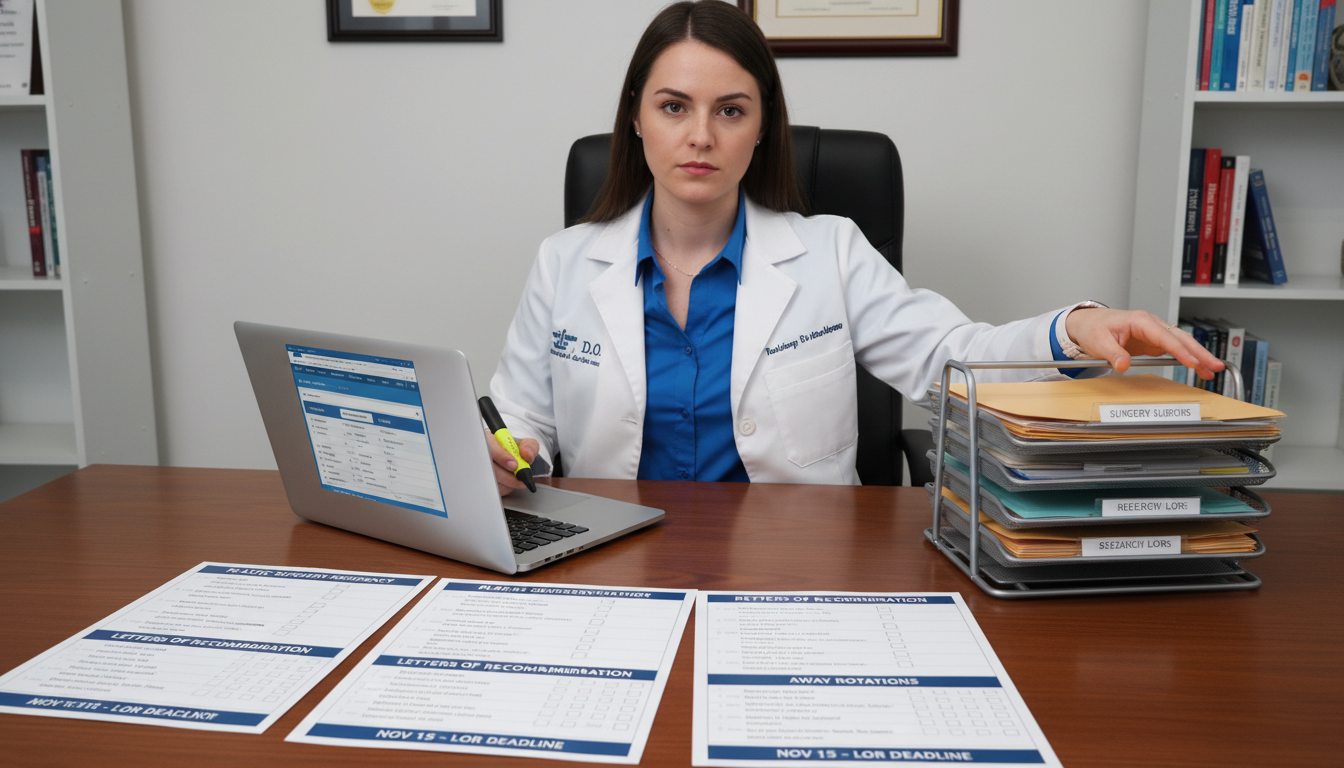
Crafting an Optimal Letter Portfolio as a DO Plastic Surgery Applicant
Beyond individual letters, you need a balanced set that collectively presents a coherent, compelling narrative.
1. Aim for At Least Two Plastics Letters from ACGME Environments
For a DO graduate targeting the integrated plastics match, having at least two letters from plastic surgery faculty at ACGME-accredited institutions is a significant asset. These letters reassure programs that:
- You’ve functioned in environments similar to theirs
- Academically oriented plastic surgeons have seen you perform
- You can handle the expectations of a plastic surgery service
If your DO school lacks plastics, prioritize away rotations smartly:
- Choose at least one academic integrated program rotation
- Consider splitting time between a “reach” program and a more mid-tier but teaching-heavy program where you may stand out more
2. Use a Non-Plastics Letter to Round Out Your Profile
A great letter from general surgery, trauma, or critical care can:
- Demonstrate stamina and responsibility under pressure
- Highlight your performance as acting intern/sub-I
- Show that you function well within multidisciplinary teams
This is especially powerful if the writer compares you favorably to prior plastics-bound or general surgery-bound students.
3. Addressing DO-Specific Concerns Through Letters
Without being defensive, your letters can indirectly address common quiet questions PDs may have:
“Can this DO student succeed in a high-intensity academic environment?”
→ Letters should mention your performance compared with MD students and residents.“Are they ready for advanced surgical training?”
→ Highlight technical skill progression, maturity in the OR, and judgment.“Do they understand what plastic surgery residency truly involves?”
→ Mentions of your consistent enthusiasm across long days, complex reconstructions, or challenging inpatient weeks is valuable.
You don’t script this, but your behavior during rotations and the materials you provide your writer (e.g., your personal statement) can nudge them to address these points.
4. Timing: When to Request and Upload
Request the letter immediately at the end of the rotation (while you’re fresh in mind).
Aim for all letters completed at least 3–4 weeks before ERAS submission.
Politely follow up 2–3 weeks before your deadline if the letter is not yet uploaded:
“I just wanted to gently check in and see if you needed any additional information from me for the letter. ERAS opens for submissions on [date], and I appreciate your support.”
5. Waiving Your Right to View Letters
Always waive your right to view the letters in ERAS. Program directors assume non-waived letters may be less candid and therefore less credible. As a DO applicant—trying to avoid any hint of insecurity or micromanaging—this is especially important.
Common Mistakes DO Applicants Make (and How to Avoid Them)
Mistake 1: Underestimating the Value of Away Rotations
For many DO students, plastic surgery exposure at the home institution is minimal. Depending primarily on one or two short local experiences can lead to:
- Weak, generic letters
- Limited evaluation by plastic surgeons in academic environments
Fix: Prioritize 2–3 well-chosen away rotations early enough (often late third year / early fourth) to generate high-quality letters and real mentorship.
Mistake 2: Choosing Writers Based on Prestige Alone
A short, vague letter from a famous name may say little more than:
“The student rotated with us. They were pleasant and eager. I expect they will do well in residency.”
This will not move the needle in plastic surgery.
Fix: Choose people who:
- Supervised you closely
- Know your story and your goals
- Can give specific comparative statements
Mistake 3: Failing to Communicate Your Career Goals
If your letter writers don’t understand your plastic surgery vision, their letters may feel generic.
Fix:
- Discuss your career goals (academic, reconstructive focus, hand, craniofacial, community practice) during the rotation.
- Give them a personal statement or summary with your letter packet.
Mistake 4: Being Passive About Feedback and Growth
Letters are strongest when they can show trajectory (“They improved significantly in X, Y, Z over the month”). If you never ask for feedback or never apply it, your growth may not be visible.
Fix:
- Ask early: “What can I do to perform at the level of a strong sub-I on this service?”
- Implement feedback and let your improvement be obvious.
Practical Example: Strong vs. Weak Letter Content
To understand how to get strong LOR, it helps to know what strong vs. weak content looks like from a selection committee’s perspective.
Weak Letter Excerpt (Low Impact)
“I am pleased to recommend [Student]. They rotated with us for four weeks. They were always on time and pleasant to work with. They have a strong interest in plastic surgery and worked well with patients and staff. I am confident they will be a good resident in any program.”
Problems:
- Vague; could describe almost anyone
- No comparison to peers
- No concrete examples
- No explicit endorsement for integrated plastics match
Strong Letter Excerpt (High Impact)
“[Student] completed a sub-internship in plastic and reconstructive surgery at our academic medical center. During this month, they functioned at the level of a strong sub-intern and, in many ways, an early PGY-1.
They independently pre-rounded on our complex flap patients, anticipated post-operative needs, and communicated effectively with nursing and ancillary staff. In the OR, [Student] demonstrated rapid improvement in basic skills such as knot tying, suturing, and handling delicate tissue. By the third week, I trusted them to close incisions under my supervision with excellent precision.
Over the past five years, I have supervised more than 100 rotating students, including many entering plastic surgery. I would comfortably rank [Student] in the top 10% of students I have worked with in terms of work ethic, teachability, and dedication to our field. I strongly support their application to integrated plastic surgery and would be delighted to have them as a resident in our own program.”
Strengths:
- Specific behaviors and responsibilities
- Demonstrates growth over time
- Comparative statement (“top 10%”)
- Explicit, enthusiastic endorsement
Your goal, as a DO graduate, is to set up your performance and your letter packet so faculty can write letters like the second example.
Final Action Plan for DO Graduates Targeting Plastic Surgery
Early Planning (End of MS2/Start of MS3)
- Identify potential plastic surgery sites and mentors (home or affiliated).
- Begin research projects in plastic surgery or adjacent fields.
- Learn about integrated plastics match trends for DO applicants.
Core Rotations (MS3)
- Perform strongly in surgery, medicine, and critical care.
- Build relationships with surgical faculty who might write secondary letters.
Plastic Surgery Exposure (Late MS3/Early MS4)
- Schedule 2–3 away rotations at plastic surgery programs, ideally including at least one academic integrated site.
- Treat each rotation as a month-long interview and letter audition.
Securing Letters (During/Afters Rotations)
- Mid-rotation: signal interest and ask if a strong LOR might be possible.
- End of rotation: formally request the letter and provide your “letter packet.”
- Track deadlines and send polite reminders.
ERAS and Program Strategy
- Upload 3–4 letters mixing:
- 2–3 plastic surgery attendings (at least two from ACGME environments if possible)
- 1 surgical or research mentor who knows you deeply
- Ensure your letters align with your personal statement and CV story.
- Upload 3–4 letters mixing:
Post-Submission
- Stay in touch with mentors; they may advocate for you informally.
- Consider asking especially supportive letter writers if they’d be willing to email or call select PDs on your behalf (used judiciously and only when they offer).
FAQ: Letters of Recommendation for DO Graduates in Plastic Surgery
1. How many plastic surgery-specific letters do I really need as a DO applicant?
Aim for at least two, ideally three, plastic surgery-specific letters. At least two from ACGME academic environments will significantly strengthen your integrated plastics match application. A fourth letter can be from general surgery or a closely related field, especially if that writer knows you best.
2. Who to ask for letters if my DO school doesn’t have a plastic surgery residency?
You should rely heavily on:
- Away rotation faculty at plastic surgery programs
- Affiliated or community plastic surgeons connected with your school
- Research mentors in plastic surgery (even if at another institution, via remote collaboration)
- General surgery or trauma attendings who can speak to your surgical performance
Plan your rotations and research specifically to create these opportunities.
3. Is it a disadvantage if one of my letters is not from plastic surgery?
Not inherently. While plastics-specific letters carry the most weight, one excellent letter from general surgery, ENT, ortho, or a surgical ICU can be very valuable, especially if it describes you as functioning at intern level and compares you favorably to prior plastics-bound students. The key is that the total set still makes it crystal clear that plastic surgery is your committed path.
4. Should I prioritize MD plastic surgeons over DO plastic surgeons for my letters?
Both can be excellent letter writers. For the integrated plastics match, PDs are most focused on:
- The writer’s reputation for good judgment
- The specificity and strength of the letter
- The context of your performance (academic plastics environment, student ranking, etc.)
If a DO plastic surgeon knows you extremely well and can write a powerful, specific letter, that may be more impactful than a generic letter from an MD faculty who barely interacted with you. Ideally, your portfolio includes a mix: strong letters from whoever knows your work best, regardless of degree.