
Letters of recommendation (LORs) can make or break a neurology residency application—especially if you are a non-US citizen IMG or foreign national medical graduate. When program directors review your file, they often read your letters before or alongside your personal statement. Strong, credible LORs help them answer a few key questions:
- Can this applicant function safely and effectively in a US clinical environment?
- Would I trust this person with my patients at 2 a.m. on call?
- Will this applicant fit into our neurology team and culture?
This article will guide you through everything you need to know about letters of recommendation for neurology residency as a non-US citizen IMG—from who to ask for letters and how to get strong LOR, to ERAS formatting, strategy, and common pitfalls.
Understanding the Role of LORs in Neurology for Non-US Citizen IMGs
Neurology residency programs are detail-oriented and academically focused. They care about your reasoning, reliability, and communication skills. For a non-US citizen IMG, letters of recommendation serve several extra functions beyond what they do for US graduates.
Why LORs matter even more for foreign national medical graduates
Program directors use letters to:
Bridge the “context gap”
They may not be familiar with your home country’s medical school or grading system. A strong letter from a recognized neurologist—especially in the US—helps them understand your level.Confirm adaptability to US training
As a non-US citizen IMG, they want evidence that you can:- Communicate effectively in English with patients and staff
- Work within US-style teams and hierarchy
- Document accurately and efficiently in a US clinical setting
Mitigate visa concerns indirectly
While LORs do not directly solve visa issues, they reassure programs that:- The effort to sponsor you will likely be “worth it”
- You are stable, committed, and likely to succeed and complete training
Highlight your neurology potential
Neurology is heavily cognitive. LORs should confirm:- Strong clinical reasoning
- Meticulous exam skills
- Curiosity about pathophysiology
- Professionalism and empathy
How neurology-specific expectations shape letters
Neurologists reading your letters look for:
- Descriptions of your neurologic exam skills
- Examples of localization and differential diagnosis
- Evidence you can explain complex concepts to patients and families
- Commitment to follow-up and continuity, not just quick consults
- Professionalism in managing sensitive, chronic, or disabling conditions
As a foreign national medical graduate, your goal is to ensure your letters explicitly describe these neurology competencies rather than just saying you are “hard-working” and “pleasant.”
How Many Letters and What Type Do Neurology Programs Prefer?
Before asking for letters, you need a clear letter strategy tailored to neurology and to your IMG status.
Basic ERAS and neurology expectations
- ERAS maximum: 4 letters can be uploaded.
- Most neurology programs:
- Require 3 letters (plus MSPE/dean’s letter, which is separate).
- Strongly prefer at least 2 letters from neurologists.
A solid configuration for a non-US citizen IMG in neurology:
- Letter #1 – US Neurologist (Clinical)
- From an inpatient neurology, stroke, consult, epilepsy, or general neurology rotation in the US.
- Letter #2 – US Neurologist (Clinical or Research)
- Could be from another clinical neurology rotation, or from a neurology research mentor who has seen you in patient-related or scholarly work.
- Letter #3 – Additional US Clinical Letter
- Ideally from another US physician who can speak to your clinical performance (internal medicine, critical care, or psychiatry can work if neurologist letters are limited).
- Optional Letter #4 – Home Country or Research Letter
- From your home institution’s neurology department chair or a major neurology research mentor, especially if they have international reputation or extensive academic productivity.
Programs often prefer US-based LORs for non-US citizen IMGs because they are easier to interpret and compare. Aim for at least 2 US letters, ideally both in neurology.
How important is a department chair letter for neurology?
Unlike some surgical specialties, neurology does not always require a formal “Chair’s letter,” but it can help if:
- The chair knows you personally and can describe your work, or
- The chair is well-known in US academic neurology, or
- It serves as a strong summary letter complementing detailed rotation letters.
However, a generic chair letter that barely mentions your name is less useful than a detailed letter from an attending who supervised you closely.
Who to Ask for Letters: Choosing the Right Neurology Recommenders
Knowing who to ask for letters is central to getting strong LORs. Titles and reputation matter, but how well they know you matters more.
Ideal letter writers for neurology residency
Ranked from best to good (assuming they know you well):
US Clinical Neurology Attendings
- Supervised you on:
- Inpatient neurology
- Stroke unit
- Consult service
- EMU/epilepsy
- Outpatient clinics
- Can comment on:
- Your neurologic exam
- Decision-making and localization
- Notes, handoffs, and teamwork
- Communication with patients
- Supervised you on:
US Neurology Subspecialty Faculty or Fellows
- Epilepsy, movement disorders, neuromuscular, neurocritical care, etc.
- Acceptable if they have seen you clinically or in close academic work.
US Neurology Research Mentors
- Particularly valuable if:
- You have meaningful, long-term research involvement
- The letter describes your analytic thinking, work ethic, and reliability
- Even stronger if they also saw you in clinical contexts.
- Particularly valuable if:
US Internal Medicine, Psychiatry, or ICU Attendings
- Helpful when neurology exposure is limited.
- Especially useful if:
- They supervised you on wards with many neuro patients
- They can attest to your ability to manage complex medical/neurologic issues.
Home-Country Neurologists or Professors
- Valuable if:
- They know you very well
- You did neurology rotations, thesis work, or significant projects with them
- They have international collaborations or publications
- Valuable if:
Strength vs. prestige: what matters more?
You may be tempted to ask a “famous” neurologist who barely worked with you. This is usually a mistake.
A strong mid-level attending letter that says:
“I directly observed Dr. X manage over 30 neurology inpatients, lead rounds, and present complex stroke cases. They consistently generated accurate differential diagnoses and demonstrated excellent localization skills…”
is far more powerful than a brief letter from a big name saying:
“I supervised Dr. X briefly during a rotation. They were polite and hardworking.”
For non-US citizen IMGs, specificity is your best ally. Prioritize depth of interaction and detailed description over pure name recognition.
Red flags in choosing letter writers
Avoid asking for letters from:
- Someone who seems neutral or lukewarm about your performance.
- Someone who hints they are “very busy” or noncommittal about writing.
- Attendings who barely remember you or confuse you with other students.
- Non-physicians (e.g., PhD-only supervisors) as primary clinical letters—acceptable as additional but not core letters.
If you are unsure whether someone will write a strong letter, you can ask directly:
“Do you feel you know my work well enough to write a strong and detailed letter of recommendation for neurology residency?”
If they hesitate, choose someone else.

How to Get Strong LOR: Building Relationships and Performance
Letters are not created in the last week before ERAS; they are earned over months of consistent performance and relationship-building.
Step 1: Plan your neurology exposure early
If you know neurology is your goal:
- Arrange US clinical experience (USCE) in neurology as early as possible:
- Observerships (if hands-on rotations are not possible)
- Externships or electives (best option)
- Visiting student rotations (if eligible as a final-year student)
- Aim for at least 8–12 weeks of neurology rotations overall, with:
- Inpatient exposure
- Outpatient clinics
- Ideally at least one site with an ACGME-accredited neurology program
More exposure = more opportunities to impress potential letter writers.
Step 2: Perform like a future neurology resident
During your neurology rotations, focus on behaviors that generate strong content for LORs:
Show up early and be dependable
- Arrive before rounds, pre-read charts, and know your patients.
- Volunteers for tasks (notes, follow-ups, calls to family).
Demonstrate neurologic thinking
- Practice clear localization: “The pattern suggests a left MCA cortical process.”
- Present structured neuro cases:
- Chief complaint
- Onset and progression
- Focused neuro exam findings
- Localization and differential
- Read about your patients’ conditions and discuss during rounds.
Ask thoughtful, not superficial questions
- Instead of “What is ALS?” ask:
“Can we review how to differentiate ALS from peripheral neuropathy clinically in early stages?”
- This shows deeper engagement and readiness for residency-level thinking.
- Instead of “What is ALS?” ask:
Be proactive with learning and teaching
- Offer short, prepared mini-presentations (5–10 minutes) on:
- Status epilepticus management
- Approach to acute neuromuscular weakness
- Localizing causes of vertigo
- Teaching peers and students is highly valued and easy to mention in letters.
- Offer short, prepared mini-presentations (5–10 minutes) on:
Show empathy and communication skills
- Take time with families of stroke or dementia patients.
- Practice explaining diagnoses in simple, compassionate language.
- Neurologists notice and value this deeply.
Step 3: Signal your interest in neurology early
Program directors want residents genuinely committed to neurology. Let your attendings know during the rotation:
- “I intend to apply for neurology residency this cycle.”
- “I am a non-US citizen IMG and I’m hoping to build strong neurology letters. I’d appreciate any feedback on how I can improve.”
This primes them to watch you more closely and gives you early feedback you can correct before asking for a letter.
When and How to Ask for Neurology Letters of Recommendation
The way you request letters influences what gets written. Be organized and respectful of your letter writers’ time.
Best timing for asking
- Ideal: Ask near the end of the rotation, while your performance is fresh in their mind.
- If that’s not possible:
- Email within 1–2 weeks after the rotation ends.
- Avoid waiting until:
- Just before ERAS submission
- After the writer has supervised many more students and may not remember you well
How to make the ask (in person and by email)
In person (preferred if feasible):
“Dr. [Name], I’ve really appreciated working with you on this rotation. I’m applying to neurology residency this year as a non-US citizen IMG. Would you feel comfortable writing a strong letter of recommendation based on our work together?”
This gives them a polite way to decline if they cannot provide a strong letter.
Follow-up email (example):
Subject: Letter of Recommendation Request for Neurology Residency
Dear Dr. [Last Name],
Thank you again for the opportunity to work with you on the neurology [service/clinic] from [dates]. I learned a great deal, particularly about [briefly mention something specific].
As I mentioned, I am applying for neurology residency this upcoming ERAS cycle as a non-US citizen IMG, and I would be very grateful if you could write a strong letter of recommendation on my behalf. I found your feedback extremely helpful during the rotation, and I feel that you observed my clinical reasoning, neurologic examination skills, and interactions with patients closely.
I have attached my current CV, personal statement draft, and a brief summary of cases I saw with you to help provide context. ERAS will send you an email with instructions for uploading the letter directly.
Please let me know if there is any additional information I can provide. Thank you very much for considering my request and for your time and mentorship.
Sincerely,
[Your Full Name]
[Medical School, Graduation Year]
AAMC ID: [if applicable]
What to provide your letter writers
Make it easy for them to write a detailed, tailored letter. Send:
- Updated CV
- Personal statement draft (even if not final)
- USMLE/Step scores summary (optional but useful)
- Brief bullet list of:
- Specific patients or cases you managed with them
- Presentations you gave
- Research or projects they may not remember in detail
- Clear ERAS/LoRP instructions (or links) and deadlines
You can also politely highlight what you hope they can emphasize, for example:
“If possible, I would be grateful if you could comment on my clinical reasoning, neurologic exam skills, and ability to work in the US clinical environment as a non-US citizen IMG.”
This is not controlling the content; it is guiding their focus.
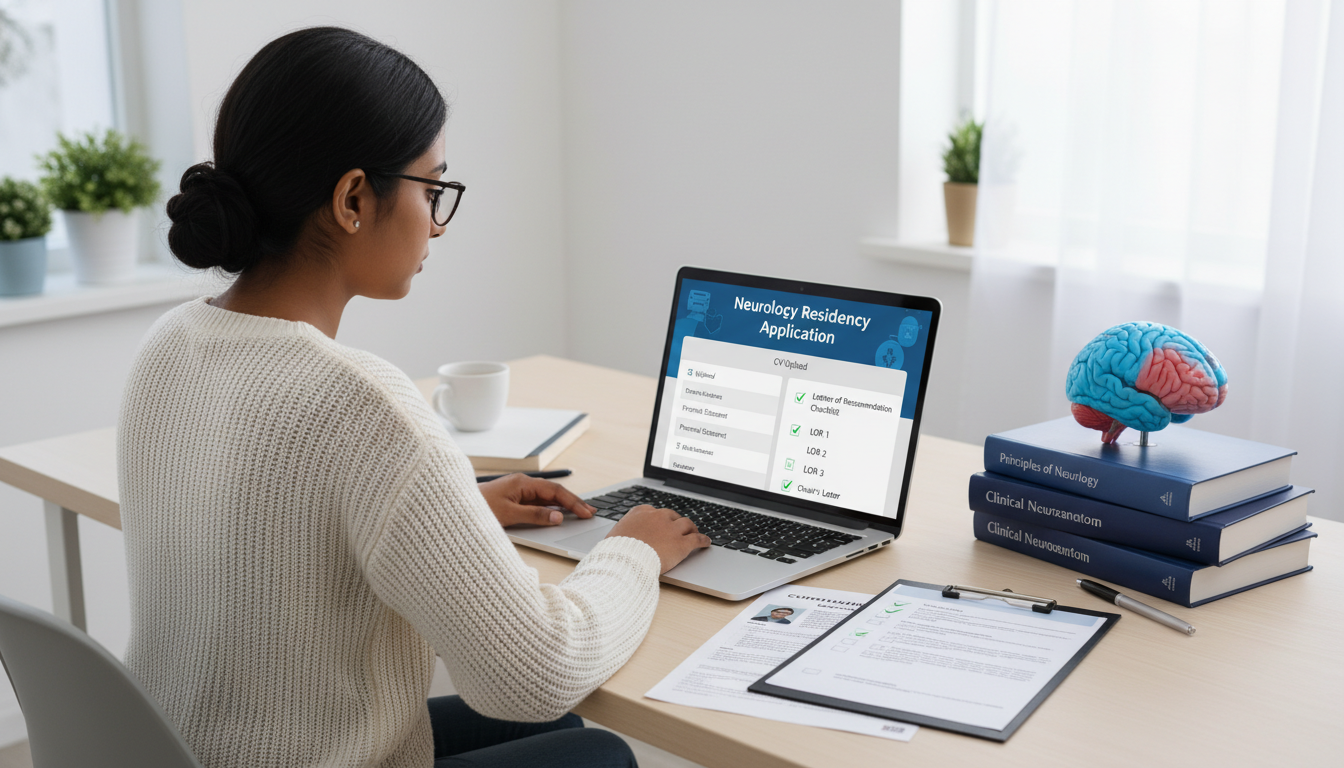
Practical Tips for Managing LORs in ERAS and the Neuro Match
Once your letters are in progress, you need to manage them strategically for the neurology residency match (neuro match).
Waiving your right to view letters
On ERAS, you will be asked whether you want to waive your right to see each letter.
- Strongly recommended to waive:
- Programs expect confidential letters.
- Waived letters are generally perceived as more honest and credible.
- Non-waived letters can raise subtle concerns.
Explain this to your letter writers: they can still share feedback or general impressions with you if they wish, but the uploaded version should remain confidential.
Matching letters to programs
If you are dual applying or applying broadly:
- Use different mixes of letters for:
- Pure neurology programs
- Transitional/preliminary medicine programs (more internal medicine letters)
- For neurology programs, always prioritize:
- Neurology clinical letters (US)
- Neurology research letters (if strong and detailed)
Most applicants send the same 3–4 letters to most neurology programs. However, if you have both a strong research letter and a strong home-country clinical letter, you can adjust combinations based on each program’s emphasis (e.g., research-heavy academic programs vs. more community-based programs).
Handling delays or missing letters
Some letter writers are extremely busy. To avoid issues:
- Request letters at least 4–6 weeks before you plan to submit ERAS.
- Politely remind them 2–3 weeks before your deadline if not yet uploaded.
- Use a respectful follow-up email:
- Express gratitude
- Re-attach documents if needed
- Mention the approaching ERAS date
If a letter never arrives despite reminders, do not confront or complain. Simply adjust your strategy and rely on other letters.
Addressing common IMG challenges in LORs
As a non-US citizen IMG, you may face specific concerns:
Language / communication
- Ask at least one US-based letter writer to comment directly on your English fluency and communication skills with patients.
Transition to US system
- Letters should ideally mention your adaptability to US documentation, teamwork, and clinical workflows.
Gaps or delays
- If you have time gaps since graduation, a mentor who knows your recent work (research, clinical observerships, teaching) can explain your continuous engagement in medicine.
Sample Elements of a Strong Neurology LOR for a Non-US Citizen IMG
You cannot write your own letters, but you can understand what strong letters look like so you know what to aim for.
A powerful neurology LOR for a foreign national medical graduate often includes:
Context and comparison
- “I have worked with over 40 medical students and visiting international graduates in neurology over the last five years. Dr. X is among the top 5% in clinical reasoning and dedication.”
Specific neurology-related observations
- “Dr. X independently performed thorough neurologic examinations, including detailed cranial nerve assessments and sensory testing, and consistently identified subtle deficits such as extinction and mild dysmetria.”
Examples of complex patient care
- “On our stroke service, Dr. X managed a complex case of acute ischemic stroke in the setting of atrial fibrillation and severe carotid stenosis, presenting a nuanced differential and appropriate workup plan.”
Comments on communication and professionalism
- “As a non-US citizen IMG, Dr. X adapted quickly to our system, communicated clearly with nurses, residents, and families, and wrote accurate notes that required minimal editing.”
Research or academic engagement (if applicable)
- “In addition to clinical duties, Dr. X took initiative to start a retrospective study on our stroke unit outcomes and has already completed a first-draft abstract, which we plan to submit to a regional neurology conference.”
Strong, unambiguous endorsement
- “I recommend Dr. X without reservation for neurology residency and would be delighted to have them as a resident in our own program.”
If your behavior and performance give your attendings material like this to write about, your letters will stand out.
FAQs: Letters of Recommendation for Non-US Citizen IMG in Neurology
1. As a non-US citizen IMG, do I absolutely need US neurology letters?
They are not 100% mandatory, but they are highly recommended and often expected. For neurology, at least one, preferably two, US-based neurology letters significantly strengthen your application. Without them, many programs will worry about how well you can function in the US clinical environment and may be hesitant to rank you highly.
If you cannot obtain US neurology letters, maximize:
- Strong letters from home-country neurologists
- Any US clinical letters from internal medicine or ICU
- Detailed descriptions of your neurology exposure in your CV and personal statement
2. Is a research letter useful if it’s not from a clinical neurologist?
Yes—if the research mentor knows you well and can comment on your:
- Analytical thinking and attention to detail
- Work ethic and reliability
- Initiative and independence
A research letter is especially valuable if it is from a neurologist or neuroscientist and is in addition to at least two clinical letters. For purely clinical programs, a research-only letter without US clinical letters will not be sufficient; use it as your third or fourth letter, not your primary clinical recommendation.
3. My English is good but not perfect. Should I worry about LOR comments on communication?
Residency programs expect international variation in accents and style, but they need assurance that you can:
- Communicate clearly with patients and team members
- Document accurately in English
- Understand instructions and give safe handoffs
Ask at least one US-based letter writer to explicitly address your communication skills if they are strong. Phrases like “Dr. X has excellent spoken and written English” or “I did not observe any communication barriers with patients or staff” are very helpful, particularly for a non-US citizen IMG.
4. What if I graduated several years ago and my old attendings barely remember me?
For older graduates, this is common. Your strategy:
- Focus on recent supervisors:
- Recent observerships
- Research mentors
- Volunteer clinical roles (where permissible)
- Provide older letter writers with:
- Your updated CV
- A detailed reminder of when and how you worked together
- Specific cases or projects you did with them
- If a past supervisor barely remembers you, it is often better not to use their letter than to submit a vague, generic recommendation.
You can explain older graduation in your personal statement, but what matters most now is strong, current evidence of clinical and academic engagement.
By understanding what neurology program directors look for, selecting the right recommenders, and performing at a residency-ready level during your rotations, you can turn your letters of recommendation into one of the strongest parts of your application—even as a non-US citizen IMG or foreign national medical graduate. Thoughtful planning and deliberate effort in this area will significantly improve your chances of a successful neuro match.