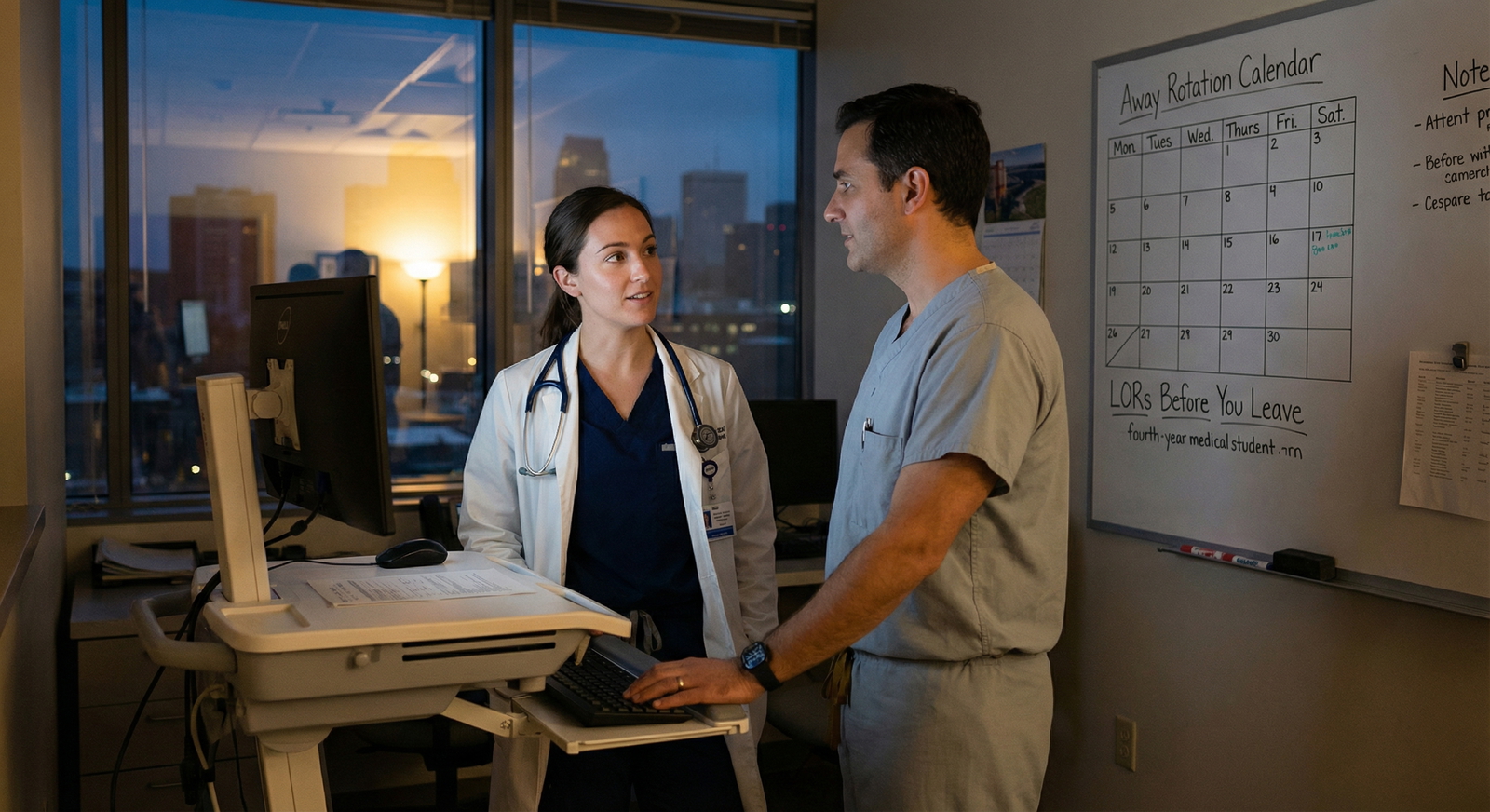
Understanding the Unique LOR Challenges for Non‑US Citizen IMGs
For a non-US citizen IMG, residency letters of recommendation (LORs) can make or break your application. Program directors consistently rank LORs among the most important components of the residency file—often right alongside US clinical experience and exam scores. For a foreign national medical graduate, strong letters are not just helpful; they’re a critical way to overcome unfamiliarity with your school, your grading system, and your visa status.
Before you can build a strategy, you need to understand:
- What residency letters of recommendation actually do
- How they’re evaluated differently for IMGs
- Why your citizenship and training background matter
What LORs Actually Signal to Program Directors
Residency LORs are used to answer specific questions:
- Can this person function safely and effectively in a US clinical environment?
- What is their work ethic, reliability, and professionalism like?
- How do they compare to US medical students and residents the writer has seen?
- Would this attending trust them with their own patients?
When the LOR is written by someone who regularly works with US trainees, the letter becomes a “translation” of your performance into language US program directors trust.
Why LORs Matter Even More for Non‑US Citizen IMGs
As a non-US citizen IMG, you face several extra layers of scrutiny:
- Unknown medical school environment – Many PDs don’t recognize your institution or know how rigorous it is.
- Different systems and expectations – Clinical training, documentation, and hierarchy may be very different from US norms.
- Visa limitations – Some programs worry whether a foreign national medical graduate will adapt well and justify the investment in sponsorship.
A strong, specific LOR from a US-based physician who routinely supervises residents is one of the most powerful counters to these concerns. It says, “I’ve seen this person in a US environment, and they perform at or above the level of our US students.”
Types of Letters You Need (and How Programs Prioritize Them)
Not all LORs are valued equally. As a non-US citizen IMG, you must be strategic about which letters you obtain and how many of each type.
1. US Clinical Experience Letters (Highest Priority)
For most non-US citizen IMG applicants, the most valuable LORs are from:
- US attending physicians
- In your target specialty
- Who directly supervised you during:
- Clinical electives
- Observerships with meaningful involvement
- Externships
- Research with patient interaction
- Sub-internships (if available to you)
These letters show that you can:
- Communicate with patients in English
- Understand US hospital workflows and documentation
- Work as part of a US healthcare team
- Function at the level expected of US students or junior trainees
Actionable target: Aim for at least 2 US-based letters in your target specialty, ideally 3 if possible.
2. Home Country Clinical Letters (Supportive but Secondary)
Letters from your home institution can still be valuable, especially if:
- The writer is a senior faculty member or department head
- They describe sustained clinical work over time
- They highlight leadership, teaching, and professionalism
However, these letters cannot substitute for US letters if a program explicitly expects or strongly prefers US clinical experience. They should be seen as supporting evidence, not the core of your letter portfolio.
Best use: Use one strong home-country clinical letter if:
- You lack enough high-quality US letters, or
- The writer knows you exceptionally well and can speak to long-term growth.
3. Research Letters (High value if research-focused program)
If you’re applying to academic or research-heavy programs, a research LOR can be extremely important—especially if:
- The letter is from a US-based principal investigator (PI) or faculty member
- You had substantial responsibility and output (publications, posters, major data analysis)
- The PI is known in the specialty or at least actively involved in academic work
A strong research LOR may not fully replace a clinical letter, but it can:
- Demonstrate discipline, perseverance, and critical thinking
- Show commitment to the specialty
- Provide a US-based advocate who understands academic residency programs
4. Specialty-Specific vs. Generalist Letters
Programs prefer letters from your target specialty (e.g., internal medicine letters for IM, psychiatry letters for psych). However, a strong letter from a related specialty can still help:
- Internal medicine + sub-specialty (cardiology, GI)
- Pediatrics + pediatric subspecialty
- Surgery + surgical subspecialty
- Psychiatry + neurology or primary care (if relevant)
Recommendation for most applicants:
- 3–4 letters total
- 2–3 from your target specialty (US-based if possible)
- 0–1 from a related field / research mentor / home institution

Who to Ask for Letters: Choosing the Right Recommenders
A crucial part of how to get strong LOR as a non-US citizen IMG is choosing who to ask for letters. The wrong choice can lead to generic, weak, or even damaging letters.
Priorities When Choosing a Recommender
They have directly observed your clinical work
- Not just research meetings or lectures
- Ideally saw you take histories, present patients, write notes, or work up cases
They write letters for US residency applicants regularly
- They understand what US program directors expect
- They can “translate” your performance into standard US comparisons
They are willing to write a strong letter
- Explicitly ask: “Would you feel comfortable writing a strong, supportive letter of recommendation for my US residency applications?”
- If they hesitate, thank them and ask someone else.
Title and reputation matter—but only if they know you well
- A detailed letter from a mid-level attending who worked with you closely is better than a vague letter from a famous chair who barely knows you.
- Ideal: a senior attending who knows you well and is respected in the department.
Clinical vs Research vs Administrative Recommenders
Clinical attending (most valuable)
- You worked with them on the wards, clinic, or operating room
- They can describe your clinical reasoning, teamwork, and patient care
Research mentor
- Valuable if programs are academic or your CV is research-heavy
- Less helpful if they cannot comment on your clinical ability at all
Department chair or program director
- Very helpful if:
- They actually know you
- They reference input from multiple faculty who supervised you
- Less useful if the letter is generic or based only on your file
- Very helpful if:
For Observerships and Shadowing
Many non-US citizen IMG applicants rely on observerships. These can still yield useful letters if:
- You are more than a passive shadow:
- Regularly presenting patients in informal settings
- Discussing differential diagnoses with the attending
- Actively reading and following up on your cases
- The attending has time to interact closely with you
- You stay for a long enough duration (ideally 4 weeks or more)
If the observership is very hands-off and brief, the attending may not be able to write a truly strong letter; in that case, prioritize longer or more hands-on experiences if you can.
How to Earn Strong Letters: Performance and Relationship-Building
You cannot rush a good LOR. Even the best writer can’t compensate for limited observation time and weak engagement. Use these strategies systematically during each rotation or experience.
1. Start with Clear Communication
At the beginning of your US clinical experience:
- Introduce yourself as a non-US citizen IMG hoping to apply to US residency.
- Politely ask:
- “I hope to apply to residency in the US. Is it okay if I ask for feedback throughout this rotation so I can improve?”
- Clarify:
- Your target specialty
- Application timeline (which match cycle)
This primes your attendings to think of you in the context of residency potential.
2. Show US-Style Professionalism
Program directors and attendings watch for:
- Punctuality: Arrive early, not on time.
- Reliability: Do what you say you will do, every time.
- Documentation habits: Even if you cannot write official notes, practice them and ask for feedback.
- Respect for hierarchy and team dynamics: Address staff respectfully, work collaboratively with nurses and other trainees.
- Ownership of tasks: Follow up on labs, imaging, and patient questions without being asked twice.
As a foreign national medical graduate, cultural differences may exist—if you’re unsure about etiquette, observe carefully and ask senior residents or fellows for guidance.
3. Maximize Direct Interaction with Your Future Letter Writer
You want your future letter writer to have rich, specific examples of your work. To make this possible:
- Volunteer to present patients on rounds.
- Offer to give a short evidence-based presentation (“micro-talk”) on a relevant topic.
- Ask the attending if you can discuss 1–2 patients in detail before rounds to prepare.
- Request feedback midway through the rotation:
- “Are there any areas where I should improve to be at the level of a strong residency applicant?”
This shows maturity and gives them material to include in the letter:
“Midway through the rotation, she specifically requested feedback and immediately implemented suggestions regarding her presentations and documentation.”
4. Demonstrate Adaptability to the US System
As a non-US citizen IMG, you’re being evaluated on how quickly you adapt:
- Learn common US abbreviations and documentation formats.
- Ask residents how they structure SOAP notes or presentations.
- Adjust your approach to align with local guidelines and protocols.
- Show improvement week-to-week in efficiency and communication.
Your letter writer might then say:
“Despite training in a different healthcare system, he rapidly adapted to our workflows and, by the end of the rotation, was functioning at the level of our best US fourth-year medical students.”
5. Build a Genuine Relationship
Faculty are more enthusiastic writers when they:
- Know your story and long-term goals
- See your motivation for the specialty
- Respect how far you’ve come as a foreign national medical graduate
Share (briefly and professionally):
- Why you chose this specialty
- Why you’re pursuing training in the US
- How your background (language skills, international experiences) will benefit their patients

How and When to Ask for Letters (and What to Provide)
Even strong clinical performance can result in a weak letter if you ask poorly or don’t support your writer with enough information.
Ideal Timing to Request a Letter
- Best: Final week of the rotation or experience
- Acceptable: Within 1–2 months after completing the rotation
- Risky: More than 6–12 months later, especially if contact has been minimal
At the end of the rotation, you might say:
“Dr. Smith, I’ve really appreciated working with you this month. I will be applying for internal medicine residency as a non-US citizen IMG in the next ERAS cycle. Based on our work together, would you feel comfortable writing a strong letter of recommendation for my applications?”
If they say yes, follow up immediately with an email containing supporting materials.
What to Provide to LOR Writers
Make it easy for them to write a detailed, tailored letter by sending:
- Your updated CV
- A brief personal statement or 1-page “letter writer packet” including:
- Your target specialty and match year
- Why you chose this specialty
- A few key clinical or research strengths you hope they can address (e.g., “clinical reasoning,” “work ethic,” “teamwork”)
- Memorable cases or projects you shared
- Your exam scores (if you’re comfortable)
- Instructions for ERAS LOR submission
- That you will send an ERAS LOR request with their name
- That the letter should be uploaded directly to ERAS (not sent to you)
You can also gently suggest specific areas they might emphasize:
“If you feel it is appropriate, it would be especially helpful if you could comment on my clinical reasoning, work ethic, and how I compared to US medical students you have supervised.”
This is not controlling the content; it is focusing their attention on key attributes important to programs.
Waiving Your Right to See the Letter
In ERAS, you will be asked whether you “waive the right” to see your letters.
- Always waive your right if you want the letter to be perceived as credible.
- Program directors expect letters to be confidential; if you do not waive, some will distrust that letter.
If you’re genuinely concerned the writer might submit a weak letter, it’s better not to ask them at all rather than insist on reading it.
Following Up Professionally
Faculty are busy and may forget. After:
- 2–3 weeks: Send a polite reminder email if the letter is not yet uploaded.
- 6–8 weeks: A second, very polite reminder, reiterating your gratitude.
Example reminder:
“Dear Dr. Smith,
I hope you are doing well. I wanted to gently follow up regarding the residency letter of recommendation for my ERAS application. I completely understand how busy your schedule is and truly appreciate your time and support as a non-US citizen IMG applicant. Please let me know if there is anything else I can provide to assist you.”
If after multiple reminders they still haven’t submitted, consider whether you need an alternative letter.
Strategic Questions: How Many, Which Programs, and Common Pitfalls
How Many Letters Should a Non‑US Citizen IMG Submit?
ERAS allows a maximum of 4 letters per program. Most programs accept 3–4.
- Internal Medicine / Pediatrics / Psychiatry / FM:
- Target: 3 letters (2–3 in specialty, 0–1 research or home country)
- Surgery / OB‑GYN / Competitive Specialties:
- Usually 3–4 letters, skewed heavily toward your primary specialty
You may upload more than 4 total into ERAS, then customize which ones go to which program.
Tailoring LORs to Different Specialties
As a non-US citizen IMG, you may apply to more than one specialty (e.g., internal medicine and family medicine, or psychiatry and neurology). To manage this:
- Ask your letter writers which specialty they are comfortable addressing.
- Some letters can be written in a way that fits multiple specialties (e.g., “internal medicine or family medicine residency”), but focused letters are usually stronger.
- When sending your letter writer packet, state clearly:
- “I am applying primarily to internal medicine programs, with some family medicine programs. If appropriate, could you frame the letter for internal medicine, with emphasis on general internal medicine skills that translate to primary care?”
Common Pitfalls for Non‑US Citizen IMGs (and How to Avoid Them)
Pitfall 1: Too many home-country letters, not enough US letters
- Fix: Prioritize obtaining US clinical experience and at least 2 US-based letters.
Pitfall 2: Generic letters with no specific examples
- Fix: Maximize your interaction with the writer; remind them of specific cases or projects when you request the letter.
Pitfall 3: Letters from people who barely know you
- Fix: Prioritize attendings who directly supervised you, even if they’re less famous.
Pitfall 4: Late letter requests leading to rushed writing
- Fix: Ask early, remind politely, and manage your ERAS timeline carefully.
Pitfall 5: Not matching letters to specialty
- Fix: Use specialty-appropriate attendings and tailor which letters go to which programs in ERAS.
Pitfall 6: Overemphasis on research letters for clinically-focused community programs
- Fix: For community programs, favor strong clinical letters over pure research letters unless the research mentor can also comment on your clinical potential.
FAQ: Letters of Recommendation for Non‑US Citizen IMGs
1. How many US letters do I really need as a non‑US citizen IMG?
Aim for at least 2 strong US clinical letters in your target specialty. Three is ideal if you can manage it. Programs understand that not every foreign national medical graduate has extensive US experience, but they want clear evidence that at least a few US attendings have seen you function in their environment and support your candidacy.
2. Is a letter from my home country still useful if I have US letters?
Yes—if it’s strong and specific. A senior faculty member or department head who has known you for years can provide powerful testimony about your work ethic, leadership, and long-term growth. Use such a letter as your third or fourth LOR, not as a substitute for US-based clinical letters.
3. Can I use a letter from an observership, or is it too weak?
You can absolutely use a letter from an observership, especially if:
- The observership lasted at least 4 weeks
- You had repeated, meaningful interactions with the attending
- You demonstrated engagement, reading, and clinical reasoning (even informally)
The key is not the label “observership,” but how deeply the attending actually worked with you and how vividly they can describe your performance.
4. Should I prioritize a famous professor who barely knows me or a less-known attending who worked closely with me?
Always prioritize someone who knows you well and can write a detailed, enthusiastic letter. Program directors strongly prefer:
A specific, example-filled letter from a regular attending
over
A vague, generic letter from a famous chair.
If you can combine both—e.g., a department chair who has solicited input from multiple attendings who supervised you—that’s even better, but do not sacrifice specificity for title alone.
By approaching residency letters of recommendation with a deliberate strategy—focusing on who to ask for letters, how to get strong LOR through your daily performance, and how to present yourself as a capable, adaptable non-US citizen IMG—you give program directors what they most need: trusted, detailed evidence that you can succeed in their program and care for their patients at the level of any US graduate.