Why Letters of Recommendation Matter So Much in Plastic Surgery (Especially for US Citizen IMGs)
Plastic surgery is one of the most competitive specialties, and for an American studying abroad, letters of recommendation (LORs) carry even more weight than usual. Program directors know they cannot rely as heavily on your school’s reputation or clinical grades because international curricula vary widely. Instead, they look for trusted voices who can vouch for your:
- Technical potential in surgery
- Work ethic and reliability
- Maturity and professionalism
- Ability to function on a high-performing surgical team
For a US citizen IMG aiming at an integrated plastics match, your letters often serve as your “translation layer” for program directors: they explain who you are in terms they understand and trust.
You’re not just aiming for “solid” LORs. In plastic surgery, you need highly enthusiastic, specific, and credible letters to be a serious candidate.
This article breaks down:
- Who to ask for letters (and who not to)
- How to get strong LOR as an American studying abroad
- How to plan your rotations and networking for the best possible letters
- How plastic surgery letters are read and judged
- How many plastics vs non-plastics letters you should have
Understanding What Makes a “Strong” Plastics Letter
Before thinking about who to ask for letters, you need to understand what programs consider a strong LOR in plastic surgery.
Core Features of a Strong Letter
A powerful letter typically:
Is written by a known, credible surgeon or educator
- Ideal: Academic plastic surgeons at US programs
- Very strong: Program directors, department chairs, rotation directors
- Helpful: General surgeons, surgical subspecialists, research mentors with a track record in plastics or surgery
Shows direct, longitudinal observation
The writer should clearly have seen you in action:- In the OR over multiple cases
- In clinic on multiple days
- On the wards or during call
- During a substantial research project
Generic statements like “hardworking and pleasant” without context signal weak exposure.
Provides specific, concrete examples
The letter should include stories and details, such as:- A technically challenging suturing or microsurgery-related task you excelled at
- A time you took ownership of a complex patient’s care
- Initiative you showed in research, improving workflow, or teaching juniors
Specific anecdotes are far more believable than vague adjectives.
Benchmarks you against peers
Strong letters compare you to:- The writer’s other students, residents, or fellows
- Recent successful plastics residents or applicants
Phrases like:
- “Among the top 5 medical students I have worked with in the last 10 years”
- “Comparable to our incoming PGY-1 residents in maturity and clinical reasoning”
carry enormous weight.
Contains unambiguous enthusiasm
Programs quickly pick up on tone. Strong letters often sound like:- “I recommend her with my highest enthusiasm for plastic surgery residency.”
- “I would be thrilled to have him as a resident in our program.”
Lukewarm language (e.g., “I believe she will do well somewhere”) can hurt more than help.
Addresses your IMG status in a positive, contextualized way
For a US citizen IMG, a great letter might:- Explain the differences in your training environment
- Highlight how you overcame structural barriers (limited home plastics exposure, need to travel for rotations, etc.)
- Emphasize that your performance is fully comparable to, or better than, US MD/DO students the writer has worked with
Who to Ask for Letters (and Who to Avoid)
For an integrated plastic surgery residency application, your LOR strategy must be intentional. You have limited slots (usually 3–4 letters in ERAS), and as a US citizen IMG, every letter must work hard for you.

Ideal Letter Writers for a Plastics Applicant (US Citizen IMG)
Aim for a mix that covers plastic surgery credibility, surgical performance, and academic potential.
1. US Academic Plastic Surgeons (Top Priority)
For an American studying abroad, the single most important thing you can do is secure strong letters from US-based plastic surgeons who know what it takes to succeed in the integrated plastics match.
Best sources:
- Faculty from US away/audition rotations in plastic surgery
- Plastic surgery program director or associate PD where you rotated
- Division or section chief of plastic surgery, if they interacted closely with you
Why this matters:
- Program directors trust people they know or institutions they respect
- They know the benchmarks for US MD students and can say whether you truly measure up
If possible, try to get:
- At least 2 letters from US plastic surgeons
- Ideally: 1 from your strongest away rotation + 1 from a research mentor in plastics or another rotation site
2. Surgical Faculty Who Directly Oversaw You
If you cannot get three plastics letters (many applicants cannot), the next best are:
- General surgeons with a strong academic CV
- Trauma, hand, or reconstructive surgeons
- Other surgical subspecialists (ENT, ortho, neurosurgery, vascular) who saw you perform in the OR and on call
These letters are especially valuable if they can:
- Compare you to US medical students they have worked with
- Comment on your technical ability, judgment, and team functioning
- State explicitly that you are capable of success in a high-intensity procedural field like plastics
3. Research Mentors in Plastics or Surgery
A research mentor can write a powerful letter if:
- You worked closely with them for at least 6–12 months
- You contributed significantly to manuscripts, presentations, or grants
- They are well-known in the field or at least active in ASPS/academic plastics circles
This type of letter is especially useful if you:
- Have multiple publications/posters in plastic surgery
- Are aiming for academic plastics or a T32-heavy program
Who to Ask For Letters vs Who Not To
Strong choices:
- US plastic surgery program director from your away
- US plastic surgery faculty with national reputation
- Academic general surgeon who supervised you extensively
- Plastic surgery research mentor at a US institution
- Hand surgeon, craniofacial surgeon, or microsurgeon in an academic setting
Risky or weak choices (avoid if possible):
- Faculty who barely know you (“Sure, I’ll sign something if you draft it”)
- Non-surgical specialties unless they know you exceptionally well and can speak to standout qualities
- Family friends or community physicians who know you personally but not professionally
- International faculty unknown in the US who write vague, formulaic letters
- Very junior residents or fellows signing as primary letter writers (they can give input, but the attending should sign)
If you must use a non-US or non-plastics letter, make sure the writer:
- Worked with you closely over time
- Understands US-style letters and is willing to be detailed and comparative
- Is willing to state that your performance is equal or superior to US students they have encountered (if true)
How Many Letters, and What Mix Is Ideal?
Most programs accept 3–4 letters of recommendation in ERAS.
For a US citizen IMG in plastic surgery, a strong mix might be:
Option A (Ideal for Highly Competitive Applicants)
- 2 letters: US plastic surgery faculty from away rotations
- 1 letter: Plastic surgery research mentor (US-based)
- 1 letter: General surgeon or other surgical subspecialty who supervised you clinically
Option B (More Realistic for Many US IMGs)
- 1–2 letters: US plastic surgery faculty from away rotations
- 1 letter: Academic general surgeon (US-based)
- 1 letter: Research mentor in plastics or surgery (US-based or international with strong academic credibility)
Programs understand that US citizen IMGs often have limited home plastics exposure, but they still want to see at least one US plastics letter if you are serious about the field.
How to Get Strong LOR as a US Citizen IMG: Step-by-Step Strategy
Simply doing a rotation is not enough. You need to plan ahead so that by the time you ask for letters, faculty have real reasons to advocate for you.
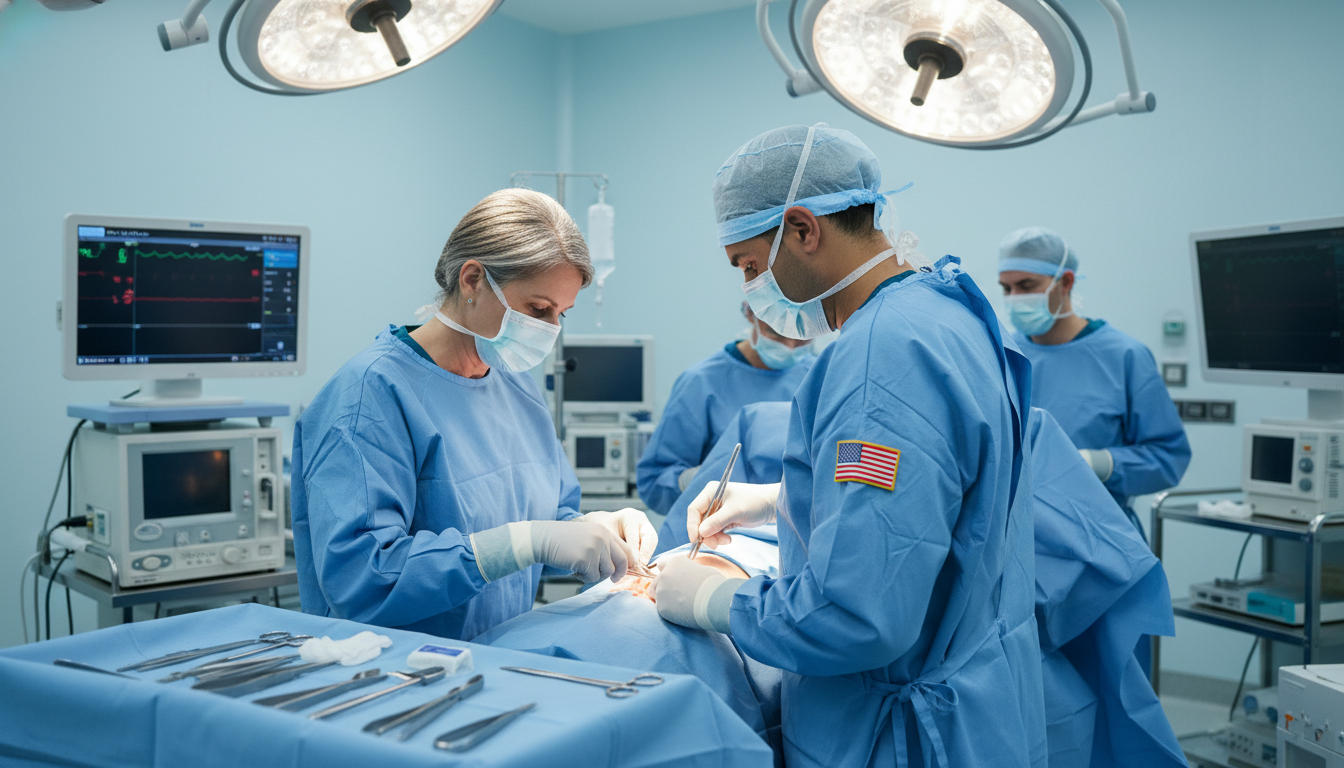
1. Plan Rotations with Letters in Mind
Since you’re an American studying abroad, you need to be strategic in how you structure your clinical years.
Target at least 2 US-based experiences in plastics or surgery:
- Sub-internship (sub-I) / away rotation in plastic surgery (4–8 weeks) at a US academic center
- Another away or sub-I in plastics or a closely related surgical field if available
- If plastics away slots are limited, consider:
- One plastics away
- One general surgery or specialty surgery away at a program with a plastics division
Timing tip:
- Aim to complete your primary plastics away rotation before ERAS opens (June–August) of your application cycle so letters can be uploaded in time.
2. Behave Like a Future Resident, Not “Just a Student”
Letter writers are looking for residents-in-training, not observers.
On every rotation (especially plastics away rotations):
Be present and early
- Arrive before residents, pre-round independently when allowed, help gather data
- Stay late when cases run over—this is noted and appreciated
Own patient care
- Know your patients intimately: diagnosis, operative plan, post-op day, drains, labs, complications
- Present concisely on rounds; anticipate next steps
Show technical curiosity and humility
- Ask to close skin, place sutures, or assist more closely when appropriate
- Accept feedback without defensiveness and apply it quickly
Help the team function better
- Volunteer for notes, consults, discharge paperwork
- Keep the list updated, help residents with small but meaningful tasks
Your behavior during these critical weeks is essentially your interview for letters of recommendation.
3. Make Your Interest in Plastics Clear (Without Overdoing It)
Faculty are more likely to write strong letters if:
- They know you are seriously committed to plastic surgery
- They see you taking steps aligned with that goal
Ways to demonstrate this:
- Read about cases the night before (including anatomy and reconstruction options)
- Ask thoughtful, case-related questions
- Attend departmental conferences, grand rounds, and journal clubs
- If you have research or prior exposure, mention it briefly in conversation
Avoid:
- Repeatedly talking about prestige or “how competitive plastics is”
- Asking for letters too early in the rotation before they have seen your work
4. Build Relationships Before You Need the Letter
Throughout the rotation:
- Identify 2–3 faculty or attendings who see you most often and seem approachable
- Ask for brief feedback mid-rotation:
- “Dr. X, I’m really trying to grow on this rotation and I’m very interested in plastic surgery. Is there anything you recommend I do differently or focus on more?”
- Implement their feedback visibly and quickly
This shows maturity and will make them much more comfortable endorsing you later.
5. When and How to Ask for a Strong Letter
Timing:
- Best: Last week of your rotation (or near completion)
- Alternative: Within a few weeks after, while you are still fresh in their mind
Wording matters. You’re not just asking for a letter—you’re asking for a strong letter.
Suggested in-person script:
“Dr. Smith, I’ve really valued working with you these past few weeks, and I’m strongly committed to plastic surgery. I’ll be applying to integrated plastic surgery residency this cycle.
Would you feel comfortable writing me a strong letter of recommendation based on my performance on this rotation?”
This gives them a chance to:
- Enthusiastically say yes
- Or gently decline if they cannot support you strongly (which is better than a weak generic letter)
If they say yes, follow up with an email including:
- Your CV
- Personal statement (even a draft)
- Summary of your work with them:
- Dates of the rotation
- Cases you scrubbed with them
- Projects or specific contributions you made
If you are a US citizen IMG, you may also add a short paragraph explaining:
- That you are an American studying abroad
- Why you chose this path
- That US-based strong LORs are particularly impactful for you
This can help them frame your story in the letter.
6. Help Your Writers Help You (Without Writing the Letter Yourself)
It’s common—and appropriate—to provide:
- An updated CV
- Step scores, clinical grades (if helpful)
- A short “brag sheet” or bullet list:
- Your key strengths
- Cases that were particularly meaningful
- Specific interactions or feedback you remember
But avoid:
- Writing your own letter for them to sign (this is discouraged and often detectable)
- Overly scripted language or telling them exactly what to say
Instead, you might write:
“I’ve attached a short summary of our work together and some points I’m hoping might come across in my application, in case it’s helpful as you draft the letter.”
Handling Special Challenges as a US Citizen IMG
Being a US citizen IMG presents unique challenges—but also opportunities—when it comes to residency letters of recommendation.
1. Limited or No Home Plastic Surgery Department
Many international schools don’t have a formal plastics department, making it hard to:
- Get early mentorship
- Obtain letters from plastics faculty
- Build a research portfolio in plastic surgery
Actionable steps:
- Pursue US clinical electives in plastic surgery during your later clinical years
- Email US plastics departments 6–12 months in advance to ask about visiting student rotations (VSLO/VSAS or local equivalents)
- If a plastics rotation is not available, choose:
- General surgery
- Trauma or orthopedic rotations at an institution that also has a plastics service—then network into plastic surgery once you are on-site
2. Explaining Your IMG Status (Subtly, Through Letters)
You don’t need your letters to excuse your IMG status, but you can ask writers (if they understand your path) to:
- Contextualize differences in your training environment
- Emphasize how you proactively sought US-based exposure
- Compare you to US students and residents they’ve worked with
A powerful line in a letter might be:
“Although he completed his core medical training abroad, his performance on our service was at least on par with, and at times superior to, that of US MD students and early residents I have supervised.”
3. Building Name Recognition and Networks
Your letters also serve as network connectors. Even if you rotated at a program that doesn’t ultimately rank you, their faculty may know:
- PDs and chairs at other plastics programs
- Fellowship directors and national leaders
They may reach out informally or simply lend credibility with their signature.
As a US citizen IMG, prioritize:
- Rotations at programs that regularly match plastics applicants
- Mentors who are active in national organizations (ASPS, AAPS, etc.)
- Research mentors who present at major plastics meetings
How Letters Are Read in the Integrated Plastics Match
Understanding how your letters will be interpreted helps you design your strategy.
Program directors scanning your file typically ask:
Who wrote this letter?
- Do I know them personally?
- Are they from a program I respect or collaborate with?
- Are they a plastic surgeon or in a related surgical field?
How well do they know the applicant?
- Is there clear evidence of longitudinal interaction?
- Do they describe specific cases or examples?
How do they compare the applicant to others?
- Are there benchmark statements?
- Do they say “one of the top” or “among the best I’ve worked with”?
Is there any doubt or faint praise?
- Hesitation, lukewarm language, or lack of detail often hurt
- Short, template-like letters are red flags
Do they address the IMG context (if obvious from the application)?
- For a US citizen IMG, a strong letter explicitly stating that you are equal to US MD peers is very reassuring
Your goal is to have multiple letters that:
- Tell a consistent story
- Emphasize both technical and interpersonal strengths
- Show clear, enthusiastic endorsement for plastic surgery residency
Practical Timeline for US Citizen IMG Applicants
To make this more concrete, here’s a sample timeline for someone applying in their final year:
18–24 months before application (Early clinical years):
- Decide you’re interested in plastic surgery
- Start reading about the field and exploring local opportunities
- Join research remotely with a US plastics or surgery team if possible
12–18 months before application:
- Secure US-based electives/away rotations in plastic surgery or surgery
- Confirm dates (ideally 1 plastics away in early application year, 1 other surgical away earlier)
- Build your CV (research, leadership, teaching)
6–12 months before application:
- Complete your first US surgical away rotation
- Impress faculty, gather mid-rotation feedback
- Ask 1–2 attendings for strong letters at the end
3–6 months before application:
- Do your primary plastics away rotation (ideally June–August before ERAS)
- Repeat the process: excel clinically, seek feedback, then ask for a strong LOR
1–3 months before ERAS submission:
- Confirm that all writers have uploaded letters
- Check ERAS to ensure:
- Correct letter assignment to plastic surgery programs
- You have the right mix of plastics/surgical/research letters
Frequently Asked Questions (FAQ)
1. As a US citizen IMG, do I absolutely need letters from plastic surgeons?
You strongly should have at least one letter from a US plastic surgeon if you are applying to an integrated plastic surgery residency. Two is better. Programs need to see that:
- You have real exposure to the specialty
- A plastic surgeon believes you are well-suited for the field
If you can’t secure plastics letters at all, your application will be significantly disadvantaged, but you can partially compensate with:
- Strong letters from US general or subspecialty surgeons
- Significant plastics-oriented research with a strong mentor
2. Is it better to get a letter from a famous surgeon who barely knows me, or a junior faculty who worked with me closely?
Almost always, it is better to get a letter from the faculty member who knows you well and can write a detailed, enthusiastic letter. Name recognition helps, but vague letters from “big names” are often recognized as such and can come across as hollow. A mid-level or junior faculty member in plastics who can describe your day-to-day performance is far more valuable.
3. How many letters should I assign to plastic surgery programs?
Most programs allow 3–4 letters. For plastic surgery, use all available slots:
- Aim for: 2 plastics letters + 1–2 surgical/research letters
- Avoid mixing in primary care or unrelated specialty letters unless they are extremely strong and based on long-term mentorship
Always prioritize letters that reinforce your identity as a future plastic surgeon.
4. Should I waive my right to see my letters?
Yes. You should waive your right to view your LORs in ERAS. Program directors expect letters to be confidential; non-waived letters can raise concerns that the writer may not have been fully candid. If a faculty member seems hesitant when you ask for a “strong” letter, it is often better to seek another writer rather than push forward with a potentially lukewarm recommendation.
By understanding how to get strong LOR, who to ask for letters, and how to plan your rotations strategically, you can turn letters of recommendation from a potential liability into a powerful asset—as a US citizen IMG pursuing the highly competitive integrated plastics match.