Why Letters of Recommendation Matter So Much for US Citizen IMGs in Diagnostic Radiology
For a US citizen IMG or American studying abroad, letters of recommendation (LORs) can significantly influence your diagnostic radiology match chances. Program directors know that your school, grading system, and clinical environment may be unfamiliar. Strong, credible residency letters of recommendation from US radiologists help them “translate” your performance and potential into a context they understand and trust.
Diagnostic radiology in particular is a specialty where:
- Many applicants look strong on paper (Step scores, class rank, research).
- Programs are selective and image-conscious.
- Your ability to work well in teams, communicate clearly, and think analytically is crucial—but hard to judge from scores alone.
That’s why your letters are not just a checklist item; they are narrative evidence that:
- You can function in a US clinical environment.
- Radiologists have actually seen your work and would trust you on their team.
- You understand what radiology entails and are making an informed decision.
For a US citizen IMG, your LOR strategy should be as deliberate as your Step exam strategy. This article will walk you through exactly how to get strong LORs, who to ask for letters, and how to maximize your chances of a successful diagnostic radiology match.
Understanding the Radiology LOR Landscape for US Citizen IMGs
How Many Letters and What Types?
Most diagnostic radiology residency programs require:
- 3 letters of recommendation, plus
- 1 Dean’s/MSPE letter (automatic from your school)
Common patterns:
- Some programs strongly prefer at least 1–2 letters from radiologists.
- A few explicitly state “at least one letter must be from a radiologist practicing in the US”.
- Many are open to letters from other specialties if they speak well to your clinical performance and work ethic.
For a US citizen IMG targeting radiology, a competitive letter mix typically looks like:
- 2 letters from US radiologists (ideally both in diagnostic radiology, one from a core elective and one from a sub-internship/AI or away rotation).
- 1 letter from another US clinical service (e.g., internal medicine, surgery, emergency medicine) or from a research mentor closely tied to radiology.
- Optional: A research letter from a radiology faculty member (if you have solid, sustained research experience).
Why Radiology Letters Are Somewhat Unique
Radiology attendings often:
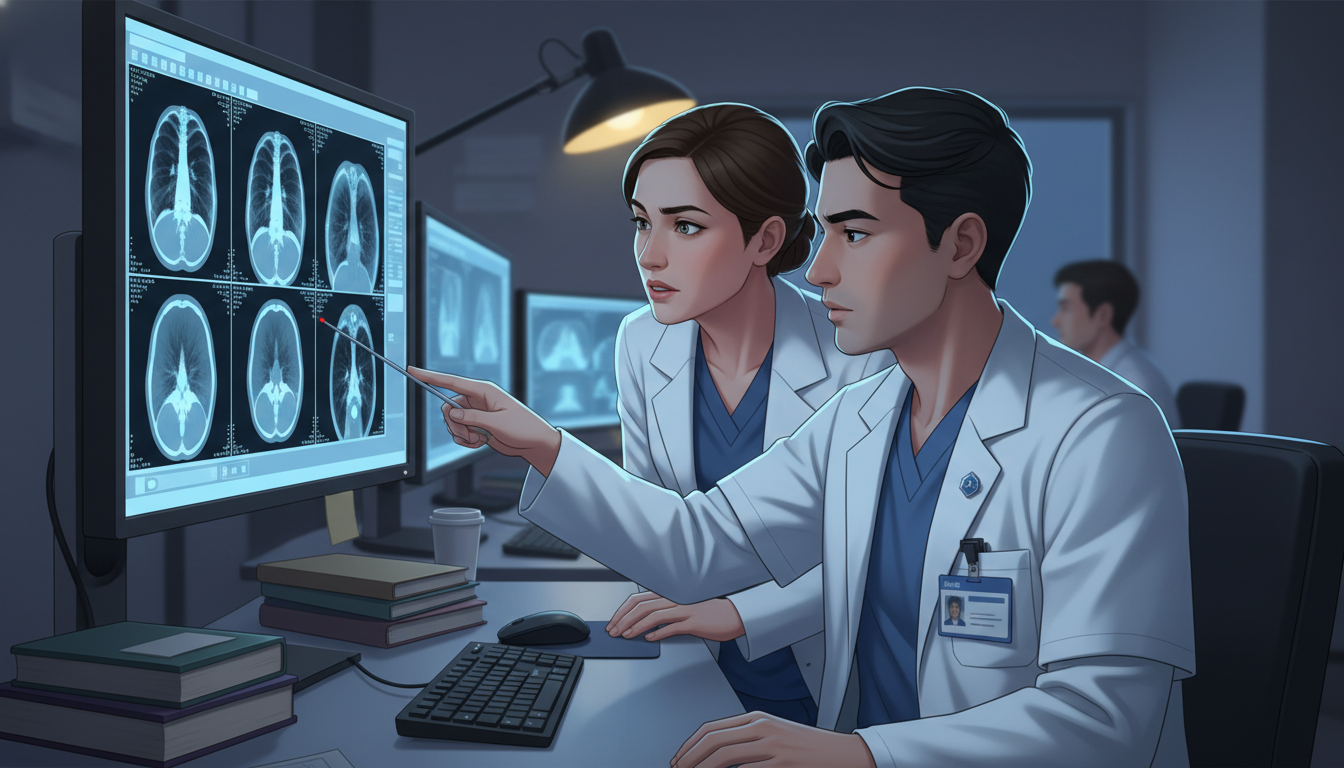
- Observe you in a “reading room” environment—less hands-on, more cognitive and communication-driven.
- Assess your pattern recognition, attention to detail, and clinical reasoning.
- Evaluate your professionalism when interacting with referring clinicians, residents, technologists, and patients (e.g., procedures, contrast reactions, consults).
A strong diagnostic radiology LOR will often touch on:
- Your ability to synthesize clinical information and imaging findings.
- Your growth during the rotation—how quickly you improved.
- Your curiosity, initiative, and readiness for independent learning.
- Your team behavior in a space that’s often high volume and high pressure.
For a US citizen IMG, these letters help reassure programs you can thrive in a US radiology practice environment, despite doing your core education abroad.
Who to Ask for Letters (and Who Not To)
Prioritizing Letter Writers as a US Citizen IMG
If you’re an American studying abroad, your first task is securing US-based clinical experience, particularly in diagnostic radiology. Your strongest letters will almost always come from:
US Diagnostic Radiologists Who Worked With You Directly
- Source: Electives, sub-internships, observerships/hands-on externships, or research.
- Ideal if:
- They saw you consistently for at least 3–4 weeks.
- You had active responsibility (presenting cases, drafting reports, attending readouts, calling clinicians).
- You had meaningful feedback conversations with them.
US Academic Radiologists at Institutions With Residency Programs
- Particularly valuable if:
- They are program directors, associate program directors, or core faculty.
- They can reference how you compare to US seniors.
- These letters carry extra weight because PDs trust their colleagues’ judgment.
- Particularly valuable if:
Non-Radiology US Attending Physicians Who Can Vouch for Your Clinical Skills
- Internal medicine, surgery, EM, neurology, etc.
- Helpful if:
- They saw you in a setting with direct patient care.
- They can describe your reliability, communication, professionalism.
- These letters show you’re a solid clinician, not just a “shadow in the reading room.”
Radiology Research Mentors (Especially in the US)
- Particularly helpful if:
- You worked with them for several months or more.
- You are a co-author on submitted/accepted work.
- They tie your research contributions to traits relevant for residency (initiative, perseverance, analytical skills).
- Particularly helpful if:
Less Ideal—but Sometimes Necessary—Letter Writers
These are not worthless, but they usually carry less weight than the categories above:
Home-country/non-US radiologists or clinicians
- Programs sometimes see these as harder to interpret.
- If used, they should be supplementary, not your primary letters, unless they are very well-known academically.
Very senior faculty who barely know you (even if famous)
- Titles don’t replace substance.
- A generic letter from a famous radiologist is weaker than a detailed letter from a mid-career faculty who truly knows your abilities.
Non-physician supervisors (MPH, MBA, or lab-only mentors)
- Can supplement but should not replace a core clinical or radiology letter.
- Best used if they’ve supervised a significant project tied to radiology or patient care.
Who Not to Ask
Residents or fellows as primary authors of the letter
- They may help draft, but the letter must be signed and endorsed by an attending.
- A resident-authored letter without attending oversight rarely carries full weight.
Family friends or personal physician acquaintances
- Even if they are radiologists, if they haven’t worked with you clinically or academically, the letter lacks credibility.
Short-encounter supervisors (1–2 days of contact)
- These letters are inevitably vague and generic.
Key principle: Prioritize people who have observed your work repeatedly, can compare you to US senior students, and can write convincingly about your readiness for radiology residency.
How to Get Strong LORs: Before, During, and After Your Rotations
Before the Rotation: Set Up for Success
For a US citizen IMG, your radiology rotations in the US are often high-stakes auditions. Approach them strategically:
Clarify Expectations Early
- Email your supervisor before the rotation:
- Introduce yourself briefly (US citizen IMG, school, graduation year).
- Express interest in diagnostic radiology.
- Ask:
- “How can I best prepare for this rotation?”
- “Are there specific resources you recommend for students rotating on your service?”
- Email your supervisor before the rotation:
Review Core Radiology Basics
- Before day 1, know:
- Basic chest X-ray interpretation (systematic approach).
- Anatomy on CT brain, CT abdomen/pelvis.
- Basic imaging indications and contraindications (contrast, MRI safety).
- This allows you to ask higher-level questions and show genuine engagement.
- Before day 1, know:
Understand the LOR Timeline
- Identify:
- Which rotations are most likely to produce strong radiology letters.
- Whether they occur early enough to have letters uploaded before ERAS deadlines.
- Identify:
Communicate Your Goals
- On day 1 or early in the rotation, tell your attending or the clerkship director:
- That you’re a US citizen IMG.
- You’re strongly committed to diagnostic radiology.
- You’re hoping to earn letters of recommendation for your radiology residency applications.
- On day 1 or early in the rotation, tell your attending or the clerkship director:
This signals motivation and transparency—and encourages faculty to observe you more closely.
During the Rotation: Behaviors That Create Strong Letter Content
Your daily performance is what ultimately writes your LOR. Faculty notice:
Consistency and Professionalism
- Arrive early, stay engaged until the work is done (not just until “official” hours).
- Dress appropriately, be approachable and respectful to everyone.
- Respond promptly to emails and administrative tasks.
Engagement in the Reading Room
- Take initiative:
- Ask to preview cases and give your impression: “On this CT, I think there’s an appendicitis because…”
- Offer a concise differential when uncertain.
- Ask thoughtful, targeted questions:
- “What features pushed you toward ischemic vs hemorrhagic stroke here?”
- “How would this finding change clinical management in the ED?”
- Take initiative:
Ownership of Your Learning
- Keep a case log of interesting findings and review them after hours.
- Read short, focused radiology resources based on what you saw during the day.
- Return the next day with something you followed up on: “I read more on pulmonary embolism CTA last night; can I walk you through a case?”
Teamwork and Communication
- Be courteous to technologists and nurses; faculty notice how you treat all team members.
- When allowed, practice calling results to referring teams under supervision:
- Shows communication skills and clinical maturity.
Feedback-Seeking
- Mid-rotation, ask your main attending or clerkship leader:
- “How am I doing so far?”
- “Is there anything I can do differently to improve?”
- Then implement their suggestions visibly.
- Mid-rotation, ask your main attending or clerkship leader:
These behaviors provide the raw material for a strong LOR: “This student actively sought feedback and improved over the month…”
When and How to Ask for a Letter
Aim to ask for LORs:
- In the last week of the rotation or within 2–3 weeks after it ends.
- When your performance is still fresh in the faculty’s mind.
How to Phrase the Request (In Person or Email)
A practical way to ask:
“Dr. Smith, I’ve really appreciated the chance to work with you this month. I’m applying to diagnostic radiology residency as a US citizen IMG, and I was wondering if you’d feel comfortable writing a strong letter of recommendation for my applications?”
Why this works:
- You directly ask for a “strong” letter, giving them an out if they can’t be enthusiastic.
- If they hesitate or seem unsure, it’s better not to use that letter.
If they say yes, follow up with an email including:
- Your CV.
- A brief personal statement or short paragraph about your interest in radiology.
- A short bullet list of specific projects or cases you worked on with them (helps jog their memory).
- Your ERAS AAMC ID and instructions (if needed).
Handling Common Situations
You rotated with multiple faculty, but no single one knows you extremely well:
- Ask the clerkship director or site director, who can gather feedback from all faculty and write a composite letter.
Faculty asks you to draft the letter:
- This is common in some settings.
- If you’re comfortable, draft a fact-based, modest letter focusing on:
- Specific behaviors and cases.
- Your growth and reliability.
- Example: “The student consistently arrived early, took initiative in reviewing cases, and demonstrated improvement in CT interpretation over the rotation.”
- They should edit and sign it; do not exaggerate.

Crafting a Strategic LOR Portfolio for the Diagnostic Radiology Match
Ideal LOR Mix for a US Citizen IMG in Diagnostic Radiology
To strengthen your diagnostic radiology match profile, structure your letters like this whenever possible:
Letter 1: Core US Diagnostic Radiology Attending (Clinical Rotation)
- From your most substantive, hands-on US radiology experience.
- Should describe your day-to-day work, case discussions, and growth.
- Particularly strong if:
- They compare you to US students (“He performed at the level of a top US senior.”).
- They explicitly support your radiology residency goals.
Letter 2: Second Radiology Letter (Clinical or Research)
- Another attending radiologist, ideally:
- At a different institution (shows breadth) or
- From a radiology research experience (shows academic potential).
- Valuable content:
- Your persistence, curiosity, and research contributions.
- Your analytical thinking and professionalism.
- Another attending radiologist, ideally:
Letter 3: Non-Radiology US Clinical Attending
- Internal medicine, surgery, EM, etc.
- Emphasis on:
- Reliability in patient care.
- Teamwork.
- Communication and professionalism.
- Shows you are a strong physician first, not only focused on imaging.
If you have more letters:
- You can select which 3 to send to each program via ERAS.
- Common strategy:
- Academic radiology programs: prioritize 2 radiology + 1 research or IM letter.
- Community-based programs: prioritize 1–2 strong radiology letters + 1 robust clinical letter showing reliability and work ethic.
Tailoring Letters to Different Programs (When Possible)
Though you can’t generally customize each letter per program, you can:
- Ask at least one writer (often a PD or senior academic) to:
- Emphasize your suitability for a range of programs (academic or community).
- Highlight your flexibility, adaptability, and eagerness to learn.
You can also guide letter writers with a short note:
- “I’ll be applying mainly to diagnostic radiology programs in [regions], including both academic and community settings. I’d be grateful if your letter could speak to my readiness for radiology residency and my ability to adapt to different training environments.”
Where LORs Fit Relative to Other Application Components
For a US citizen IMG, many programs will quickly look for:
- USMLE/COMLEX scores.
- Evidence of US clinical experience.
- At least one strong US-based radiology LOR.
In a competitive specialty like diagnostic radiology, excellent LORs can:
- Offset a mid-range Step score or lower-tier school.
- Differentiate you among many applicants with similar metrics.
- Support your narrative if you’re switching from another specialty.
However, they cannot fully compensate for:
- No US clinical experience at all.
- Very low scores without an explanation.
- Unprofessional behavior or red flags elsewhere.
Think of LORs as high-leverage amplifiers of a solid application—not as a substitute for foundational requirements.
Common Pitfalls and How to Avoid Them
Pitfall 1: Generic, Vague Letters
Red flags for program directors:
- “This student was on my service for two weeks and did a good job.”
- “I recommend them without reservation,” with no specific examples.
- No mention of comparative performance.
Fix:
- Work long enough and closely enough to give your writers material.
- Provide them with:
- A short list of cases, projects, or responsibilities they supervised.
- A short personal statement explaining why radiology.
Pitfall 2: Over-Reliance on Non-US or Non-Radiology Letters
For a US citizen IMG, having no US radiology letters is a major weakness.
Fix:
- Prioritize getting at least one, ideally two, US-based radiology rotations early enough to yield letters.
- Consider:
- University electives.
- Community hospital rotations with strong teaching.
- Research-focused experiences that include some clinical exposure.
Pitfall 3: Late or Missing Letters
Programs may start reviewing files as soon as ERAS opens to them. If your letters arrive late:
- You might miss early interview invites.
- Your file may be overlooked when the first review happens.
Fix:
- Ask for letters 4–6 weeks before ERAS opening whenever possible.
- Set polite reminders:
- One reminder 2 weeks before your target deadline.
- Another reminder a few days before, if still not uploaded.
- Use ERAS tools to track which letters have been submitted.
Pitfall 4: Not Protecting Yourself from Weak Letters
If you don’t ask whether someone can write a strong letter, you may end up with a lukewarm recommendation.
Fix:
- Always phrase your request explicitly:
- “Would you feel comfortable writing a strong letter of recommendation for my radiology residency applications?”
- If they hesitate:
- Thank them and ask someone else.
- Better to have fewer strong letters than one weak or neutral one.
FAQs: Letters of Recommendation for US Citizen IMGs in Diagnostic Radiology
1. As a US citizen IMG, is it mandatory to have radiology-specific letters for a radiology residency?
While not always explicitly mandatory, in practice yes—for a competitive diagnostic radiology match, you should aim for at least one, preferably two, letters from radiologists, ideally from US institutions. Programs want reassurance that:
- You’ve been exposed to the specialty.
- Radiologists have seen your work and believe you can succeed in this field.
Non-radiology letters are still important for showing clinical competence, but they are not sufficient alone.
2. I only have observerships in the US, not hands-on electives. Can I still get strong LORs?
You can, but it requires more intentional effort. Even in observerships:
- Show up consistently and on time.
- Take notes, ask thoughtful questions, and follow cases.
- Offer to help with:
- Literature reviews.
- Small quality improvement projects.
- Case write-ups or teaching files.
When you ask for a letter, emphasize:
- Your long-term presence (e.g., 4–8 weeks).
- Specific ways you contributed or learned actively. The more you behave like an engaged team member, the easier it is for attendings to write a meaningful letter—even within the observership constraints.
3. How many total letters should I get, and how many should I assign to each program?
Most programs consider three LORs plus the Dean’s/MSPE letter sufficient. ERAS usually allows up to four letters per program, but more is not always better.
For radiology programs, a balanced approach is:
- 3 letters total per program, typically:
- 2 radiology (US-based if possible).
- 1 strong non-radiology US clinical or research letter.
You can collect 4–5 letters total, then selectively assign the best 3 to each program depending on its focus (academic vs community, research-heavy vs clinically focused).
4. How can I help my letter writers without overstepping or writing the letter for them?
You can make their job easier by providing:
- Your updated CV.
- A brief (1-page) personal statement about your interest in diagnostic radiology.
- A short bullet list of cases, projects, or responsibilities you had with them.
- Key points you hope the letter might mention, such as:
- “Observed interacting with technologists and residents in a professional manner.”
- “Demonstrated rapid improvement in CT abdomen interpretation over 4 weeks.”
This is not “controlling” the content; it’s simply giving them accurate, concrete details to work with. They will choose what to include and how to phrase it.
By understanding how to get strong LORs, who to ask for letters, and how to position your experiences, you can significantly strengthen your diagnostic radiology application as a US citizen IMG. Thoughtful preparation and strategic letter selection can turn your time in US radiology environments into compelling, credible endorsements that help you stand out in the diagnostic radiology match.