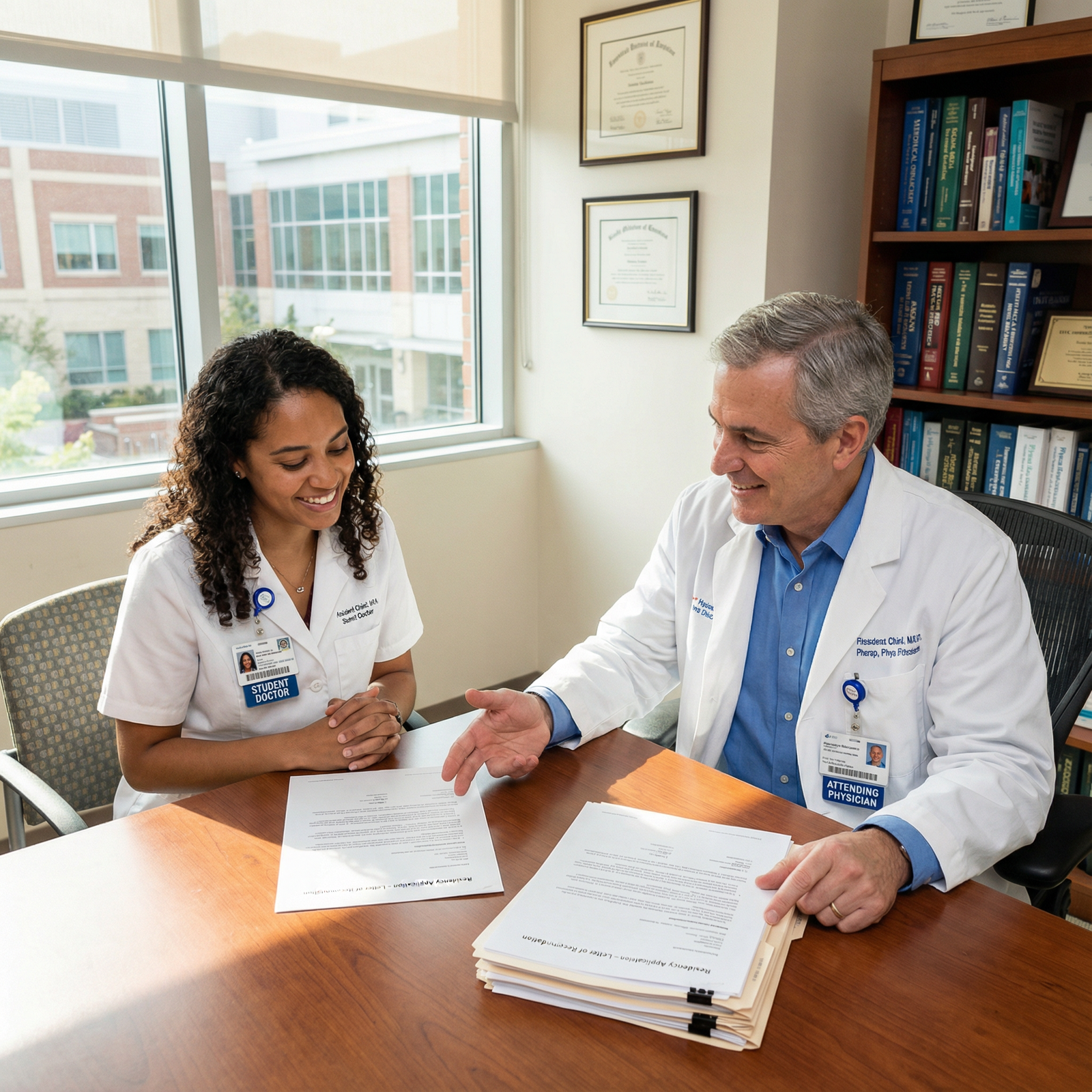
Why Letters of Recommendation Matter So Much in Cardiothoracic Surgery
For a US citizen IMG or an American studying abroad, letters of recommendation (LORs) can make or break a cardiothoracic surgery residency application. This is one of the most competitive and scrutinized subspecialties in medicine. Programs receive far more qualified applicants than they can interview, and they rely heavily on LORs to:
- Assess your technical potential in a highly demanding operative field
- Gauge your work ethic, resilience, and team behavior
- Understand how you compare to other strong trainees
- Validate that trusted faculty are willing to “put their name on you”
For international graduates, LORs also help residency committees answer specific questions:
- Can you perform at the level of US medical graduates in a high-stress OR environment?
- Are there credible US-based surgeons or faculty who can vouch for you?
- Do you understand the culture, expectations, and pace of US training?
If you are a US citizen IMG aiming for heart surgery training—either through integrated cardiothoracic surgery residency (I-6) or as a traditional general surgery resident targeting a CT fellowship—your letters are essential evidence that you belong in this pipeline.
In this article, we will focus on:
- How to get strong LOR as an IMG
- Who to ask for letters in cardiothoracic surgery
- How to strategically plan your rotations to maximize letter quality
- What program directors actually want to see in a letter
- Practical templates, talking points, and timing tips
Understanding the Role of LORs in Cardiothoracic Surgery Applications
How Many Letters and From Whom?
Always confirm current ERAS and program-specific requirements, but in general:
- ERAS typically allows up to 4 letters to be assigned to each program.
- Most cardiothoracic surgery and general surgery programs expect at least 3 letters, often 3–4.
For a US citizen IMG targeting cardiothoracic surgery pathways, a strong baseline mix is:
- One letter from a cardiothoracic surgeon (ideally US-based, academic, and directly supervised you)
- One letter from a general surgeon (acute care, vascular, transplant, or HPB can also be valuable)
- One letter from a senior faculty in a core department (internal medicine, anesthesia, critical care, or another surgical field)
- Optional: A fourth letter from a research mentor (especially if you have serious CT research experience)
If you’re not applying directly to integrated cardiothoracic surgery but planning a general surgery residency first, you still benefit from at least one strong CT surgery–related LOR. Programs recognize you as serious about heart surgery training and see that CT surgeons already support your trajectory.
What Makes a Letter “Strong” vs. Generic?
Program directors read hundreds of LORs. They rapidly separate:
- Generic letters: Mostly adjectives, broad praise, little detail
- Strong letters: Specific, story-driven, and comparative
Key features of a high-impact letter:
- Clear relationship: Describes how and how long the writer knows you
- Specific clinical examples: “On post-op day 2 of a complex CABG, the patient began to decompensate. The student promptly…”
- Comparison statements: “Among the top 5% of students I have worked with in the last 10 years”
- Concrete CT-relevant traits: Technical aptitude, composure under pressure, meticulous attention to detail, teamwork, stamina, honesty
- Program endorsement: Explicit support such as “I would be delighted to have them as a resident in our program”
As a US citizen IMG, your letters must not just say you’re “excellent”; they must prove you can perform on the same level—or better—than US graduates who are also aiming for cardiothoracic surgery.

Who to Ask for Letters: Strategic Choices for US Citizen IMG
Figuring out who to ask for letters is often more important than anything else you do. The strength of the writer’s reputation and their depth of knowledge of your performance both matter.
Priority 1: US-Based Cardiothoracic Surgeons
For an applicant interested in cardiothoracic surgery residency or eventual heart surgery training, the gold standard is:
- A US-based board-certified cardiothoracic surgeon
- Working at a reputable teaching hospital
- Who has directly supervised your clinical work
This may be through:
- A sub-internship / acting internship (sub-I) in CT surgery
- A visiting clinical rotation in cardiothoracic surgery
- A research year with some clinical exposure and OR shadowing
If the letter writer is also:
- A program director, division chief, or well-known academic faculty, their endorsement weighs heavily. Some program directors will immediately recognize certain names and pay extra attention to those LORs.
Priority 2: General Surgeons with Strong Reputations
Many US citizen IMG applicants will complete more general surgery rotations than cardiothoracic ones. Don’t underestimate the value of:
- A general surgery program director
- A trauma / acute care surgeon
- A vascular or transplant surgeon
- Any surgeon known for training CT residents or collaborating closely with the CT team
These faculty can:
- Comment on your technical skills, OR conduct, response to feedback, and work ethic, all central to heart surgery training
- Position you as someone who would excel in a demanding surgical residency and then subspecialty training
Priority 3: Research Mentors in Cardiothoracic / Surgical Fields
If you’ve done serious research related to:
- Coronary bypass surgery
- Valve disease and repair
- Aortic surgery
- Mechanical circulatory support or transplant
- Thoracic oncology or lung transplantation
then a research mentor’s letter can be powerful—especially if they can describe your:
- Ownership of projects
- First-author work or conference presentations
- Ability to manage data, write manuscripts, and think critically
For American students studying abroad, a US-based research year in CT surgery is often one of the most effective strategies to secure strong LORs and build your credibility.
Priority 4: Other Core Clinical Faculty (Internal Medicine, Anesthesia, ICU)
As “supporting” letters, these can still be quite valuable, particularly when:
- The writer is US-based and academic
- They have seen you longitudinally (multiple weeks in the ICU, for example)
- They can attest to your clinical judgment, communication, and reliability
An ICU or anesthesia attending who has repeatedly seen you caring for post-op CT or complex surgical patients can write an excellent, unique perspective letter.
When IMG-School Faculty Letters Are Less Effective
Letters from non-US-based faculty at your international school are often:
- Less familiar to US PDs
- More variable in format and content
- Sometimes too generic
They are not useless, especially if they are detailed and comparative, but for a US citizen IMG applying to a highly competitive route like cardiothoracic surgery, these letters are best used as supplements, not replacements for US-based LORs.
How to Get Strong LORs: Building the Relationship Before the Request
Understanding how to get strong LOR starts months—sometimes years—before you ever ask for one. A powerful letter is built on sustained, visible performance.
Step 1: Choose Rotations Strategically
As an American studying abroad, you must be proactive in securing:
- US clinical electives in surgery and cardiothoracic surgery, ideally at:
- Academic medical centers
- Hospitals with cardiothoracic or integrated CT programs
- Sub-internships / acting internships where you function as close to an intern as possible
Target rotations where:
- You will be on a team with key faculty (program directors, CT division chiefs, or respected attending surgeons)
- The faculty actually write letters for residency applicants and are familiar with the US Match process
Step 2: Perform Like a Junior Resident
In every high-yield rotation, aim to be the student that attendings remember. That generally means:
- Show up early and stay late consistently
- Know patients thoroughly: history, labs, imaging, and operative plans
- Read about every case the night before (especially CT or high-risk surgical cases)
- Volunteer for responsibilities:
- PRE-round notes
- Presenting in rounds
- Following up on consults
- Assisting in procedures when appropriate
In the OR for cardiothoracic or general surgery:
- Know the indication, steps, and major anatomy for each case
- Ask focused, informed questions
- Show composure: calm, attentive, responsive to feedback
- Demonstrate respect for the team—scrub nurses, residents, perfusionists, anesthesiologists
What letters often highlight for top CT applicants:
“Works like a PGY1 already. Needs minimal supervision for tasks at their level.”
Step 3: Signal Your Interest in Cardiothoracic Surgery Early
Don’t keep your interest a secret. For US-based faculty to write a CT-focused letter:
- Tell them explicitly that your long-term goal is cardiothoracic surgery
- Ask for advice on the path—integrated I-6, general surgery followed by CT fellowship, or other options
- Show that you are willing to put in the long, demanding years of training
Attendings are more invested in students who share their field and show genuine, informed commitment.
Step 4: Stay in Touch After the Rotation
Some of the best letters are written by faculty who have:
- Seen the student over multiple rotations or months
- Observed them in clinical and research roles
- Watched them follow through on projects or advice
For a US citizen IMG, this continuity is especially powerful, because it shows:
- You can maintain professional relationships in the US system
- You are reliable and persistent beyond just one month of good behavior
Maintain contact by:
- Sending a polite update email every few months (research, exam scores, conference presentations, next steps)
- Asking for brief career guidance
- Sharing any major application milestones (registering for ERAS, when you apply, when you match)

Asking for the Letter: Timing, Wording, and Logistics
Once you’ve built a strong foundation with a faculty member, you still need to ask correctly. This step often determines whether you receive a generic or truly strong letter.
When to Ask
Aim to ask:
- Near the end of a high-yield rotation, when your performance is fresh in their mind
- Or a few months before ERAS opens, if the relationship extends beyond a single month
For cardiothoracic surgeons specifically, don’t wait until they’re overwhelmed with other duties. If your rotation ends in June and ERAS opens in September, ask before you leave the service and then send a reminder with your final CV closer to ERAS opening.
How to Ask the Right Way
The most crucial phrase when asking is:
“Would you be able to write me a strong letter of recommendation for cardiothoracic surgery (or general surgery with future CT plans)?”
This wording:
- Gives them permission to decline if they can’t be strongly supportive
- Signals that you care about the quality, not just the presence, of a letter
If they hesitate, seem lukewarm, or suggest someone else, listen. A mediocre letter can hurt you.
What to Provide to Your Letter Writers
Make it as easy as possible for them to write a detailed, specific letter. Provide:
- Updated CV
- Personal statement draft (especially CT-focused, if applicable)
- A one-page summary of:
- Your long-term goal (e.g., CT surgery via I-6 or general surgery → CT fellowship)
- Key experiences on their service: particular cases, on-call shifts, ICU experiences
- A few bullet points of strengths you hope they might highlight (e.g., composure in the OR, initiative in managing sick patients, research productivity)
- ERAS instructions and LOR upload link (Letter ID)
You are not “writing your own letter,” but you are reminding them of the best evidence they already have about you.
Following Up and Thanking Them
If they agree to write:
- Politely ask when they think they can submit it (e.g., “Would it be possible to have it uploaded by early September?”)
- Follow up once if the deadline approaches and it’s still not uploaded—professionally and respectfully.
After submission:
- Send a thank-you email expressing genuine appreciation.
- Keep them informed of your progress: when you apply, where you interview, where you match.
These faculty may become future references for fellowships, jobs, or research collaborations.
What Strong CT-Focused Letters Actually Say (and How to Make That Possible)
LORs for a US citizen IMG in cardiothoracic surgery are strongest when they answer three main questions program directors silently ask.
Question 1: “Can this applicant handle the technical and cognitive demands of heart surgery?”
Strong letters highlight:
- Technical skills appropriate to your level (e.g., suturing, knot tying, basic assisting in thoracotomies or sternotomies under supervision)
- Operative mindset: understanding steps, anticipating next moves, learning quickly from feedback
- Ability to stay focused and accurate during long or high-stress cases
For this to be written about you, you must act the part:
- Ask to assist in as many CT-related procedures as possible
- Read operative techniques ahead of time
- Learn and use appropriate surgical language
- Demonstrate attention to sterility, safety, and detail
Question 2: “Will this person be safe, reliable, and coachable during long training years?”
CT training involves very long hours, heavy responsibility, and steep learning curves. Good letters include examples like:
- Staying late to help with a complicated post-op patient
- Volunteering for extra tasks without complaint
- Responding maturely to criticism or mistakes
- Admitting limitations and asking for help appropriately
You can make this possible by:
- Consistently going the extra mile for your team and your patients
- Owning up to errors and demonstrating rapid improvement
- Supporting co-students and residents instead of competing destructively
Question 3: “How does this US citizen IMG compare to our current and past residents?”
For IMGs, comparative statements are particularly useful:
- “Performs at the level of our current PGY-1 residents”
- “Among the top students I have worked with, including graduates from US schools”
- “I would rank them in the top 5% of all trainees at their level”
You can encourage such statements by:
- Maintaining a strong work ethic that clearly stands out
- Demonstrating US system familiarity (notes, EMR, rounding style, interprofessional communication)
- Asking for specific feedback during the rotation and acting on it visibly
Practical Tips and Common Pitfalls for US Citizen IMG
Practical Tips
Plan US Rotations Early
As an American studying abroad, arrange your US surgery/CT surgery rotations 12–18 months before you apply, so you have time to impress faculty and get letters.Diversify, but Don’t Dilute
Aim for a mix of letters:- At least one CT surgeon
- One general surgeon
- One other core clinical or research mentor
Too many letters from non-US-based faculty or non-surgical specialties dilutes your surgical message.
Align Your Personal Statement and LORs
Your personal statement should echo themes that appear in your letters: dedication, resilience, specific CT interests, and your training plan (I-6 vs general → CT). Consistency builds credibility.Use Research to Your Advantage
A productive CT-related research year in the US can:- Generate at least one strong LOR
- Provide publications and presentations
- Increase your visibility to CT faculty who know each other across programs
Check for Program-Specific LOR Preferences
Some integrated CT programs specify the types of letters they want (e.g., at least one CT surgeon, one surgery chair, or one from a PD). Always review each program’s website carefully.
Common Pitfalls
Asking the wrong person:
A letter from a world-famous surgeon who barely knows you is worse than from a lesser-known but deeply invested mentor.Ignoring timing:
Asking at the last minute → rushed, generic letter. Start months in advance.Not clarifying your path:
If you’re applying to general surgery with CT aspirations, make sure your writer knows this so they can frame the letter appropriately.Over-relying on home-country letters:
Even if they’re glowing, too many non-US letters may not carry the same weight for US-based cardiothoracic or general surgery programs.Failing to waive your right to see the letter:
In ERAS, always waive your right to view the LOR; programs expect confidential letters and may question non-waived ones.
FAQs: Letters of Recommendation for US Citizen IMGs in Cardiothoracic Surgery
1. As a US citizen IMG, how many US-based letters do I really need?
Ideally, at least 2–3 letters from US-based faculty, including one from a cardiothoracic surgeon if you are targeting heart surgery training. You can include one strong letter from your international school, but your core application should lean on US-based evaluators who can compare you directly to US students and residents.
2. What if I can’t get a letter from a cardiothoracic surgeon?
It’s still possible to be competitive, especially if you are applying first to general surgery. In that case:
- Focus on very strong letters from general surgeons, trauma/acute care, or vascular surgeons.
- Try to obtain some exposure to CT (observerships, research) and discuss your interest in your personal statement.
- If you cannot secure clinical CT letters, a CT research mentor letter can partially fill that gap, especially if US-based.
3. How do I politely ask “who to ask for letters” if I don’t know which faculty write strong LORs?
Ask your residents or chief residents privately:
- “I’m planning to apply for general surgery with the goal of cardiothoracic surgery. Which attendings here are known for writing strong letters for residency?”
Residents usually know which faculty:
- Invest in teaching
- Are respected by program leadership
- Routinely write detailed letters for applicants
Then try to arrange meaningful contact and performance opportunities with those attendings.
4. Can I use the same letters for both general surgery and integrated cardiothoracic applications?
Often yes, but with nuance:
- A CT surgeon’s letter is usually appropriate for both.
- A general surgery PD or attending letter is also appropriate for both, especially if it highlights your long-term interest in CT.
- For highly specialized I-6 applications, you may want at least one letter that explicitly supports you for integrated cardiothoracic surgery.
You can ask letter writers to mention both: that you are applying to general surgery and/or integrated CT, and that they believe you will excel along the path to heart surgery training.
Letters of recommendation are one of the most powerful tools you control as a US citizen IMG pursuing cardiothoracic surgery. By strategically choosing who to ask for letters, performing like a junior resident during your US rotations, and asking for strong, specific support, you can turn LORs from a vulnerability into a core strength of your application.