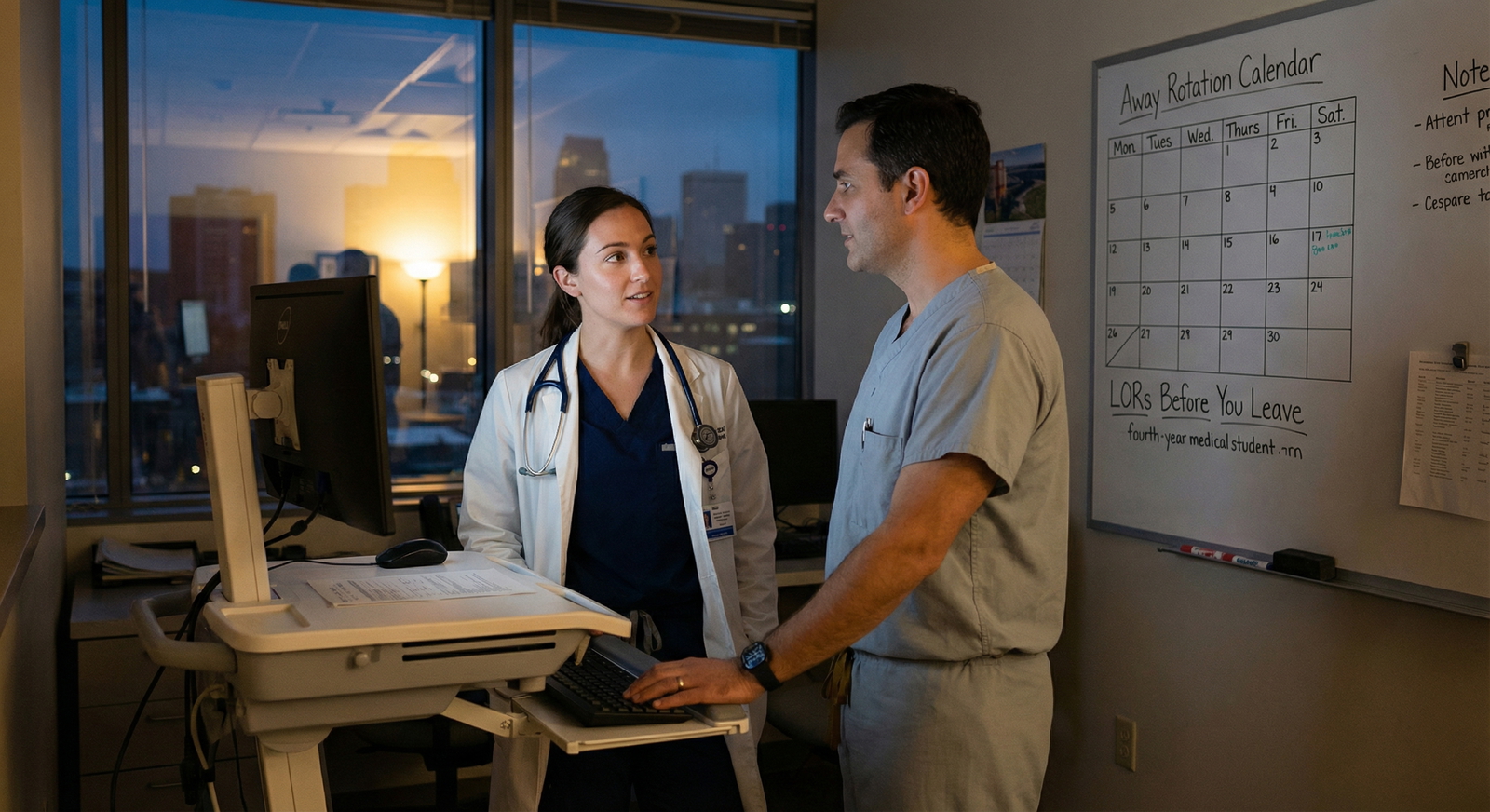
Why Letters of Recommendation Matter So Much in Ophthalmology
Among all specialties, ophthalmology is one where residency letters of recommendation can significantly shift an application’s trajectory. With relatively small program sizes, an early match timeline, and a tight-knit faculty community, decision-makers in ophthalmology residency programs heavily weigh what trusted colleagues say about you.
For an MD graduate aiming for an ophthalmology residency, strong LORs can:
- Confirm the story your application tells (clinical excellence, curiosity, technical skill)
- Add credibility to your ophtho match if your school is less known or your metrics are borderline
- Offset a weaker Step score or underwhelming clerkship comments—if letters speak to clear growth and potential
- Differentiate you from many applicants with similar exam scores and grades
Program directors in allopathic medical school match processes consistently rate residency letters of recommendation among the most important factors in interview and rank decisions. In competitive fields like ophthalmology, this importance is amplified.
This article walks you through, step-by-step, how to get strong LORs: who to ask, how to ask, how to support your writers, and how to avoid common pitfalls as an MD graduate in ophthalmology.
How Many Ophthalmology Letters You Need – And What Type
Because ophthalmology uses SF Match (with its own timeline) plus ERAS for internship, you’ll usually need two sets of letters:
For Ophthalmology (SF Match)
Most ophtho programs typically expect:
- 3 letters total, sometimes 4 (check individual program requirements)
- Among them:
- At least 2 letters from ophthalmology faculty
- 1 letter can be from another specialty (e.g., internal medicine, surgery, neurology) or research
If you’re an MD graduate who has been out of medical school for a year or more, having at least one recent clinical letter (within 12–18 months) becomes particularly valuable to show current competence.
For Preliminary/Transitional Year (ERAS)
For your allopathic medical school match–related internship year, you will usually need:
- 3 letters for prelim/transitional programs
- These can overlap with your ophtho letters, but:
- Intern-year programs often value strong evaluations from core rotations (internal medicine, surgery)
- A strong ophthalmology letter can still help, but at least one general medicine/surgery letter is highly recommended
Practical Recommendation
Aim to secure:
- 2–3 ophthalmology LORs
- 1 general clinical LOR (e.g., from medicine, surgery, or neurology)
- Optional: 1 research LOR (if substantial and recent)
This gives you flexibility to tailor your letters per program and per application system (SF Match vs ERAS).
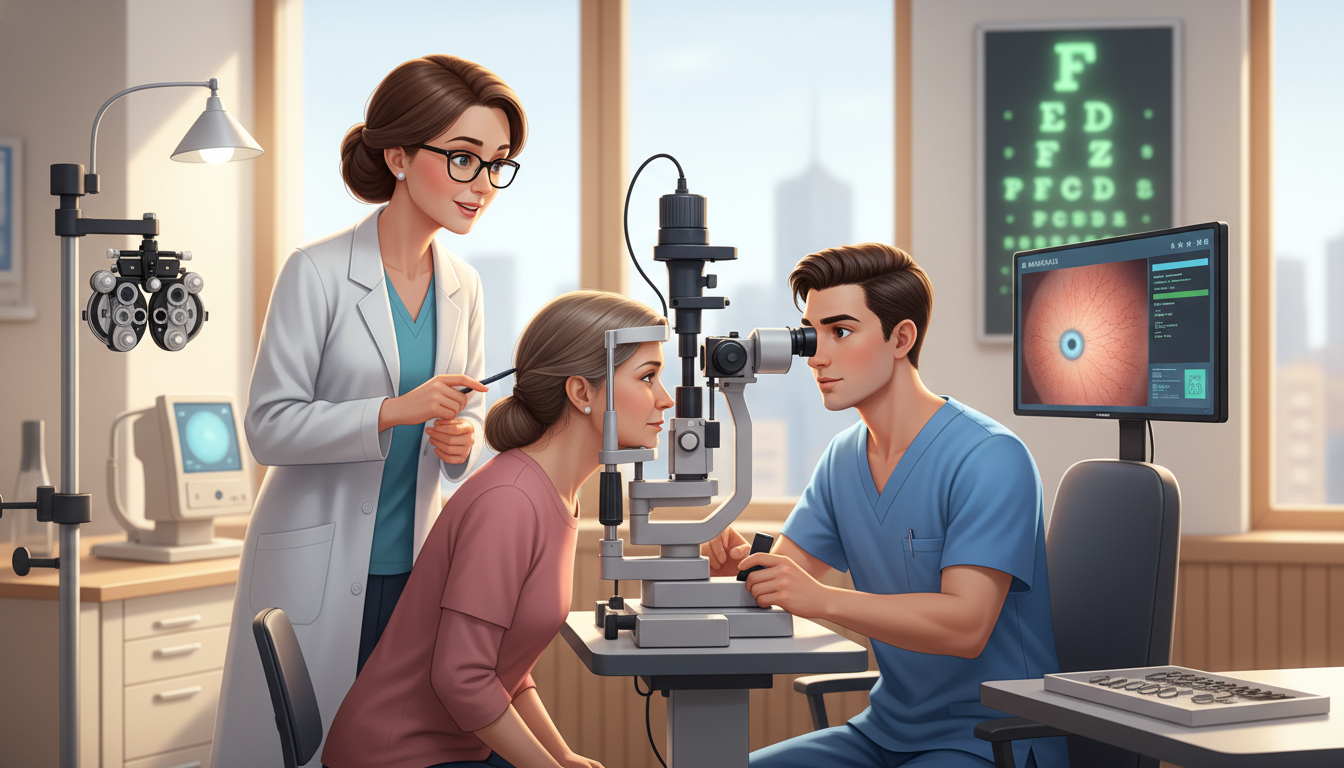
Who to Ask for Letters in Ophthalmology (And Who Not To)
A core question for every MD graduate is who to ask for letters. The quality and impact of your LOR depend heavily on the writer’s:
- Seniority and reputation
- Direct experience supervising you
- Willingness to advocate strongly
Priority 1: Ophthalmology Faculty Who Know You Well
Your best writers are typically:
- Faculty who directly supervised you on an ophthalmology rotation
- Attending mentors from research projects or longitudinal clinics
- Program directors or clerkship directors in ophthalmology who have seen you clinically
Ideal characteristics:
- They’ve observed you repeatedly (not just once in clinic).
- They can speak to:
- Clinical reasoning
- Surgical or procedural aptitude
- Professionalism and teamwork
- Curiosity and commitment to eye care
- They are supportive of your ophthalmology goals and ideally connected within the ophtho community.
For example, a letter from your ophthalmology clerkship director describing your growth from your first clinic session to your final day—with concrete details—often outweighs a short, generic letter from the department chair who barely knows you.
Priority 2: Research Mentors in Ophthalmology
If you’ve worked substantially on ophthalmology research (ideally for at least several months), a research letter can be powerful—especially if:
- You presented at a conference or published a paper/abstract
- Your mentor is known in the field
- They can describe your work ethic, independence, and intellectual curiosity
However, a research letter should not substitute for clinical letters if programs specifically ask for clinical evaluations. The strongest applications blend both.
Priority 3: Non-Ophthalmology Clinicians (For Breadth)
Strong letters from other fields can help support:
- Your overall clinical competence
- Your performance in high-responsibility settings (e.g., medicine wards, ICU, surgery)
- Attributes like communication, reliability, and resilience
Good sources:
- Internal medicine attending from a sub-internship
- General surgery or neurosurgery attending if you showed technical skill
- Neurology attending if you were strong in neuro-ophthalmology–adjacent settings
Programs appreciate knowing that you are a solid physician first and an ophthalmologist second.
Who Not to Ask
Avoid defaulting to:
- Faculty who barely know you but have big names or titles (e.g., department chair, famous researcher you met once)
- Residents alone, unless co-signing with an attending who supervised both of you
- Personal or family friends in medicine without direct professional supervision of you
A frequent mistake MD graduates make is assuming “chair = best possible letter.” A short or generic letter from a chair can hurt more than it helps. A detailed letter from a mid-level faculty who truly knows your strengths is often far more impactful.
How to Get Strong LORs: Building Relationships and Performance
You can’t fix letters retroactively. The key to how to get strong LOR is to plan months in advance, during rotations, research, and electives.
1. Be Explicit About Your Ophthalmology Interest Early
When you start an ophthalmology rotation or related research:
- Tell faculty, “I am planning to apply for ophthalmology residency and would love to learn how to be a strong candidate.”
- Ask for specific feedback during the rotation; this signals you’re coachable and invested.
- Consider arranging a brief meeting with the clerkship director or program director early in your rotation to introduce yourself and your goals.
This creates context for future letters and gives faculty a reason to pay closer attention to your performance.
2. Excel Clinically in Ways Ophthalmologists Value
Ophthalmology attendings often highlight specific traits in LORs. Focus on:
- Attention to detail: Meticulous H&Ps, accurate visual acuity, careful examination.
- Technical aptitude: Comfort with instruments (slit lamp, indirect ophthalmoscope), coordinated hands.
- Pattern recognition and reasoning: Integrating ocular and systemic findings into thoughtful differentials.
- Communication: Explaining diagnoses clearly to patients, writing concise notes.
- Professionalism: Punctuality, ownership of tasks, courteous behavior with staff and patients.
For example, an attending might write:
“By the end of the rotation, Dr. X was independently performing thorough slit lamp examinations and recognizing subtle corneal pathology, then articulating clear, concise assessments and plans.”
That level of detail comes only if you consistently demonstrate these skills.
3. Ask for Real-Time Feedback—and Act on It
Mid-rotation, ask:
“Could you please give me feedback on an area I should specifically work on to be a stronger ophthalmology applicant?”
Then, actually improve in that area. When attendings see visible growth, they can write about your capacity to learn quickly—an extremely valued trait in residency.
4. For MD Graduates Off-Cycle or with Gaps
If you graduated from an allopathic medical school previously and are now applying (e.g., after a research year or other work), make sure you:
- Reconnect with prior attendings and, if possible, rotate or moonlight clinically to obtain updated letters.
- Emphasize continuous engagement in medicine and/or ophthalmology—programs want assurance your skills are current.
- Consider a post-grad ophthalmology research or clinical fellowship (e.g., pre-residency fellow) if feasible; LORs from these experiences can be very strong.

The Mechanics: When and How to Ask for Letters
Once you’ve identified who to ask for letters, timing and approach become crucial.
When to Ask
For the ophthalmology match, timelines are earlier than most other specialties. In a typical year:
- Ophtho applications (SF Match) open: late summer/early fall
- Submission deadline: often September–October
Working backward:
- Ask for letters 4–8 weeks before you need them uploaded.
- For away rotations during summer, request letters near the end of the rotation, while your performance is fresh in the writer’s mind.
If you’re applying directly as an MD graduate (without a gap year), start identifying letter writers by the spring of your third year or early fourth-year summer, depending on your curriculum.
How to Ask: Wording and Medium
Whenever possible, ask in person or via video, then follow up with a clear email.
Example In-Person Request
“I’ve really appreciated working with you during this rotation, and ophthalmology is the field I’m fully committed to. I was wondering if you would feel comfortable writing a strong letter of recommendation for my ophthalmology residency applications?”
Emphasizing “strong” is critical. It gives them permission to decline if they’re unable to be enthusiastic, which protects you from lukewarm letters.
Email Follow-Up Template
Subject: Letter of Recommendation Request for Ophthalmology Residency
Dear Dr. [Last Name],
Thank you again for the opportunity to work with you on [rotation/research project] from [dates]. I learned a tremendous amount, especially regarding [brief specific example].
As we discussed, I am applying to ophthalmology residency this cycle through SF Match, and I would be honored if you would be willing to write a strong letter of recommendation on my behalf. I felt that you observed my clinical skills and growth closely, and your perspective would be very meaningful to programs.
I would be happy to provide any materials that might be helpful, including:
- My updated CV
- A draft of my personal statement
- A summary of my activities and career goals
- Specific details about our work together
Letters for SF Match are ideally submitted by [target deadline—give them 3–4 weeks], and I can provide upload instructions or forms as needed.
Thank you again for your time and consideration, and for everything I learned while working with you.
Best regards,
[Your Full Name], MD
[Medical School / Graduation Year]
[Contact Information]
What to Provide to Your Letter Writers
Make it as easy as possible for them to write detailed, specific letters:
- CV (updated, with ophthalmology-related activities highlighted)
- Personal statement draft, even if not final
- Transcript and exam scores (optional but helpful context)
- Brief bullet list:
- What you did with them (rotation dates, specific responsibilities, research projects)
- 3–5 traits you hope they can comment on (e.g., work ethic, teaching skills, technical aptitude)
- Any meaningful patient stories or projects you shared with them
- Clear instructions:
- SF Match vs ERAS upload portals
- Deadlines
- Any program-specific requirements
You are not “writing your own letter”—you’re giving them the information needed to write a more personalized evaluation, which is expected and appreciated.
Content of a Strong Ophthalmology LOR: What Programs Want to See
While you won’t see confidential letters, understanding what goes into a strong LOR can help you shape the experiences that faculty might write about.
Key Elements of a High-Impact Ophtho Letter
Program directors in ophthalmology often value:
Context and comparison
- How long and in what capacity the writer knew you
- How you compare to peers: “top 10% of students I’ve worked with in the last 5 years”
Specific examples of clinical performance
- Descriptions of how you handled particular clinical scenarios
- Your ability to synthesize ocular and systemic findings
Technical and procedural potential
- Comfort with ocular instruments
- Fine motor skills and attention to detail
Work ethic and professionalism
- Initiative in preparing for clinic or OR
- Reliability with notes, follow-up, research tasks
- Respectful interactions with staff and patients
Commitment to ophthalmology
- Participation in ophthalmology interest groups, research, electives, outreach
- Thoughtfulness about long-term career goals
Enthusiastic endorsement
- Clear, unambiguous support: “I give my highest recommendation” or “I would be thrilled to have them as a resident in our program.”
Letters that are lukewarm, vague, or merely descriptive (without judgment or ranking language) can raise concern—even more than having no letter from that writer.
Example Phrases That Signal Strong Support
While you can’t control exact wording, these are the kinds of things you want your letter to naturally support:
- “Among the top [X]% of students I have supervised.”
- “I would rank [Name] without hesitation on my residency rank list.”
- “I have no doubt that [Name] will become an outstanding ophthalmologist and academic leader.”
Your job is to live out these statements in your behavior and performance so they become authentic reflections, not exaggerations.
Common Pitfalls and Special Situations in Ophtho LORs
Pitfall 1: Overemphasis on Prestige Over Substance
Choosing a famous letter writer who barely knows you often results in generic letters. Program directors can recognize copy-pasted or templated letters and may weigh them less than heartfelt letters from lesser-known faculty.
Solution: Prioritize depth of relationship over reputation. A mix is ideal (e.g., one well-known faculty who really knows you, plus two strong mentors).
Pitfall 2: Asking Too Late
Rushed letters tend to be short and generic. If you send a last-minute request, even a supportive mentor might not have time to craft a detailed letter.
Solution: Ask 4–8 weeks before deadlines, send reminders politely 1–2 weeks before the due date.
Pitfall 3: Not Waiving Your Right to View Letters
Most advisors strongly recommend waiving your right to view letters (i.e., keeping them confidential). Non-confidential letters may be viewed as less candid and, therefore, less trusted.
Solution: Unless there’s an extraordinary reason, waive your right to view, and focus on choosing writers who will be honest and supportive.
Pitfall 4: Inconsistent Narrative Across Letters
If one letter emphasizes that you were unclear about your specialty choice, and another letter calls you “fully committed to ophthalmology for years,” programs may sense a mismatch.
Solution: Share your true timeline and story with each letter writer so their letters align with your overall application narrative.
Action Plan for MD Graduates Targeting Ophthalmology
To bring this together, here’s a concrete checklist to strengthen your residency letters of recommendation as you approach the ophtho match.
6–12 Months Before Application
- Identify key ophthalmology faculty during core rotation(s).
- Demonstrate strong clinical performance and professionalism.
- Express your intent to pursue ophthalmology to interested mentors.
- Begin or continue ophthalmology-related research if possible.
3–6 Months Before Application
- Clarify who to ask for letters:
- 2–3 ophthalmology letters
- 1 general clinical letter (medicine/surgery)
- Optional research letter
- Let potential writers know informally you may ask for a letter.
- Update your CV and begin drafting your personal statement.
1–3 Months Before Application
- Formally ask for letters (in person, then via email).
- Provide each writer:
- CV
- Personal statement draft
- Bullet points about your work together
- Clear deadlines and upload instructions
- Send polite reminders as deadlines approach.
Final Weeks Before Submission
- Verify in SF Match and ERAS that letters are received and assigned to programs.
- Tailor letter assignments as needed (e.g., ensuring a strong medicine letter for prelim programs).
- Thank your letter writers—sincerely and specifically. A short thank-you note or email acknowledging their effort goes a long way.
FAQs About Ophthalmology Residency Letters of Recommendation
1. How many ophthalmology-specific letters do I really need?
Aim for at least two strong ophthalmology letters, ideally three if possible. Most programs like to see multiple ophtho-specific evaluations because they directly reflect your fit for the field. That said, one strong non-ophtho clinical letter is also valuable for showing you are a capable general physician.
2. Is a research letter useful if my research is not in ophthalmology?
Yes—with caveats. A non-ophthalmology research letter can still help if it highlights your work ethic, independence, analytical thinking, and professionalism. However, for the ophtho match, prioritize at least two clinical ophthalmology letters. A non-ophtho research letter is best used as a supplemental letter rather than a replacement for core clinical LORs.
3. What if I did not do a home ophthalmology rotation or my school has no ophtho department?
This is a common situation. Programs understand variability in resources. Your strategy should be:
- Do away rotations in ophthalmology at other institutions.
- Make a strong impression there and request letters from those rotations.
- Obtain excellent general clinical letters (medicine, surgery).
- Clearly explain in your application and personal statement why you chose ophthalmology and how you sought out opportunities despite limited home resources.
Away rotation letters often carry substantial weight in these situations.
4. Should I ask to see or edit my letters before they are submitted?
For U.S. allopathic medical school match processes, standard practice is to waive your right to view letters and not participate in editing. This preserves the integrity and perceived honesty of the letter. You should provide your writers with a CV and supporting materials, but you generally should not request to read or edit the letter itself.
Thoughtful planning around who to ask for letters, how to get strong LORs, and how to support your writers is one of the most impactful things you can do as an MD graduate pursuing an ophthalmology residency. When done well, your letters won’t simply confirm that you’re a capable applicant—they’ll help programs see you as a future colleague they’ll be proud to train.