AAMC data shows that students who retake the MCAT typically see a modest score bump. But a dangerous myth has infected premed forums: the idea that you can crank out a retake in three or four weeks and magically secure a five-point jump. The data tells a completely different story. Let's bust the myth of the quick MCAT retake and look at what actually moves the needle.
The 'Quick Fix' Mirage: Why Speed Isn't a Metric
You bombed your MCAT. You're panicking. The next testing window opens in three weeks, and you think, "I'll just study harder, do it again, and fix this." Bad idea.
Conventional wisdom in some premed circles suggests a few weeks of intense cramming will patch the holes in your score. Here's what the data actually shows: it won't. MCAT scores often plateau because of test-taking stamina and cognitive fatigue, not just content gaps. If you were exhausted on test day, you're already running on empty. Trying to force another three weeks of high-intensity studying on a burnt-out brain doesn't build mastery. It breaks you down. You're hitting the gas pedal while the engine is overheating.
We need to talk about neural consolidation. Learning isn't just about reading a physics equation, feeling a spark of recognition, and moving on. Your brain literally needs physical time to wire those concepts into your long-term memory. When you cram for a rapid retake, you're sacrificing the consolidation phase entirely. The returns diminish rapidly. You might feel like you're studying hard, but you're just staring at pages you already forgot. Your brain hasn't had the biological downtime required to structurally rewire itself for the better.
Worse, this rushed approach breeds performance anxiety. You're walking into the exact same high-stakes environment while carrying the heavy emotional baggage of your previous score. Burnout exacerbates that anxiety. Instead of growing, your score stagnates or outright drops. Speed isn't a metric of improvement. It's a metric of desperation.
Data Decoded: The Real Impact of Retake Timing
(Read: The 'Premed Major Advantage' Myth: MCAT Results by Major to understand how background factors might influence your stress levels during retakes.)
Let's look at the numbers. The AAMC tracks retake data meticulously, and the timing of your retake dictates everything. People love to throw around the idea that any retake yields a +3 to +5 point jump. That's pure fiction.
When you isolate the data for sub-six-week retakes, the probability of achieving even a single point of variance is shockingly low. A massive chunk of rapid retakers score exactly the same, or lower. Why? Recency bias. Students review their practice material, it feels incredibly fresh because they just read it three days ago, and they mistake that short-term familiarity for long-term retention. It's an illusion. Your brain recognizes the material in your bedroom, but that doesn't mean you can recall it under the pressure of a testing center.
(For detailed strategies on managing high-pressure windows, see Two-MCCT Cycle Plan: If You Might Need a Retake, Timeline It Now.)
The data heavily favors a structured, spaced repetition approach. If you wait eight to twelve weeks, your score jumps correlate far more strongly with actual mastery. You've given your brain time to forget the wrong habits and solidify the right ones. You aren't relying on short-term memory; you've built actual cognitive scaffolding.
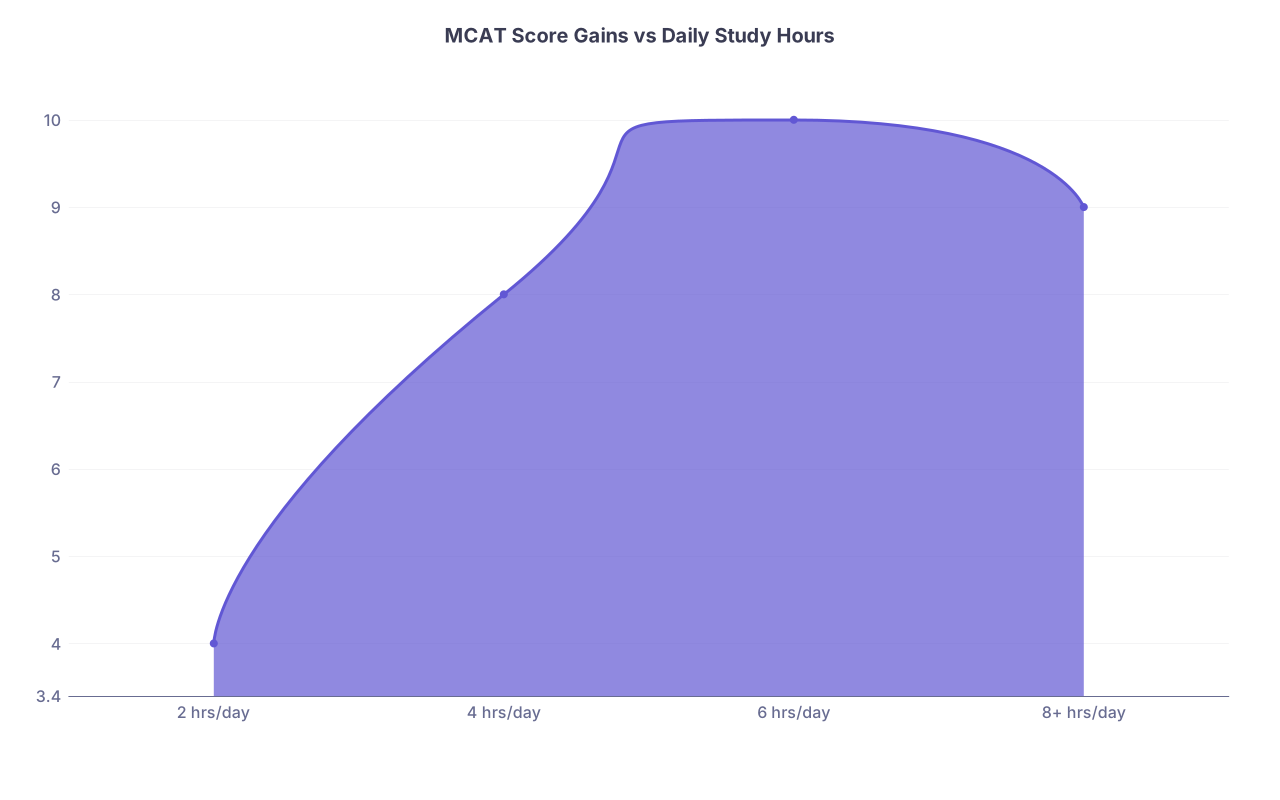
Look at the trend. A two to four week retake nets you a negligible 0.4 point average bump. You essentially paid hundreds of dollars to stay in the exact same place. Push that out to eight to twelve weeks, and the average jumps to nearly three points. That's the difference between a borderline applicant and a competitive one. The gap isn't filled by more hours; it's filled by smarter, spaced hours.
The Strategic Alternative: Diagnose Before You Reschedule
Stop asking when to retake. Start asking why you need to. If you can't articulate exactly why your score landed where it did, a quick retake is just gambling with application money.
Without identifying your specific low-yield content areas, you will repeat the exact same mistakes. You need a deep-dive analytics approach. Was your CARS pacing completely destructive? Did you run out of time on the Chem/Phys section, or do you genuinely not understand buoyancy? There's a massive difference between a pacing problem and a content problem. Treating them the same way guarantees failure.
The quick retake approach means using the exact same prep strategy on a new date. That's insane. If the strategy didn't work the first time, doing it faster won't help. You need a targeted rebuild. New resources. Focused weakness remediation. If you failed CARS because you couldn't track the author's tone, doing more full-length tests won't fix it. You need to do targeted passage mapping drills.
There is no such thing as a guaranteed score jump. What exists is calculated risk mitigation. And that mitigation requires time, diagnosis, and a completely new approach to your weak points.
Key Takeaways
- Speed does not correlate with score improvement; biological neural consolidation requires time.
- Sub-6-week retakes statistically show minimal gains compared to delayed, targeted studies spaced over 8-12 weeks.
- Focus on diagnostic analysis of your specific errors before scheduling any future exam dates.
The next time a forum member tells you they secured a massive score jump after just three weeks of studying, check their data. The numbers don't lie, and neither should your prep strategy. Slow down, diagnose your failures, and let your brain actually learn the material. That's how you win this exam.