
Educational disclaimer: This article is for general educational purposes only. It is not admissions, legal, financial, or professional advising. Interview expectations vary by school, and applicants should use official program materials and guidance from qualified advisors or mentors when making application decisions.
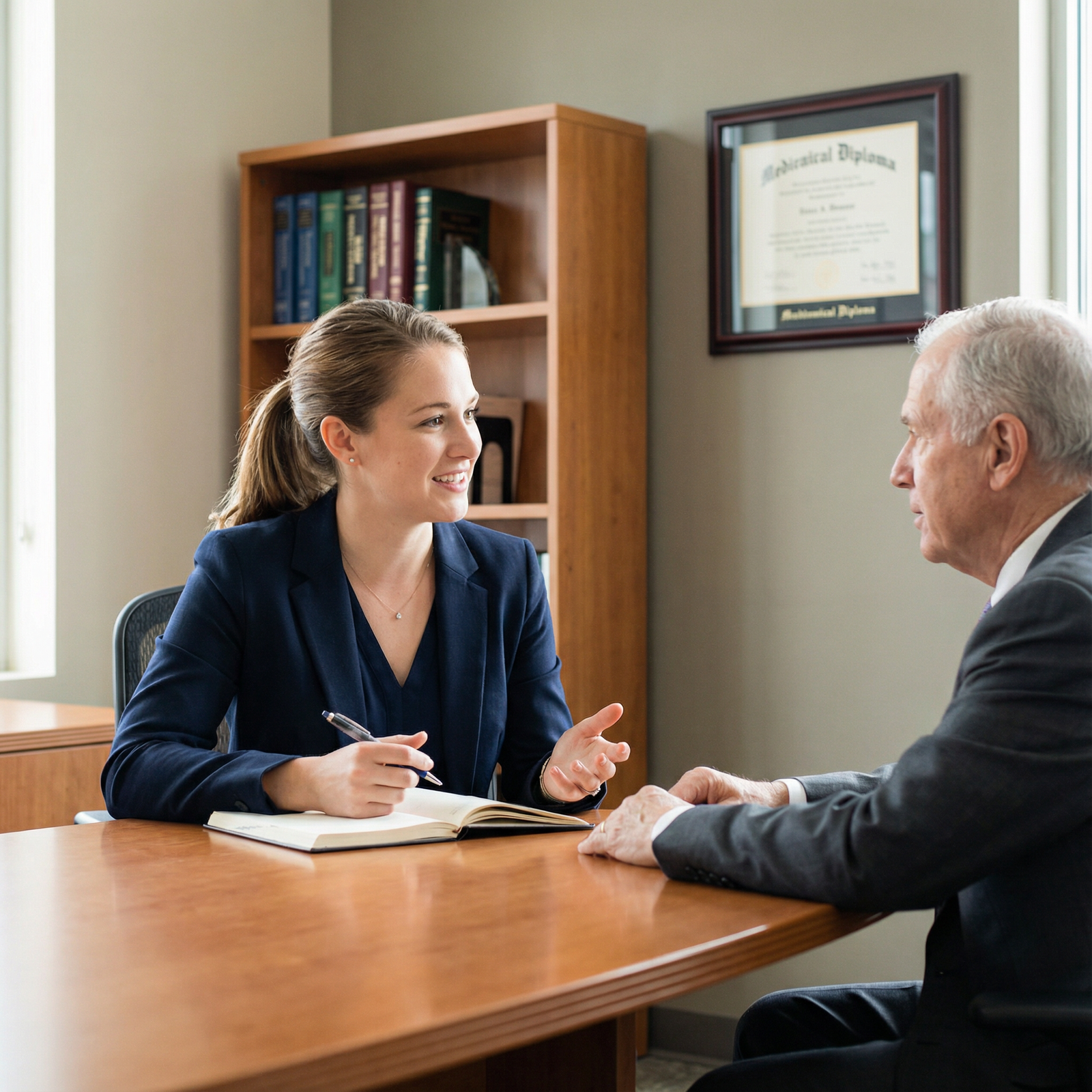
You are in the interview chair. Suit pressed. Webcam centered, or maybe a faculty office with the usual polite smile, bottled water, and framed diploma behind the interviewer. Then the question lands:
“Why osteopathic medicine?”
And right there, a lot of applicants hesitate. Do you bring up osteopathic manipulative medicine? Do you say “OMM” out loud? Do you leave it alone unless they ask? Do you sound more committed if you mention it, or more rehearsed?
That little decision matters more than applicants think. I have seen people handle it beautifully. I have also seen applicants force OMM into answers so awkwardly that the whole response starts sounding like a brochure. That is the real dilemma. You want to show that you understand what makes the DO pathway distinct. But you do not want to sound performative, defensive, or like you memorized three osteopathic buzzwords the night before.
Here is the distinction that clears up most of the confusion. Mentioning OMM is not the same as discussing osteopathic philosophy. And neither of those is the same thing as pretending you understand manipulative techniques at a clinical level. Those are three different lanes. Strong applicants know the difference.
If you have meaningful exposure to OMM, mentioning it can absolutely strengthen your interview. If you bring it up as a canned talking point, or start speaking with fake authority about something you have barely observed, it can hurt you. Badly.
My position is simple: mention OMM when it adds authenticity and substance. Do not use it as decoration. In this article, I am going to break down exactly when it helps, when it backfires, what interviewers are actually listening for, and how to talk about it in a way that sounds credible rather than rehearsed.
What Interviewers Are Really Evaluating When You Mention OMM
Most interviewers are not testing whether you can teach counterstrain or explain the mechanics of rib dysfunction. That is not the game. They are usually evaluating four things:
- Do you actually understand what osteopathic medicine is?
- Do you fit the school’s mission?
- Are you mature enough to talk about clinical experiences honestly?
- Can you communicate with clarity instead of performing?
That is the frame. Not technical mastery.
A lot of applicants miss this and think OMM is a password. Mention it, and the door opens. Wrong. Interviewers are listening for whether your interest in osteopathic medicine is grounded in real observation and reflection. They want perspective, not fake prowess.
Here is the difference.
Mission alignment sounds like this:
“I was drawn to the way the physician I shadowed approached low back pain by discussing lifestyle, work demands, biomechanics, and patient goals, and then used hands-on treatment as one part of a broader plan.”
Overreach sounds like this:
“I really believe OMM is the future of medicine because it treats the root cause of disease.”
That second answer is exactly how applicants get themselves into trouble. It sounds grandiose, simplistic, and uncritical. Worse, it often signals that the applicant does not actually understand how OMM fits within evidence-based care.
Interviewers also have predictable follow-up patterns. If you mention OMM, many will ask one of the following:
- “What exposure have you had to it?”
- “What did you observe during shadowing?”
- “How did that shape your understanding of osteopathic medicine?”
- “How do you see OMM fitting into patient care?”
- “What about the osteopathic approach resonates with you?”
Notice what they are doing. They are pulling you away from slogans and into specifics. They want examples. They want patient-centered reflection. They want to hear what you actually saw, not what you copied from a secondary application.
There is another point applicants need to hear clearly: overemphasizing techniques you have never practiced is a mistake. Full stop. You are a premed, not a manipulative medicine fellow. If you start naming techniques, discussing treatment indications with confidence, or implying you know the clinical utility better than you should, you do not sound prepared. You sound inflated.
The best interview answers stay in the lane of observation, reflection, and fit. You can say that seeing a DO use hands-on assessment made you more interested in the relationship between structure, function, and symptoms. Good. You can say that it reinforced your interest in a patient-centered, preventive approach. Also good.
What you should not do is cosplay expertise.
When You Should Mention OMM
There are clear situations where bringing up OMM is smart.
First: when you are asked directly about osteopathic medicine. If the question is “Why DO?” or “What interests you about osteopathic training?” then avoiding OMM altogether can make your answer feel incomplete. Not always fatal. But incomplete. OMM is one of the distinct features of DO training, and if you have genuine exposure to it, this is the place to use it.
Second: when you are discussing shadowing or clinical observations. This is probably the strongest setting because it gives you something concrete to anchor your answer. Interviewers trust details. If you watched a DO evaluate a patient with neck pain, explain the patient’s posture, discuss ergonomics, and then use OMM alongside a broader treatment plan, that is useful material. It shows you are not speaking in abstractions.
Third: when a question invites you to talk about patient-centered care, whole-person care, function, prevention, or physician-patient relationships. OMM can fit naturally here because many applicants are not really drawn to it as a “technique collection.” They are drawn to what it represents: a more hands-on, function-oriented, person-focused style of care.
That is the key. Connect OMM to larger themes.
Here are the larger themes that usually work well:
- Whole-person care: not just symptoms, but lifestyle, stress, work, movement, and goals.
- Function: how the patient moves, works, sleeps, and returns to daily life.
- Prevention: identifying mechanical or behavioral contributors before things worsen.
- Empathy and touch: the idea that careful hands-on assessment can deepen clinical attention.
- Relationship-building: time, listening, and patient engagement.
That last one is underrated. I have heard excellent applicants describe how observing OMM changed their view of the clinical encounter because it made the visit feel less transactional and more participatory. That is strong if it is true. It gives the interviewer a real picture.

Now the caveat. Depth should vary by program.
Some DO schools clearly foreground osteopathic identity and OMM in their mission, curriculum, and culture. At those schools, a complete answer to “Why this school?” should probably include at least a thoughtful sentence about your interest in osteopathic principles and, if applicable, OMM exposure. Other programs have a broader emphasis on service, primary care, rural health, underserved communities, or systems-based training, with OMM still present but not always the centerpiece of your answer. Read the room. Read the mission statement. Read the curriculum pages. This is not hard, but applicants are lazy about it.
A smart answer matches the school’s priorities. If a program strongly emphasizes osteopathic tradition, and you ignore it entirely, that can feel tone-deaf. If a program emphasizes community health and you make your whole answer about manipulative medicine, that can feel narrow.
For applicants with meaningful exposure, the best use of OMM is usually brief but specific. Something like:
- what you observed
- what you learned from it
- why it mattered to your understanding of medicine
That is enough. You do not need a sermon.
A good sample structure:
“I was initially drawn to osteopathic medicine because of its whole-person philosophy, but shadowing Dr. Patel gave that idea real substance for me. I watched her use hands-on assessment and OMM as part of a broader plan for a patient with chronic back pain, while also addressing work posture, exercise, and stress. What stayed with me was not just the technique itself, but the way it reflected a more functional and patient-centered approach to care.”
That answer works because it is grounded. It does not oversell. It does not pretend OMM is magic. It ties observation to reflection. That is what interviewers reward.
When You Should Not Lead With OMM
Do not lead with OMM in every answer. That is the fastest way to sound scripted.
I have heard applicants shoehorn it into “Tell me about yourself,” “What is your greatest challenge,” and “Describe a leadership experience.” At that point, it stops sounding meaningful and starts sounding desperate. Interviewers notice. They are not stupid.
You also should not use OMM as filler if you cannot explain what you mean. If your entire understanding is basically “DOs do hands-on stuff,” then keep it broader. Focus on osteopathic values, patient-centered care, and what drew you to the training environment. There is no shame in being early in your understanding. There is shame in bluffing.
There are several situations where the safer move is to discuss osteopathic philosophy rather than OMM specifically:
- You have little to no direct exposure.
- The question is broad and personal rather than school- or DO-specific.
- You are not confident you can answer follow-up questions cleanly.
- Your interest in the DO path is genuine, but rooted more in philosophy than manipulation.
That is fine. Very fine, actually.
The pitfalls here are predictable.
Pitfall one: talking as if all DOs use OMM daily. They do not. Different specialties use it differently, and many physicians incorporate osteopathic principles far more than formal manipulative treatment.
Pitfall two: implying OMM replaces standard medical care. Bad answer. OMM is not a substitute for evidence-based diagnosis, pharmacology, imaging when indicated, procedural care, or referral. Presenting it that way makes you sound unserious.
Pitfall three: treating OMM like an admissions trick. If your answer feels like, “I know this is what DO schools want to hear,” you have already lost the tone battle.
Keep this rule in mind: if OMM is not adding substance, it is subtracting credibility.
How to Talk About OMM Naturally and Credibly
Use a four-part framework:
- Exposure
- Reflection
- Relevance to medicine
- Future curiosity
That is the cleanest way to do it.
1. Exposure
Start with what you actually experienced.
- shadowed a DO who used OMM
- observed patient education around body mechanics and function
- discussed osteopathic training with a mentor
- learned about the role of structure and function through clinical exposure
Specifics win. Name the setting. Name the kind of patient problem if appropriate. Show that this came from reality.
2. Reflection
Then explain what you took from it.
Did it show you a more hands-on style of assessment? Did it change your understanding of chronic pain visits? Did it make whole-person care feel more concrete rather than just theoretical language?
This is where your answer becomes yours.
3. Relevance to medicine
Next, connect it to the kind of physician you want to become.
Maybe you value functional outcomes. Maybe you like the idea of approaching symptoms in a way that includes lifestyle, movement, and prevention. Maybe you appreciate how hands-on care can strengthen the physician-patient relationship.
Again, patient-focused. Always better.
4. Future curiosity
End by showing humility.
You are not supposed to be an OMM expert yet. Say you are interested in learning more. Say you want formal training to understand where it is most useful and how it complements broader medical care. That sounds mature.
Here is sample language for different situations.
If you have shadowing experience
“I had the opportunity to shadow a DO in family medicine and observe OMM during a few musculoskeletal visits. What stood out to me was not just the hands-on treatment, but how it fit into a larger conversation about function, daily activities, and prevention. It made the osteopathic philosophy feel practical rather than abstract, and that is part of what drew me to DO training.”
If you have limited exposure
“I am still early in my understanding of OMM, so I would not want to overstate my experience. What has drawn me to osteopathic medicine so far is the emphasis on whole-person care and the relationship between structure, function, and health. I am interested in learning more about how OMM fits into that framework during medical school.”
That answer is honest. Honest beats polished nonsense every time.
If you are still learning and want to show curiosity
“I do not have extensive direct exposure to OMM yet, but I have become interested in the way osteopathic training emphasizes hands-on assessment and functional thinking. I see that as one part of a broader patient-centered approach, and I would be excited to develop a more informed understanding of it through formal training.”
That works because it does not pretend.
Now let me make this even more practical.
Mini checklist for sounding polished
Before your interview, test your answer against this list:
- Concise: Can you explain your point in 20 to 40 seconds?
- Specific: Did you mention a real observation, not just a slogan?
- Patient-focused: Did you connect OMM to care, function, or experience?
- Humble: Did you avoid pretending you know more than you do?
- Mission-aligned: Does your answer fit the school you are interviewing at?
If your answer fails two or three of those, revise it.
The strongest applicants sound thoughtful, not overeager. They do not worship the distinction between DO and MD pathways. They understand it. There is a difference. Mature applicants can say, plainly, that they are drawn to osteopathic medicine because its philosophy and training model fit how they think about patient care. If OMM helped shape that view, say so. If not, do not force it.
Interview Strategy by Question Type
Let me break this down by the questions you are most likely to get.
“Why DO?”
This is where OMM fits best. Not necessarily as the entire answer, but as one piece of it. Your main narrative should still be bigger than manipulation alone. Lead with your understanding of osteopathic philosophy, then use OMM as supporting evidence if you have observed it in practice.
“Why this school?”
Mention OMM only if it is relevant to that school’s identity, curriculum, or your experiences. If the program highlights osteopathic skills training, manipulative medicine clinics, or a strong hands-on tradition, bring it in briefly. If the school’s mission is more centered on underserved care or rural medicine, do not make OMM the star of the answer.
“Tell me about yourself”
Usually, keep OMM secondary here. This answer should frame your journey, values, and motivation. If a shadowing experience involving OMM genuinely changed your thinking, mention it as one turning point. Do not build your whole identity around it.
“What interests you about osteopathic medicine?”
This is the most direct invitation. Here, discussing OMM is appropriate, especially if you can connect it to whole-person care, function, and clinical observation.
Now, interviewer type matters too.
- DO interviewer: often more likely to explore your understanding of osteopathic identity and ask follow-up questions about exposure.
- MD interviewer: may be more interested in your broader reasoning, maturity, and fit than the technical aspect of OMM.
- Student interviewer: often picks up quickly on whether you sound rehearsed.
- Faculty with strong OMM interest: can probe deeper, so do not bluff.
- Faculty with broader specialty focus: usually cares more about whether your answer is balanced and thoughtful.
For virtual interviews, this matters even more. You have less room to recover with body language and warmth. If your answer is long, vague, or canned, it lands flat. Be concise. Intentional. Controlled.
Common Mistakes Applicants Make About OMM
Here are the mistakes I see again and again:
- sounding rehearsed
- confusing OMM with osteopathic philosophy as a whole
- making sweeping claims about efficacy
- using jargon they cannot explain
- acting like OMM is the defining feature of every DO career
- talking around exposure they never actually had
The worst version is the applicant who says OMM “treats the root cause” of almost everything. That line needs to die. It is simplistic and medically sloppy.
Avoid overpromising. OMM is not a cure-all. It does not replace evidence-based care. It is one component of osteopathic training and, depending on the physician and specialty, one tool among many. Presenting it with nuance makes you sound credible. Presenting it like a miracle makes you sound unserious.
Also, drop the jargon unless you genuinely know what you are saying. If you mention a technique name and get asked to explain it, and then you freeze, that is on you. Plain language is better. “I observed hands-on treatment used to complement broader care for a musculoskeletal complaint” is safer and stronger than random buzzwords.
Practice out loud. Not silently in your head. Out loud. That is how you catch the robotic phrasing and the weird overexplaining.
Conclusion: Use OMM as a Signal of Fit, Not a Performance
Here is the rule I want you to leave with: mention OMM when it adds authenticity, context, and alignment. Do not mention it because you think it is required.
Strong DO interview answers are not built on buzzwords. They are built on honest reflection, clear understanding of osteopathic values, and a patient-centered view of medicine. If OMM is part of that story for you, use it. Specifically. Briefly. Credibly.
If you can explain what you observed, what it taught you, and why it shaped your interest in medicine, OMM can absolutely strengthen your interview. If you cannot do that, keep the focus broader. Talk about whole-person care. Talk about function, prevention, and the kind of physician you want to become.
That is the real win. Not performing osteopathic identity. Demonstrating fit.