The romantic story you’ve been told about osteopathic philosophy is mostly marketing. In day‑to‑day practice, DOs and MDs treat patients far more similarly than schools and brochures want you to believe.
If you’re premed or early in medical school, you’ve probably heard this pitch: DO schools train “holistic,” “whole‑person,” “hands‑on” physicians, grounded in a unique osteopathic philosophy that sets them apart from MDs. Sounds noble. Sounds marketable. But how much of that actually shows up in real clinical practice when you’re cranking through 25 patients in clinic or cross-covering 40+ in the hospital?
Let’s pull the curtain back.
What “Osteopathic Philosophy” Actually Claims
On paper, osteopathic philosophy has a few core ideas that every DO school loves to put on a slide:
- The body is a unit: mind, body, spirit.
- Structure and function are interrelated.
- The body has self‑regulatory and self‑healing mechanisms.
- Rational treatment is based on these principles.
Then there’s the practical expression of this: Osteopathic Manipulative Treatment (OMT/OMM)—hands‑on techniques aimed at diagnosing and treating “somatic dysfunction.”
If you sit through DO school orientation, you’ll hear some version of: “We don’t just treat disease; we treat people. We emphasize prevention. We use our hands to diagnose and treat.” You’ll hear that this is different from “allopathic” (MD) medicine, which supposedly just throws drugs and procedures at isolated problems.
That’s the sales pitch.
Now let’s look at what actually happens when DO graduates go into the wild.
Evidence Check: How Often Is Osteopathic Manipulation Used?
Start with the most tangible piece: OMT. If osteopathic philosophy really shaped practice in a unique way, you’d expect DOs to be using OMT frequently, right?
They aren’t.
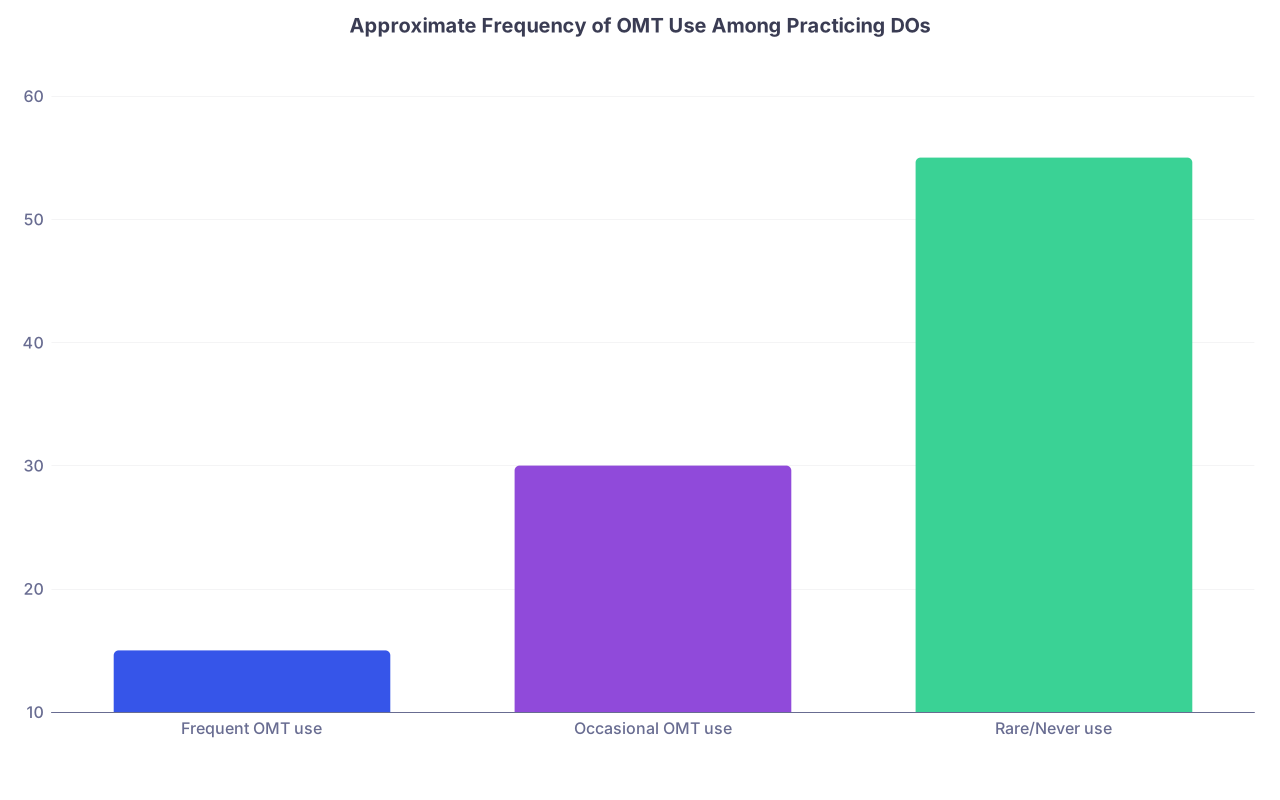
Multiple surveys of practicing DOs going back over two decades show the same pattern: most DOs rarely or never use OMT in routine practice, especially outside a few niches.
The numbers shift slightly by study and year, but the pattern is remarkably consistent:
| Category | Value |
|---|---|
| Frequent OMT use | 15 |
| Occasional OMT use | 30 |
| Rare/Never use | 55 |
The exact percentages vary depending on specialty and survey method, but it’s not controversial in DO circles to say: a minority of DOs use OMT regularly, and a substantial chunk use it rarely or not at all once in full practice—especially in hospital-based specialties, emergency medicine, anesthesiology, radiology, and most surgical fields.
I’ve watched residents with DO degrees go entire months on inpatient rotations without touching OMT once. Not because they hate it. Because there’s no time, no system support, and frankly, no billing infrastructure that makes it worth doing in a 10–15 minute follow‑up slot.
So if the most distinctive “tool” of osteopathic medicine is rarely used, what about the more philosophical stuff—the “whole person,” mind‑body‑spirit claims?
Holistic Care: Philosophy or Just Good Medicine?
Here’s the uncomfortable truth for the marketing departments: “holistic, whole‑person care” is not uniquely osteopathic. It’s mainstream medicine now.
Family medicine, internal medicine, pediatrics, and psychiatry—MD and DO alike—are drilled with concepts like patient‑centered care, social determinants of health, motivational interviewing, shared decision‑making, trauma‑informed care. These aren’t osteopathic add‑ons; they’re standard ACGME core competencies and board exam content.
So the question is not: “Do DOs care more holistically than MDs?”
The real question is: “Does osteopathic training produce measurably different practice patterns or outcomes?”
Here’s where the data gets boringly anti‑dramatic.
- Patient satisfaction? No convincing, consistent advantage for DOs vs MDs when you adjust for specialty and practice environment.
- Prescribing patterns? Largely driven by specialty, geography, and system policies—not DO vs MD letters.
- Use of counseling, preventive care, screening? Again, dominated by specialty and practice setting. A DO in a rushed community clinic will practice more like the MD next door than like the marketing brochure from their school.
You’re not going to find a robust body of evidence showing that DOs spend more time with each patient, prescribe fewer medications, or deliver better holistic outcomes solely due to osteopathic philosophy. The variation within each group (DO vs MD) dwarfs any average difference between them.
Holistic care is about time, training environment, and personal style—not your diploma logo.
Where Osteopathic Philosophy Does Shape Reality: Training, Not Practice
If you want to see osteopathic philosophy in action, look at DO school curricula, not most physician practices.
Every DO student spends hundreds of hours learning OMM/OMT. They’re tested on osteopathic principles on COMLEX. Some schools truly emphasize it. You’ll see faculty passionately demonstrating rib raising, muscle energy, HVLA, cranial techniques. You’ll hear about Chapman points and lymphatic pumps.
In school, osteopathic identity is a very real, very concrete thing.
Then graduates hit residency. Mostly ACGME (formerly “MD”) programs now that the merger is complete. And reality looks different.
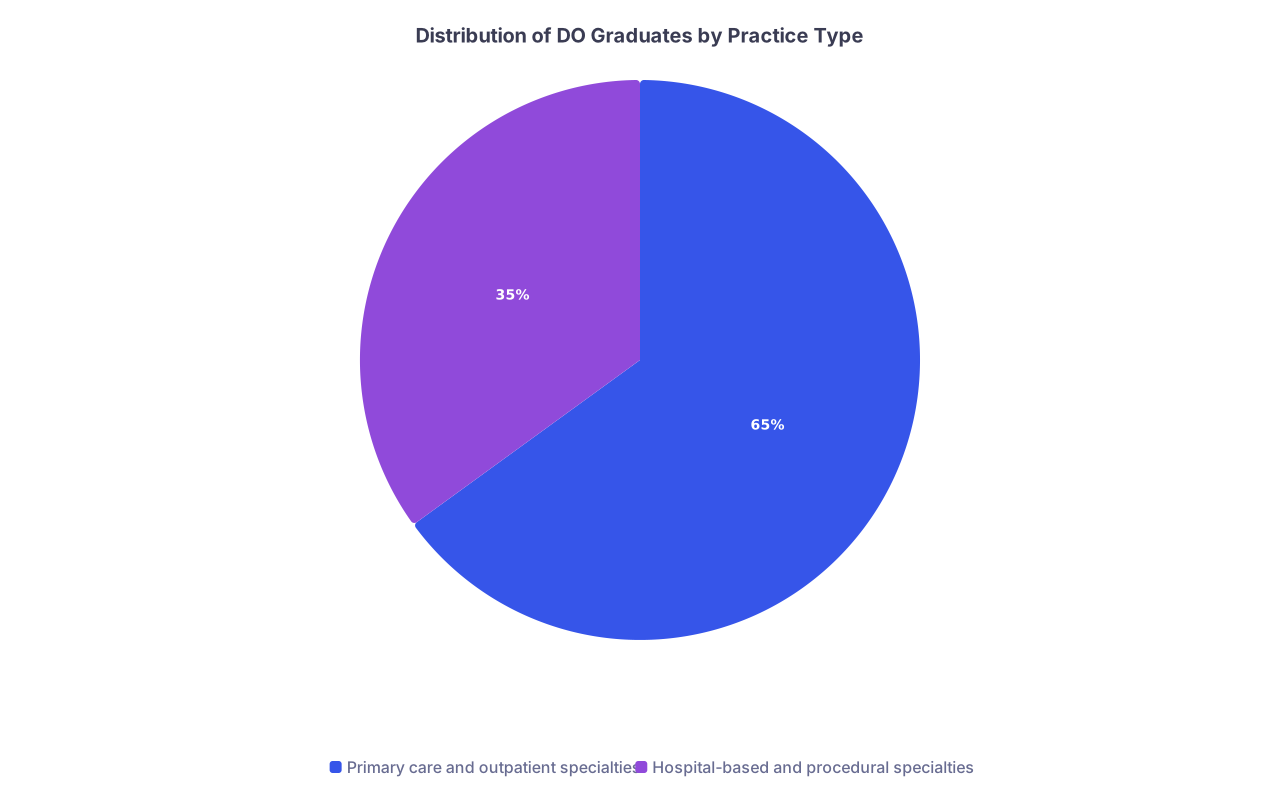
Here’s the pipeline reality:
| Category | Value |
|---|---|
| Primary care and outpatient specialties | 65 |
| Hospital-based and procedural specialties | 35 |
Most DOs end up in primary care–leaning fields where you could integrate OMT or more hands‑on holistic touches if you wanted. But most do not, at least not systematically.
The philosophy shows up strongest in three places:
- Admissions rhetoric and identity-building during school.
- The extra OMM coursework and labs.
- A subset of DOs—often in FM, sports med, PM&R, pain—who deliberately craft OMT-heavy practices.
For everyone else, osteopathic philosophy slowly dilutes into the background of “good bedside manner” and a vague claim of being “more holistic,” indistinguishable from any MD who believes the same things and practices thoughtfully.
The Residency and Systems Reality: Why Philosophy Gets Squeezed Out
The main reason osteopathic philosophy rarely translates into distinctive practice isn’t conspiracy. It’s logistics.
Residency and modern health systems are built around:
- RVUs and billing codes.
- Throughput and metrics.
- Standardized clinical guidelines.
- Limited visit lengths.
OMT is time‑consuming. You can’t meaningfully do a full structural exam, counseling, and manipulative treatment and still keep up in a 15‑minute acute visit, unless you want to drown.
And then there’s billing. OMT has specific CPT codes, but:
- Many residents never learn to bill them correctly.
- Some Attending physicians never use them.
- Certain systems quietly discourage OMT because it complicates workflows.
So philosophy meets productivity pressure. Productivity wins.
I’ve literally heard DO residents say, “I’d love to use OMT, but I’m already behind on notes and consults. I’m not adding 10 more minutes per patient for something my attending doesn’t even value.”
That’s the real world. Whatever you were told on interview day has to survive that environment.
So Are DOs Just “MDs with Extra Back Pain Tricks”?
Not quite. But close in most specialties.
There are three distinct realities you need to hold in your head simultaneously:
- On a population level, DOs and MDs practice extremely similarly when you control for specialty, training environment, and practice setting.
- Osteopathic training does create a small but real sub-group of physicians who build OMT-heavy or strongly hands‑on practices, especially in primary care, sports, and musculoskeletal medicine.
- The philosophical talking points (mind-body-spirit, self-healing, structure-function) are not operationalized into clearly different standard-of-care protocols that separate DO practice from MD practice in most clinical settings.
If you’re imagining that going DO means you’ll automatically be trained to practice some dramatically more humanistic form of medicine—no. You might get more touch-based assessment skills. You might think more structurally about musculoskeletal complaints. But whether you’re actually more “holistic” in practice will depend overwhelmingly on you, not on the letters.
Where the MD vs DO Story Really Comes From: Branding and History
Osteopathic medicine started as an alternative system in the late 1800s, more skeptical of drugs and surgery, more focused on manual medicine. Over time, it moved toward mainstream evidence‑based practice.
Fast forward to today:
- DOs and MDs sit in the same residencies.
- They take overlapping board exams (COMLEX vs USMLE).
- They’re licensed as equivalent physicians in all 50 states.
- They follow the same clinical guidelines and evidence.
So how do DO schools justify their separate identity? They lean on philosophy. Hard. “Whole‑person,” “hands‑on,” “osteopathic difference.” Because they can’t lean on radically different pharmacology, different cardiology, different ventilator settings in the ICU. Those are the same.
There’s nothing inherently wrong with branding. But you need to recognize it as such.
A lot of premeds choose DO because they believe they’re choosing a more human, patient‑centered version of medicine. What they’re actually choosing is a different path to the same practice reality, with some extra tools they may or may not use.
Does Osteopathic Philosophy Help or Hurt Your Career?
Here’s the part everyone tiptoes around with premeds: how does all this affect you strategically?
For most U.S. applicants, DO is a parallel track into mainstream physicianhood, not a ticket into a separate tribe that practices a dramatically different kind of medicine.
- If you want primary care, sports med, PM&R, pain, or a general outpatient field and you genuinely love manual medicine, a DO degree can give you extra tools. You can absolutely build a practice where osteopathic principles matter day to day.
- If you want a highly competitive surgical or subspecialty field, your “osteopathic philosophy” won’t matter. Your scores, research, evaluations, and performance will. In these environments, almost nobody cares if you’re more “holistic” if you can’t scrub efficiently and manage complex patients.
Here’s the mind‑set shift: don’t pick DO because you believe DOs “care more.” Pick it if it’s your best viable route into medicine, and if you actually intend to use the manual skills and perspective you’re paying to learn.
If you know you will never, ever do OMT on a patient, then you are essentially choosing:
- Extra coursework and testing that may not benefit you directly.
- A historical identity that might matter less and less as training fully merges.
- A degree that is functionally equivalent in most settings, but still carries subtle biases in a few academic or ultra-competitive niches.
For many applicants, that’s a completely rational trade‑off. But you should walk into it with your eyes open, not because a brochure told you DOs “treat the whole person” like MDs don’t.
How Philosophy Actually Shows Up in the Exam Room
Strip away the slogans. What does a “philosophically osteopathic” encounter look like in a realistic clinic slot?
It’s not mystical. It’s usually something like:
- A DO with a primary complaint of low back pain spends 2–3 minutes doing a more detailed musculoskeletal/structural exam than many MDs would.
- They might integrate an OMT technique—muscle energy, soft tissue, maybe HVLA—especially if they’ve structured their schedule to allow it.
- They might emphasize posture, movement, breathing, and lifestyle in a way that’s somewhat more physical and hands‑on than average.
That’s it. It’s not a different universe of medicine. It’s the same HPI, ROS, meds, PMH, differential, and guideline-driven decisions, with some additional manual tools and a bit of extra emphasis on structure and function.
And most DOs, under pressure, end up defaulting to the same pattern as their MD colleagues: quick assessment, meds/therapy/imaging as indicated, brief counseling, move on.
Some MDs, especially in primary care or sports, practice in ways that look identically “osteopathic” in spirit—long visits, lots of counseling, manual assessment, sometimes other hands‑on modalities (even if not called OMT). Because again, the main determinant is the doctor and the system, not the diploma.
So, Is Osteopathic Philosophy Really Used in Practice?
Here’s the blunt answer you’re not going to see on a school website:
- Osteopathic philosophy is heavily taught, constantly referenced, and strongly branded during DO training.
- In routine practice, for the majority of DOs—especially outside musculoskeletal and primary care niches—it fades into background mindset more than it functions as a clearly distinct clinical approach.
- The striking, tangible difference (OMT) is used regularly by a minority of DOs and barely or never by many others.
If you’re premed or early in school, what you should take away is simple:
- DO vs MD does not predetermine whether you’ll be “holistic.” You do.
- OMT is a real, useful tool—if you practice in a context where you can and will use it.
- Most differences in practice patterns come from specialty, training environment, and personality, not from the initials after your name.
The philosophy isn’t fake. It’s just not magic. And it’s definitely not the day‑to‑day revolution the marketing makes it out to be.