The fastest way for a DO student to sabotage their own degree is to quietly treat OMM/OMT like an elective. It is not. And programs will punish you for acting like it is.
You want “DO vs MD” clarity? Here it is: MD students do not have to worry about failing an OMM practical that keeps them from progressing. You do. If you copy MD study habits without adjusting for OMM, you are walking into a trap that catches first- and second-years every single year.
Let me walk you through the academic landmines I see over and over—and how to avoid stepping on them.
1. Treating OMM as Optional Background Noise
This is the foundational mistake. Everything else grows out of this.
I have watched first-years at places like VCOM, NYITCOM, and LECOM literally say out loud:
“Boards don’t really test OMM that much. I’ll just cram before the practicals.”
By Thanksgiving they are:
- Passing systems exams
- Doing “OK” on COMSAE practice tests
- And simultaneously one failed OMM practical away from remediation
Why? Because they made three wrong assumptions:
“OMM is just extra anatomy.”
Wrong. It is anatomy + biomechanics + hands-on psychomotor skills + osteopathic philosophy. Different mental muscles than multiple-choice exams.“Boards barely test it so I can ignore it now.”
Wrong again. COMLEX Level 1 and 2 are written by osteopathic physicians. They consistently include OMM, and some questions are basically free points if you are not completely lost.“I can flip the switch third year when I need it for clinic.”
No. You cannot suddenly develop palpation and technique skills in a month. Your hands need reps. Early and often.
The result when you ignore OMM:
- You spend more time later trying to catch up
- You risk failing a course that MD students do not even have
- You start resenting the entire osteopathic side of your education—because you treated it like noise instead of a core subject
Avoid this trap:
- Put OMM on your weekly study calendar as a separate subject, not an afterthought
- Treat it like a language: small, frequent exposure beats giant cram sessions
- Ask yourself once a week: “If I had a practical tomorrow, would I be humiliated?” If the answer is yes, you are underprepared
2. Copying MD Study Schedules Without OMM Time Built In
Here is the premed fantasy: “I will use the exact same Anki decks, the same board resources, the same YouTube channels as MD students—because a test is a test.”
Reality check: MD-oriented study schedules are silently missing 3–6+ hours per week you will need for OMM readings, labs, practice, and write-ups.
So what actually happens?
You adopt an MD-style system-based schedule with:
- X hours of lectures
- Y hours of Anki/Boards & Beyond/Sketchy
- Z hours of question banks
Then your OMM lab appears on your calendar like an annoying pop-up ad.
You think, “I’ll just survive lab and focus on the real stuff.” Bad framing. Because then:
- You do not block time to review OMM lecture content
- You do not pre-practice techniques before lab
- You do not revisit concepts between labs
- You walk into practicals relying solely on two rushed group practice sessions

| Category | Value |
|---|---|
| Boards Content | 32 |
| OMM/OMT | 6 |
| Admin/Logistics | 2 |
What successful DO students do differently is not heroic. They just accept a harder reality earlier:
- They reserve protected OMM time each week:
- 1–2 hours: reviewing slides/videos and writing mini outlines
- 1–2 hours: solo mental run-throughs of sequences (HVLA, MET, counterstrain positions)
- 2+ hours: live practice with classmates
If you are planning medical school now (premed phase), this has a direct implication:
- Do not aim for a schedule that already has you at 60+ hours/week fully booked with only “USMLE-style” study
- Build in an extra 4–6 hours in your mental model for OMM from the start
- If you are shadowing DOs and none of them can explain how they used OMM in school or practice… that is a red flag. You may be walking into a culture where students learn to treat OMM as expendable. That mindset spreads.
3. Underestimating OMM Practical Exams (Until They Wreck You)
Written OMM exams are one thing. Practical exams are another beast. And this is where a lot of smart, high-MCAT students get blindsided.
The pattern I keep seeing:
- Student crushes first systems exam. Confidence spikes.
- Student glances at OMM notes, attends lab, half-practices techniques.
- Practical exam arrives.
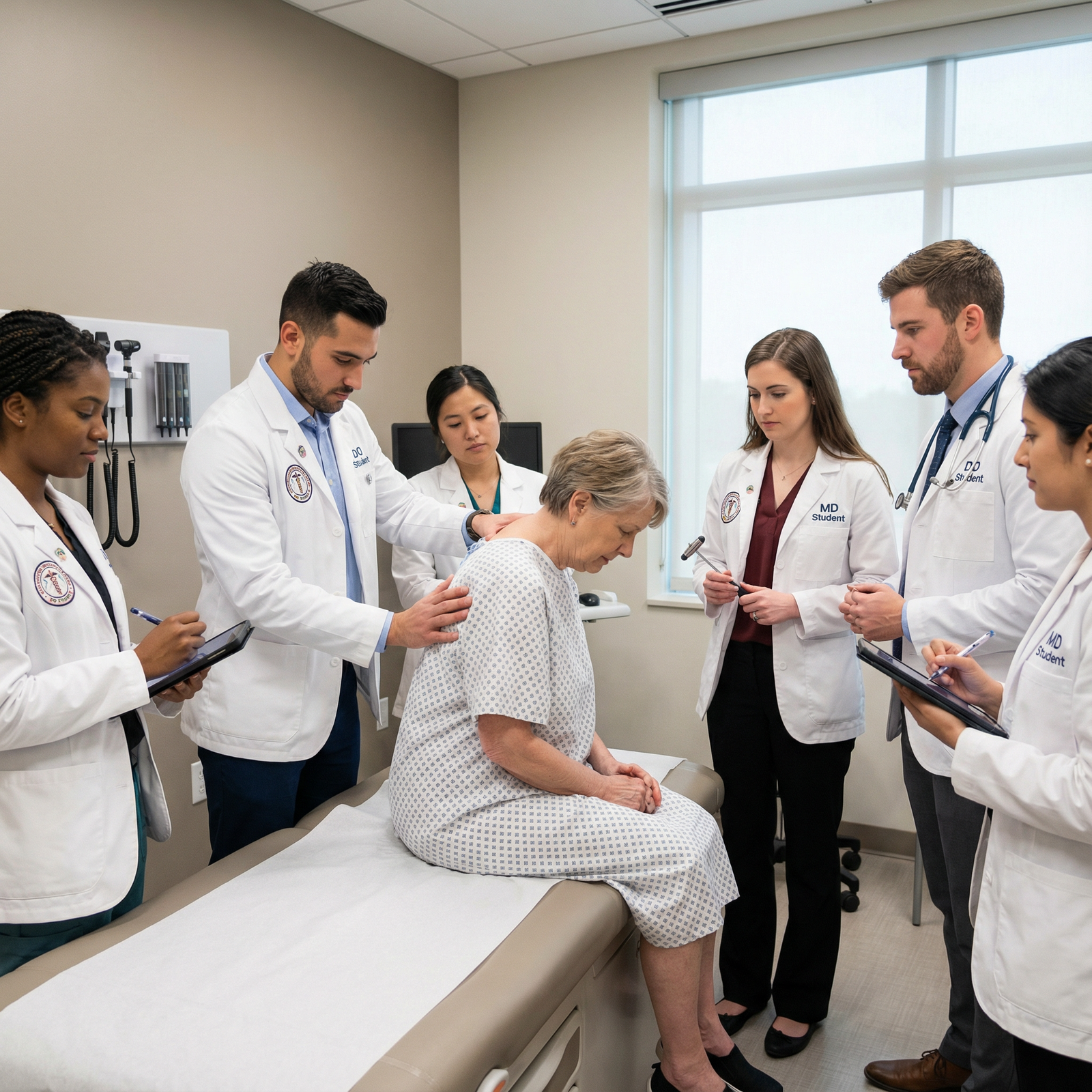
- They freeze on the first station: “Show me your sequence for diagnosing and treating a type II somatic dysfunction at T5.”
- They misidentify, fumble hand placement, mess up the steps, and burn precious points.
The big mistake is assuming you can “reason your way through” a physical exam skill the same way you logic your way through a pathophysiology question.
You cannot.
Skills that commonly destroy early OMM grades:
Inconsistent hand landmarks.
Transverse processes, spinous processes, rib angles. If you are guessing, it shows.Poor verbalization.
Not describing what you are doing. Not using proper terminology. Not naming the diagnosis clearly.Step-wise sequences out of order.
Even if you know the gist of MET or HVLA, if your order is chaos, some examiners will mark you down hard.Ignoring patient comfort and safety.
Leaving them in awkward positions. Not asking for consent. Not rechecking properly.
You will not “wing” your way through this.
How to avoid the practical exam trap:
- Practice exactly like you will test:
- Speak out loud: “I am diagnosing T5. I palpate the transverse processes. The right appears posterior…”
- Walk through each maneuver with the full script and rationale
- Ask an upperclassman to do a mock practical with you two weeks before the real thing
- Do short, frequent reps: 15–20 minutes a few times a week > 3-hour panic session right before
4. Forgetting That COMLEX Will Absolutely Test OMM
Some premeds still walk into a DO program thinking, “I will just take USMLE and match like an MD.” That ship has mostly sailed. You will live and die by COMLEX performance.
And COMLEX is not shy about OMM.
Typical early mistake: treating OMM boards prep like a luxury you deal with in dedicated study time.
By the time students realize OMM is not trivial—when they start doing COMSAEs and see clusters of OMM misses—it is much harder to fix. Because:
- OMM questions often blend anatomy, biomechanics, and clinical reasoning
- Many require pattern recognition: “When the sacrum moves X way, what does L5 do?”
- If you have not internalized basic principles early (Fryette’s, Chapman’s points, viscerosomatic reflexes), cramming them later is miserable
The smartest DO students I know do this from M1:
- Use an OMM review resource alongside course content, not eight months later
Rapid Review OMT, Savarese, or school-made board-style decks - Tag any confusing OMM lecture topic with a “boards” note and revisit weekly
- Treat every lab as not just a course requirement, but COMLEX prep

| Step | Description |
|---|---|
| Step 1 | Weekly OMM Lecture/Lab |
| Step 2 | Same-week Review Notes |
| Step 3 | Board-style OMM Questions |
| Step 4 | Anki or Flashcards for High-yield Topics |
| Step 5 | Monthly COMLEX-style Mini Quiz |
| Step 6 | Identify Weak Areas |
What you want to avoid is waking up four months before COMLEX and realizing:
- You never truly learned sacral or cranial mechanics
- You have zero pattern recognition for viscerosomatic levels
- You are missing 10–15% of questions on practice exams purely from OMM
In a competitive match environment where DO students already have to fight outdated biases, voluntarily giving up free osteopathic points is reckless.
5. Adopting a Cynical “OMM Is Fake” Attitude Too Early
This one is touchy, but I am going to be blunt.
I have seen groups of first-years latch onto the most jaded attending or intern and adopt their worldview wholesale:
“OMM is basically placebo.”
“No one uses this in real practice.”
“I am just here to get through the requirements.”
Here is the problem. Once you mentally label OMM as “fake,” your brain stops investing effort. You will:
- Half-listen in lab
- Refuse to take palpation seriously
- Blow off reading assignments
- Do the bare minimum for practicals
That attitude bleeds into performance. Faculty notice. PDs sometimes notice. Your classmates definitely notice.
You do not have to become an OMM zealot. You do not have to believe every claimed mechanism. But if you adopt full cynicism M1 year, three bad things happen:
- Your grades suffer in a required, heavily weighted course series.
- Your letters of recommendation from OMM faculty become lukewarm or nonexistent.
- You telegraph to osteopathic physicians that you do not respect the core identity of the degree you chose.
If you are a premed reading this and already rolling your eyes at the idea of manual medicine, ask yourself honestly: Why are you pursuing a DO at all? If your only answer is “slightly higher acceptance rates,” you are setting yourself up for four years of internal friction.
Healthier alternative:
- Treat OMM like any other clinical skill: test it, question it, but also learn it well enough to use it safely and competently
- Separate healthy skepticism from lazy dismissal
- If an OMM professor is truly unconvincing, find another DO physician who uses OMT effectively in practice and ask how they approach it
6. Ignoring the Professional Optics of Blowing Off OMM
Here is something few premeds realize: your behavior around OMM is part of how faculty decide who “gets it” as an osteopathic physician.
Red flags I have seen hurt students:
- Chronically late to OMM lab, but never to exam review sessions
- Never volunteering as the demo student, always disappearing when hands-on practice is needed
- Rolling eyes or making jokes about “voodoo” or “chiropractic lite” in front of OMM faculty
- Publicly announcing they are “basically MD” because they are planning on USMLE and not “using this stuff”
Those patterns stick.
Faculty who are deeply invested in osteopathic medicine write a disproportionate number of letters. They talk to clinical preceptors. They remember which students:
- Took lab seriously
- Practiced respectfully
- Asked good questions even if they did not fully buy every explanation
Even for residencies that do not care about OMM per se, they care about:
- How you handle required but unglamorous responsibilities
- Whether you can respect the culture you are in, even if you have critiques
If you telegraph “I think this whole OMM thing is a joke,” what program hears is: “This student might decide our requirements are optional too.”
7. Failing to Use OMM as a Clinical Differentiator (Even If You Never Do Full OMT in Practice)
This is the part almost everyone underestimates.
You might never run a busy OMT clinic. You might match EM, rads, anesthesia, even surgery—and barely have time for elaborate manipulative treatments.
But there are specific, high-yield ways OMM training can quietly make you better:
- Understanding biomechanics in a real, 3D, hands-on way
Helps with ortho exams, sports med, even basic MSK complaints in primary care. - Learning to use touch professionally and confidently
Many MD students feel awkward palpating. You will not, if you use lab time properly. - Having a built-in “value add” for certain programs that actually like DOs because of their MSK skills
The mistake is thinking: “If I am not going into FM/PM&R/Neuromusculoskeletal, this is irrelevant.” No. You may not use the full OMT toolbox, but:
- Your neuro + MSK exams can be sharper
- Your understanding of posture, gait, compensatory patterns can improve diagnoses
- You might occasionally offer a simple MET or soft tissue and shock a patient with how quickly they feel relief
If you lean into those strengths instead of hiding them, you stop seeing OMM as extra work and start seeing it as leverage.
8. For Premeds: Choosing a DO Path Without Respecting the OMM Commitment
Let me pull this back to your current phase: premed and “medical school preparation.”
The worst premed mistake I see is this:
- Applying DO broadly
- Knowing almost nothing about OMM/OMT
- Never shadowing a DO who actually uses it
- Then acting surprised when 10–20% of your curriculum is something you quietly resent
If you are on the fence:
- Shadow at least one DO who regularly uses OMT. Watch a full afternoon of patients.
- Ask current DO students specific questions:
- “How many hours per week do you usually spend on OMM?”
- “What percentage of your exams are practical vs written?”
- “How seriously do faculty take osteopathic principles?”
- Read a short OMT board review chapter before you matriculate. Get a sense of the language and expectations.
If you already know you will rage at the idea of palpation-based exams, osteopathic principles questions, and hands-on skill checks—then forcing yourself into a DO curriculum is not “keeping options open.” It is building four years of constant friction.
You avoid the biggest mistake by being brutally honest with yourself now, not when you are already paying tuition.
FAQ (Exactly 5 Questions)
1. If my goal is a competitive specialty, should I still spend time on OMM?
Yes. Ignoring OMM does not make you more competitive. It just adds academic risk. You can prioritize high-yield board prep while still respecting OMM enough to pass comfortably and avoid remediation. A failed OMM course or poor faculty reputation will hurt your competitiveness more than reclaiming a few extra hours from OMM ever will help.
2. How many hours per week should I realistically devote to OMM in M1/M2?
A reasonable baseline for most DO programs is 4–6 focused hours per week:
- 1–2 hours: review lecture content and outline high-yield points
- 2+ hours: hands-on practice with peers, emphasizing practical exam format
- Short 10–15 minute refreshers on tricky techniques before and after lab
If you are truly struggling, you may transiently bump this to 6–8 hours until you are solid.
3. What is the single biggest OMM mistake that leads to failing practicals?
Walking into the exam having only practiced in crowded labs, with zero one-on-one “mock practical” reps. Students think showing up to lab is enough. It is not. You need deliberate practice where you run through stations as if they are real, verbalize every step, and let a partner or upperclassman critique you.
4. Can I succeed as a DO if I personally doubt some of the OMM theories?
Yes, with a caveat. You can hold scientific skepticism and still respect the curriculum, learn the skills, and treat OMM like any other clinical tool. The problem is not doubt. The problem is contempt. If your attitude becomes, “This is fake, so I will not try,” you will damage your grades, your relationships with faculty, and your professional reputation.
5. What is one concrete thing I can do before starting DO school to avoid OMM problems?
Get your hands on a basic OMM review book (Savarese or school-recommended text) and read one chapter on somatic dysfunction, one on spine mechanics, and one on sacrum/pelvis. Do not memorize. Just acclimate to the language and concepts. You will walk into M1 year recognizing terms instead of feeling like OMM is a foreign dialect layered on top of everything else.
Open your calendar for next week and block two specific OMM study sessions—one for reviewing content, one for hands-on practice. If they are not on your schedule, you are already drifting toward the mistakes that sink DO students early.