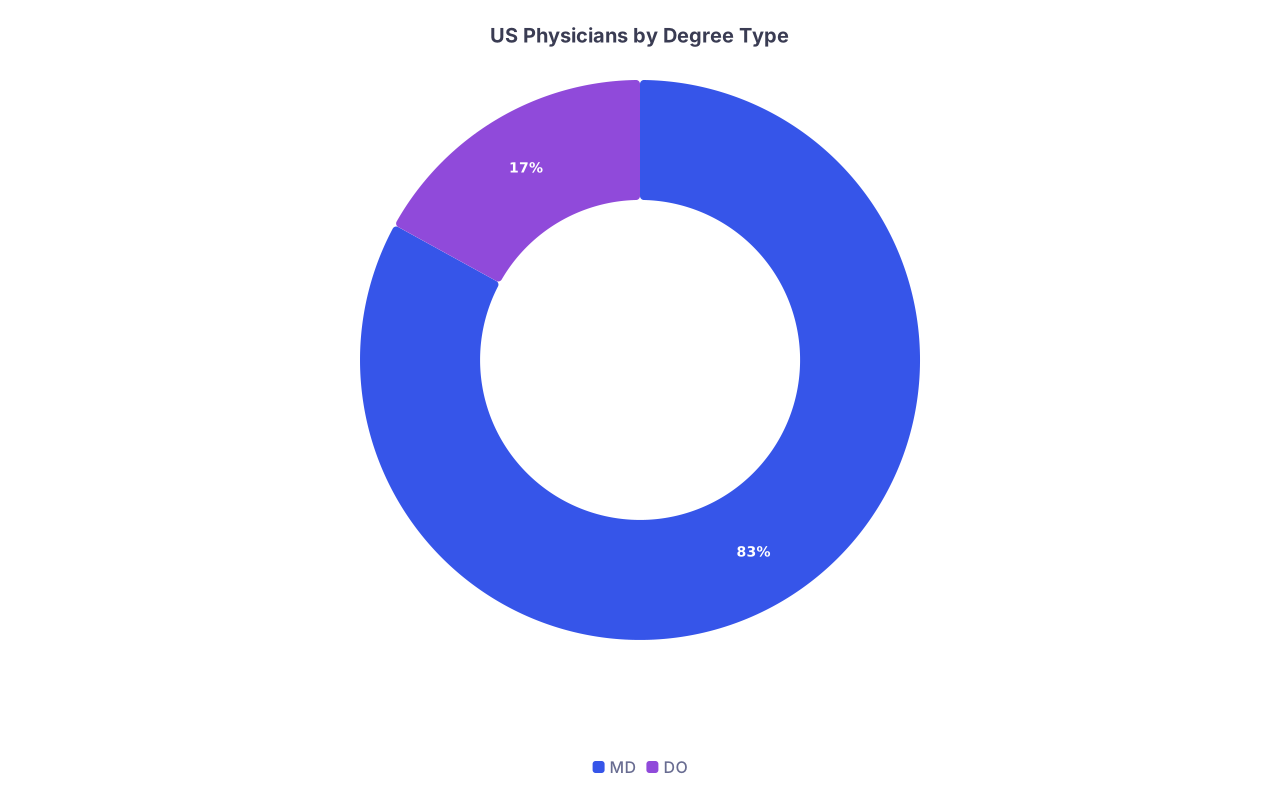
The fastest way to destroy professional trust while shadowing is to open your mouth and say something dumb about DO vs MD.
I am not exaggerating. I have watched otherwise promising premeds go from “maybe I will write you a letter” to “please do not bring this person back” in one conversation about osteopathic vs allopathic training. You think you are being curious. They hear arrogance, bias, or ignorance.
You are not just protecting someone’s feelings here. You are protecting your future reputation in a very small, very talkative profession.
Let me walk you through the landmines.
1. The Cardinal Sin: Ranking DO vs MD Out Loud
The worst mistake: trying to “rate” DO vs MD in front of physicians, residents, staff, or patients.
Phrases that will get you mentally blacklisted:
- “So… be honest… DO is kind of like backup to MD, right?”
- “If I do not get into an MD program, I guess I will just go DO.”
- “Do patients ever complain that you’re ‘only’ a DO?”
- “Are DOs as smart as MDs? I heard the scores are lower.”
That “just being honest” or “I heard on Reddit” tone? Fatal.
Here is what you are really saying when you talk like that:
- You do not understand that both DO and MD are fully licensed physicians.
- You have not done basic homework on training pathways.
- You already view DO as second-tier and are comfortable saying it out loud.
- You cannot read the room, which means you will not be safe as a team member.
Faculty do not want to recommend someone who would insult colleagues, nurses, or patients in a similar way one day.
Safe replacement approach: Put curiosity over judgment.
Try:
- “Can you tell me more about your training path and how it shaped your practice?”
- “What made you choose osteopathic / allopathic medicine?”
- “How has the unified residency match affected DO and MD training from your perspective?”
Notice the difference? No ranking. No hierarchy. You are there to learn, not to confirm your favorite YouTube hot takes.
2. Comparing Board Scores and “Competitiveness” Like You’re on a Message Board
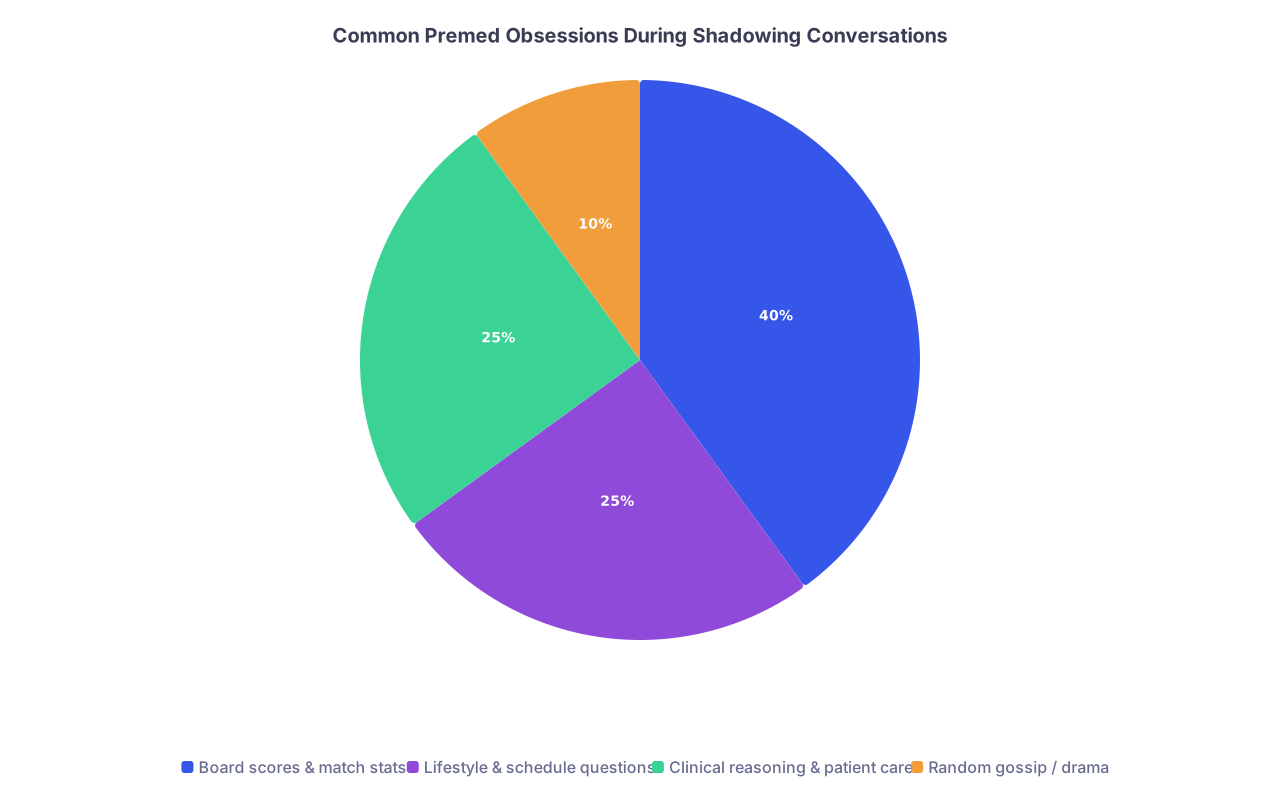
| Category | Value |
|---|---|
| Board scores & match stats | 40 |
| Lifestyle & schedule questions | 25 |
| Clinical reasoning & patient care | 25 |
| Random gossip / drama | 10 |
Another common disaster: trying to talk Step/COMLEX scores, match rates, and “prestige” with a physician you barely know.
Things I have actually heard students say:
- “I read DO Step scores are lower overall. Do you think that’s true?”
- “So is it harder for DOs to get real residencies?”
- “Are DOs basically shut out of competitive specialties?”
Every time, the room goes cold.
Here is what you are doing wrong:
- Treating your shadowing doctor as a walking statistics blog instead of a mentor.
- Reducing their entire career to test scores and match competitiveness.
- Exposing how much you care about clout over patient care.
You are allowed to care about match outcomes. But shadowing is the wrong setting to quiz or challenge a physician about the “value” of their degree.
If you want to ask about training outcomes, do it with respect and context:
- “I’ve been trying to understand residency options for DO and MD graduates. How did you think about that when you were applying?”
- “For students considering both DO and MD, what should they focus on to keep competitive residency options open?”
You are asking for wisdom, not debating their life choices.
3. Using Loaded, Disrespectful Language (Even “Jokingly”)
There are words and phrases that will instantly tell a physician you lack judgment.
Do not say:
- “Real doctor” vs “just a DO”
- “Top-tier” vs “lower-tier” school in a smug way
- “Backup option” / “safety degree”
- “I want MD because I do not want patients to think I am not a real doctor”
- “I am worried DO looks bad internationally”
You might think you are being honest about your fears. What they hear:
- You will throw colleagues under the bus to protect your ego.
- You are more concerned with external perception than competence.
- You have internalized internet-level misconceptions and have not bothered to correct them.
You also do not know who is listening. That “just a DO” joke in a workroom? The nurse, the PA, the tech, the medical assistant—someone there knows and respects multiple DOs and will remember what you said when you are the applicant asking for a favor.
If you need to talk about reputation concerns, frame them as your confusion, not a verdict:
- “I’ve heard a lot of conflicting information online about how patients or programs view DO vs MD. From your experience, how much does it really matter once you are in practice?”
- “Are there any realistic limitations I should be aware of if I choose the DO route, or are most of the horror stories exaggerated?”
You can acknowledge concerns without trashing an entire degree.
4. Oversimplifying Osteopathic Medicine to “Back Cracking”
This one makes DOs tired.
You shadow an osteopathic physician. You notice they do not do manipulative treatment on every patient. Then you ask:
- “So… do you even use OMM, or is that mostly marketing?”
- “Is OMT just like chiropractic?”
- “I heard DO school is just MD school plus some back cracking.”
This screams: I skimmed one blog post and came to a conclusion.
If you are shadowing a DO, they already know 90% of premeds have butchered ideas about osteopathic philosophy. What they are watching is whether you repeat those ideas or ask better questions.
Try this instead:
- “How would you describe the main differences in training emphasis between your DO program and what your MD colleagues experienced?”
- “When do you find osteopathic manipulative treatment most useful in your practice?”
- “Are there osteopathic principles you use daily even when you are not doing hands-on OMT?”
You are allowing them to define their own work. That is respectful. And smart.
5. Trying to “Test” Doctors with Gotcha Questions
I have seen premeds treat shadowing like a debate club. They ask a DO:
- “But if DO and MD are equal, why do some programs still prefer MD?”
- “If DOs can do everything, why is the average MCAT lower?”
- “Do you ever feel you had to prove yourself because your degree is ‘less known’?”
And they ask MDs:
- “Do you think DO is inferior?”
- “Would you ever send your kid to a DO school?”
- “Do you think DOs should just convert to MD?”
All bad. You are not a journalist. You are not writing a think-piece. You are a guest.
If a physician volunteers their frustrations or experiences with bias, you can listen and ask clarifying questions. But you do not initiate a confrontation disguised as a question.
Safer framing looks like:
- “I’ve heard about historical bias in some parts of the system. How has that changed over the course of your career, if at all?”
- “Have you seen differences in how older vs younger physicians view DO and MD training?”
You are positioning yourself as a learner, not an interrogator.
6. Saying the Quiet Part Out Loud: “I Just Want Whatever Is More Prestigious”
Let me be clear: physicians are not stupid. They know most premeds care at least somewhat about “prestige,” especially early on.
The difference is whether you:
- Blurt out: “Honestly, I just want MD for the name.”
- Or say: “I’m trying to understand how much the degree letters really affect long-term career satisfaction and options.”
That first version tells them you are immature and status-obsessed. The second tells them you are thinking beyond Reddit rankings.
Here is the real danger. If you repeatedly talk about prestige, top 10 programs, and “not wasting your stats” during shadowing, physicians will question:
- Will this person turn down excellent but less flashy opportunities?
- Will they treat some specialties, schools, or colleagues as beneath them?
- Are they coachable, or are they locked into a fantasy of what their career “must” look like?
If you slip and say something cringe, stop. Correct. For example:
- “I realize that came out poorly. I’m trying to say I used to be very fixated on prestige, and I’m working to understand what actually matters in real practice. I would appreciate your perspective on that.”
Honest course-correction earns more respect than digging in.
7. Involving Patients in DO vs MD Comparisons
Huge red flag: dragging patients into your degree questions.
You should not:
- Ask patients directly: “Do you care that your doctor is a DO vs MD?”
- Comment in front of patients: “He’s actually a DO, not an MD.”
- Correct a patient who calls a DO “doctor” as if that is inaccurate.
You are a shadow. Not a brand policeman.
If a patient asks you (it happens): “What is a DO?” or “What is the difference between DO and MD?” the correct response is short and deferential:
- “Both DOs and MDs are fully licensed physicians. Dr. X could give you a much better explanation of the specifics.”
Then you stop talking. You do not give a mini-lecture. You do not editorialize.
Patients are there for care, not for your premed discourse.
8. Acting Like You Have Already Decided DO vs MD After Two YouTube Videos
Another mistake: declaring hard opinions about DO vs MD when you have never taken organic chemistry, let alone set foot in a medical school.
Things that sound bad coming from a premed:
- “I would never do DO because of the match limitations.”
- “I only want DO because of the holistic approach; MDs are too rigid.”
- “Honestly, I think MD training is more evidence-based than DO.”
You have not earned those conclusions yet. You do not know what you do not know.
You can have leanings. But state them with humility:
- “Right now I’m leaning toward MD simply because that’s the pathway I know more about, but I’m trying to genuinely understand both.”
- “I’m drawn to the osteopathic emphasis on whole-person care, though I’m still learning how that looks in actual practice.”
If you sound like you walked straight out of a comment section, people will treat you that way.
9. Mixing DO vs MD Talk with Political or Culture-War Rants
DO vs MD is already a sensitive topic. Layering politics on top of it? Near-suicidal socially in a clinical environment.
Examples of what not to do:
- Turning DO vs MD into a rant about “gatekeeping elites” or “woke admissions.”
- Using DO vs MD to make sweeping statements about “affirmative action” or “meritocracy.”
- Suggesting certain groups “only get DO” or “need DO as a backup.”
This is where you go from “immature” to “liable to generate HR problems later.”
Clinical spaces are already under enough stress. Nobody wants a student who cannot keep hot takes off the floor.
If a physician brings up systemic issues (bias, access, inequities), you can listen quietly and ask neutral, clarifying questions. But you do not inject your political theories into a shadowing day.
10. How to Talk About DO vs MD Safely and Intelligently
Let me give you a template so you stop guessing.
What you can say to DO physicians
- “What made you choose a DO school over an MD program?”
- “Looking back, are there advantages to your DO training that you especially value now?”
- “For a student open to both DO and MD, what factors would you recommend they weigh most heavily?”
What you can say to MD physicians
- “If you were advising a student open to both DO and MD paths, what would you tell them to focus on?”
- “Have you worked with DO colleagues or residents? Any differences you’ve noticed in training or approach?”
- “How much do the degree letters actually matter once you reach residency and practice?”
What you should avoid saying to anyone
- Anything that starts with “be honest, are DOs really…”
- Anything that uses “real doctor,” “only a DO,” “backup,” or “less competitive.”
- Anything that compares test scores or match stats in a snarky or challenging tone.
You are there to absorb the reality of clinical work. Not to litigate degree hierarchy.
11. Why This Matters More Than You Think

| Step | Description |
|---|---|
| Step 1 | Careless DO vs MD Comment |
| Step 2 | Physician Loses Respect |
| Step 3 | No Letter of Recommendation |
| Step 4 | Fewer Strong Applications |
| Step 5 | Warned About You Informally |
| Step 6 | Harder to Find Future Mentors |
| Step 7 | Seen as Unprofessional/Arrogant |
| Step 8 | Questionable Fit for Clinical Teams |
Medicine is smaller than you think.
Physicians talk. Nurses talk. Program coordinators talk. The intern who heard you say “just a DO” may be chief resident when you apply to their program. The DO you casually insult today may be the PD who reads your application in 7 years.
The habits you build now—respect, curiosity, restraint—will determine how people experience you later as a colleague.
DO vs MD is not just about admissions strategy. It is a test of whether you can handle nuance, hierarchy, and professional respect without turning everything into a ranking contest.
Pass that test.
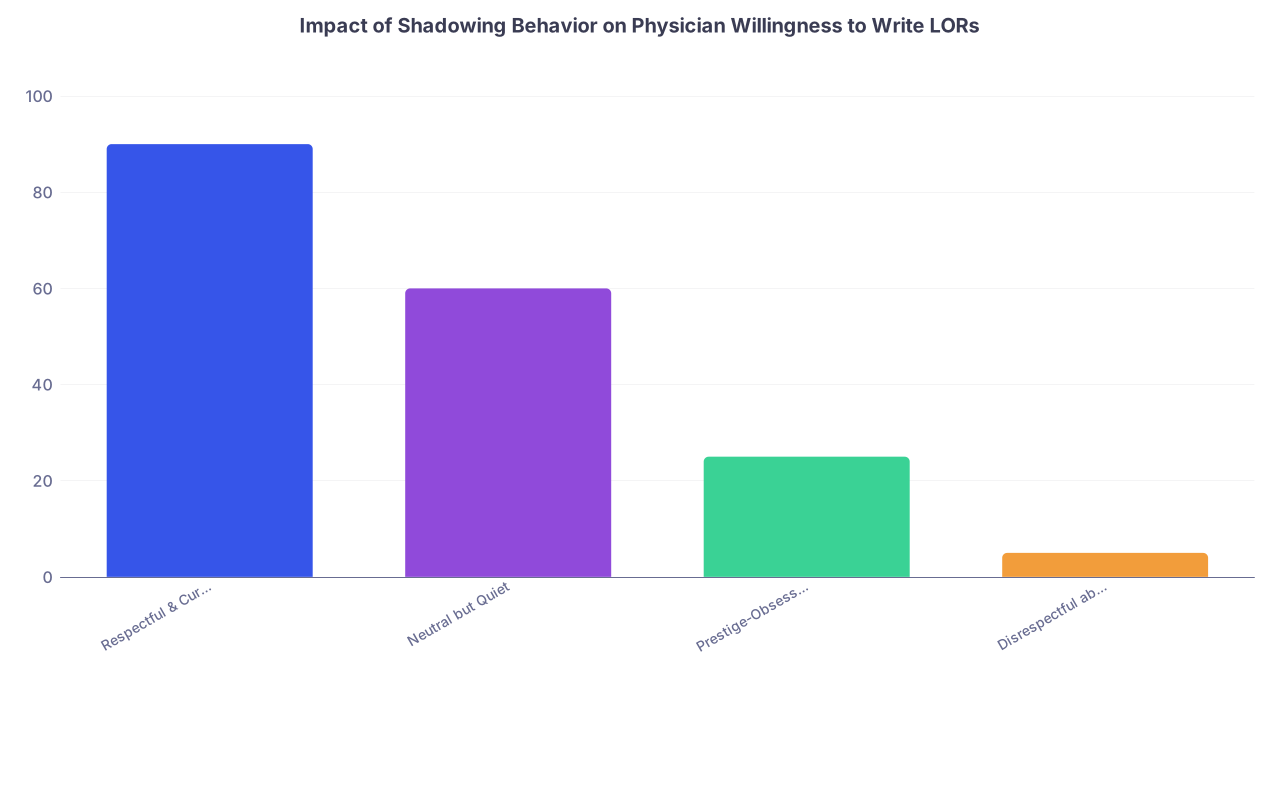
| Category | Value |
|---|---|
| Respectful & Curious | 90 |
| Neutral but Quiet | 60 |
| Prestige-Obsessed | 25 |
| Disrespectful about DO vs MD | 5 |
FAQ (Exactly 3 Questions)
1. Can I admit that I’m currently aiming for MD but open to DO?
Yes, if you say it like an adult. Something like: “Right now I’m more familiar with the MD path, but I’m genuinely trying to understand both options.” The problem is not having a preference. The problem is talking as if DO is automatically beneath you or only acceptable if everything else fails.
2. Is it ever appropriate to ask about DO vs MD match differences while shadowing?
You can, but keep it high-level and deferential. For example: “I’m trying to understand how DO and MD graduates fare in the current unified match. Are there any realistic differences you think premeds should keep in mind?” Do not quote cherry-picked stats and try to argue. You are asking for perspective, not trying to win.
3. What if I already said something dumb about DO vs MD to a physician?
Own it immediately. “I realize what I said earlier about DO vs MD came out poorly and sounded disrespectful. I’m still learning and I said it badly. I’d like to better understand your perspective if you’re open to sharing.” That shows self-awareness. You might still have done some damage, but it is far better than pretending it did not happen.
Key points:
- Never “rank” DO vs MD out loud in shadowing; ask to learn, not to judge.
- Avoid loaded language like “real doctor,” “backup,” or “only a DO”—it instantly harms your credibility.
- Your goal is to leave every physician thinking: “This student is respectful, curious, and safe to recommend,” not “This student repeats Reddit takes in a clinic.”