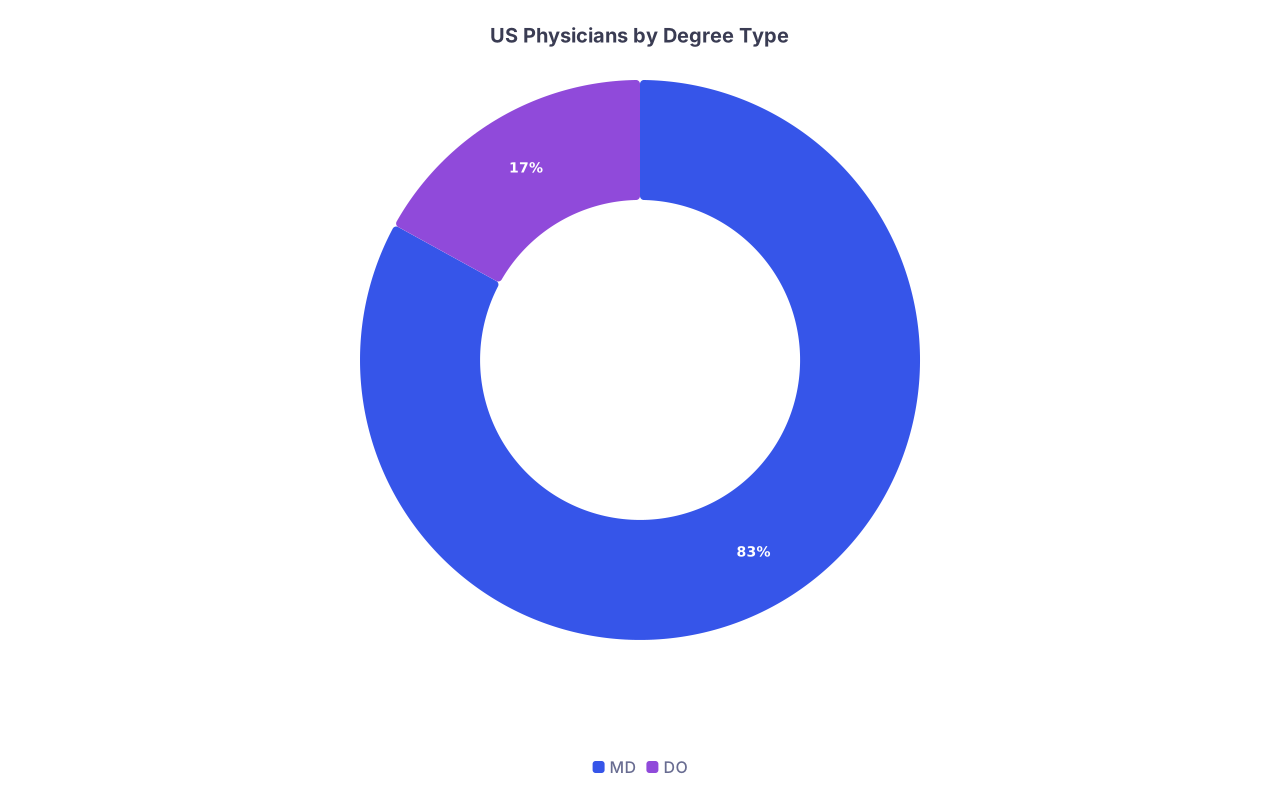
The most dangerous DO vs. MD mistake is pretending the licensing exams are “basically the same.” They are not. And planning as if they are will quietly sabotage your options long before Match Day.
If you are premed or early in medical school and you are not thinking strategically about COMLEX vs USMLE, you are already behind. I have watched smart, hardworking students close doors they did not even know existed—simply because no one forced them to confront the reality of these exams early.
Let’s fix that.
The Core Error: Treating COMLEX and USMLE as Interchangeable
Most students fall into one of two lazy assumptions:
- “I’m DO, so I’ll just take COMLEX. Programs know how to read it now.”
- “I’ll just take both when the time comes. I’ll decide later.”
Both are bad plans. For different reasons.
Here is the blunt version:
- Many competitive residencies still prefer or functionally require USMLE scores.
- A subset of programs barely understand COMLEX scoring, even after the merger.
- Taking both exams without a plan often means doing mediocre on both.
- Taking only COMLEX can be career-limiting if you discover late that you want a competitive specialty or region.
The mistake is not choosing one path or the other.
The mistake is failing to choose intentionally. Early enough that your schedule, resources, and study approach actually match reality.
What Premeds Get Wrong Before They Even Matriculate
Most of this disaster starts before medical school.
Mistake 1: Choosing DO vs MD Without Considering Licensing Strategy
Premeds love to talk about:
- “A doctor is a doctor.”
- “Merger means it’s all the same now.”
- “Residency programs treat DO and MD equally now.”
That sounds nice on Reddit. It is not how program selection actually works in many specialties.
If you are a premed, there are three questions you should ask yourself before you rank schools:
- Am I seriously considering a competitive specialty?
Things like:- Dermatology
- Orthopedic surgery
- Plastic surgery
- Neurosurgery
- ENT
- Some competitive radiology and anesthesia programs
- Am I dead set on a specific geographic region that is MD-heavy and ultra-competitive?
- Am I willing to take both COMLEX and USMLE and study accordingly from day one?
If your answer to #1 or #2 is “yes” and your answer to #3 is “no,” you are playing with fire by assuming a DO route will not constrain you at all. It can. It does. Not always. But enough that “I will just figure it out” is a reckless plan.
Mistake 2: Believing the COMLEX-Only Narrative Because It Is Comforting
You will hear this line:
“Most residencies accept COMLEX now. You do not need USMLE.”
That sentence is technically half-true and practically dangerous.
Yes, many programs accept COMLEX. No, that does not mean they understand it, trust it, or evaluate it equivalently to USMLE. I have heard faculty literally say:
- “I do not know what a 550 on COMLEX means. Show me a Step score.”
- “We prefer USMLE so we can compare everyone on the same metric.”
Is that fair? No.
Is it reality? Yes.
The Quiet Trap in the First Two Years of Medical School
The worst licensing mistakes are not dramatic. They are slow.
They creep in through course scheduling, resource choice, and wishful thinking.
Mistake 3: Not Deciding Early Whether You Will Take USMLE (As a DO)
If you are DO and you cannot answer this question by the first months of MS1:
“Am I planning to sit for USMLE Step 1 and Step 2 in addition to COMLEX?”
you are already behind.
Undecided for 3–4 months? Fine. Still “seeing how things go” a year into school? That is how students end up with:
- A curriculum built only around COMLEX-style questions.
- Little exposure to NBME-style stems or question logic.
- Weak biochemistry, neuro, or path detail that USMLE absolutely expects.
- Panic at the end of second year when they suddenly realize they need USMLE for their desired specialty.
By then, it is too late to build a strong USMLE foundation. You are patching leaks, not building structure.
Mistake 4: Treating COMLEX-Only Prep as Sufficient for USMLE
This lie is common:
“If you are ready for COMLEX, you are basically ready for USMLE.”
No. The exams:
- Test overlapping science, yes.
- But emphasize different details, formats, and approaches.
- And COMLEX includes OMM and has different style questions and pacing.
USMLE:
- Longer, more detailed clinical vignettes.
- Heavy on mechanism, pathophysiology, “why” not just “what.”
- More precise in testing stepwise reasoning.
COMLEX:
- Often shorter stems, sometimes weirder question phrasing.
- Strong emphasis on OMM, osteopathic principles.
- Different blueprint weightings.
Building your entire prep around COMLEX review resources and question banks, then “adding on” USMLE at the end, is a recipe for mediocre performance on both.
You want an integrated plan, not a bolt-on.
Numbers Do Not Lie: Program Preferences and Score Blind Spots
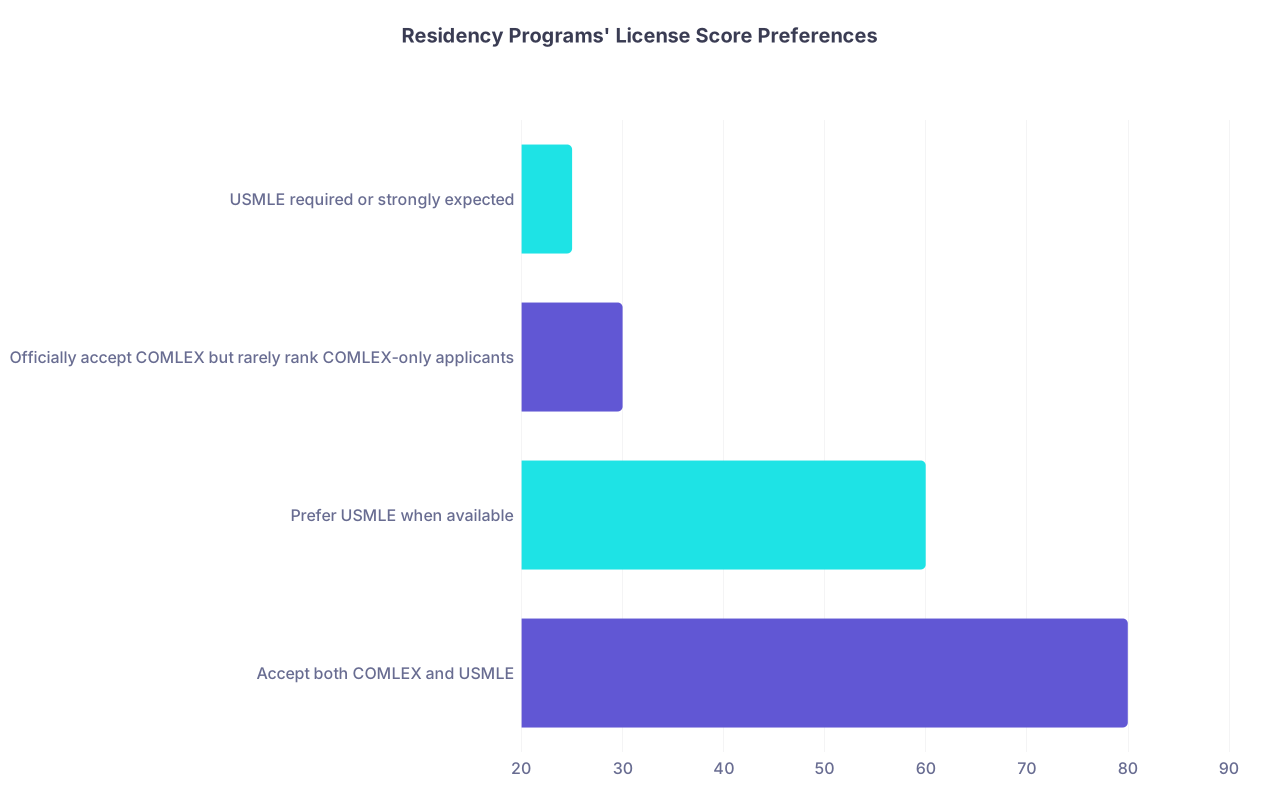
Let me show you what you are up against.
| Category | Value |
|---|---|
| Accept both COMLEX and USMLE | 80 |
| Prefer USMLE when available | 60 |
| Officially accept COMLEX but rarely rank COMLEX-only applicants | 30 |
| USMLE required or strongly expected | 25 |
Those are illustrative, not exact, but they reflect what I keep hearing from advisors and program directors in competitive specialties.
Common realities:
- Many programs say “COMLEX accepted” on paper but quietly rank USMLE takers higher because they can compare them more easily.
- Some specialties (ortho, derm, neurosurg) are still very Step-score focused, even in the pass/fail era for Step 1. Step 2 CK matters more now, and DO students without USMLE Step 2 CK can be at a disadvantage.
- Some programs filter out applicants below a certain Step 2 CK cut-off. COMLEX-only students do not even enter the filter.
If you go COMLEX-only, you must accept that:
- Your list of viable programs may shrink.
- Some doors will be harder to open, even if you are excellent.
That might be acceptable.
What is not acceptable is being surprised by this in third year.
Planning Mistakes That Wreck Both Exams
Let us talk about the students who try to do “everything” and end up doing nothing well.
Mistake 5: Double-Testing Without a Coherent Calendar
I see this pattern constantly in DO students:
- Vague plan: “I will take COMLEX Level 1 first, then Step 1 two weeks later.”
- Or worse: “I will schedule them two days apart to get it over with.”
Result?
- They aim for two overlapping, different-but-related blueprints.
- They chase both COMQUEST/COMBANK and UWorld frantically.
- They never get into a groove with one exam’s logic.
The brain does not like you switching question styles every 10 minutes. You end up:
- Misreading COMLEX stems with USMLE expectations.
- Overthinking USMLE questions because COMLEX conditioned you to shorter vignettes.
- Burning out faster because your study days are chaotic.
If you are taking both, you need:
- One primary exam to anchor your studying.
- A clear ordering (usually USMLE first, then COMLEX after a short adaptation period).
- A realistic timeline that recognizes you are human, not a test-taking robot.
Mistake 6: Ignoring Content Differences and “Hoping It Transfers”
Here is what “hoping it transfers” looks like in practice:
- Doing 95% of your questions on COMLEX-style banks.
- Skimming OMM because “I will learn it later.”
- Hardly touching UWorld or NBME-style exams.
- Then getting blindsided by USMLE’s depth in renal phys or immunology.
Or the reverse:
- Focusing only on UWorld and NBME practice.
- Treating OMM as an afterthought you will memorize quickly.
- Then getting hammered by Level 1 or Level 2 on osteopathic principles you never truly integrated.
You cannot treat either set of content as optional. Programs see failed attempts. They remember them.
Specialty Choice: Where Licensing Strategy Really Bites
If you are dreaming about a competitive specialty, pretending exam differences do not matter is self-sabotage.
Mistake 7: COMLEX-Only While Aiming for Competitive Fields
This is the harsh version:
If you want:
- Derm
- Ortho
- ENT
- Neurosurgery
- Certain radiology or anesthesia spots at big academic centers
and you are:
- DO
- COMLEX-only
you are voluntarily playing on hard mode.
Can you match? Yes. Some do. They usually:
- Have stellar research.
- Network aggressively.
- Crush clinical performance.
- Have very strong COMLEX scores.
But many programs in these fields will quietly prefer applicants with USMLE. This will not be in their brochure. You find out the hard way—through lack of interview invites.
Mistake 8: Waiting Until Third Year to Care About This
I have watched DO students say:
“I am not sure what I want yet. I will see after my rotations.”
Then during clinicals, they fall in love with a competitive specialty. Orthopedics, for example. Now they are:
- COMLEX-only.
- Without USMLE Step scores.
- Applying into a field where some PDs still barely understand COMLEX distribution.
There is no quick fix at that stage.
Timeline and Strategy: What Smart Planning Actually Looks Like
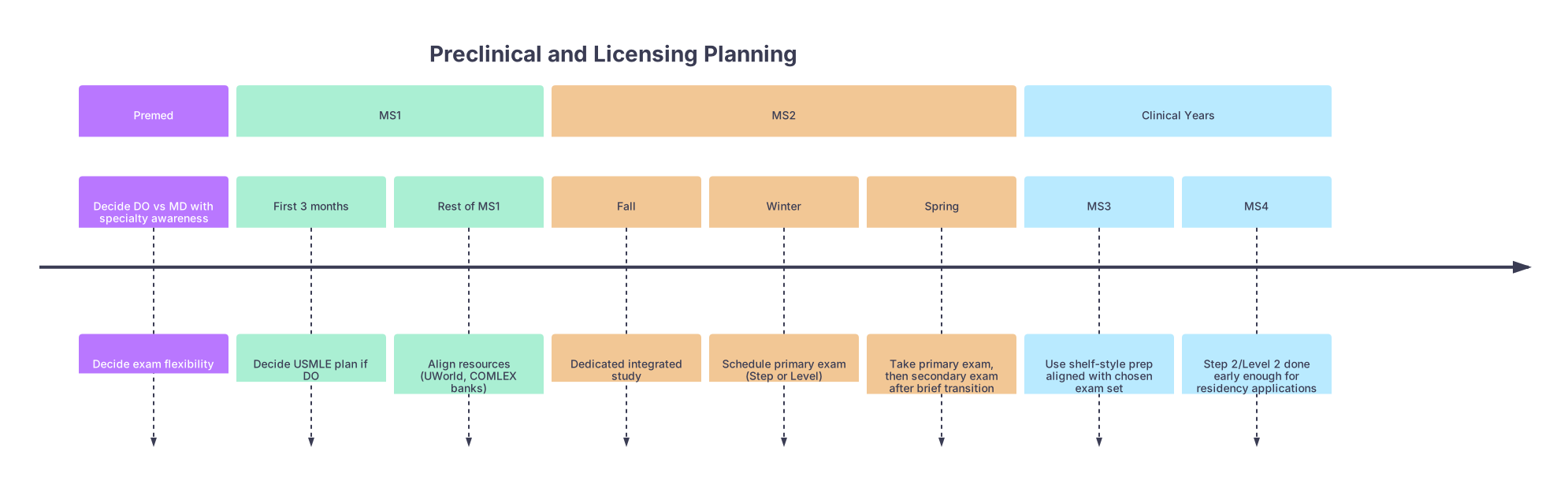
Here is the part most students never map out clearly. You should.
| Period | Event |
|---|---|
| Premed - Decide DO vs MD with specialty awareness | Decide exam flexibility |
| MS1 - First 3 months | Decide USMLE plan if DO |
| MS1 - Rest of MS1 | Align resources (UWorld, COMLEX banks) |
| MS2 - Fall | Dedicated integrated study |
| MS2 - Winter | Schedule primary exam (Step or Level) |
| MS2 - Spring | Take primary exam, then secondary exam after brief transition |
| Clinical Years - MS3 | Use shelf-style prep aligned with chosen exam set |
| Clinical Years - MS4 | Step 2/Level 2 done early enough for residency applications |
Key principle:
You match your identity (DO vs MD), goals (competitive vs less competitive specialties), and resources (time, money, energy) into a coherent plan in MS1. Not MS3.
Resource and Practice Exam Mistakes
You can sabotage yourself even with the right intent if you misuse tools.
Mistake 9: Misreading COMLEX–USMLE Score Conversion Myths
Everyone wants a clean formula:
“A COMLEX 550 equals a Step 2 CK of X.”
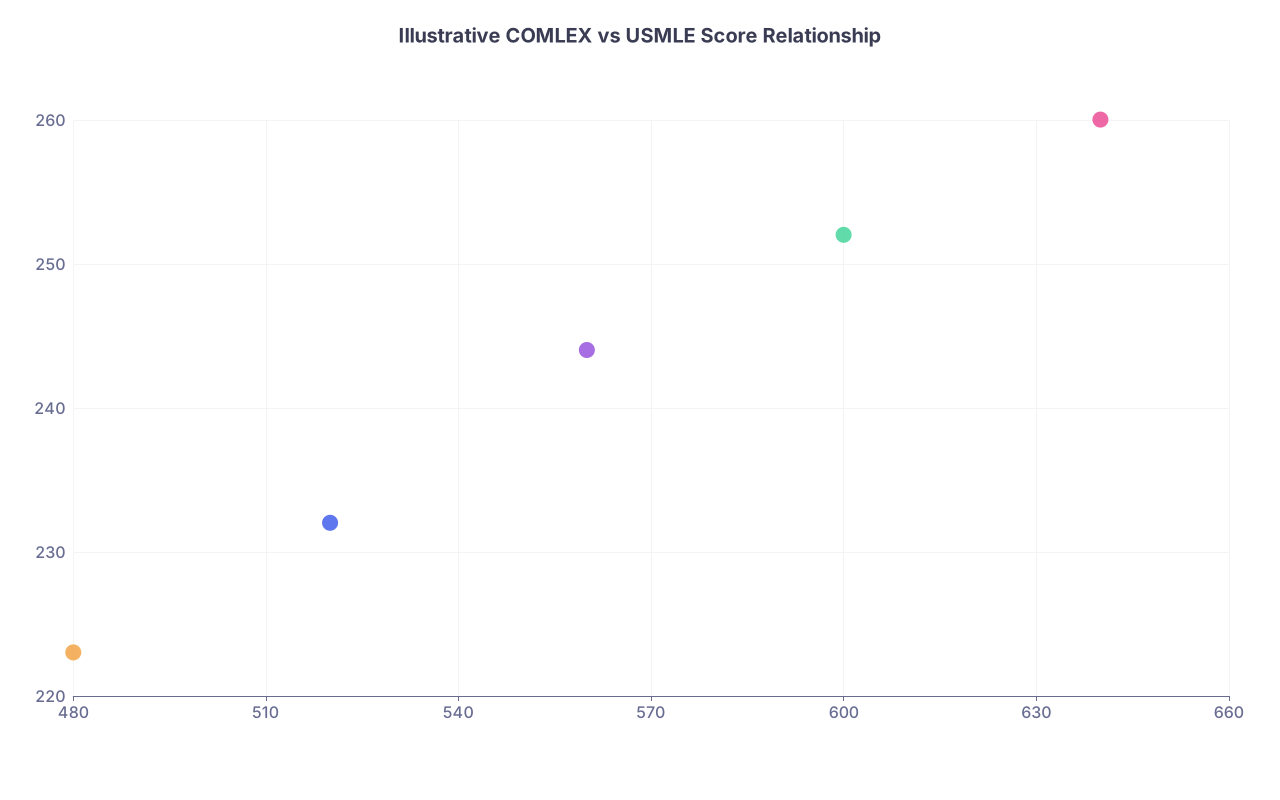
No. Stop. Different exams, different scales, different populations.
| Category | Value |
|---|---|
| Student A | 520,232 |
| Student B | 560,244 |
| Student C | 600,252 |
| Student D | 480,223 |
| Student E | 640,260 |
You see the pattern? Higher COMLEX often means higher USMLE, but with wide scatter. I have seen:
- Students with mid-500s COMLEX and surprisingly weak Step 2 CK.
- Others with modest COMLEX but very strong USMLE because they prepped specifically for it.
Trust made-up conversion charts and you will:
- Overestimate your USMLE readiness.
- Apply to programs assuming you meet “unofficial” cutoffs that you do not.
- Make bad decisions about which exams to prioritize.
Reality: treat each exam as requiring independent validation through its own practice tests (NBME for USMLE; COMSAE/COMPE for COMLEX).
Mistake 10: Using the Wrong Question Bank as Your Primary Tool
A few specific traps:
- DO student uses COMBANK/COMQUEST as their primary and UWorld as a “side resource.” They end up underprepared for USMLE-style clinical reasoning.
- MD student planning to take COMLEX for “extra options” never touches OMM content and thinks memorizing a few counterstrain positions the week before is enough. Then COMLEX punishes them.
Smart alignment looks like this:
- If you are taking USMLE and COMLEX, UWorld should usually be your anchor question bank. COMLEX banks are supplements, not your primary engine.
- If you are taking COMLEX only, you still benefit enormously from UWorld to build deeper understanding and better question-reading skills, then add COMLEX-specific banks later.
Skipping UWorld because “it is expensive” while simultaneously hoping for a high Step 2 CK score is how you quietly cap your own ceiling.
How to Avoid These Licensing Exam Planning Errors
You are probably asking: what should I actually do differently?
Here is the protective version.
Step 1: As a Premed – Decide with Licensing Eyes Open
- Am I comfortable, right now, with the possibility of taking both COMLEX and USMLE if I go DO?
- If I end up loving derm/ortho/ENT, will I regret not having USMLE scores?
- Does my target region (e.g., Northeast academic centers) have a history of favoring USMLE?
You do not need absolute certainty about specialty. You do need to accept that DO + COMLEX-only narrows some future paths.
Step 2: As a DO MS1 – Lock in a Provisional Exam Strategy
Within the first 3–4 months of MS1:
- Make a provisional decision:
- Path A: COMLEX-only
- Path B: COMLEX + USMLE
- Share this decision with:
- Your academic advisor
- A mentor in your potential specialty (if you have one)
Get brutally honest feedback. If someone in ortho or derm says, “You really want USMLE,” believe them.
Step 3: Align Your Resources
Once you pick your path:
- If COMLEX + USMLE:
- Use UWorld early.
- Supplement with COMLEX banks after you have decent NBME-style comfort.
- Use materials that explicitly cover both blueprints.
- If COMLEX-only:
- Still consider UWorld for depth.
- But build a strong OMM framework early; do not cram it at the end.
And stop chasing 8 different resources because someone on YouTube mentioned them. Depth beats breadth.
Step 4: Build a Realistic Testing Calendar
Do not schedule your exams like this:
- “I will see how dedicated goes and then pick dates.”
Instead, sketch a working plan like:
- “USMLE Step 1 in late May; COMLEX Level 1 in mid-June.”
- Or the reverse, if your school is structured heavily COMLEX-first.
Then work backward to determine:
- When dedicated starts.
- When you will finish first passes through Qbanks.
- When you will take practice NBMEs and COMSAEs.
Adjust if needed, but have a spine to your plan.
FAQ (Exactly 3 Questions)
1. If I am a DO student and unsure about specialty, should I default to taking USMLE as well as COMLEX?
If you can handle the extra workload and cost, yes, defaulting to both keeps more doors open. Especially if you are even slightly drawn to competitive specialties or academic programs. The catch: you must treat USMLE as a primary exam early, not an afterthought. If you know you struggle with standardized tests or bandwidth, talk to your school’s advising office and a specialty mentor before committing.
2. I am DO and already in MS2 without USMLE-focused prep. Is it too late to add USMLE now?
Not automatically too late, but the margin shrinks fast. Look honestly at your current COMLEX-style performance, your practice scores, and your stress level. If your foundations (path, phys, pharm) are solid and you can dedicate additional time to NBME-style work, you might still incorporate Step 2 CK effectively even if you skip Step 1. If your preclinical performance has been shaky, forcing in USMLE just to “have it” can lead to low scores that hurt more than help.
3. I am an MD student. Should I ever consider taking COMLEX as well?
Generally, no. There is almost no strategic benefit for MD students to take COMLEX. Programs are very comfortable reading USMLE scores; COMLEX adds complexity with no real advantage. Your limited time is far better spent excelling on Step 2 CK, building strong clerkship evaluations, and doing targeted research or audition rotations in your chosen specialty.
Open your current study or application plan today and write down, in one sentence, your licensing exam strategy (COMLEX-only vs COMLEX+USMLE or USMLE-only) and why it matches your goals. If you cannot explain it clearly in 2–3 lines, your plan is not a plan. Fix that now, while you still can.