
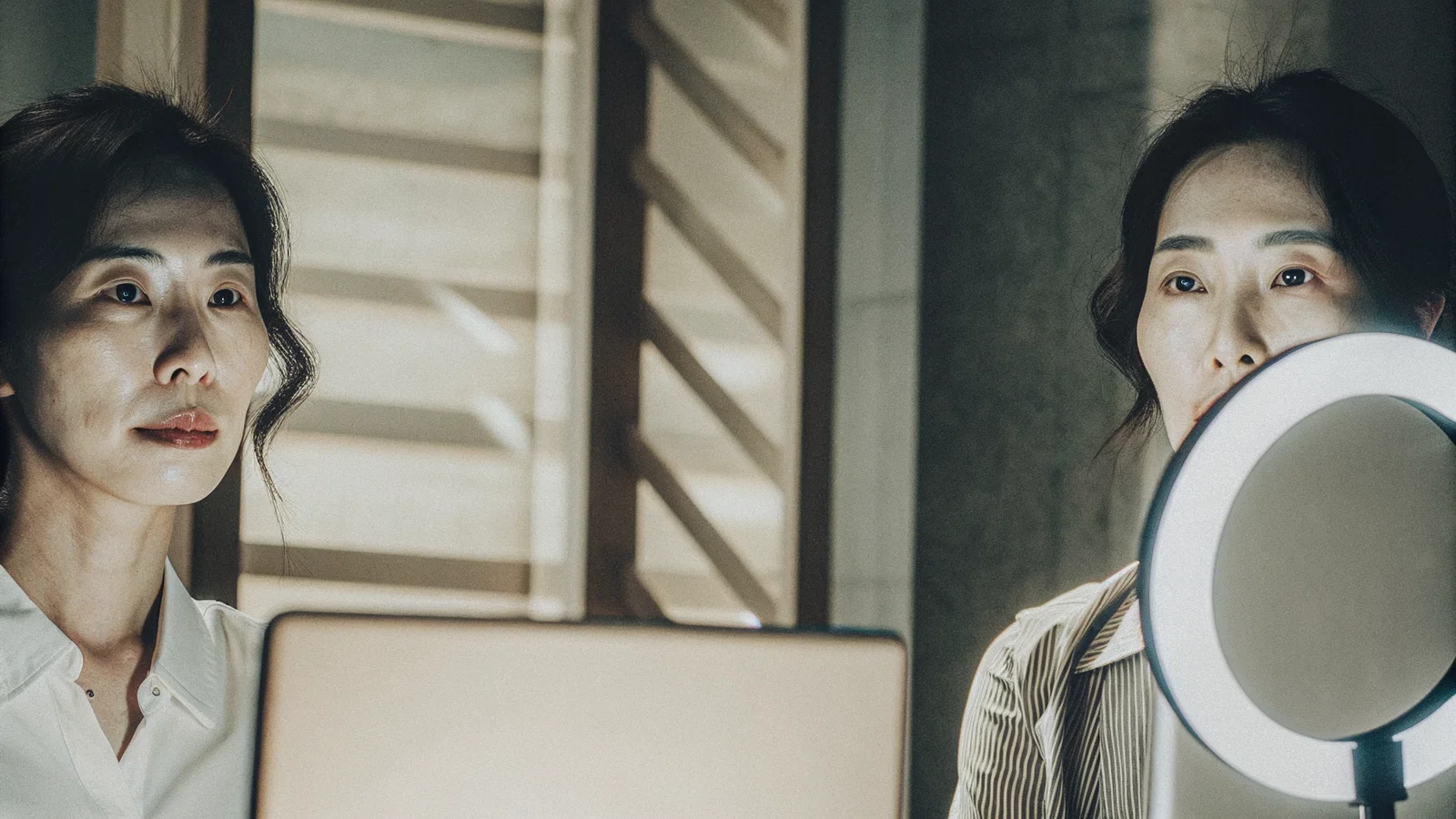
The Virtual Interview Paradox: Why Your Eyes Are Playing Tricks on You
You think you're making eye contact. You're not.
When you sit down for a virtual medical school or residency interview, your brain defaults to a lifetime of in-person social conditioning. You look at the person speaking to you. It feels natural. It feels polite. But in a digital environment, looking at the interviewer's face on your screen means you are physically looking away from the camera lens. To the person on the other side of the screen, your eyes are cast downward. You look distracted. You look disengaged.
If you struggle with these dynamics, reviewing advanced techniques for virtual interview eye contact and presence can help refine your delivery.
This is the psychological disconnect of the virtual interview. We are dealing with a fundamental clash between human instinct and hardware reality.
In a physical room, connection relies on a direct line of sight. In a digital environment, we have to manage what I call the 'Triangle of Connection.' The three points are your eyes, the interviewer's eyes on your screen, and the camera lens. In person, this triangle collapses into a straight line. Virtually, the triangle remains intact, and it constantly pulls your gaze away from the lens. You are forced to choose between seeing the person and letting the person see you.
It's exhausting. Plain and simple. Forcing yourself to stare into a tiny, unblinking black plastic dot for forty-five minutes drains your cognitive bandwidth. I've watched brilliant applicants completely burn out by minute thirty because the mental effort of maintaining artificial camera gaze hijacked the energy they needed to formulate complex answers.
Understanding how these preferences manifest is crucial, as why PDs prefer certain virtual interview behaviors over others can inform how you present yourself.
We have to acknowledge this shift. Traditional face-to-face social norms do not neatly map onto digital interface etiquette. In person, staring unblinkingly at someone is aggressive. On a webcam, looking away is dismissive. You are playing a game with a completely new set of rules, and if you don't know those rules, your eyes will betray you.
Data-Driven Performance: Does Camera Gaze Actually Impact Scores?
Let's look at the actual data. This isn't just about feeling good; it's about how behavioral science translates into your interview scores.
Studies on non-verbal cues in video conferencing consistently show that 'mutual gaze', the perception that you are looking directly at the other person, is the single highest driver of trust and rapport in digital communication. When interviewers perceive mutual gaze, their trust scores for the applicant spike. When they don't, trust plummets. It's that binary.
I've sat in on admissions committee debriefs and residency rank meetings. I've heard faculty say, "They just didn't seem engaged," or "I didn't feel a connection." Nine times out of ten, the applicant was staring at their own Zoom tile or looking down at the screen. Faculty raters are human. They use standardized rubrics, but "Professionalism" and "Interpersonal Communication" are heavily weighted, subjective categories. If you exhibit gaze aversion, raters subconsciously penalize you. They dock points for a perceived lack of confidence or engagement, even if your verbal content is flawless.
But here is where most applicants get it wrong. They try to stare at the camera 100% of the time. That's a mistake.
You need to distinguish between 'active listening' and 'persuasive delivery.'
When the interviewer is speaking, your job is active listening. If you stare blankly into the camera lens while they talk, you can't read their facial expressions. You miss the subtle nods, the smiles, the micro-expressions that tell you how your previous answer landed. During their turns, look at the screen. Look at their face. Nod. React.
When it is your turn to speak, your job shifts to persuasive delivery. This is when you pivot to the camera lens. You deliver your core message, your punchlines, and your closing thoughts directly into the lens. This strategic toggling between screen and camera mimics the natural rhythm of a real conversation, preventing you from looking like a hostage reading a ransom note.
The Situation Handler's Playbook: Practical Execution
Theory is great. Execution gets you matched. Here is exactly how to handle your gaze when the camera light turns red.
The 70/30 Rule
Aim for a 70/30 split. Spend 70% of your speaking time looking directly at the camera lens. Spend the remaining 30% glancing at the screen to check the interviewer's non-verbal reactions or to gather your thoughts. If you are listening to them speak, flip it: 80% screen, 20% camera. Do not try to achieve 100% camera gaze. You will look robotic, and artificial eye contact is far more distracting than intermittent screen glancing.
Environment Setup: Fix Your Angles
The biggest culprit in poor virtual rapport isn't your eyes; it's your laptop placement. If your laptop is sitting flat on your desk, the camera is below your eye level. When you look at the screen, you are looking down. When you look at the camera, you are looking down. The interviewer gets a view of your nostrils and your chin.
Fix this immediately. Put your laptop on a stack of textbooks. Use a monitor riser. Get the camera lens exactly at your eye level. When the lens and the screen are on the same horizontal plane, the physical distance your eyes have to travel to switch between the screen and the camera drops to almost zero. The gaze shift angle becomes imperceptible to the interviewer.
Physical Anchors
Your brain will naturally drift toward the screen, especially when you are stressed or thinking hard. You need physical anchors to break the habit.
Take a brightly colored sticky note. Draw a bold arrow or stick a pair of googly eyes on it. Place it directly next to your webcam. Not below it. Not above it. Right next to it. When you feel your eyes wandering during a high-stakes behavioral question, that flash of neon yellow will snap your attention back to the lens. It sounds silly. It works flawlessly.
Handling the Panel
Panel interviews are a nightmare for gaze management. You have three or four faces scattered across your monitor. If you try to make eye contact with each person on the screen, your eyes will dart around like you're watching a tennis match. You'll look nervous and shifty.
Don't do it. Keep your primary focus on the camera lens. Use your peripheral vision to gauge the panel's collective reaction, but address your verbal response to the camera. By speaking to the lens, you ensure that every single panelist feels the answer is directed at them collectively. You are addressing the room, not just the person in the top-left grid square.
Summary: Balancing Human Connection with Digital Performance
Let's get real for a second. Perfect camera gaze is a myth. It doesn't exist, and chasing it will only make you stiff and unnatural. The goal isn't to perfectly simulate a physical interaction; the goal is to project authentic, natural engagement through a digital medium.
Before your next interview, run through this final checklist:
- Camera is physically at eye level.
- Lighting is in front of you, not behind you.
- Sticky note anchor is placed next to the lens.
- Self-view is turned off (stop looking at yourself).
- Notifications are silenced.
Remember this: the content of your answer always outweighs your eye positioning. If your answer is brilliant, insightful, and demonstrates your core competencies, a few glances down at the screen won't tank your score. But if your answer is empty, no amount of unblinking camera stare will save you.
Master the hardware. Respect the 70/30 rule. Then, forget about the camera and focus on telling your story.


