The behaviors that win virtual interviews are not the ones you think they are.
Everyone obsesses over “having good answers” and “knowing my CV.” That’s baseline. What PDs really sort you on during virtual interviews are micro-behaviors: how your eyes move on screen, your timing when others speak, how you handle tech hiccups, what you do in the first three seconds when the Zoom window opens. Those tiny tells decide whether you feel like a future colleague or a future problem.
I’ve sat in the post‑interview debriefs. I’ve watched PDs and faculty trash an otherwise strong candidate over one or two on‑screen habits that nobody warns you about. So let me walk you through what actually matters, what irritates PDs, and what quietly moves you up the rank list.
What PDs Really See When They Look At Your Screen
Here’s the blunt truth: on a virtual interview, PDs have less data on you than in person, so they massively overweight what they can see and hear. And they’re doing it quickly.
A typical day: PD logs on at 7:45 a.m., stares at 12–16 faces over Zoom/Webex all day, bouncing between breakout rooms, faculty filters, and a chat full of logistics. By noon, everyone’s answers sound the same:
“I love your program’s emphasis on…”
“I’m passionate about teaching and underserved populations…”
“I’m really excited about your research opportunities…”
It all blurs.
So what stands out? Not your eloquent paragraph about health disparities. What stands out are very specific virtual behaviors:
- Are you looking at them or at yourself?
- Do you talk over people on Zoom?
- Do you handle awkward lag with grace or panic?
- Does your environment make you look like someone who can be trusted with patients at 2 a.m.?
They’re not consciously thinking, “This candidate’s framing is good.” They’re thinking, “I could work with her” or “He felt off.” And they build those impressions on things they’d never write in an NRMP survey.
The Visual Behaviors PDs Prefer (Even When They Won’t Admit It)
Let’s start with what’s on camera. Visuals in virtual interviews are loaded with unconscious signals.
1. Eye Contact: The Camera Trick Almost No One Uses
Here’s the dirty secret: PDs know that real eye contact isn’t technically possible on Zoom. But they still react emotionally as if it is.
Candidates who appear to be making eye contact feel more present, more engaged, more confident. Those who keep glancing away—from second monitor, phone, notes, or their own video—feel distracted, evasive, or anxious.
PD perspective in debriefs sounds like:
- “She seemed really engaged; I felt like she was talking to me.”
- “He kept looking off screen. I wasn’t sure he was fully there.”
They’re reacting to where your eyes go.
What PDs prefer:
You mostly looking straight at the camera during key moments: introductions, big questions (“Why this program?”, “Tell me about yourself”), and whenever they are talking.
What hurts you:
- Constantly checking your own video box
- Reading obviously from notes below the screen
- Looking to the side when answering tough questions (it reads like you’re making something up)
You want a natural pattern: look at the camera when you’re speaking, occasionally glance at the screen to read their expressions, then back to camera for emphasis.
2. Framing and Background: What Your Square Says About You
PDs do not care whether your wall is Pinterest‑worthy. They absolutely care if your frame screams “chaos.”
I’ve heard this exact line: “If you can’t get yourself together for a 20‑minute interview, what are you going to look like on rounds?”
What silently boosts you:
- Head and upper torso visible, not just a floating head
- Camera at eye level (not up your nose, not looking down on you)
- Neutral background: wall, bookshelf, simple decor
- No visible bed behind you if it can be avoided (yes, people judge this)
What quietly kills the vibe:
- Sitting on a bed or couch with pillows behind you
- Messy piles, laundry, food containers in frame
- Distracting motion behind you (doorways, roommates, family crossing)
- Virtual backgrounds that glitch around your hair or hands
Programs don’t need you to look rich. They need you to look like you take this seriously.
3. Lighting and Video Quality: Why “Crisp and Clear” Wins
This one is more psychological than technical. Brighter, clearer video makes people feel like they know you better. Grainy, dark video creates distance.
I’ve watched PDs say, “I just didn’t get a good sense of him,” about candidates whose cameras made them look like they were broadcasting from a cave.
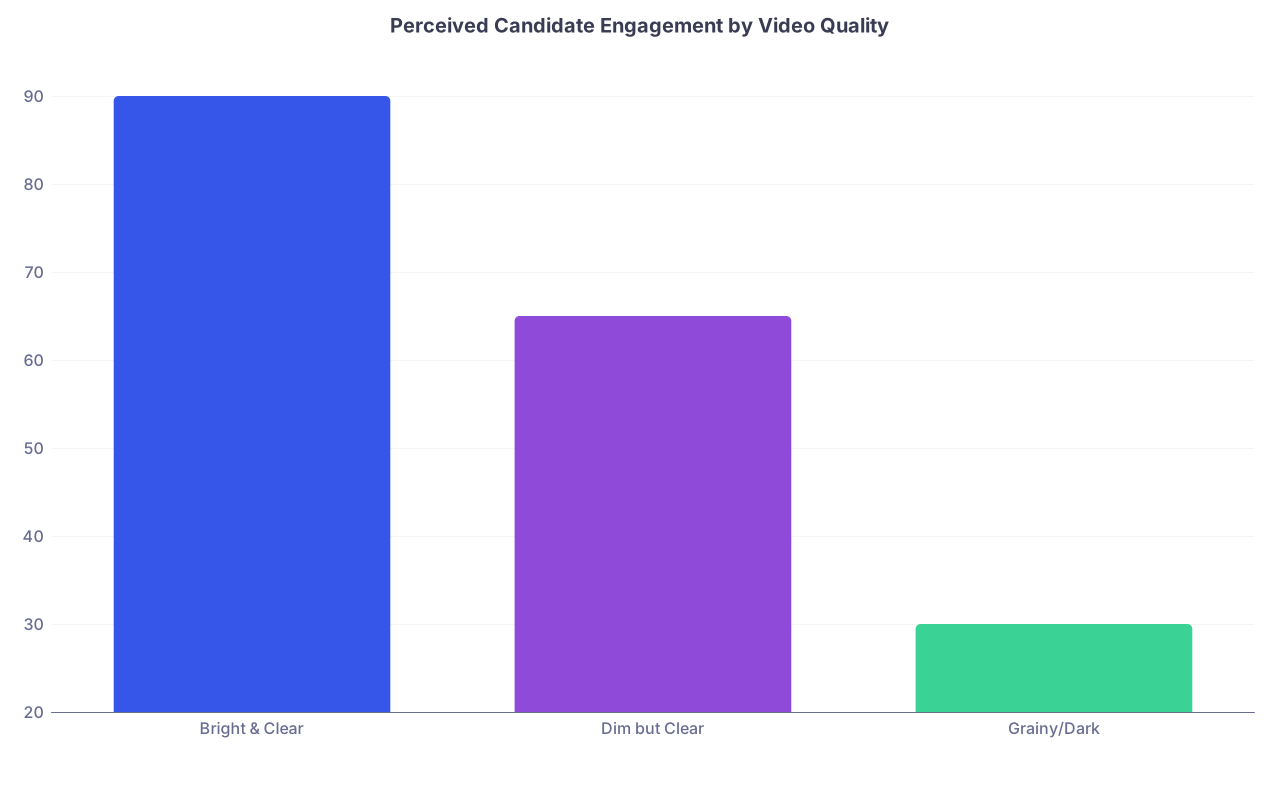
| Category | Value |
|---|---|
| Bright & Clear | 90 |
| Dim but Clear | 65 |
| Grainy/Dark | 30 |
No program’s official rubric says “A+ for having a ring light,” but the effect is real. Better video → more facial cues → stronger emotional impression.
The behavior PDs prefer:
- You show up well lit from the front, no harsh backlight, no face in shadow
- Your video is stable—not constantly shaking because you’re on a bed or holding a tablet
They file you mentally under “put together” versus “high-maintenance problem.”
The Verbal Habits PDs Reward (And The Ones They Hate)
You’ve heard “be professional and enthusiastic.” Too vague. Let me tell you the specific verbal behaviors PDs react to over Zoom.
1. Pacing and Turn‑Taking on Zoom
Virtual conversation has a different rhythm. There’s lag, audio compression, tiny delays. Candidates who don’t adjust sound rude or socially awkward.
On debriefs, a common complaint is: “He kept talking over people,” or “She was weirdly slow to respond, felt disengaged.”
PDs prefer:
- A half‑second pause after they finish talking before you respond. On Zoom, that reads as thoughtful, not awkward.
- Letting them finish the sentence—even if in person you’d jump in to show enthusiasm.
- Shorter, tighter answers. In virtual, a 4‑minute monologue feels like 10.
And here’s the big one: they like candidates who rescue awkward virtual moments smoothly. For example, when both of you start talking and you quickly say, “Go ahead, sorry,” with a smile, then listen. It signals emotional intelligence.
What they dislike:
- You bulldozing through overlaps
- Overly long, unstructured answers that wander
- You clearly reading pre‑scripted responses
2. Warmth On Screen: Sounding Like a Human, Not a Recording
On virtual, your voice has to do a lot more work. They can’t read your body language fully. So tone, inflection, and responsiveness matter more.
PD feedback I’ve heard:
- “She felt flat, like she was reciting.”
- “He was nervous but very genuine—I liked him.”
- “Her answers were polished, but I couldn’t connect with her.”
Notice something: they’d rather have “nervous but genuine” than “perfect but robotic.”
Behaviors they prefer:
- You allow small, appropriate smiles
- You vary your tone—you don’t answer every question in the exact same rhythm
- You respond to their comments, not just your own agenda (“That’s great to hear about the night float change, I spoke to one of your residents who mentioned that.”)
That’s how you recreate a human conversation over a screen.
3. Handling Difficult or Personal Questions Virtually
Virtual distance can make tough questions feel harsher. PDs know this. They watch how you handle it.
They pay attention to:
- Do you maintain composure when asked about a low Step score, leave of absence, or red flag?
- Do you look away, fidget, or shut down?
- Can you talk through something vulnerable without oversharing or rambling?
Programs prefer candidates who take a beat, look into the camera, acknowledge the question, and then answer cleanly. Something like:
“I’m glad you asked that. During that time… [brief context] …here’s what changed, and here’s how I work now.”
They’re not just judging what happened in your past; they’re judging how you talk about it under minor pressure and slight discomfort online.
The “Professionalism Tells” That Matter More On Zoom Than In Person
Here’s the part most applicants miss: PDs use virtual interviews as a stress test for reliability and professionalism in a less‑controlled setting. They want to see how you function without a team smoothing the edges.
1. Punctuality and Tech Discipline
Yes, everyone knows “be on time.” But virtual gives PDs extra data you don’t realize you’re feeding them.
They prefer:
- You logging in early, already named correctly in the platform, camera on, audio working
- You not fumbling with headphones, Zoom updates, or phone audio while they watch
- You not clearly switching audio sources or muting to fix echoes mid‑answer
I’ve seen entire discussion segments derailed because one applicant spent two minutes going, “Can you hear me now? One sec, let me switch Wi‑Fi.” That person is now the “tech mess” in the PD’s mind.
Programs understand tech issues happen. What they care about is your preparation behavior:
- Did you test your setup beforehand?
- Did you have a backup plan?
- Do you stay calm and solution‑oriented or do you spiral?
That’s a proxy for how you’ll act during a 3 a.m. code when something goes wrong.
2. Dress and Grooming: Slightly Stricter On Virtual
Here’s something a lot of students don’t realize: PDs are slightly less forgiving of sloppy appearance on virtual than in person, because you had total control of your environment and time.
In person, they know you traveled, woke up in a hotel, maybe got rained on. On Zoom? You’re at home. You had no excuse.
So yes, they notice:
- Wrinkled shirts
- Half‑tucked ties
- “I just rolled out of bed” hair
- Heavy, reflective glasses with major glare hiding your eyes
The behavior they prefer is simple: dress like you’re showing up for actual work in that specialty. IM, peds, neuro—clean, classic. Surgery and ortho skew a bit more conservative. EM less obsessed, but still aligned.
It’s not about fashion. It’s about looking like you respect the moment.
3. Chat, Breakouts, and Social Events: Where PDs Get Their Real Data
You think the “informal meet and greet” is casual. It is not. That’s where the real behavioral intel comes from.
Residents report back on:
- Who dominated the social session
- Who ignored quieter people
- Who seemed bored or checked out on camera
- Who made odd comments or dark jokes that landed badly
PDs weigh this heavily, because this is closer to how you’ll behave at 1 a.m. in the work room.
They prefer candidates who:
- Turn camera on in social events (unless there’s a serious reason not to)
- Participate, but also listen
- Ask residents genuine, specific questions, not just “How’s the work‑life balance?”
I’ve been in rank meetings where a PD said, “Her interview with me was okay, but the residents loved her—let’s bump her up.” The reverse happens too.
How PDs Actually Use These Impressions In Ranking Meetings
Let me pull the curtain all the way back.
After interview day, faculty and PDs gather—sometimes that night, sometimes later—to discuss candidates. Very few programs use purely rigid scoring. Almost all use some structured scoring plus gut sense.
Here’s what it really looks like:

| Step | Description |
|---|---|
| Step 1 | Interview Day |
| Step 2 | Faculty Complete Scores |
| Step 3 | Resident Feedback from Social Events |
| Step 4 | PD Reviews Notes and Flags |
| Step 5 | Discuss Behavioral Impressions |
| Step 6 | Place in Tentative Rank Tiers |
| Step 7 | Adjust Tier Up or Down |
| Step 8 | Finalize Rank List |
| Step 9 | Borderline or Split Opinions? |
When they hit disagreement—on a “maybe” candidate or someone between tiers—that’s when these virtual behaviors decide your fate.
You’ll hear lines like:
- “I just didn’t click with him on Zoom.”
- “Her answers were solid, but she felt distant.”
- “He handled that tech issue really well, stayed calm. I liked his demeanor.”
- “Her space was a mess; I got an unprofessional vibe.”
Nobody’s saying, “Her Step 2 CK was 255, but her eye contact at minute seven…” Yet that’s basically what’s happening. Behaviors nudge you up or down a notch when you’re competing with people who look identical on paper.
And here’s the kicker: programs especially use these impressions for borderline candidates. If your scores and CV are top tier, they’ll overlook a few quirks. If you’re on the bubble, your virtual habits can save you—or sink you.
Behaviors That Quietly Raise You Above the Pack
Let me be very specific about what PDs remember favorably—even if they never articulate it.
They prefer candidates who:
- Join calls early, smooth tech, named correctly
- Look into the camera during key points, but don’t stare unnaturally
- Answer concisely, then stop—allowing space for follow‑up
- Reference specific details from the program’s day, showing you were actually listening
- Handle minor hiccups (frozen screens, audio drops) with calm and a bit of humor
- Treat residents on social sessions with the same respect as the PD
And they’re wary of candidates who:
- Make the faculty work to get past awkward tech issues
- Obviously read scripted answers
- Appear disengaged or “flat” on camera
- Give rehearsed generic lines about “great diversity” without any nuance or specifics
- Let their surroundings or background scream disorganization
If you want a quick way to visualize this tradeoff, here’s how PDs often unconsciously score the whole package—yes, very unscientifically, but this is how humans work.
| Factor | Impact on PD Impression |
|---|---|
| Eye contact & presence | High |
| Tech smoothness | High |
| Background & environment | Medium |
| Verbal content of answers | High |
| Warmth & tone | High |
| Clothing/grooming | Medium |
Notice “tech smoothness” is up there with actual content. If that annoys you, good. It should. But you can either be mad about it or exploit it.
FAQ: Virtual Interview Behaviors PDs Care About
1. Is it better to stare at the camera the whole time or look at the interviewer’s face?
Straight camera stare the entire time looks robotic and unnatural. The sweet spot: look at the camera when you’re making key points or listening to a serious question, then glance at the interviewer’s face on screen to read their reaction. PDs prefer a natural back‑and‑forth, not a dead‑eyed camera lock.
2. Do PDs really judge my background that much, or is that overblown?
They’re not interior designers, but yes, your background colors the impression. You don’t need fancy art. You do need clean, stable, and non‑distracting. A bed in the background isn’t fatal, but a messy bed with visible clutter makes people question your professionalism. They won’t say it out loud, but they do react to it.
3. How bad is it if I have a tech issue during the interview?
A single tech hiccup won’t kill you. How you handle it might. If you clearly prepared, apologize once, stay calm, and recover quickly, most PDs will shrug it off. Repeated issues, visible frustration, or clear lack of prep (didn’t test audio, using unstable Wi‑Fi) signal you’re not reliable. That’s where it starts to hurt.
4. Do PDs expect me to be “on” and energetic the entire day, even in resident socials?
They’re not expecting stand‑up comedy. They are expecting you to show basic engagement: camera on when possible, asking a few thoughtful questions, not obviously multitasking. The resident social is a major data source for “would I want this person on my team?” Coasting or disappearing there can damage an otherwise solid faculty interview day.
Two key points to walk away with:
First, PDs use virtual behaviors as a proxy for how you’ll act under pressure in real clinical settings. Tech prep, eye contact, pacing, and environment all get unconsciously mapped to “reliable vs. risky.”
Second, when you’re in a pile of applicants with similar stats, these micro‑behaviors are the tie‑breakers. You do not need to be perfect. But you do need to look like someone they can trust on a screen—because that’s the only version of you they’ll ever meet before they rank you.