When was the last time you left a study session actually sharper, calmer, and genuinely prepared, not just socially reassured? If you have to think too hard for an answer, I want you to sit with that discomfort for a second.
I see this mistake constantly. Medical students form study groups because isolation feels wrong. The group feels productive. People nod, highlight the same lines, laugh about how tired they are. But Study Buddy Burnout is not ordinary fatigue. It's accelerated emotional and cognitive exhaustion produced by constant social comparison and shared anxiety spirals. It feels like connection. It functions like gasoline on a fire.
Here is my core warning, and I'm not going to soften it: mimicry of effort is not productivity. Most study buddies don't make you better. They validate your inefficiencies. They tell you that if they're confused too, the material must be impossible. That's not a strategy. That's an echo chamber with highlighters.
If your current study routine revolves around someone else's mood, pace, or panic, your mental health and retention rates are paying the price. This article is a cautionary guide. I'll show you the three biggest mistakes, what they look like in real life, and how to pivot before the burnout becomes irreversible.
This article is for educational purposes only. It is not financial advice, not legal advice, and not tax advice. Figures vary by individual circumstances, so consult a qualified professional before acting.
Mistake #1: The Comparison Trap and Imposter Syndrome Amplification
The first mistake is treating someone else's progress as a mirror for your own. That's statistically misleading and emotionally corrosive.
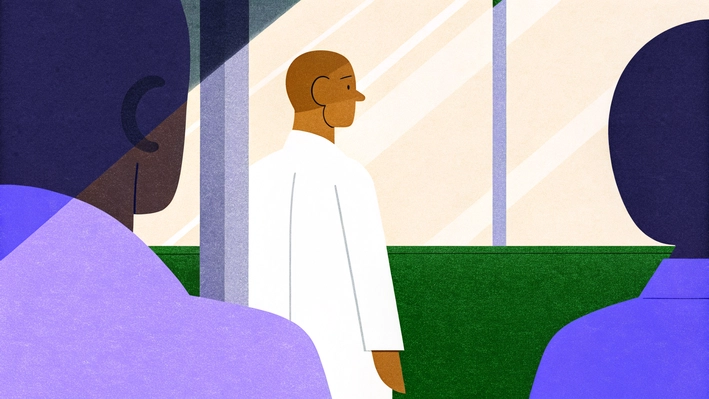
When you sit with a study buddy, you're not comparing your learning to an objective standard. You're comparing your inside to their outside. You hear them rattle off a mechanism and assume they own it. You don't see the six hours of shaky first passes or the fact that they forgot the same enzyme yesterday. Upward social comparison makes one person look like a genius and the other like a fraud. That's imposter syndrome doing push-ups.
The bigger error is assuming equal baseline knowledge and equal learning styles. You and your buddy are not starting from the same place. One of you aced biochem in undergrad. The other scraped through. One of you learns by drawing pathways. The other learns by talking through cases. If you try to match someone else's rhythm, you're not calibrating to the exam. You're calibrating to their history.
I watched this happen to a second-year I'll call Sarah. She was doing fine on her own, actually ahead on her Anki reviews. Then she joined a classmate because she felt guilty saying no. He was three days ahead in respiratory physiology. Instead of trusting her own plan, Sarah panicked. She abandoned her spaced repetition, tried to cram what he had already covered, and ended up confusing herself worse than if she'd never looked at the material. She slowed down because she thought being behind meant being wrong. It didn't. It meant they had different schedules.
Here's a warning sign you cannot ignore: if you feel worse after studying together, the format is failing you. Not the material. Not your intelligence. The format. Group study should leave you clearer, not more anxious. If you finish a session and your first instinct is to double-check whether you're actually cut out for this, the social comparison has already done damage.
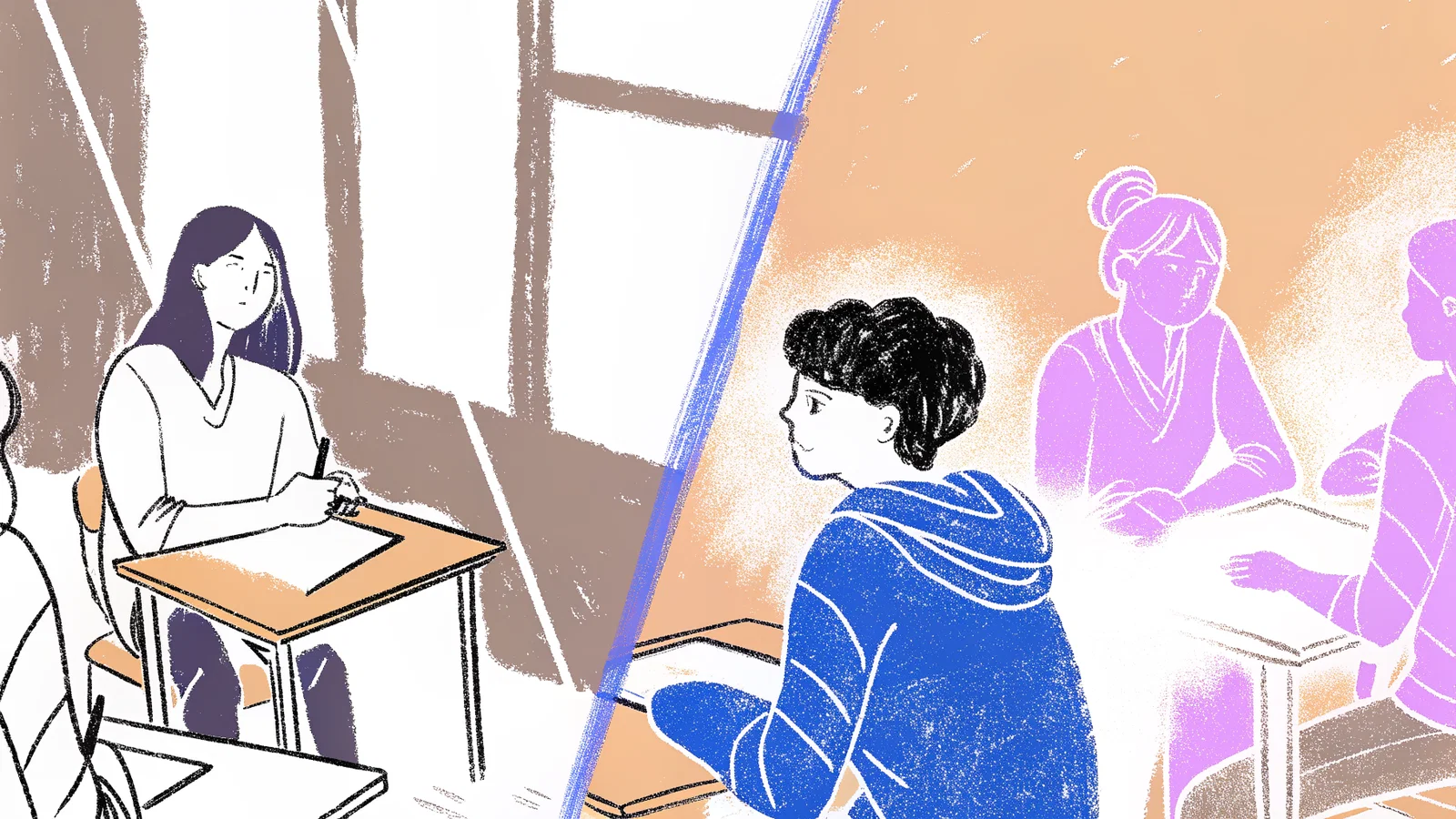
This chart shows the trap clearly. Confidence in a group often rises because people validate each other's presence. Actual retention often drops because that validation replaces active retrieval. The gap between feeling prepared and being prepared widens.
I've learned to be blunt with students about this: feeling confident in a group is cheap. Proving knowledge to yourself in silence is expensive, but it's the only kind of confidence that survives test day.
Mistake #2: Validation of Bad Habits and Anxiety Spirals
The second mistake is more dangerous because it wears a friendly face. It's mutual reassurance. The problem? Two people being wrong together is still wrong.
(See also: Designing a Study Schedule That Survives Bad Mental Health Days for tactical advice on pacing.)
"We both got Q#45 wrong, so it must be hard." No. It means both of you missed the same underlying concept. Maybe the question was fair. Maybe your shared confusion came from the same knowledge gap. When a study buddy confirms your incorrect reasoning, you stop interrogating it. You close the loop too early. That's not learning. That's co-signing errors.
Psychologists call this co-rumination: spending excessive time venting about stressors without solving them. You talk about how awful the last block was. You list every attending who annoyed you. You compare sleep schedules like they're battle scars. None of that moves you closer to passing Step 1 or crushing your shelf exams. It moves you deeper into a shared emotional pit.
A red flag goes up when study sessions devolve into complaining about professors, workload, or classmates instead of active recall or practice questions. I've seen sessions that lasted three hours. Real content covered? Maybe twenty minutes. The rest was emotional processing dressed up as studying. If your group spends more time talking about the exam than doing what the exam requires, you're in a venting club, not a study group.
Anxiety is contagious. Chronically panicked peers transfer their cortisol spike directly into your nervous system. You walk in calm. You walk out vibrating with someone else's dread. The "Contagion Effect" is real, and medical students are remarkably efficient carriers.
Let me show you the cycle I've witnessed too many times.
You start stressed. You seek your buddy to feel better. They agree the situation is hopeless. Now you feel justified in your panic. That panic leads to passive re-reading, endless highlighting, and skipping practice questions because "we're not ready." Productivity drops. Stress rises. You go back to the buddy. The loop tightens.
I need you to stop seeing this as support. It's not. It's shared avoidance with a side of adrenaline.
Mistake #3: Misalignment of Goals, Pace, and Energy
The third mistake is quieter but just as damaging: forcing synchronization where none belongs.
You are a visual learner who needs to draw the brachial plexus. Your buddy is an auditory learner who wants to talk through it. You prefer two-hour deep work blocks. They prefer thirty-minute sprints with constant check-ins. Neither style is wrong. Trying to force them into one shared session is.
When pacing is misaligned, resentment builds fast. The faster student feels held back. The slower student feels rushed. Both walk away fragmented. I've seen friendships strain not because people dislike each other, but because they kept pretending their brains worked the same way.
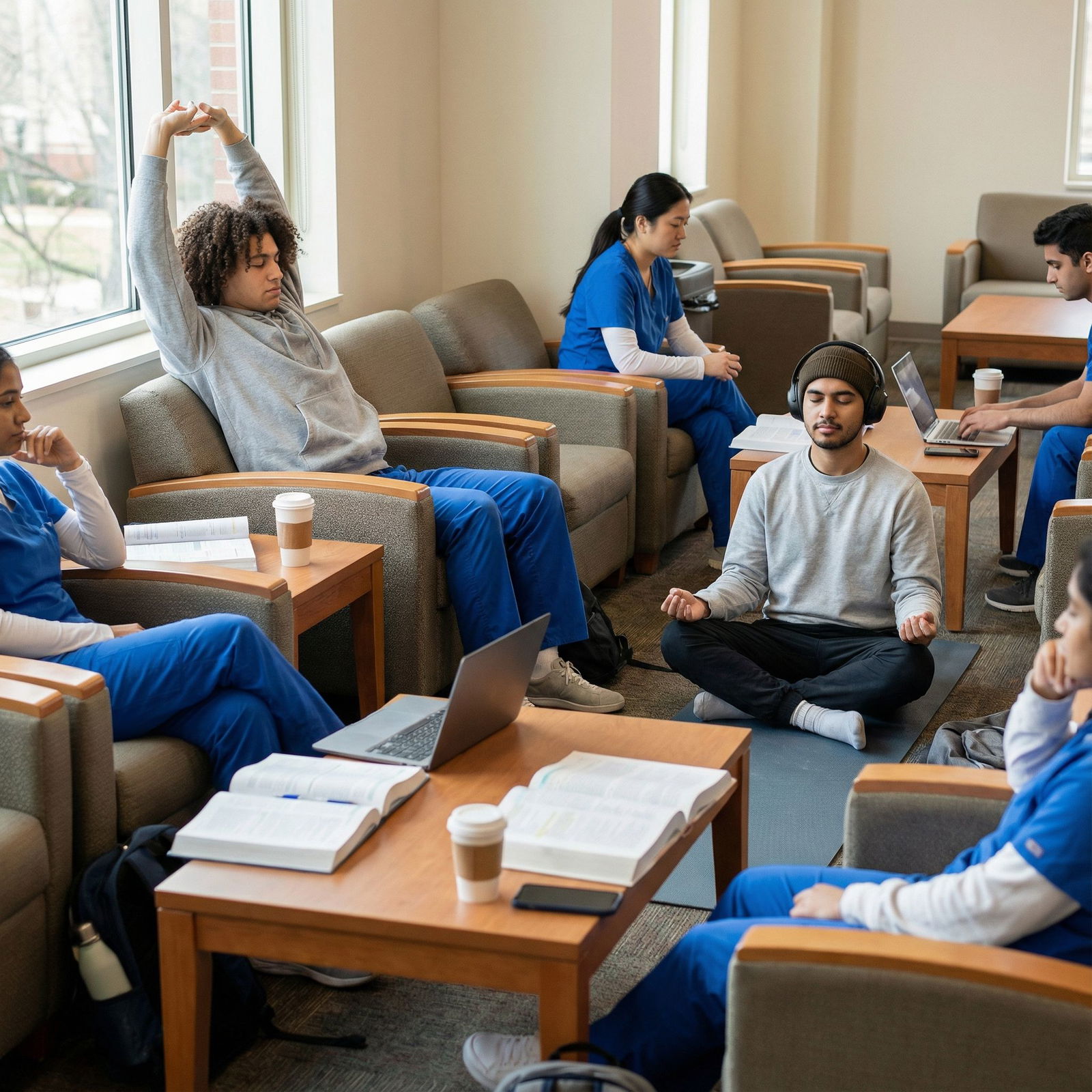
That image feels dramatic, but it's accurate. Every forced joint study session is two runners tied together, neither able to race at their own speed.
(See also: The Myth of the 14-Hour Study Day to understand why longer isn't always better.)
Then there's the "Busy Work" trap. Presence equals productivity, right? Wrong. Two students sit at a table for four hours. They chat, check Instagram, reorganize notes, maybe answer five questions. At the end, they feel exhausted because they sat still for a long time. That's not cognitive load. That's social fatigue. You wasted time, and then you'll tell yourself you studied all afternoon. The lie feels comfortable. The score report won't.
I'll say it plainly: if you need a buddy to keep yourself accountable for showing up, you don't have a study problem. You have a discipline problem. And a buddy won't fix discipline. They'll just camouflage it.
Action Plan: How to Pivot Without Complete Isolation
You don't need to become a total hermit. But you do need to stop using people as emotional furniture.
Shift from Collaborative Studying to Structured Accountability. Use friends for check-ins only, not content processing. You are not looking for someone to teach you. You're looking for someone to witness your plan and hold you to it.
Try these three techniques.
1. The Pomodoro Solo Sprint + Brief Debriefing. Study alone for 50 minutes. No phone. No conversation. Then, if needed, meet a buddy for a max 15-minute debrief. Use that time to ask specific questions about specific problems. Example: "I don't understand why option B is wrong on question 47." Then go back to solo work. The debrief is a scalpel, not a couch.
2. Topic-Specific Partners Only. Work with someone only when reviewing a genuinely ambiguous topic, something with conflicting guidelines or a tricky acid-base disorder. Not for passive reading. Not for "we'll study cardio together every night." That's a time leak.
3. Implement Graceful Exits. You need a script for bowing out of draining dynamics. Try this:
"I've realized my retention is better when I study alone first. Can we do a 15-minute audit at noon instead of a full session?"
Or:
"I'm shifting my schedule to protect my sleep, so I can't do late-night group sessions anymore. Happy to swap practice questions via text."
You are not rejecting them. You are rejecting the inefficiency. That's a mature boundary.

Protect your cognitive reserve. You cannot pour from an empty cup, especially when that cup is leaking into someone else's unmanaged anxiety. Your mental energy is a finite clinical resource. Spend it like one.
Key Takeaways
- Avoid using study buddies as emotional dumping grounds. Validation of anxiety is not relief. It's reinforcement.
- Compare your notes only to official answer explanations. Your peer's perceived competence is a distorted mirror.
- Transition to structured accountability. Meet briefly to set goals and troubleshoot specific errors, then work independently.
- If you leave a session more drained than before, treat it as a critical failure mode. Adjust or exit. Do not negotiate with red flags.
This is your training, not a group project. Study like it.