Let me save you five thousand dollars. And probably a residency interview slot, too.
You've seen the Instagram posts. White coat heroically posed against a dusty backdrop, stethoscope around the neck, smiling children in a village that needed exactly one week of your "help." The caption: "Changed lives today. 🙏 #medicalmissions #globalhealth"
Here's what the post doesn't say: that trip cost $4,500 through a "facilitated program." That you observed, mostly. That the local physician, who's been there for fifteen years, got bumped out of an OR so you could "get hands-on experience." That the program director reviewing your ERAS application saw right through it.
I'm not here to shame anyone who genuinely cares about global health. I am here to tell you what the data actually shows: the "pay-to-play" mission trip, the kind sold to pre-med and medical students as a residency-boosting experience, is one of the most expensive resume mistakes you can make.
Before you commit your funds, consider the realities of how attending physicians quietly vet students on mission trips.

This article is for educational purposes only. It is not financial advice, not legal advice, and not tax advice. Figures vary by individual circumstances, so consult a qualified professional before acting.
The Voluntourism Trap: Why Your CV Is Being Filtered Out
There's a reason the term "voluntourism" exists. It was coined to describe well-meaning travelers paying premium prices for short-term volunteer experiences that often create more work than they solve. In medicine, this has metastasized into an entire industry of week-long "mission trips" marketed to students with promises of clinical exposure, cultural immersion, and a competitive edge on Match Day.
The marketing works. The reality doesn't.
Program directors see hundreds of applications per cycle. At mid-tier programs, you're competing against 1,500+ applicants for 10-15 spots. They've been doing this for years, and they can spot a glorified vacation dressed up as clinical experience from across the room.
If you are already in the planning stages, research how to vet a medical mission organization for ethical, sustainable work to avoid common pitfalls.
Here's the uncomfortable truth: most of these trips function as observerships. You shadow. You watch. Maybe, if the host site is poorly regulated and ethically compromised, you assist in ways you absolutely shouldn't be assisting. The "halo effect" that students assume surrounds international work? It's largely a myth perpetuated by the companies selling the trips.
The ethical dimension should bother you more than the application impact. When you parachute into a low-resource setting for seven days, you extract value. You photograph. You learn. You leave. The continuity of care breaks. The local clinician now has to manage the patient you "helped" without documentation, without follow-up, without infrastructure you contributed to.
You're not providing value. You're creating a burden. And admission committees, increasingly trained in global health ethics, know the difference.
The ROI of Experience: What Program Directors Actually Value
Let's talk numbers, because the people selling you these trips are counting on you not to.
I've sat on enough application review panels (and spoken candidly with program directors at places like UCSF, Hopkins, and smaller community programs) to tell you exactly what gets weighted. It's not the destination. It's the depth.
A one-week international trip and a six-month longitudinal research project in your home institution carry wildly different signals. The first tells a program director: this student had disposable income and free time. The second tells them: this student can commit, can execute, can produce outcomes worth publishing.
The "impact vs. duration" metric is brutally simple. A week of observation, no matter how exotic the location, doesn't build clinical competency. It builds a photo album. Meanwhile, six months of consistent clinical research demonstrates that you understand the scientific method, can collaborate over time, and have produced something tangible.
Then there's the legal and ethical liability that almost never makes the brochure. You're not licensed. You're not insured through your medical school's malpractice policy if you're practicing outside its jurisdiction. If you perform a procedure abroad that goes wrong, and they do go wrong, there's no recourse for the patient and no protection for you. Some schools have explicitly forbidden certain activities on these trips after students returned with concerning stories.
When your CV lists four or five such trips stacked on top of each other, the red flag is unmistakable. It signals one thing to seasoned reviewers: this student prioritized experience-collection over clinical depth. They have no longitudinal commitment. No sustained engagement. No demonstrated ability to do hard things for a long time.
Residency is hard things for a long time. You need to show you can do that.
The Ethical Cost of 'Medical Tourism' in Residency Applications
Beyond the strategic failure, there's the moral failure that should make you pause before booking.
The "saviour complex" narrative, the idea that you, a third-year student with eight months of clinical rotations under your belt, are uniquely positioned to "save" a community that has survived without you for generations, has become a documented red flag in residency interviews. I've watched interviewers politely probe applicants about their international work, waiting to see if the response reveals genuine partnership or performative heroism.
The socioeconomic disparity embedded in pay-to-play trips deserves attention, too. The $4,500 you paid for your "experience" often exceeds the monthly salary of the healthcare workers you're "helping." The program fees flow back to Western facilitators and brokers, not to the local infrastructure. You are, in many cases, subsidizing an extraction economy dressed up as charity.
The "White Savior" trope, despite what your study abroad office might say, is not a relic. It's a current and damaging pattern that modern admissions committees, especially at programs with international or first-generation medical student populations, are actively screening for. Multiple PDs I've consulted have described down-ranking applicants whose applications read like a portfolio of rescued populations rather than a record of mutual collaboration.
Pivoting from "service-tourism" to genuine global health equity requires a different framework entirely. It requires you to enter as a learner, not a savior. To defer to local expertise. To invest time, not just money. To accept that the most ethical contribution you can make as a student might be to stay home, study epidemiology, and contribute to systems-level research rather than grabbing a scalpel in a setting where you have no business operating.
Strategic Pivot: Investing Your Time (and Money) Elsewhere
Here's where the data gets actionable. If you've got $4,500 and two weeks, here's what you should actually do with it.
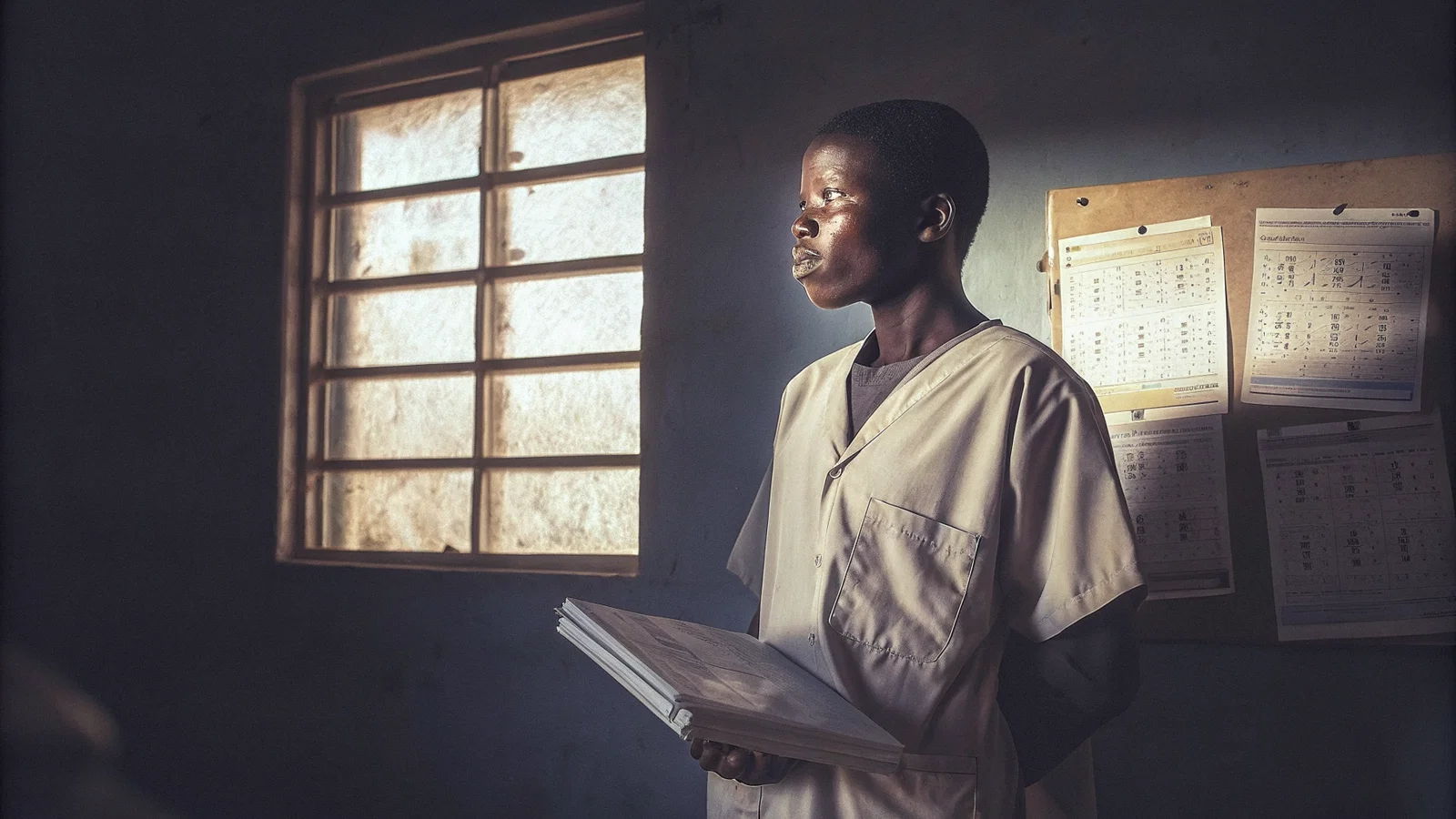
Reallocate your budget toward things that demonstrably strengthen your application. USMLE Step 2 prep materials. A longitudinal research project with a productive PI. Board review subscriptions. Or, you'll love this, direct service to an underserved community in your own zip code.
I've watched applicants with ten mission trips on their CV get passed over for candidates with three years of consistent volunteering at a local free clinic. The latter shows grit. The former shows a checkbook.
Build a global health portfolio that isn't just tourism. If international work genuinely matters to you, find programs that prioritize reciprocity, where students go for extended periods (six months minimum), work under local supervision, contribute to capacity building, and submit to the same ethical review they'd face at home. These exist. They're harder to find. They cost less. They're worth infinitely more.
The coherent clinical narrative will always beat the list of vacation-style trips. PDs read applications looking for a story: who is this person, what do they care about, what evidence shows they'll succeed in our program? A CV padded with brief international experiences tells a story of consumption, not commitment.
Stop buying experiences. Start building outcomes.
The Myth Buster Bottom Line
The medical mission industrial complex has sold an entire generation of students on the fantasy that paying for a week of foreign clinical exposure transforms them into competitive residency applicants. The evidence says otherwise. Program directors aren't wowed by your passport stamps, they're wowed by your sustained commitment, your clinical depth, and your demonstrated ability to produce meaningful outcomes over time.
Your money is finite. Your pre-clinical years are finite. Your CV space is finite. Spend each of those resources on investments that compound, not on experiences that expire the moment you land back home.
The students matching into their top programs aren't buying mission trips. They're building the kind of records that make admission committees lean forward and say, "Tell me more."